


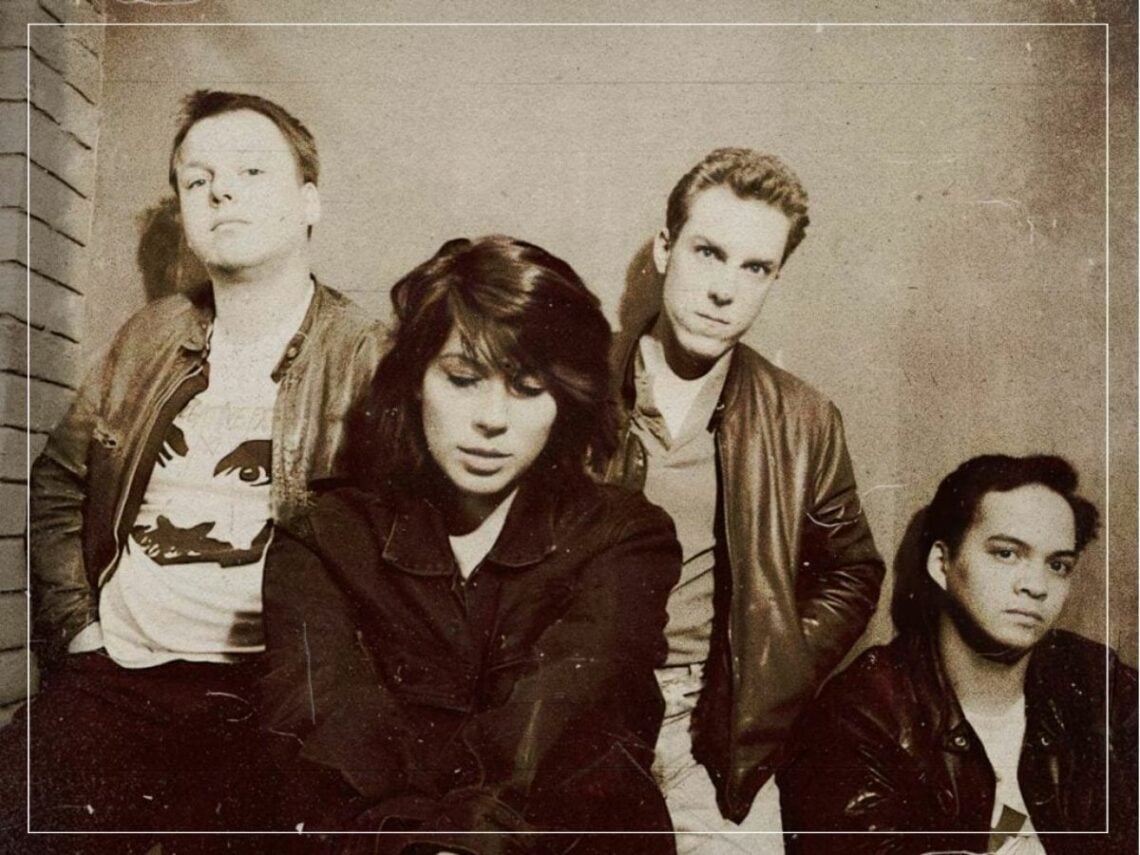
Every Pixies album ranked from worst to best

Following the release of their full-length debut, Surfer Rosa, Pixies went on to become one of the biggest and most revered groups of their generation. Both their debut and its follow-up, Doolittle, have achieved classic status, and plenty have made a case for either album to be considered alongside the all-time greats.
It’s not just the music press that has praised the group, though. They were highly influential in the alternative rock boom of the early 1990s, and artists like Radiohead, PJ Harvey, The Strokes and Alice in Chains have all cited them as influences. In a January 1994 interview with Rolling Stone, Kurt Cobain said that when he was writing ‘Smells Like Teen Spirit’, “I was basically trying to rip off the Pixies. I have to admit it.”
Like all bands with any longevity, they have undergone a number of changes to their lineup since their inception, although founding members Black Francis (vocals and guitar), David Lovering (drums) and Joey Santiago (guitar) have been ever-present. The group even broke up in 1993 but returned to the stage for a series of tours a little over ten years later, in 2004. It was another ten years before they would release another album when they returned with Indie Cindy, their first album since 1991’s Trompe le Monde.
Since 2014, they have released four more albums, including the latest, The Night the Zombies Came. The group’s blending of punk with grunge, surf rock, dream rock, and various other elements that they’ve drawn on over the years have made them a varied, interesting, and engaging act.
Every Pixies album ranked:
Trompe le Monde (1991)

The final album of their original run, Trompe le Monde, saw the group go out with a bang. With much cleaner production than Bossanova before it and a much fuller sound, this album was their best-sounding release until they re-formed in the new millennium.
While the songs weren’t as strong as their earlier work, they were still solid rock tracks full of energy. There is a fresher guitar sound on the album than the group had utilised before, and consequently, the album is more upfront and in-your-face than its predecessors had been. ‘The Sad Punk’ and ‘Head On’ sound like raucous Nirvana cuts, while Black Francis is in The B-52’s mode on ‘U-Mass’.
Indie Cindy (2014)

By the time they returned with Indie Cindy, Pixies hadn’t released a studio album for 23 years. Indie Cindy combines songs from the band’s 2013/14 EP releases – EP1, EP2, and EP3 – and pretty much picks up where Trompe le Monde left off so long before. Just like that earlier album, the production is a lot crisper than their early work, and cutting guitar parts frequently play around the vocals, but the songs are a lot stronger and fuller than those in the earlier release.
Just like some of the lyrics on the new album let down the stronger moments elsewhere, the same can be said for some of the lines here. This was the band’s first album without founding bass player Kim Deal, who had left the group the year before.
The Night the Zombies Came (2024)

This album picks up a similar sonic trail to Doggerel before it and combines that with some of the spookier elements from Beneath the Eyrie. The title track pitches Thomas’ voice as low as it’s ever gone and pairs well with new singing bassist Emma Richardson.
In places, now 38 years on since they first got together, the band’s sound is mellowing a bit, and some of the electric guitars are starting to be replaced by acoustic elements, but there is still bite and energy on songs like ‘Johnny Good Man’, ‘Oyster Beds’ and ‘Ernest Evans’. After a promising first few songs, ‘Chicken’ has one of the silliest and most absurd lyrics in the band’s entire discography and lets the rest of the album down. Overall, it’s a solid, if safe and unremarkable, record.
Doggerel (2022)

“We done run out of all our tricks”, Thomas sings on ‘Dregs of the Wine’, but you wouldn’t know it from listening to this album. Sounding like any number of the much younger bands they inspired, the energy is high across this release.
Like many of their albums, there are a couple of standout tracks—in this case, ‘Vault of Heaven’ and ‘Nomatterday’—and then everything else is consistently good. There are no real weak spots here, and while the highs could be higher, it is some feat not to have any real lows.
Bossanova (1990)

Bossanova opens with the urgent ‘Cecilia Ann’, a punk-rock spaghetti western track that predated My Chemical Romance’s Hang ‘Em High by almost 15 years. Elsewhere, the group sounds like a cross between The Smiths, Nirvana, and Scary Monsters-era David Bowie on ‘Allison’, but they never quite hit the heights of their first two albums.
Some have claimed that it contains the fundamental elements that make Surfer Rosa and Doolittle so good, making it the most representative of the band’s sound. Unfortunately, the album never hits the heights of either of its predecessors.
Beneath the Eyrie (2020)

Like all of their albums since reforming, Beneath the Eyrie is a brilliantly produced album full of steady and consistent songs. Overall, it may be their most experimental release since reforming. ‘Silver Bullet’ is a creeping and mysterious story song, while ‘Long Rider’ is the closest they get to landing on one of the vocal melodies that were so central to the success of their early songs.
The standout track, and one of their best in years, is ‘This Is My Fate’, a driving Halloween shuffle built around a Marc Ribot-style guitar line and with a stop-start section that recalls their older material. Following the beach goth of ‘This Is My Fate’, ‘Ready for Love’ starts out sounding like a middle-of-the-road filler track but kicks into life in the chorus and with a guitar solo worthy of Wilco’s Nels Cline.
Head Carrier (2016)

Where some of their other albums are more adventurous, experimental, and take more risks, they open themselves up to those risks not paying off. Head Carrier is one of the group’s more straight-ahead albums. This is a steady rock record, which does have interesting textural moments and unexpected chord changes, but it is their safest album by far.
‘Might As Well Be Gone’ is a steady mid-tempo rocker which has a slight edge, a dual vocal from Black Thomas and new recruit Paz Lenchantin (she is also the sole singer on one of the album’s best songs, ‘All I Think About Now’) and a more memorable chorus than anything on their 2014 album Indie Cindy. There are still explosive moments, like on ‘Baal’s Back’ but overall, the release is more of an exercise in steady rhythm than groundbreaking rock.
Surfer Rosa (1987)

Opening with the chaotic swirl of ‘Bone Machine’, which wouldn’t have been out of place on The B-52’s’ first album from almost ten years previously, Pixies unleashed the weirdest and most wonderful parts of their youthful creativity on the world with this album.
There is so much more invention and innovation on this record than any of their post-return releases. ‘Gigantic’ plays a wild guitar off against Kim Deal’s voice, while elsewhere ‘Where Is My Mind?’ contains one of the most iconic guitar lines and vocal melodies in the entire grunge rock canon. Billy Corgan from The Smashing Pumpkins has described Surfer Rosa as being “the one that made me go, ‘holy shit’. It was so fresh. It rocked without being lame.”
Doolittle (1989)

This album showcases the best of the Pixies and explores their full range of musical interests and dynamics as a band. The rhythm guitar parts here are, at times, Johnny Marr-esque, but there is more intensity and energy in songs like ‘Debaser’ than anywhere in The Smiths’ catalogue.
There is a wild, frenetic and raucous energy here that the band would rarely ever get back to again if they ever did. The noise of ‘Tame’ is anything but, and is the wildest they’d ever sound, while elsewhere they showed off their surfing skills and melodic mastery on the timeless ‘Here Comes Your Man’.
Doolittle would become the band’s most loved and biggest-selling album, finally being certified platinum by the RIAA in 2018.
