

Five plot lines the future of ‘Harry Potter’ should embrace
Read More


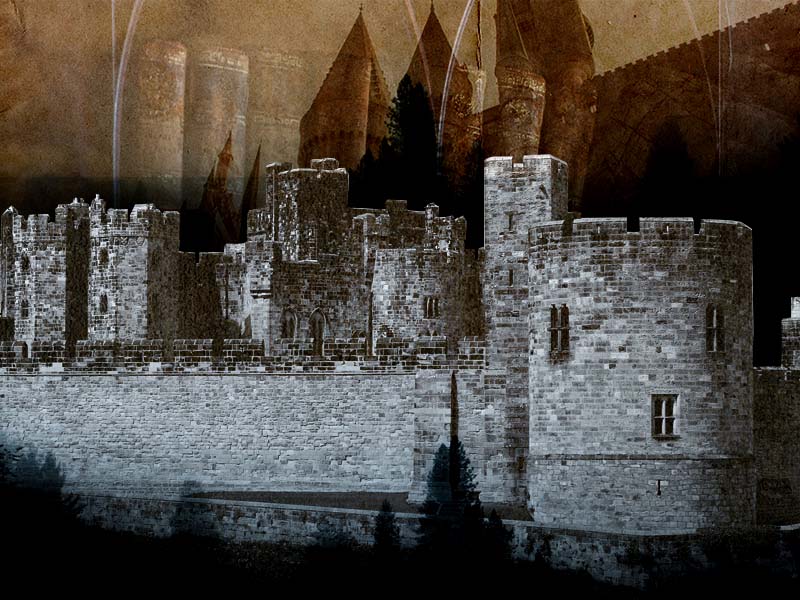
The fantasy book and film series Harry Potter is more than a mere work of fiction at this point, with the identity and philosophy of the universe J. K. Rowling’s creation having permeated throughout contemporary British culture. As well as featuring some of the most iconic names in British acting, including Timothy Spall, Maggie Smith, Imelda Staunton, Jim Broadbent and Kenneth Branagh, the movies take viewers on a journey to some of the most spectacular locations across the United Kingdom.
Unfortunately for eager fans of the Harry Potter universe, the spectacular Hogwarts castle depicted throughout each of the eight movies doesn’t exist in its entirety, with the school for promising witches and wizards being created by stitching together several different locations in the editing room.
For example, the enchanting Norman-era Durham Cathedral was used to form several parts of Hogwarts for the first two movies, The Philosopher’s Stone and The Chamber of Secrets, with the cathedral’s Chapter House doubling up as Professor McGonagall’s classroom in the films. Speaking of grand temples, the dramatic Gloucester Cathedral also hosted the film series on several occasions, most notably when Ginny writes, “The Chamber of Secrets has been opened” on the wall.
These locations were essential to the ultimate creation of Hogwarts Castle. Still, one location was used more than any other, whose exterior can be instantly recognisable from the iconic fantasy series. The second largest inhabited castle in the UK with a history that dates back to the 14th century, Northumberland’s famous Alnwick Castle was used throughout the Harry Potter series to capture the grand scale of Hogwarts.
Though it’s most famous for hosting Warner Bros and the production team behind Harry Potter, the location has also welcomed such shows and films as Downton Abbey, Robin Hood: Prince of Thieves and Transformers: The Last Knight, who have each taken advantage of the beauty of the location.
First transformed into Hogwarts castle in 2000 for the first film in the series, the production crew would return on several occasions to use the 14th-century site. Many parts of the castle were used for the movies, utilised in multiple ways. These included the Outer Bailey, which provided the backdrop for Harry, Ron and Hermione’s first broomstick lesson in The Philosopher’s Stone.
In the subsequent movie, the Inner Bailey of the castle was used when Harry and Ron crashed their flying car, and in addition, The Lion Arch acted as the entrance and exit to Hogwarts, leading to and from Hagrid’s Cabin beyond the walls. Indeed, if one were to take a walk around Alnwick Castle, it would not just be the aforementioned locations that would be recognisable. Rather, much of the spectacular site was used for simple transitional scenes where students and teachers walk to and from class.
Movie magic is a bitter pill for any film fan to swallow. Whilst Alnwick Castle was used on several occasions, in reality, Hogwarts consisted of several locations across the UK, from the most idiosyncratic abbeys to the most astonishing grand halls. But, if you’re looking to visit Hogwarts in real-life, Alnwick is your best bet.
