


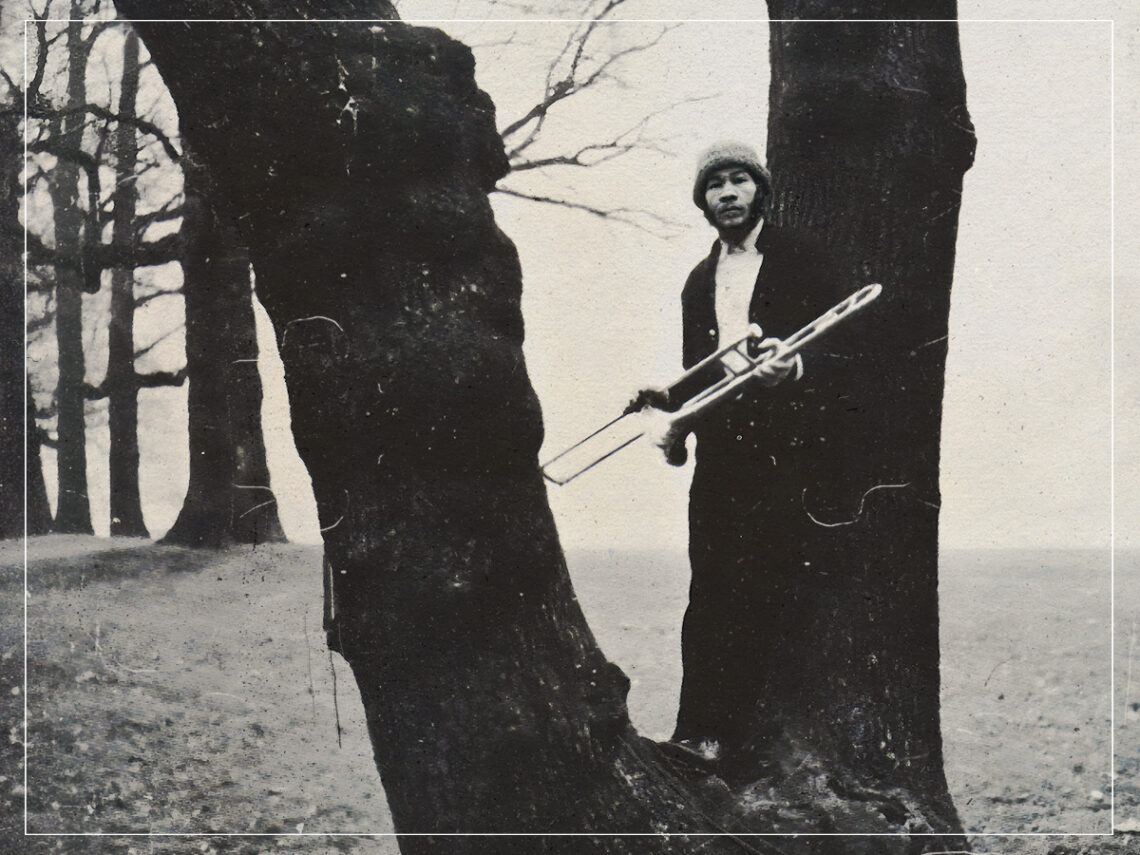
Rico Rodriguez: how a trombonist embodied the ska revolution

For such a small island, Jamaica has always been punching above its weight regarding its musical output. The Caribbean nation has produced an unbelievable amount of legendary artists, from Marcia Griffiths to Bob Marley, firmly putting the island on the global musical map. With such a broad range of artists, it can be easy for certain names to slip under the radar, but that is certainly not the case when it comes to the Cuban-Jamaican trombonist Rico Rodriguez, who was consistently at the forefront of the ska genre.
Born in Havana in 1934, before moving to Jamaica’s capital at a young age, Rico quickly proved himself to have musical bones. When the young Cuban first picked up a trombone while at school, his path in life changed indefinitely. From that point on, Rico would devote himself almost exclusively to mastering the art of brass. Establishing himself as one of the main progenitors of the ska genre, which spawned from a mixture of American R&B influences with a distinctly Jamaican rhythm, Rico became something of a legendary figure in Jamaica’s vibrant music scene.
Rico’s musical mastery kicked into overdrive during the 1960s when the trombonist relocated to London. Beginning to perform with groups in the capital’s blossoming reggae scene, which came as a result of increased emigration from the Caribbean to the UK, Rodriguez went from strength to strength. Capitalising on the popularity of reggae and ska in 1969, thanks in part to the rise of the skinhead subculture, Rico released the seminal works Blow Your Horn and Brixton Cat.
There was certainly no shortage of prominent ska artists in the UK in the late 1960s and early 1970s, as people like Dandy Livingstone travelled across the Atlantic to espouse the joys of Jamaica’s national sound. Where Rico differed, however, was his innate ability to adapt and move with the times. As the punk explosion of 1976 cooled down, many kids in England’s provincial towns rekindled a love for ska and reggae music, leading to the formation of the 2 Tone movement.
Hailing from Coventry, 2 Tone was born from a mixture of English punk rock and Jamaican ska. Groups like The Specials, The Selecter and The Beat completely reinvented the genre, using ska as a means for political activism and social commentary. The scene was always keen to pay tribute to their elders, with groups often performing covers of old-school ska tracks like The Pioneers’ ‘Longshot Kick De Bucket’ or The Skatalites’ ‘Guns of Navarone’. However, not even Jerry Dammers could have predicted the support the movement would get from ska progenitor Rico Rodriguez.
For mainstream audiences, in the UK at least, their first exposure to Rico’s signature tones would have likely been on ‘A Message to You Rudy’, a cover of Dandy Livingstone’s rocksteady classic. Rico added a sense of legitimacy to the raucous stylings of The Specials. It was almost as if the gods of ska music were passing the torch along to the next generation. He remained with The Specials throughout their initial run, becoming an unofficial eighth member of the Coventry group and providing them with some of their finest moments.
Following the breakup of The Specials after 1981’s ‘Ghost Town’, Rico returned to Jamaica, where he temporarily retired from performing. Of course, he could not stay away for long. Music ran through his veins, and he soon began performing with the likes of Jazz Jamaica and the Heart Beat Band, in addition to working with the truly iconic dub poet Linton Kwesi Johnson. He remained active up until his death in 2015 at the age of 80, leaving behind an incredible legacy that very few musicians will ever achieve.
