


“She is blameless of her malady”: ‘Nosferatu’ as an allegory for sexual assault

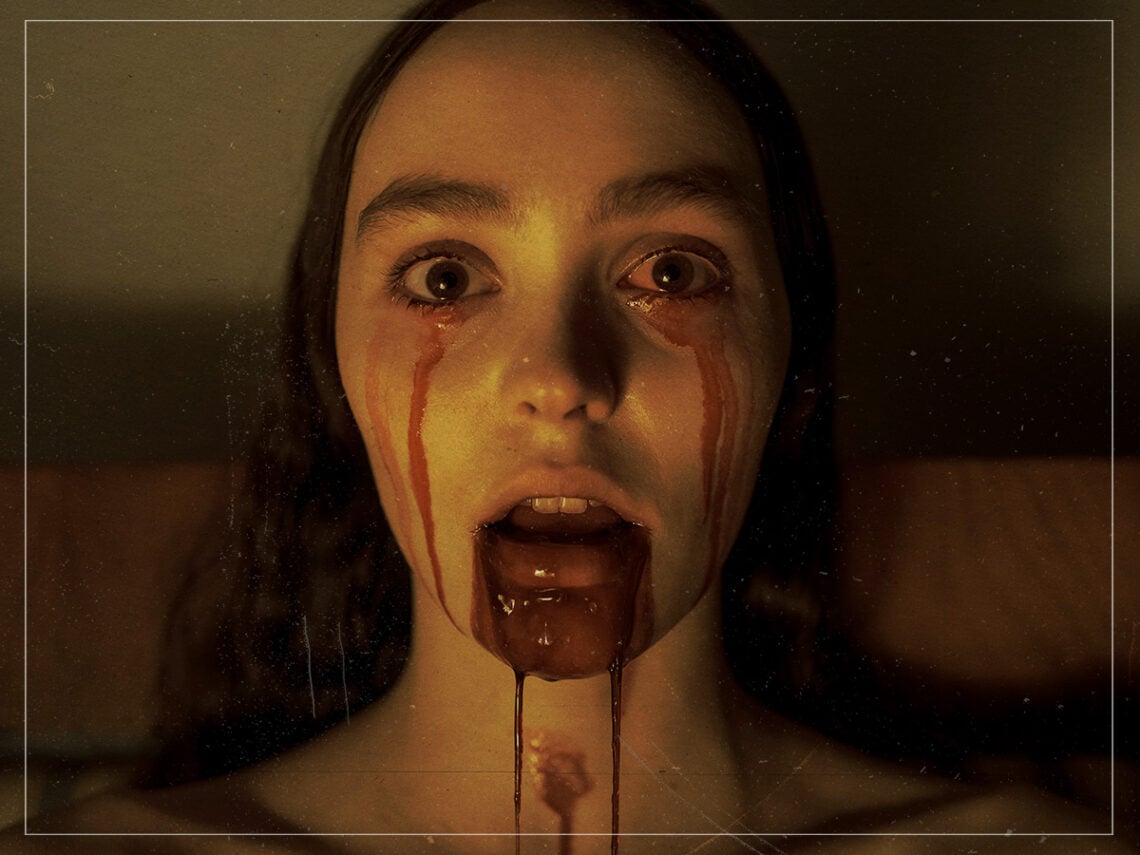
In the opening scene of Robert Eggers’ Nosferatu, Ellen Hutter, then just a young girl, calls out into the void. Lonely and sad, she asks for “a guardian angel, a spirit of comfort”. The voice that answers draws her outside, where she’s heard lying on the grass, gasping and groaning. Suddenly, a clawed hand is around her. In the first flash of the horrifying Nosferatu, he’s straddling the young girl, attacking her, as her body spasms and seizures under his affect.
The discomfort of this opening scene is obvious. “I was but an innocent child,” Ellen herself later says of this moment. She is a vulnerable young girl with no clue who or what she’s making a covenant with, instantly having her naive trust turn to violation. Any level of pleasure she may momentarily seem to get when she first lays down on the grass is instantly turned to pain as Nosferatu’s grip on her both literally and spiritually tightens, becoming intense and terrifying immediately.
With no context of Ellen before this moment, beyond the understanding that she’s young and lonely, this moment defines her entire characterisation. It’s a moment that she never recovers from, spending the rest of the story haunted and tortured by the awful connection tying her to this beast that is forged in this moment. From the second his hand appears on her neck, she is never free from his grip – much like how victims of assault often feel like they will never be free from their attacker or will forever be haunted by the shadow of what happened.
“Support group for girls who cried at Nosferatu,” one Letterboxd review reads. For a gothic horror and a remake of a remake connected to the original 1922 rip-off of Dracula, the story at hand here feels like it should be familiar. Typically, Nosferatu and Dracula are told as a twisted love story. In the eyes of the villain, Elen is his true love, his counterpart. The vampirical beast is supposed to depict Ellen’s dark desires, and the darkness within her is supposed to be a sign that she is meant to be with him or cannot part from his force.
This is definitely the predominant reading of Eggers’ take, too. “I am an appetite. Nothing more,” Count Orlok growls at Ellen as the pair are reunited. It can be read that Orlok is saying that he is nothing more than a realisation of the darkness that already exists within Ellen, that she hungers for something evil, and that he is her fix. Orlok tries to blame Ellen for all of this, continuing, “O’er centuries, a loathsome beast I lay within the darkest pit ‘til you did wake me, enchantress, and stirred me from my grave,” declaring, “You are my affliction.”

But in the emotion of the scene and the way Eggers takes the character of Ellen from a mere love interest and grows her character into the film’s true centre point, there’s a different perspective to explore here. “I am an appetite” could be less about Ellen and more about Orlok. The vampire is nothing more than an appetite, with only one desire: to kill and feast. While the story is often viewed as a love story, the beast has no capacity for love and can offer Ellen absolutely nothing in the form of affection, kindness, or any sort of life.
He is pure darkness, and the object of his fixation doesn’t want it. “I care nothing of your afflictions,” she defiantly replies, saying, “I abhor you.” From start to finish, it is clear that Ellen wants her husband, being utterly devotional to Thomas and desperate to protect their life and love. But, just as assault can linger long in the psyche and how trauma can utterly reshape a person, Orlok lingers, keeping a hold on her.
What feels key here is the nuance in the connection between Ellen and Orlok. It would be easy to try to shrug off this reading by simply pointing out that Ellen seems drawn to him, too. In this emotive confrontation scene, she’s pulled in close to him, described as being lustful but then disgusted by herself. But the very nature of trauma is that it is a complex thing. After being attacked by Orlok when she was just a girl, his violence and darkness seemed to shape her concept of love and sex.
It’s in the moments when her husband is away that memories of Orlok take a tighter grip on her as if her fear that she is losing her love makes her revisit the dark and horrific first experiences she had. When he returns, she then tries to push him away, screaming, “We should never have married! We are already dead!” as she believes the effect Orlok has had on her has doomed her chance at any happiness. She weeps devastatingly, “Keep away from me – I am unclean”, as one of the lines that feels most impactful in his tale of a young woman trying to live a life of happiness and love but feeling plagued by trauma as Orlok and his impact will not let her go.
Throughout her various breakdowns and the times she lashes out or even seems to lust for Orlok, Ellen is a perfect example of complex PTSD. While cinema is so used to depictions of sexual assault victims being meek and sad, that’s too simple. The impact of sexual assault, or any trauma, is messier. It can make a person angry, sad, hypersexual, guarded, scared, scary. It can make a person want to run into the arms of the person who attacked them because maybe it feels darkly comforting, or maybe they feel that’s all they deserve, like Ellen, who has become utterly convinced that she is cursed or unclean, eventually surrendering herself as she blames herself for the plague set upon her friends and city.
But as Eggars points out, by starting the film with Ellen’s attack and by dedicating so much screen time to her in varied states of distress as well as resolve, strength and kindness, she is more than Orlok’s “affliction” or a doomed love interest hungering for darkness; she’s a person complexly impacted by his violence. Or, as her friend so beautifully puts it, “She is blameless of her malady,” as a Victorian way of saying she stands with Ellen as the victim of Orlok’s assault.
