


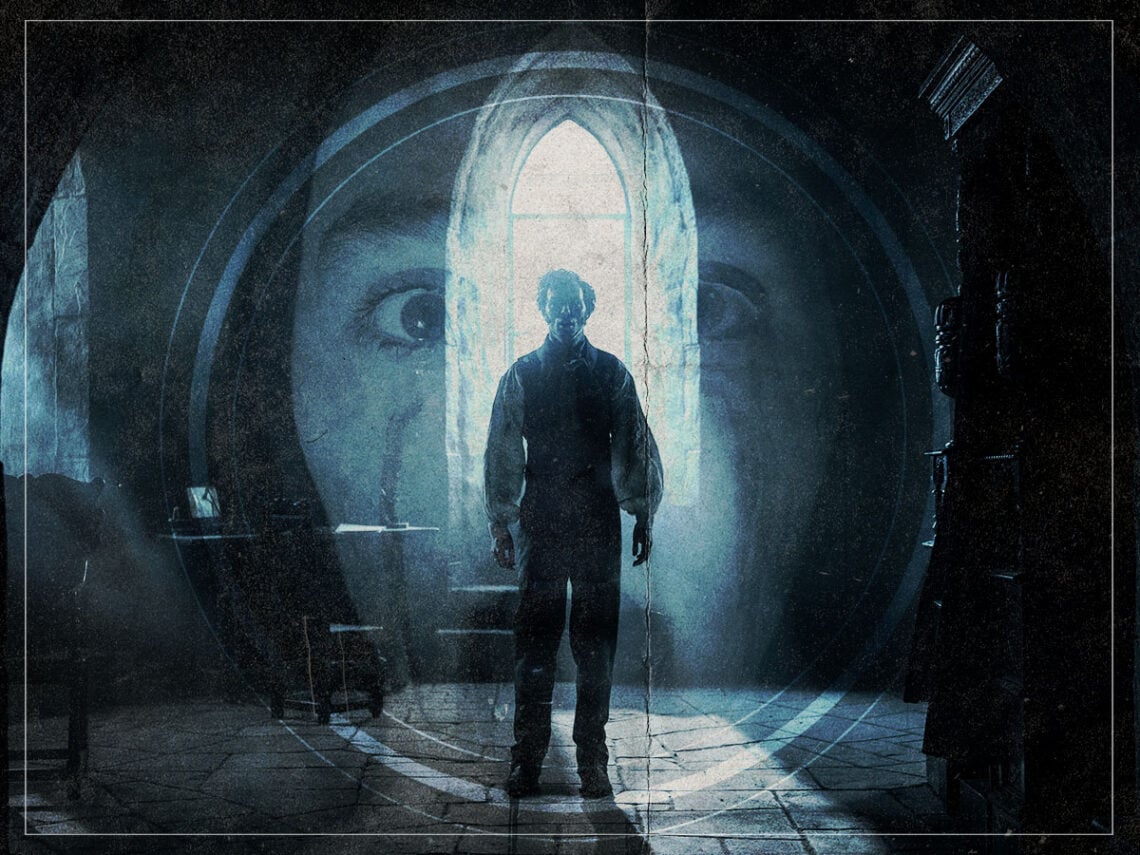
‘Nosferatu’ movie review: moustaches, the occult, and Willem Dafoe’s massive pipe

Don’t believe the marketing. Robert Eggers’ take on FW Murnau’s silent classic does not go hard. It is more gorgeous than grotesque, more lyrical than toe-curling, and more romantic than carnal. Rather than merely taking Murnau’s classic and turning up the violence and eroticism, Eggers takes a few careful plot deviations, adds some suggestive whimpering, and lingers over the meticulous period detail. The result is gorgeous to look at and surprisingly moving, but if you’re hoping for a pulse-quickening cacophony of horrors, you may end up cold.
Following in the footsteps of the 1922 film, the movie is set in early 19th-century Germany. Lily-Rose Depp plays Ellen Hutter, a young woman happily married to Nicholas Hoult’s Thomas, a real estate agent sent to Transylvania to meet with the mysterious Count Orlok to settle his purchase of an abandoned manor. Ellen has suffered from somnambulism and a mysterious psychic connection to a shadowy demon since childhood, but her seizures and melancholia have subsided since meeting Thomas. When he leaves her in the care of his friend, the wealthy shipping magnate Friedrich Harding (Aaron Taylor-Johnson), her symptoms return with a vengeance, and Harding calls upon the aid of a doctor with ties to the occult (Willem Dafoe).
Anyone with a passing knowledge of Bram Stoker’s novel or its countless film adaptations will know what follows. Orlok turns out to be the mythical vampire Nosferatu, Thomas is bitten, and the Count descends upon their German city to reclaim Ellen with an army of plagued rats.
The main addition that Eggers has made is the occult angle, which deepens the mysterious connection between Nosferatu and Ellen. In this version of the story, she possesses a mystical power that ties her to a spiritual realm. “In heathen times, you might have been a great priestess of Isis,” Dafoe’s character tells her. But in early 19th-century Germany, she is nothing more than a melancholic hysteric, a troublesome lunatic who must be bled, tied down, and forced into a corset to “calm her womb.”
Depp puts her whole body into the role. She trained in the Japanese art of Butoh to achieve the contortions necessary to portray a woman possessed and obsessed by Death, and has cited Isabelle Adjani’s harrowing performance in Possession as inspiration. (Adjani also played a version of Ellen in Werner Herzog’s 1979 adaptation, Nosferatu the Vampyre).
By placing Ellen front and centre as a woman who sets the plot in motion and determines its fate, Eggers takes previous iterations of the story (Stoker’s novel notwithstanding) to its logical conclusion. Ellen is both aroused by the vampire and tortured by him, hopelessly in love with her husband and unsatisfied by him. Her sexual appetite is made clear throughout the film, from her first gasping sighs upon meeting the vampire to begging Thomas to stay in bed rather than leave for work. Rather than shaming her for desiring two men, the movie casts her torment as a tragedy – the physical manifestation of a woman trapped between two worlds. Nowhere is this clearer than in Robin Carolan’s score. During the climax of the film, in which Ellen makes a fateful decision, the music slowly transforms from quietly ominous to sweepingly, hauntingly romantic.
The marketing and press tour surrounding the release of Nosferatu has focused on Depp’s physical performance, the splattery horror, and the steamy demon sex, but aside from the first point, this is misleading. There is no off-the-rails gore like The Substance or kinky carnality like Babygirl. And if we’re comparing it to previous adaptations of the story, it comes nowhere close to the operatic horniness of Francis Ford Coppola’s Dracula. It is not a film that you need to “buckle up” for. You’d be better off making a cup of tea and grabbing a comfy blanket.
It also lacks the surrealism and cryptic strangeness of Eggers’ The Lighthouse, and there is none of the mind-numbing excesses of The Northman. Instead, it is sweepingly romantic, a dark, sensuous fairytale full of homages to the painterly shadows of Murnau and individual frames brimming with lustre and detail so atmospheric that you’ll want to swim around in them.
For those hoping for excess and strangeness, you’ll have to settle for the moustaches, the sideburns, and the foot-long pipe that Dafoe smokes with utmost glee. As the vampire, Bill Skarsgård is unrecognisable and often shot in shadows so dark as to be nearly invisible. In one key scene, however, his bristly pornstache is on full display and may well seal the deal for you on the entire venture. Regardless of your previous experiences with Eggers’s work or Dracula lore, it is better to go into this movie without expectations. It is the director’s most delicate work to date and contributes something new to the Nosferatu story. It excels on both counts.
