


How the final car chase in ‘Nightcrawler’ makes the audience the villain

It’s the middle of the night, and a police car is chasing a black SUV down Laurel Boulevard in Los Angeles. Behind them is a red sports car driven by Jake Gyllenhaal’s Lou Bloom, who is on the verge of the biggest success of his career.
Dan Gilroy’s Nightcrawler is a story about the American Dream, told through the eyes of a millennial sociopath in the fallout of the financial crisis. At the beginning of the film, Lou, like many members of his generation, is unemployed and hungry for work. Through financial necessity and malignant fascination, he becomes a stringer, a freelance videographer who travels to the scenes of violent injury and death to capture footage and sell it to TV news channels.
Shot on a vanishingly small budget of $8.5million, 2014’s Nightcrawler more than earned its keep at the box office, but it was only after it left cinemas that its profile began to rise to the prominence it deserves. Its dual portrayal of the post-recession employment crisis and the media’s gruesome appetite for graphic, fear-mongering urban violence falls somewhere in between horror and satire, but it’s the realism that really makes you squirm.
Most films that dole out gunshot wounds and cardiac arrests opt for garishly coloured fake blood and over-the-top action sequences that are as acrobatic as they are hollow. They may be excessively long and choreographed, but the violence is never in danger of feeling real. It almost always remains glossy and performative, allowing the audience to cheer for the protagonist without reckoning with the implications of so much brutality.
But in Nightcrawler, the violence almost always takes place just before the cameras arrive. We see the aftermath of car crashes, in which bloodied bodies lie tangled in the road, or home invasions, in which bodies lie slumped on sofas like piles of dirty laundry, but we almost never get the adrenaline rush of seeing the action that led to those eerily still moments. The colour palette is muted, like real life. The blood is dark, almost black, and the lifeless bodies wear the rumpled, lived-in clothes of a person who didn’t expect to die that day for the sake of a storyline.
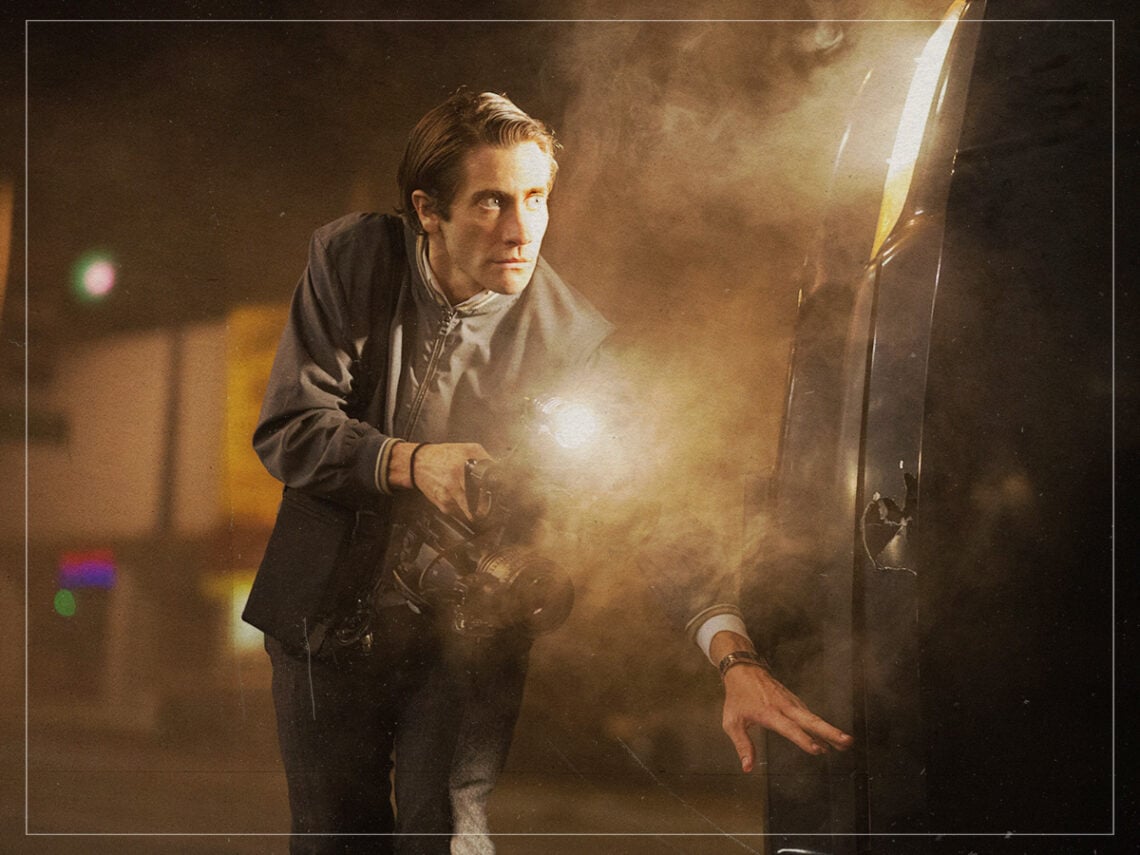
Lou surveys all these horrors with cool detachment, and almost always through his camera lens. He doesn’t hesitate to vault over police barricades or sneak through the open door of a family home that is now a crime scene just to get the shot. He isn’t a voyeur. He doesn’t seem to get a thrill out of the violent deaths of his subjects, but he has an eye for framing and storytelling that, when coupled with the nature of his work, turns him into a chillingly believable monster.
All of this comes even closer to home in that final car chase. Lou and his employee, Rick (Riz Ahmed), have been following two men who murdered three people in a palatial mansion a few days before. Lou avoided telling the police that he knew where the men lived in the hopes that he could follow them and film the spectacular standoff with the police and sell it for an unprecedented price. Following a shootout in a diner, only one of the men comes out alive, and he leads the authorities on a breakneck chase down Laurel Boulevard. Lou, having orchestrated this moment, jumps into the chase just behind the police car.
Shot in just a few nights, the chase is spare by necessity, but it is also one of the few scenes in the film with all the hallmarks of an action movie. Car chases are practically a requirement of the genre, and the moment one starts, the audience knows exactly what to expect. There will be screeching tyres, sparks flying as the bodywork scrapes the pavement, and there may even be a rollover crash. It’s the popcorn moment of most action movies, when all the buildup reaches its zenith, and the audience is served up a spectacular catharsis of thrills.
But in Nightcrawler, the preamble is very different. You haven’t seen Tom Cruise out-sprinting the goons of a criminal mastermind or Bond outfoxing a nuclear warlord in a torture chamber. All you’ve seen is the aftermath of violent death, a parade of anonymous bodies whose fatal injuries seem horribly, tragically random rather than cosmically ordained for the sake of the plot. Seeing a car chase under these circumstances leaves a sense of sickening foreboding, even as it checks all the boxes of the action genre.
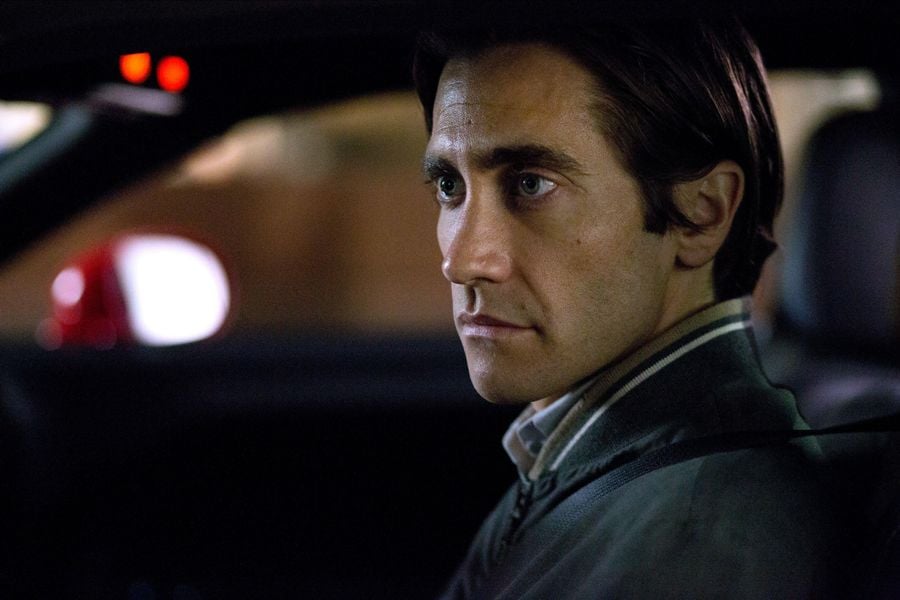
This is heightened by the fact that much of it is shot through the windshield of Lou’s car, placing the audience in the driver’s seat. You watch as the car speeds inches from the police car’s bumper and the SUV swerves into oncoming traffic before flipping and skidding to a crumpled, smoking stop. Underneath it all is the relentless back-and-forth between the 911 dispatcher and the police, a steady routine of professionalism that prevents the speed of the chase from taking off into pure spectacle.
Gilroy treated that background noise as a radio play, recruiting real dispatchers and police officers to narrate the action as they would in real life. It lends another level of sobriety and realism to a type of scene that is almost always accompanied by a pulse-pounding score and cheesy one-liners. Seeing the chase unfold from the point of view of Lou and Rick, with the graphic imagery of car crash victims fresh in your mind, it’s hard not to feel sick to your stomach rather than exhilarated.
Everything falls into place when you recognise why this car chase feels so different from every other one you’ve seen. It’s a sense of complicity that is so rarely imposed on audiences, especially in movies that feature so much violence. All of a sudden, you are left wondering about all the collateral damage that isn’t shown in movies, all of the violence masquerading as escapism and all the deaths that were dressed up to look heroic, comedic, or, worst of all, inevitable.
Nightcrawler, with its self-reflexive commentary on filmmaking, ultimately turns the camera around to the audience and asks, “Why are you watching?”
