


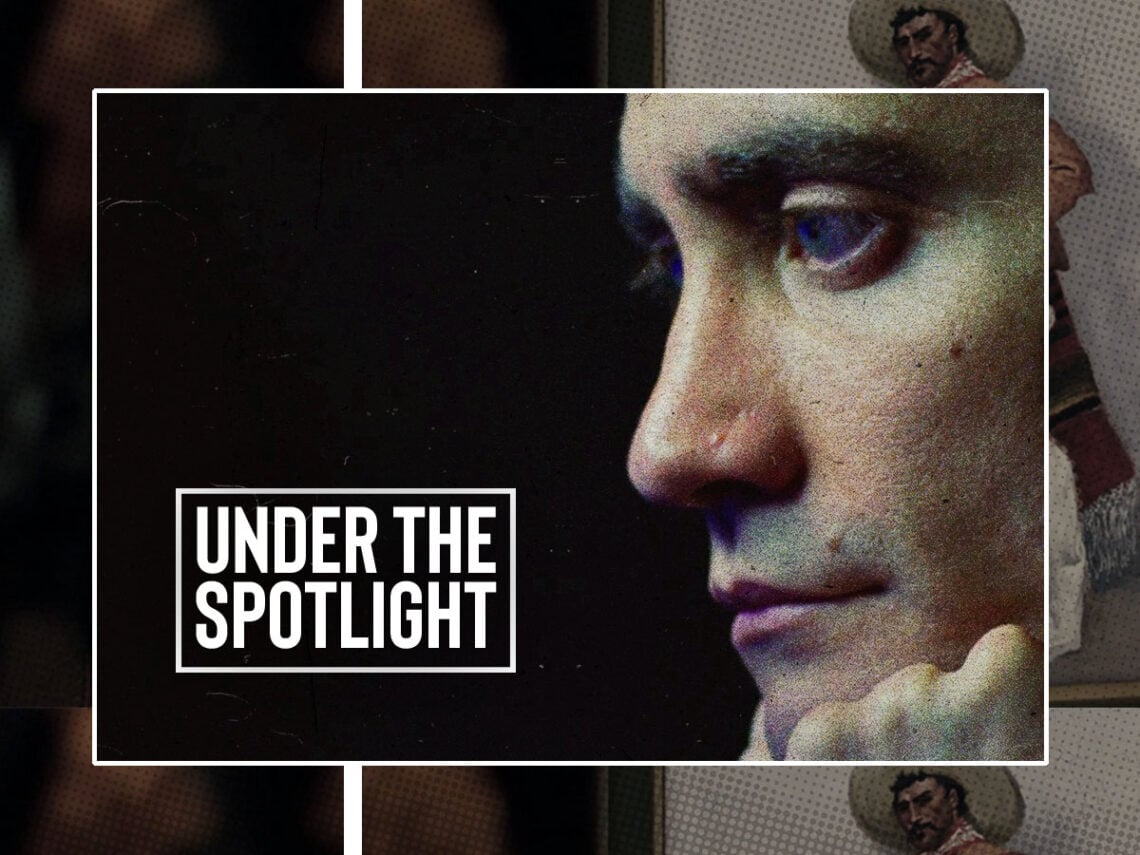
Under the Spotlight: Jake Gyllenhaal defines darkness in ‘Nightcrawler’

Jake Gyllenhaal probably couldn’t half-ass any role if he tried. Going through his filmography, Gyllenhaal was always devoted to whatever character he was playing onscreen, from the shy nerdy kid that was a bit of a handful in Donnie Darko to his major dramatic turns in films like Brokeback Mountain. Out of all the serious roles he has ever taken on, though, the art that went into creating Lou Bloom from Nightcrawler has got to be one of his most sinister.
Set in the lonely streets of downtown LA, most of Nightcrawler finds Bloom learning the trade of a freelance cameraman, often arriving on the crime scene and trying to get the most grizzly footage he can find to sell to news publications. As the movie pans out, the calm and collected demeanour that Bloom puts up is merely a front for something far more menacing, as he denies his morality and tries playing with the crime scene and trying his best to get a perfect shot.
When talking about the construction of his character, Gyllenhaal mentioned wanting to get his weight down to as low as it could be, telling GQ, “I had this vision of this guy, and the way that he talked in the script was so odd. I had the vision of myself saying, ‘There can’t be anything physically imposing about this guy’. It was all mind. He’s got one goal and one goal only, and I thought I needed to turn myself into that”.
Throughout the film, Gyllenhaal’s approach is on full display, with Bloom always focusing on the primary goal: getting a job at a news site by any means necessary. Even when talking to his colleagues about how to approach shots and gettingrejected left and right, Bloom always remains attentive, hanging on every word he might use to bring himself up the corporate ladder.
As the film plays out, some of Bloom’s tactics become much more questionable, including moving bodies during a crime scene to get exactly the right shot he’s looking for. Though Gyllenhaal admitted that what went on onscreen wasn’t moral by any stretch of the imagination, he noticed the romanticism of it as well, saying, “People talk about him like a creepy sociopath, and there’s truth to that. He was a bit of a prophetic symbol of capitalism and leadership. What he was shooting was perverse and sick, but at the same time, he looked at himself as an artist”.
Even when he sees one of his colleagues become a victim on the streets of LA, Gyllenhaal still plays a smooth version of Bloom, seeing this competitor as nothing more than a fallen pawn in his game to reach the top of the food chain. Although there are some moments when he starts to feel compassion, like his love affair with Rene Russo’s Nina, every outward emotion seems slightly off.
For instance, when talking to a security guard at the start of the film about why he got in trouble for trying to pick a lock at the beginning of the movie, Bloom doesn’t react with anger but with a cold snark to him. The performance might be lighthearted, but as far as the audience is concerned, Bloom is pocketing that information for later.
The need for Bloom, the artist, to paint his masterpiece goes too far when he hires Riz Ahmed’s Rick for his one-man production. Though Rick doubts what Bloom thinks is morally right to film, he too becomes the victim by the end when Bloom sends him into danger and lets Rick get shot.
Although Rick ends up feeling betrayed by Bloom in his dying breaths, the manner that Bloom speaks to him is the same cold and calculated tone that the audience has grown accustomed to, becoming even more terrifying as he explains why Rick had to die.
Bloom isn’t held responsible for his actions; the audience sees him with an entirely different news crew, each of whom will most likely adopt the same cutthroat work ethic. Although Bloom is a terrifying character, Gyllenhaal always considered it one of his favourite roles because of his perverse way of making art, remarking, “When he’s moving bodies, which is totally illegal, I don’t see how that’s any different from a Damien Hirst painting. That was my perspective”.
By taking himself completely out of the role, Gyllenhaal created one of the true masterminds of modern thrillers who doesn’t let any of his humanity get in the way of his central goal. As opposed to the human side of every film performance, Lou Bloom feels like a sadistic alien trying to figure out the sickest way to ascend the ladder in American culture.
