


‘Mr Nobody Against Putin’ movie review: a grim and disturbing documentary

This documentary manages to tell what could be a grim and disturbing story with humour and optimism. It presents a clear and compelling picture of life in an authoritarian regime through the simple details of daily life, from the perspective of the residents of a small town in the Ural Mountains.
To begin at the end, the movie was made available internationally because the original footage was smuggled out of Russia, along with the filmmaker, with the help of agencies outside Russia. That is how it came to be completed and released as a documentary, receiving multiple film festival awards, and becoming its host country Denmark’s submission to the Oscars (for which it is now a nominee) – all the more remarkable for being, essentially, an amateur production.
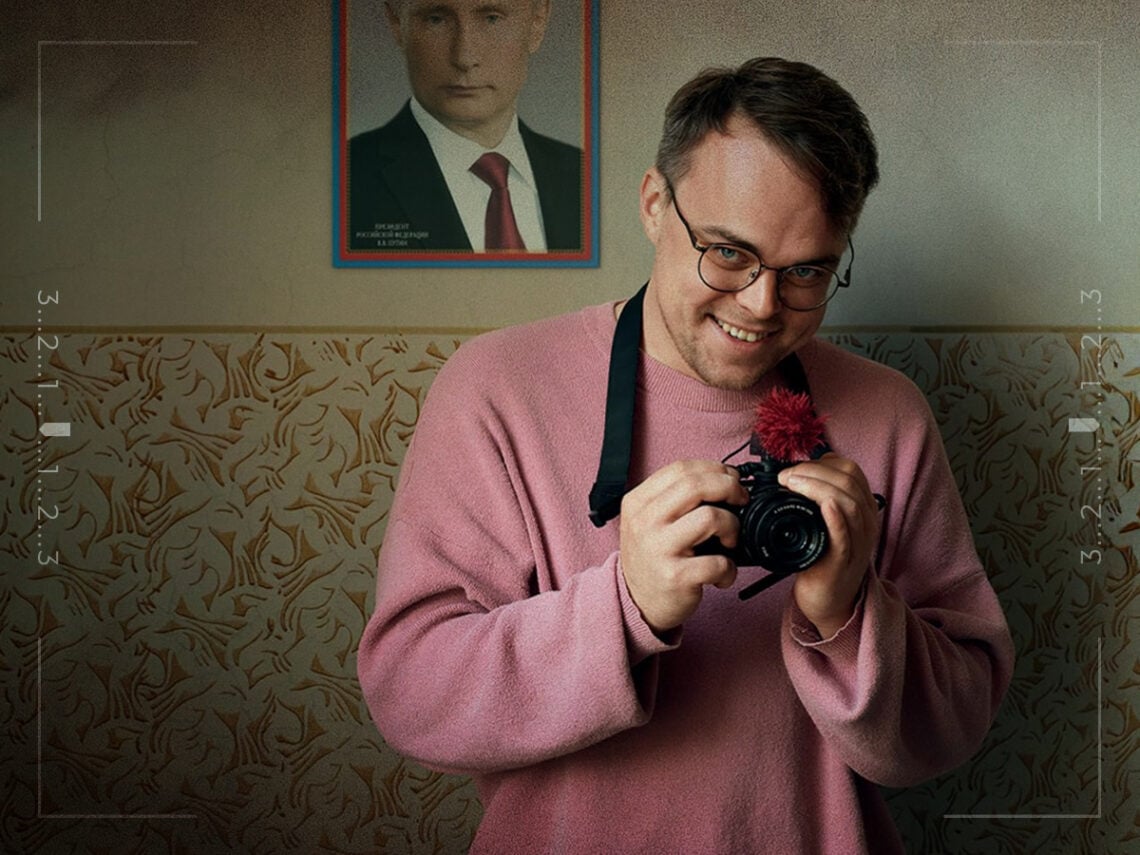
The titular ‘Mr Nobody’ is Pavel Talankin, a schoolteacher in the minor Russian town of Karabash. He was also the school’s audio-visual expert, and routinely took footage of the school’s activities and special events. He was seen as an amiable nerd, but was a well-liked and popular teacher and regarded as a benefit to the school by his colleagues.
Few of the residents were particularly interested in politics. Things changed when the school received a new, ‘patriotic’ curriculum from the Russian government, which included material such as an anti-Ukrainian statement to be read out to the students. Students were required to attend periodic pro-government lessons and group events, also outlined in the new material. These activities had to be recorded on video and sent to a government agency to prove the school was participating, a task Talankin reluctantly takes on.
The movie shows the state-approved instruction, but also, cinema-vérité-style, the informal class discussions which were not submitted to the government. Before beginning one mandatory session, Talankin tells the students frankly, “what your teacher is about to say, she was forced to say.” The children joke, asking their teacher, “blink twice if you were forced”; she blinks twice before reading the Kremilin’s statement.
The film continues to alternate Putin-sanctioned instruction with Talankin’s daily work, and his discussions of politics with his mother, a school librarian. Pro- and anti-war opinions circulate as the situation in Ukraine escalates. By capturing small moments and relevant bits of conversation, precisely edited, Talankin’s video gives a clear view of how both propaganda and the threat of war affect the students, some of whom may be going to war themselves.
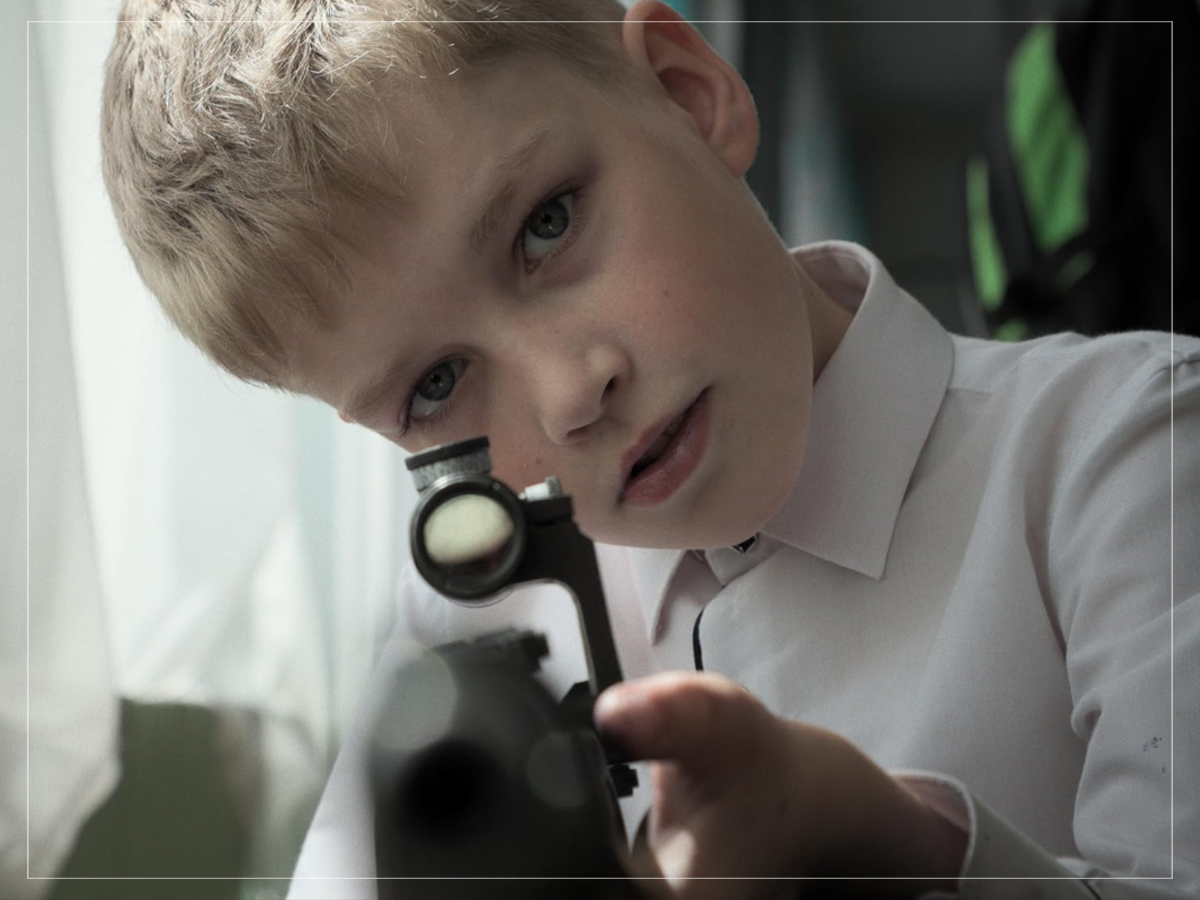
Footage of the school makes clear the tension involved in speaking out about government policy. The school’s history teacher is also known to be a representative of the ruling party and is presumed to be willing to report unacceptable statements. This teacher is secretly filmed giving regular talks to the students on the meaning of patriotism, the need to eliminate dissenting opinions so the nation is unified, and defending the newly revised Stalin regime. The film follows the reaction to a 2023 ‘treason’ law, which makes it illegal to criticise the army or the military activity in Ukraine. Commentary is provided on Putin’s newly developed pro-Russia movement, which Talankin compares to Soviet Pioneers clubs.
The film grows suspenseful as word spreads in town of the filmmaker’s quiet opposition to the war in Ukraine, and residents begin to take notice of his constant video recording. In a tiny but significant change, the school’s annual Favourite Teacher award, which had for years gone to Talankin, is rather suspiciously given to the teacher who is also a party member. At one point, as the sense of danger increases, Talankin is contacted by foreign media to film a report on the war’s effects on students.
This foreign contact is employed to guide him in escaping the country and finding refuge abroad, following a touching farewell to his mother (who was aware of the need to flee), and an onscreen tribute to his home town and his students. He is able to capture on film one last school event, the graduation ceremony, immediately before secretly crossing the border. All this is included in the carefully hidden and smuggled footage, including glimpses of his perilous journey west.
One thing that makes the film effective is the filmmaker’s ability to show rather than tell what is happening, the reasons behind it, and the effects on the people involved. Well-chosen visuals and careful editing bring out the details and conflicted feelings involved in dealing with an autocratic leader, and the tension between honesty and safety. The people, as affectionately portrayed by Talankin, are not representatives of a political viewpoint or victims of an autocracy, but full human beings, unsure of what to believe, and trying to live a good life while avoiding potentially dangerous attention.
It becomes easy to identify not only with those who disapprove or fear their government, but even with those who accept official propaganda and wholeheartedly support the regime. This modest documentary shows the human side of life under the Kremlin with unusual clarity.
