


‘Mother Mary’ movie review: a beautiful, bizarre pop art odyssey

Anne Hathaway gives one of the best performances of her career in a dizzying, unconventional musical about the different plane of reality occupied by ascendant pop stars.
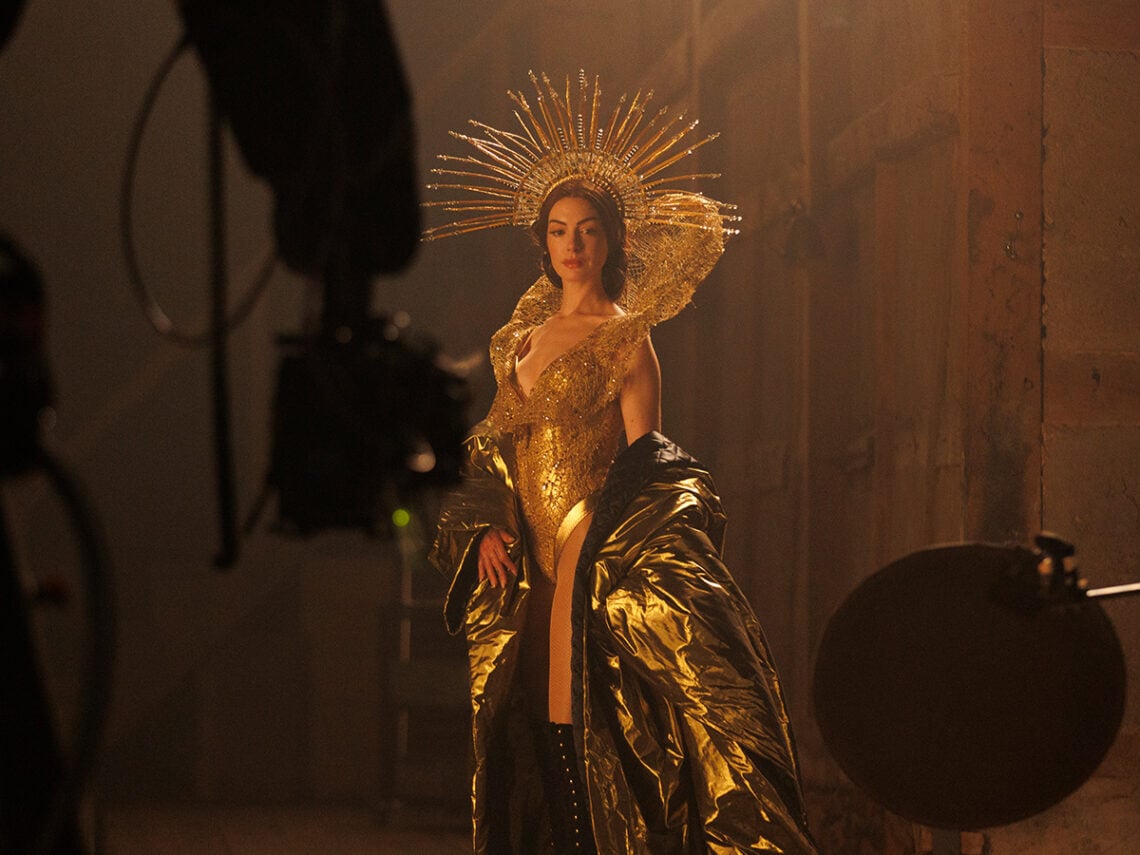
Mother Mary is not a film that can be explained with one skeleton key, nor is it one that reveals itself upon just one viewing. It’s in many ways a film that is intended to be disorienting, as it seeks to examine the unique and frequently bizarre perspective of a celebrity pop icon. These are artists so lionised by popular culture that they are almost deified, so it would make sense that the titular performer in Mother Mary shares her name with a religious figure. That the film feels so authentic in its exploration of the ego, ambition, and trepidation of someone in this unique position could only be a result of Hathaway’s striking performance, as she has no shortage of experience dealing with the paparazzi.
This is the latest film from director David Lowery, a filmmaker whose brilliance is only matched by his willingness to take risks. While he is responsible for the esoteric neo-western Ain’t Them Bodies Saints and the arthouse masterpiece A Ghost Story, he has also swung in more commercial directions with the Disney remake of Pete’s Dragon and the Robert Redford swan song The Old Man & The Gun.
Although he had also helmed the Disney+ exclusive Peter Pan & Wendy, Lowery’s last theatrical film, The Green Knight, was a rare case of a deeply metaphorical, ambiguous work of avant-garde art being packaged as a high fantasy adventure. Mother Mary operates on a similar level, with the seductive intrigue of unpacking the backstage activities of a world-renowned singer but taking the form of a psychosexual, atmospheric meditation.
Hathaway’s Mother Mary has the ability to attract a crowd comparable to that of Taylor Swift or Beyoncé, and the film’s original soundtrack includes songs from Charli XCX and Jack Antonoff. However, the gloriously rendered concert scenes are intermixed within a confined, claustrophobic narrative that examines the dynamic between Mary and Sam Anselm, a world-renowned costume designer played by Michaela Coel, where, while Sam has harboured resentment for being sidelined, Mary is desperate to connect with the one person who truly understands her.

Vulnerability is not something pop stars are incentivised to show, which has left Mary doomed to fear the ghosts (both literally and figuratively) from her past in silence. While reforging her connection with Sam is something she desires, both for the sake of personal desire and professional sustainability, they’ve reached a point in their respective lives in which they seemingly exist in different stratospheres.
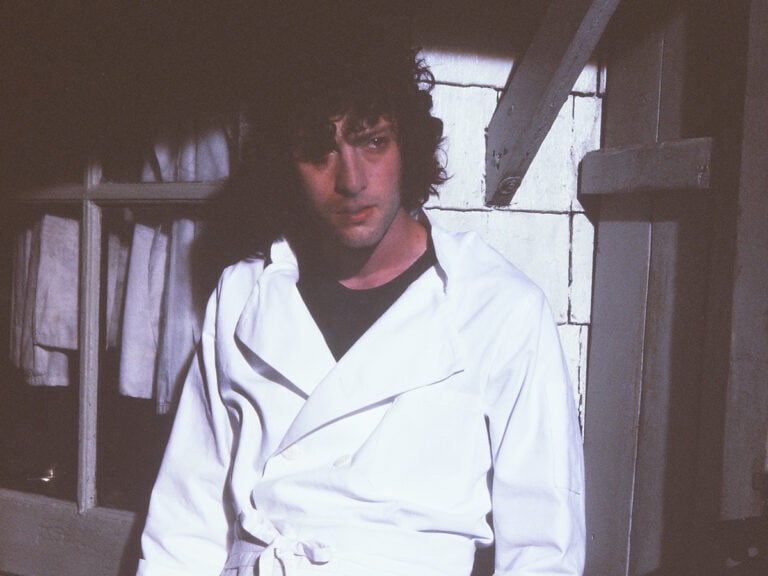
The conversations that emerge between them are bizarre and beguiling, as they are written with such literate prose that it’s understandable why both characters are so isolated, both geniuses in their own right, but they’ve been so dedicated to their respective fields that simply communicating their truths cannot be done in a casual way. The dialogue is as beautiful as it is fascinating to unpack, making for a film that requires its viewers to accept the inherent stylisation, and even when it’s pitched at a high-functioning, epic series of declarations between characters of Shakespearean depth, the dialogues shared by Mary and Sam are still emotionally satisfying because of the brilliance of the two leads.
Given that Mother Mary is a reflective look at the burdens faced by an artist, it’s hard not to see the film as a personal statement on Lowery’s part, or at least an embodiment of the themes he’s spent his career addressing. Within the film are the spiritual undertones of The Green Knight, the tender intimacy of Ain’t Them Bodies Saints, the existential musings of A Ghost Story, and even the fairy tale-esque imagination of Pete’s Dragon.
Mary exists as a friend and potentially intimate partner to Sam, but she’s also held up as a messianic figure whose music has a significant impact on those graced by it. The tension results in both Mary and Sam trying to find a playing field in which they could be seen as equals; even when Mary bares her soul, her goal is to reach a place of self-actualisation that will escalate her work to the next level. Interestingly, this never feels entirely selfish because, in her deafening pleas to Sam, Mary has seemingly distanced herself from the pop princess she becomes onstage.
The supernatural and horror-skewed mythology that emerges as the film dives deep into Mary’s past puts a chilling cloak over the musical scenes, which are electrifying in a way that no true concert film could accomplish. Lowery’s brilliance is to show Hathaway at her most vulnerable and expressive, but hold Mary at a distance; by the end, it’s not entirely clear what form she has taken, even if Sam still demands a degree of agency. What’s most remarkable is that, in all of its thoughtful provocation, Mother Mary is still a visceral, exciting sequence that it is impossible to look away from. It’s rare that there’s a piece of filmmaking that feels completely distinct from its influences and genuinely takes the form of something unprecedented.
