


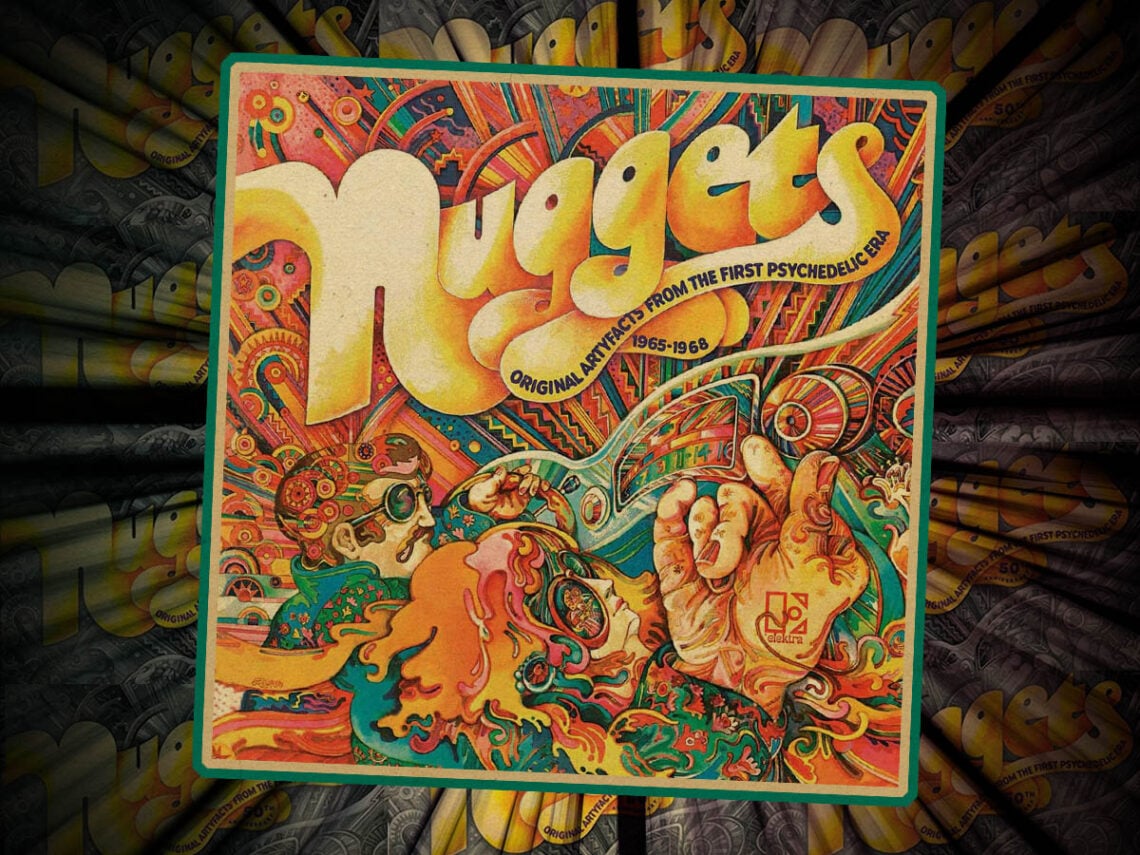
Curating obscurity: Lenny Kaye’s ‘Nuggets’ compilation remains a living, breathing monument to rock at its purest

On the cusp of 80, former Patti Smith Group guitarist Lenny Kaye has been out playing gigs with an assortment of different artists this spring, including a special ‘Evening With’ event at the Rock and Roll Hall of Fame.
Rather than playing tunes from Smith’s catalogue or one of his own projects, however, Kaye has been celebrating the legacy of one specific album, one that he didn’t originally play on himself, but that arguably represents his most important contribution to rock ‘n’ roll’s evolution over the past 50 years, which is the legendary Nuggets.
The influential psychedelic rock compilation that Kaye curated for Elektra Records features 27 previously obscure tracks from the mid 1960s, dusted off and re-released on two LPs in 1973. Kaye was 26 years old at the time and had yet to join forces with Patti Smith, but the opportunity to work on the project had come to him as a result of his day job as a music journalist, having worked for the likes of Creem and Rolling Stone.
Jac Holzman, Elektra’s president, felt that a lot of great, overlooked music from the explosive period of 1965 to 1968 was now at risk of being effectively lost to time, so he recruited the knowledgeable and well connected Kaye to make a list of forgotten bands and songs from those years that Elektra might be able to acquire the rights to and release as the first sort of historical deep dive into rock’s alternative fringes.
“There was a feeling in the critical wind that maybe things had gotten a little too musicianly [in the ‘70s],” Kaye told the Philadelphia Inquirer in 1998, when the 25th anniversary of Nuggets was released on CD, “We were missing a certain innocence, a certain lust for electricity; that loud sound coming out of your amp, that adenoidal sneer.”
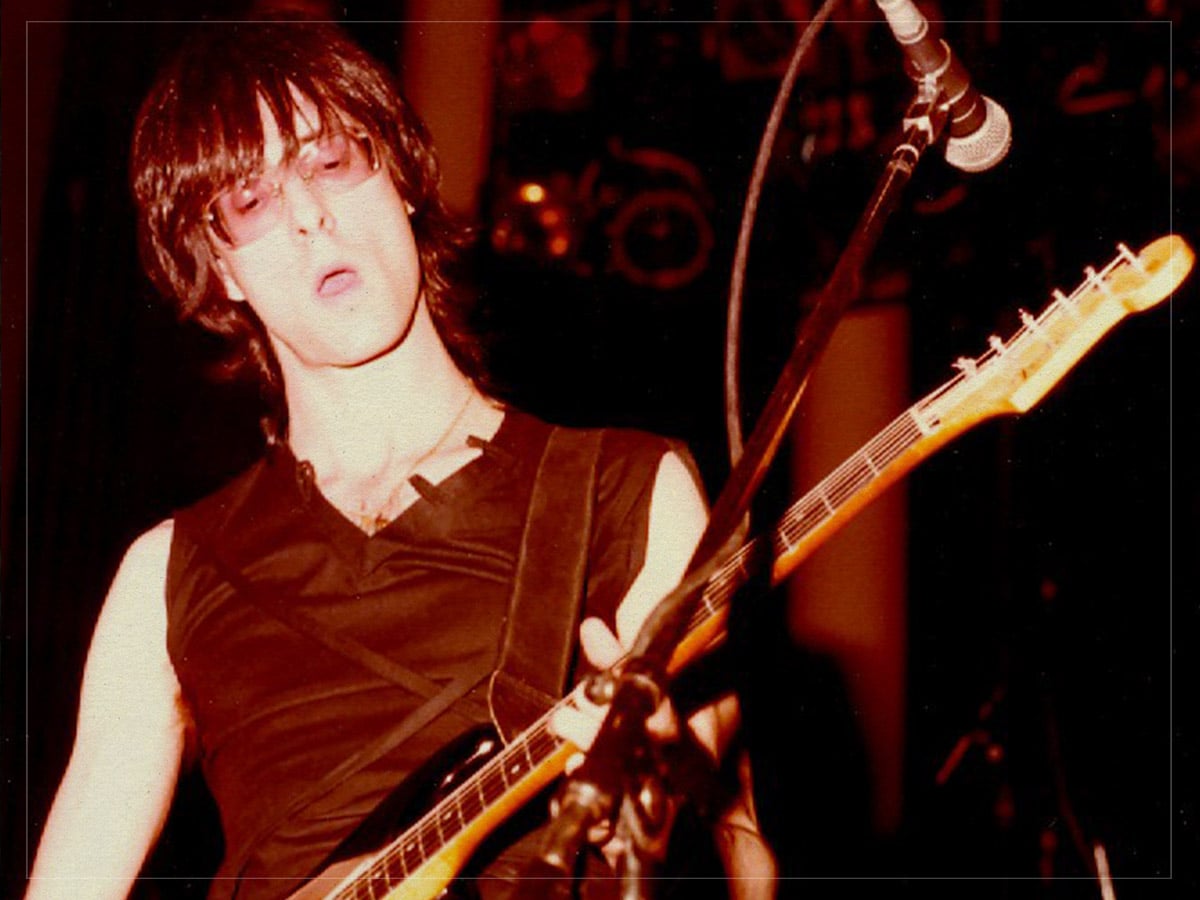
Despite rock ‘n’ roll’s long-held connections to rebellion, outcasts, and mavericks, the vast majority of people who listened to the music were primarily buying the records and seeing the gigs of groups who’d broken through into some version of mainstream acceptance. These bands had major recording contracts, managers, PR teams, and what generally amounted to a badge of pop legitimacy. By the early 1970s, most of this market was flooded with either increasingly elaborate and showy prog-rock bands or refined and soul-searching singer-songwriters. The rough-and-tumble sound of amateur rock ‘n’ roll, the sort of three-chord music Lenny Kaye had played with his own college band at Rutgers University in the mid-‘60s, had fallen out of style.
Nuggets, which was released under the full title Nuggets: Original Artyfacts From The First Psychedelic Era (1965-1968), was a labour of love for Kaye. When he sat down to write the liner notes, he had no idea if the record would ever be properly released, and he certainly didn’t think it would become a big seller or influence any new music in the immediate future. Instead, he referred to the proto-mixtape as an “archaeological dig” in which the goal was to unearth a specific type of “young, decidedly unprofessional” band from his generation, the kind that you would have been more likely to find “at home practising for a teen dance than going out on national tour”.

Famously, Kaye used a very specific term in the liner notes to describe these regional groups and their music, calling it “punk rock”, and noting that the term hit the mark because, if nothing else, “they exemplified the berserk pleasure that comes with being on-stage” and “the relentless middle-finger drive and determination offered only by rock and roll at its finest.”
This was several years before the emergence of the Ramones or the Sex Pistols, and while leather jackets, safety pins, and mohawks would eventually have their moment as emblematic elements of the punk aesthetic, those fashion fads have ultimately proven themselves secondary to the more primal and primary ethos Kaye was describing, much of which boiled down to playing rock music for your own pleasure, rather than to please a specific audience or a record company. The term ‘garage rock’ would come along later, and became more associated with the Nuggets legacy over the next few decades, but you could just as easily say that Nuggets was the first punk or indie compilation, awakening countless rock fans to the notion that ‘unpopular’ music could be just as good as popular music, and maybe even better in some surprising ways.
The original album, which has spawned numerous spin-offs and expansions, didn’t actually make household names out of any of the bands it featured, but that was an important part of its charm. Bands like The Electric Prunes, The Shadows of Knight, The Seeds, The Count Five, and The Chocolate Watch Band didn’t have massive back catalogues to catch up on; they were forgotten ambassadors of a certain moment in time, and after the idealism and energy of the ‘60s had given way to the cynicism of Watergate and the death of the hippie dream, people were eager to hear fresh voices from those earlier days, wailing out from their garages again.

It’s not a new argument to say that Nuggets helped popularise the concept of punk rock in the early ‘70s, and that it likely influenced the new rise of the more recognisable punk scene by the middle of the decade. The collection was equally important, however, for inspiring a whole generation to go in search of music outside what they heard on the radio or saw on the Billboard chart.
Rock’s ‘diamonds in the rough’ and crate digging subcultures grew exponentially after Nuggets’ release, as listeners discovered the joy of their own archaeological missions, not to mention the perverse pleasure of knowing about a great band that seemingly no one else had heard of. In this way, it helped set the tone for the indie rock culture of the 1980s and the hipster gatekeeping of the 2000s, for better or worse.
It’s a massive and complex legacy for a fun project that Lenny Kaye spent a few weeks on more than half a lifetime ago. Suffice it to say, he never expected he’d still be talking about it 50 years later, let alone playing shows in which he performs some of the selected tunes himself. When you’re putting together a cool playlist of hidden gems for your friends, even the best mixtape artists among us don’t anticipate becoming the living embodiment of those tracks. As Kaye has said, if he’d known how important his song selections were going to be back in 1973,
“I would have screwed that record up. I would have made it too serious”.
In 2024, when he was touring a version of the Nuggets tribute concert with members of The Cars, Mission of Burma, Belly, and Buffalo Tom, Kaye told the Boston Globe that he tried his best “not to have any responsibility for these things other than showing up and accepting the plaudits of a grateful universe… It’s meant to be joyous. I don’t want it to be a job”.
The message was no different at Kaye’s recent shows in Cleveland, at the Rock Hall and the Beachland Ballroom, where he was backed by members of some of the Ohio post-punk bands that had taken inspiration from Nuggets in the ‘70s, including The Waitresses and Tin Huey.
“Thank you for coming to celebrate a magical moment in musical history,” Kaye told the crowd in Cleveland, “As I always do with these kinds of shows, I’d like to dedicate this to Jac Holzman, president of Elektra Records… He wanted an album of these rogue, under-the-radar, strange manifestations of musical madness…
“A lot of people talk about Nuggets now, but to me, it’s not about the songs, although they’re great songs. It’s about that moment when you pick up a guitar, and you understand who you’d like to become. It’s a great instrument for expressing who the heck you want to be, and all you need are those three big chords.”
