


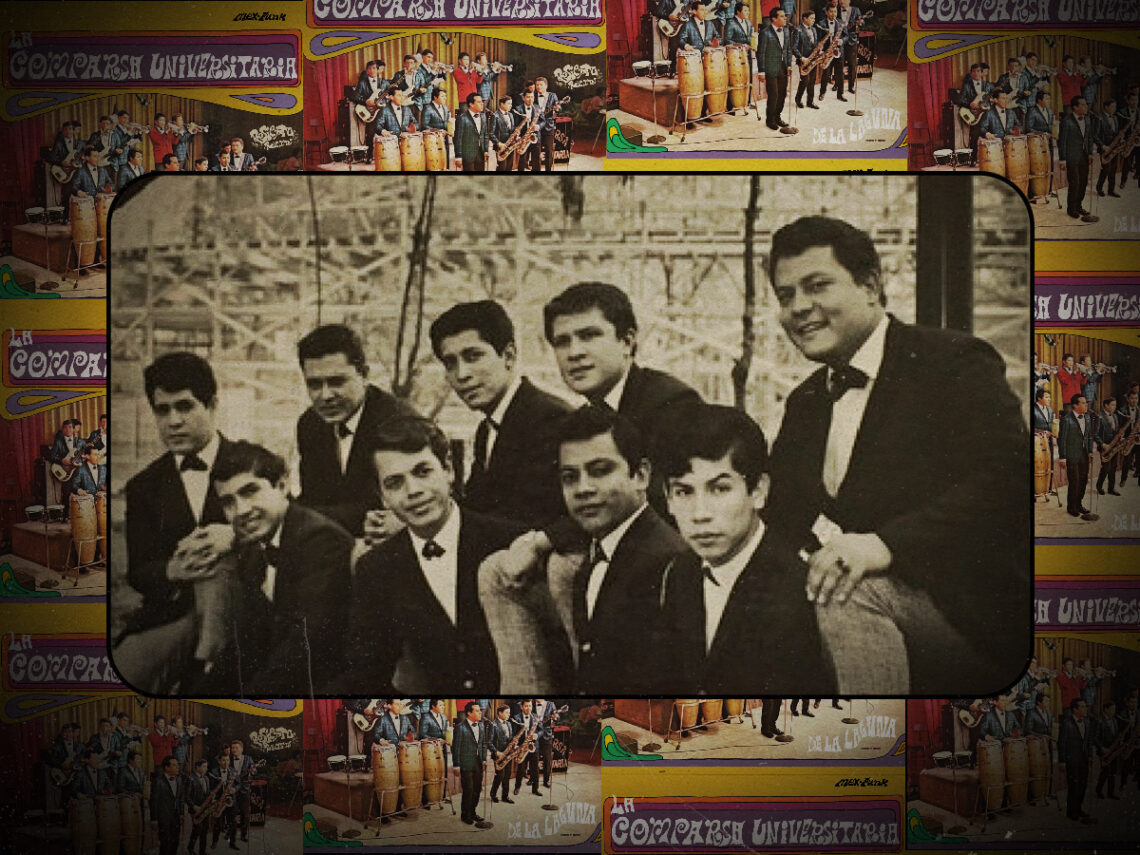
La Comparsa Universitaria de la Laguna: The pioneering band who brought funk to 1960s Mexico

Funk might have emerged into the bright lights of the musical mainstream thanks to the sweat-soaked stylings of James Brown, but those infectious rhythms were never solely limited to the United States.
Soon enough, musical messengers had spread funk goodness to all corners of the globe and down in Mexico, it was La Comparsa Universitaria de la Laguna flying the flag.
Like many tales of funk excellence, the story of La Comparsa Universitaria de la Laguna begins back in the 1950s, during a time when the whole world was being shaken awake by the emerging rebellion of rock and roll. With its roots in the American South, rock wasted no time in infecting the youth culture of the entire globe, and along its travels, the sound of the scene was morphed, adapted, and incorporated into the traditional sounds of localised music scenes.
In Mexico, for instance, rock’s influence began to be felt in the traditional sounds of conjunto, and the age-old Latin rhythms emanating from the South, much to the elation of the nation’s youth. During the late 1950s, a group of four young lads from migrant families in the industrial landscape of Comarca Lagunera, an area dominated by the mining industry, sought to follow that blossoming Mexican rock scene, forming their own group, Los Babys Rocks.
Although that fledgling teenage rock outfit didn’t manage to break into the global rock mainstream, it did at least bring its members to the musical beacon of Mexico City, where an executive by the name of Ignacio Obeso convinced them to adopt a more orchestral approach to their output. By 1965, La Comparsa Universitaria de la Laguna were in full swing, having amassed quite the following in their nation’s capital, as well as releasing the aptly named debut album La Trompeta Mágica (Magic Trumpet).

That introductory album saw the band blend the traditional conjunto sounds of Mexico with their own adoration for rock and roll, surf, and R&B, culminating in a genre-bending sound which set them apart, not just from their competition in Mexico, but from the entire musical landscape. As they went on, the outfit seemed to lean further into their R&B influences, eventually landing upon a sound which would later become known as Mex-funk.
As that tag would imply, the band’s many Mex-funk masterpieces introduced the infectious and seemingly endless energy of James Brown with the age-old rhythms of their Mexican heritage, as well as the enduring sounds of cumbia and Latin jazz. In fact, it would not be overly egregious to claim that the group single-handedly introduced the streets of Mexico City to the age of funk; either way, there’s a lot to thank La Comparsa Universitaria de la Laguna for.
Unlike countless other genre experimenters, blending their local roots with whatever the prevailing sound of the pop charts is, who tend to disappear after one or two revelatory records, La Comparsa Universitaria de la Laguna have never really gone anywhere. Since 1964, they have been exploring a countless array of different styles and genre conventions, approaching each with an equal amount of infectious energy, and their relevance still pertains to this very day.
Less than a month ago, for instance, Mexico’s Desierto Records issued a masterful slice of seven-inch goodness, featuring the band’s 1971 take on Rufus Thomas’ Stax Classic ‘(Do The) Push and Pull’, backed with their equally funky original ‘Tequila y Chile’. Although both of those songs were taken from decades ago, they have certainly retained their cutting edge.
There are countless bands now attempting to emulate their expansive blend of Mexican rhythms with funk, rock, boogaloo, surf, and everything in between, but nobody has yet eclipsed them in terms of originality, endurance, or that unwavering spirit of funk which is common throughout every one of their releases – of which there are many. For as long as people still listen to La Comparsa Universitaria de la Laguna, the Mexican funk scene will never truly die.
