


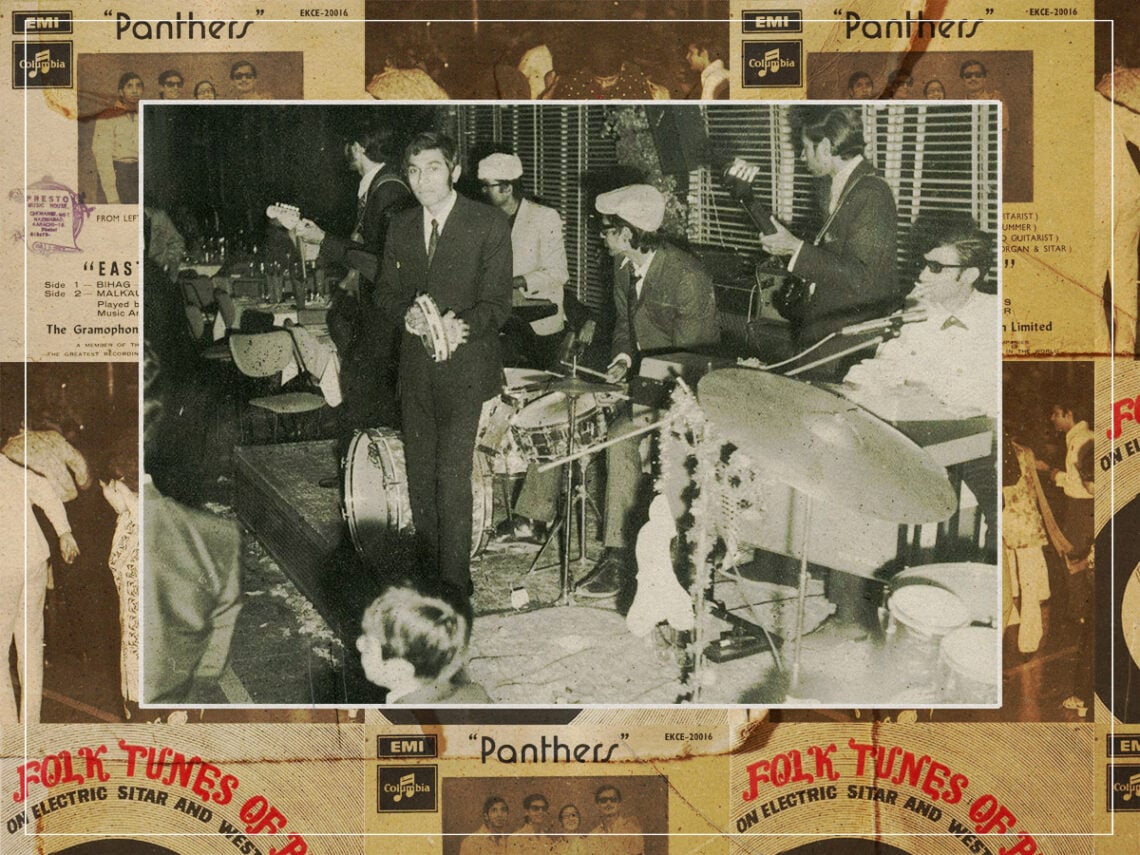
The Panthers: when surf rock came to Pakistan

For most people, upon hearing the distinctive sounds of 1960s surf rock, you probably envisage the golden beaches of California and VW vans with surfboards poking out the back. Very few people would associate surf rock with the South Asian nation of Pakistan, and yet the country had a blossoming rock ‘n’ roll scene in the 1960s and 1970s. Inspired by the sounds of Western rock, countless young bands formed in Pakistan, combining these vibrant new sounds with traditional South Asian folk music techniques. The resulting music put the likes of The Beach Boys or Dick Dale to shame.
There are many bands from that era within Pakistani popular culture that are worth revisiting, as the advent of Western rock ‘n’ roll brought something of a cultural renaissance to the country. In terms of surf rock, though, few Pakistani bands stand up to the incredible innovation of The Panthers. Formed by drummer Ahsan Sajjad and guitarist Norman Braganza in 1967, as the summer of love was in full swing over in America, the group introduced the youth of Karachi to the world of surf rock.
Reportedly, Sajjad had been inspired to pursue music during his youth, transfixed by British Invasion bands like The Rolling Stones and The Beatles. When they finally came together in 1967, though, he had amassed much wider musical influences, culminating in a sound that is both familiar and distinctive. You can hear clear elements of Western rock within the sound of The Panthers, but the added voice of Fasahat Hussein on sitar brings a distinctly South Asian sound to proceedings.
Tragically, The Panthers did not record a great deal of material during their tenure. Their first widespread release came in 1969 with the EMI-released seven-inch, ‘East Goes West’. The title alone is a good summation of the band’s sound: traditional Eastern music tendencies enmeshed in rock ‘n’ roll sensibilities arising from the West. The record utilises instruments that are local to the capital city of Karachi, as well as the improvisational style of raga, which is commonly used within Indian and Pakistani classical music. However, these traditional sounds were dragged kicking and screaming into the 20th century with rock and roll tempo and unforgettable basslines.
Unsurprisingly, there were not many rock and roll venues in mid-century Pakistan, so The Panthers were usually restricted to performing in hotel ballrooms and outdoor lounges. Despite often performing at the Midway Hotel, near the airport in Karachi, Sajjad’s band never really made it outside of Pakistan.
According to a 2009 interview, the outfit split up after Sajjad left Pakistan in the early 1970s to travel to the USA. Especially considering how few songs they managed to record, it is a crying shame that the group broke up so quickly. However, when you look at the steep downturn Pakistani pop and rock took in the late 1970s, it was probably for the best.
After Muhammad Zia-ul-Haq rose to power in 1978, harsh restrictions were placed on the distribution and proliferation of Western music. So, if The Panthers had stayed together in Pakistan, they would likely have had a pretty tough time playing Western-influenced rock and roll.
Regardless of The Panthers’ short tenure or the fact that they only released a handful of songs, their music remains as innovative and infectious today as it was back in the 1960s. Even today, there are still very few groups comparable to The Panthers. The unique combination of Pakistani raga and sitar music with Western surf and rockabilly is an unexpected masterstroke, the likes of which haven’t been seen since somebody thought to combine gin with tonic.
