


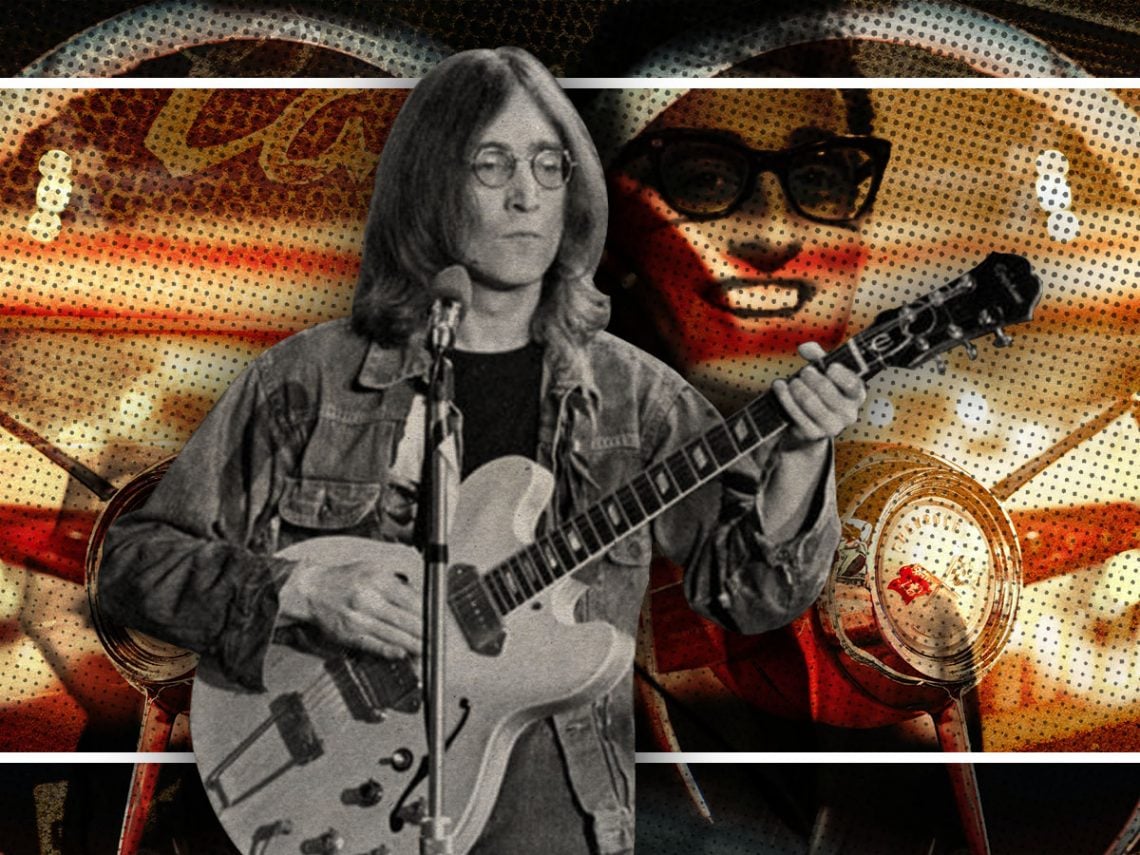
Did ‘The Day the Music Died’ lead to the British Invasion?

Music has endured its fair share of dark days, yet one of the most culturally significant remains February 3rd, 1959, more commonly known as ‘The Day the Music Died’. Whilst the tragedy was catastrophic for its era, it was immortalised in pop culture lore when Don McLean brought it to life in his 1971 hit, ‘American Pie’.
So what happened on that fateful day? At the time, former Crickets member Buddy Holly, the hottest new star in rock ‘n’ roll, had embarked on the ‘Winter Dance Party’ tour across the Midwest of America. His band consisted of Waylon Jennings, Tommy Allsup and Carl Brunch. Joining them on the run were rising acts Ritchie Valens, ‘The Big Bopper’ J.P. Richardson and vocal group Dion and the Belmonts.
Notably, the long journeys were taken on less than adequate tour buses that were sickeningly cold, with cases of flu and frostbite occurring on the regular. Compounding the pressure on the musicians from the extreme temperature and conditions, the run was scheduled to hit 24 Midwestern cities in the same number of days, with no days off.
On February 2nd, the tour stopped at Clear Lake, Iowa. Frustrated by the horrendous conditions on the buses, Holly elected to charter a plane to reach the next destination in Moorhead, Minnesota. Richardson, who was stricken with the flu, swapped places with Jennings, so went on the plane, while Allsup lost his seat to Valens as part of a coin toss. However, soon after takeoff late at night, the poor weather conditions led to the pilot, Roger Peterson, losing control of the Beechcraft Bonanza light aircraft, which crashed into a cornfield, killing all four on board.
An absolute tragedy for the families of those killed, music and Western culture itself, ‘The Day the Music Died’ remains a significant point in history. Whilst it was a mythical subject before McLean stoked the fire again with ‘American Pie’ mostly due to the death of Buddy Holly, there is an interesting argument attached to that day that many often overlook: it opened the gates for the British Invasion.
Even if you disagree, it remains a fascinating point. Although only a few British acts had succeeded in the US before 1964, the gates were open after The Beatles broke out in 1963 and appeared on Ed Sullivan in February 1964. A raft of British acts would take America by storm, including The Rolling Stones, The Yardbirds, The Hollies, The Kinks, The Dave Clark Five, The Zombies, The Animals, and, as people often forget, the eminent Dusty Springfield.
Some commentators have contended that the US consumers of this music, primarily teenagers, were growing tired of singles-oriented pop acts like Fabian and the four ‘Bobby’s’: Bobby Darin, Bobby Vinton, Bobby Rydell and Bobby Vee. Furthermore, the widely impactful aesthetic of Britain’s two youth gangs of the era – the Mods and the Rockers – helped in this emerging change. However, it is arguable that the deaths of Holly, Valens and Richardson had a tremendous impact on opening up the doors for the British Invasion, given that there was room for a new breed of artists as the times were changing.
Following this, the biggest act on the planet, ‘The King of Rock and Roll’ himself, Elvis Presley, was nowhere to be seen between 1958 and 1960, as he served his time in the US Army. Broadly speaking, this allowed culture to move on from his swaggering rock and roll days, as when The King returned, he was not the same for several reasons, including newfound addictions to barbiturates and stimulants and his mother’s death. Accordingly, a new batch of acts emerged. Armed with the lessons they had learnt from their childhood heroes such as Presley and Holly, they were ready to take to the world stage and change culture in doing so.
