


The Joni Mitchell songs inspired by her former lover, Leonard Cohen

Some relationships in music history, especially those of the rambunctious 1960s, are far too complex to be confined to biography alone.
These connections endure in interviews, photographs, dinner party hearsay and, perhaps most evocatively, in the music itself. Amid the flings and frolics that bubbled to the surface in songwriting during the late 20th-century countercultural shakedown, few could claim to be as acutely prolific as that between Joni Mitchell and Leonard Cohen, two of Canada’s finest poets to put pen to paper and finger to fret.
Cohen, firstly, set out with aspirations in literature, having successfully published several poetic works and two novels: The Favourite Game and the singular masterpiece, Beautiful Losers. By the time he abandoned these pursuits, setting sail from Hydra to New York to start a career in music, he was 32 years old. If the stellar contemporary Bob Dylan, more than seven years Cohen’s junior, had managed to evoke a timeless wisdom from age 21, Cohen drew upon his poetic experience and deeply spiritual background to debut with an instantly competitive product.
Within months of his move to the US, Cohen had become acquainted with some of the most distinguished figures of the Big Apple’s effervescent music scene, including Lou Reed and Judy Collins. The former famously complimented the singer on his then-underappreciated, avant-garde novel Beautiful Losers, instilling much-needed confidence for the steps ahead; the latter then recorded ‘Suzanne’, to great success, encouraging its author to embrace stage and studio himself.
When Mitchell first met Cohen at Newport Folk Festival 1967, she was already aware of his poetic command, owing to Collins’ version of ‘Suzanne’.

“Leonard did ‘Suzanne’, I’d met him and, I went, ‘I love that song. What a great song’,” Mitchell mused many years later, in an interview with Malka Maron for Joni Mitchell: In Her Own Words.
“‘Suzanne’ was one of the greatest songs I ever heard. So I was proud to meet an artist. He made me feel humble because I looked at that song and I went, ‘Woah, all my songs seem so naive by comparison’. It raised the standard of what I wanted to write.”
Artistic discourse, teeming with mutual admiration, rapidly transmuted into an intimate love affair. Lasting just a few rollercoaster months of romantic warmth and adulterous shade, this chapter forged a lifelong connection. Though the pair quickly realised they were better as friends, their romantic spell endured in the passion of songwriting. Mitchell found herself woven into the very first scene of Cohen’s tapestry of spiritual passion and sensual conflict. ‘Winter Lady’, appearing on his debut album, is said to have addressed Mitchell with melancholic affection; regret, perhaps, for their all-too-brief time spent hand in hand.
One could argue that Cohen in some way influenced every song Mitchell wrote after she had laid ears on ‘Suzanne’ and parted ways from such an artistically-charged affair. Nevertheless, listed below are the most Cohen-centric of the lot, some of which reflect on the man himself, while others attempt to channel his distinctive approach to music.
The five Joni Mitchell songs inspired by Leonard Cohen:
‘A Case of You’ – ‘Blue’ (1971)
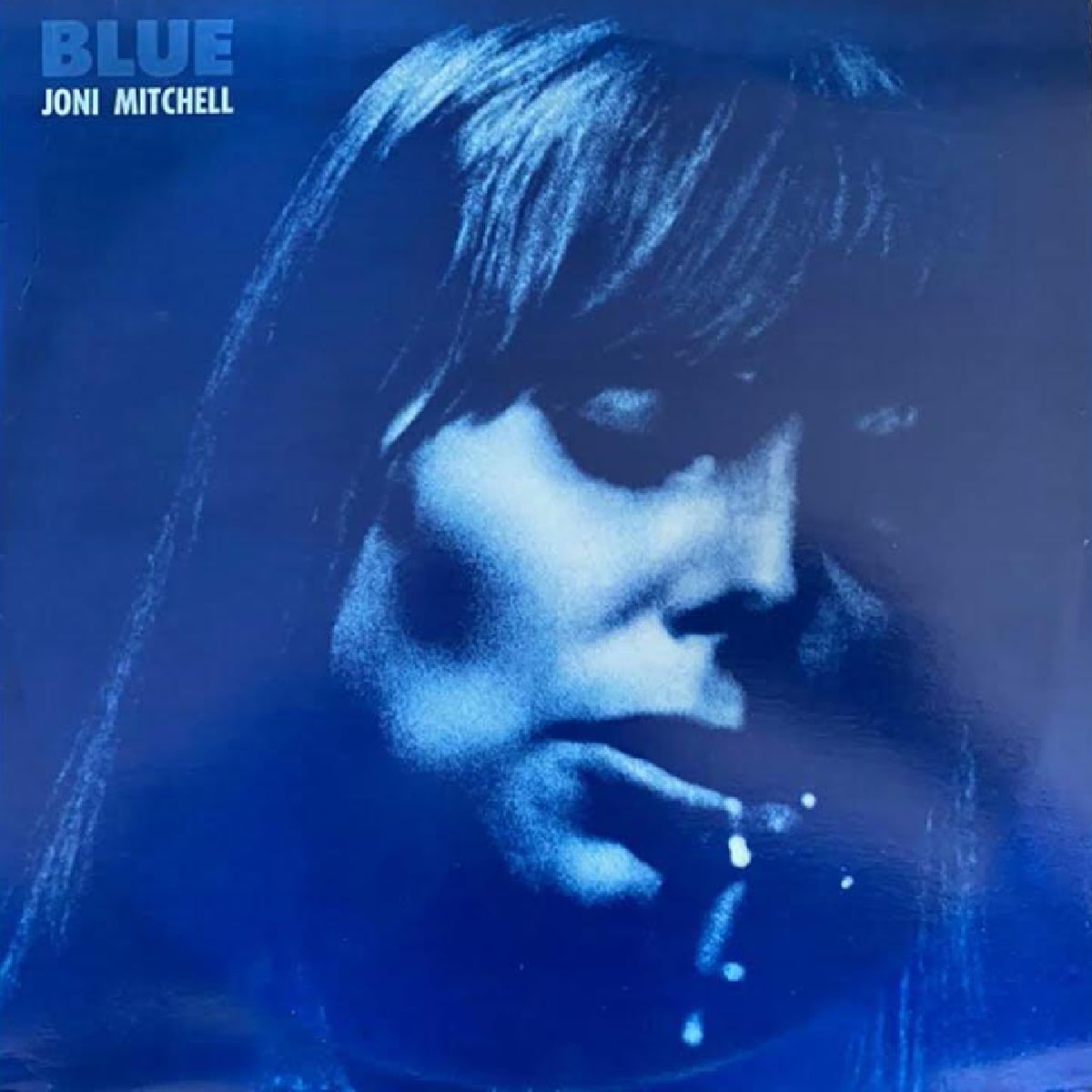
Mitchell has seemingly kept the cards close to her chest when discussing this twirling folk classic of 1971. However, it is generally thought to have been written in reflection on liaisons with Cohen, Graham Nash or a combination of the two in a more generalised flourish of romantic rumination.
Some erroneously cite James Taylor, the primary guitarist appearing on the original recording, as the song’s muse. Indeed, Mitchell could have written such lyrics about the ‘Fire and Rain’ singer, only the timing was off. This particular partnership hadn’t yet kindled in early 1970 when Mitchell put pen to paper.
Connections to Cohen are found in the lyric, “Just before our love got lost, you said / ‘I am as constant as a northern star’”. Mitchell told Marom in one of their many interviews that Cohen had been sore, accusing her of conversational plagiarism. “When I played ‘A Case of You’ for him, he said, ‘I’m glad I wrote that…’ Leonard got mad at me actually, because I put a line of his, a line that he said, in one of my songs. To me, that’s not plagiarism. You either steal from life or you steal from books. Life is fair game, but books are not. That’s my personal opinion. Don’t steal from somebody else’s art, that’s cheating. Steal from life, it’s up for grabs, right?”
‘Rainy Night House’ – ‘Ladies of the Canyon’ (1970)
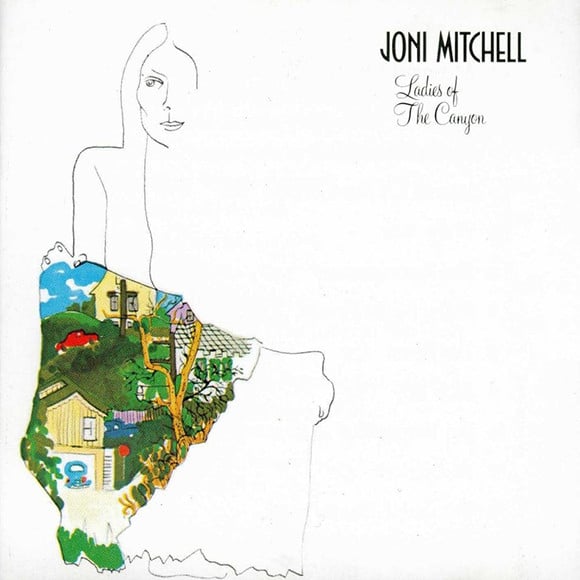
Perhaps the most tangibly connected to Cohen, ‘Rainy Night House’ first arrived on Mitchell’s ubiquitously acclaimed album Ladies of the Canyon. Recorded across the turning page of a new decade and gracing the shelves in April 1970, the album arrived long after the couple ended their love affair. All the same, what had been a brief romantic attachment endured as a strong friendship founded on mutual respect, both artistically and personally.
Accordingly, ‘Rainy Night House’ enters the ears as a nostalgic goodbye kiss rather than a slap across the jaw or a forlorn siren call into a fading moment of passion. Mitchell told Maron about Cohen’s influence on the song, recalling a poignant visit to the poet’s childhood home in Montreal: “I went one time to his home, and I fell asleep in his old room, and he sat up and watched me sleep. He sat up all the night, and he watched me to see who in the world I could be.”
“There’s some poetic liberty with those two lines,” she continued, “Actually, it’s ‘you sat up all night and watched me to see who in the world…’ I turned it around. Leonard was in a lot of pain. Hungry ghosts is what it’s called in Buddhism. I am even lower. Five steps down.”
‘Marcie’ – ‘Song to a Seagull’ (1968)
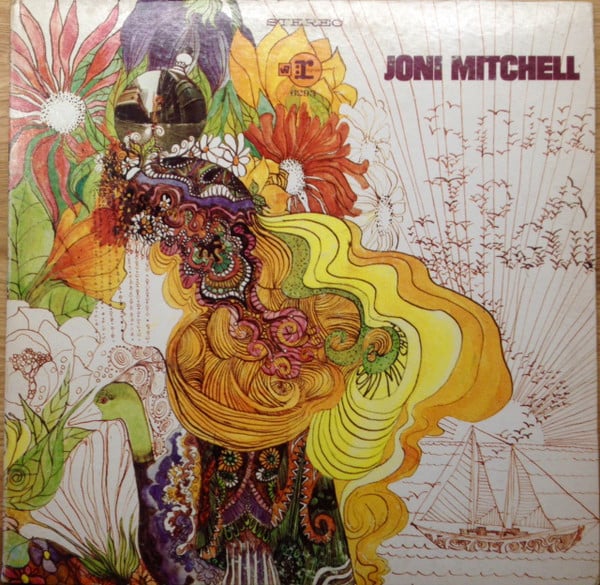
Elsewhere in her celestial back catalogue, Mitchell found inspiration in Cohen’s musical and lyrical style, a sturdy foundation before shared experience and personal connection took hold. She had been a folk musician long before she first met Cohen, though her scope began to broaden in the late 1960s, thanks to him as well as Bob Dylan, Joan Baez and her pals in CSNY.
While gathering original content for her debut album, Song to a Seagull, Mitchell became enamoured with her new muse’s debut, December 1967’s Songs of Leonard Cohen. Just how directly Cohen’s enchanting melodies and poetic lyricism guided Mitchell’s hand during that period is difficult to say, though, in retrospect, she admitted to her former lover’s rather profound and particular influence on ‘Marcie’.
Speaking to Dave Wilson of Broadside in 1970, Mitchell remembered Cohen’s early fan-favourite ‘Suzanne’, admitting, “I think I’m rather Cohen influenced. I wrote ‘Marcie’ and afterwards thought that it wouldn’t have happened if it hadn’t been for ‘Suzanne'”.
Musically, ‘Marcie’ unravels with a shimmering acoustic rhythm that is not dissimilar in tone to that of ‘Suzanne’, if a little more dynamic, precursory to the work of Nick Drake. Most notably, the song saw Mitchell challenge herself to vividly sketch out a character in verse, matching the sullen music to her poetic imagery. By all accounts, it was a success, an early milestone in her artistic voyage.
‘That Song About the Midway’ – ‘Clouds’ (1969)
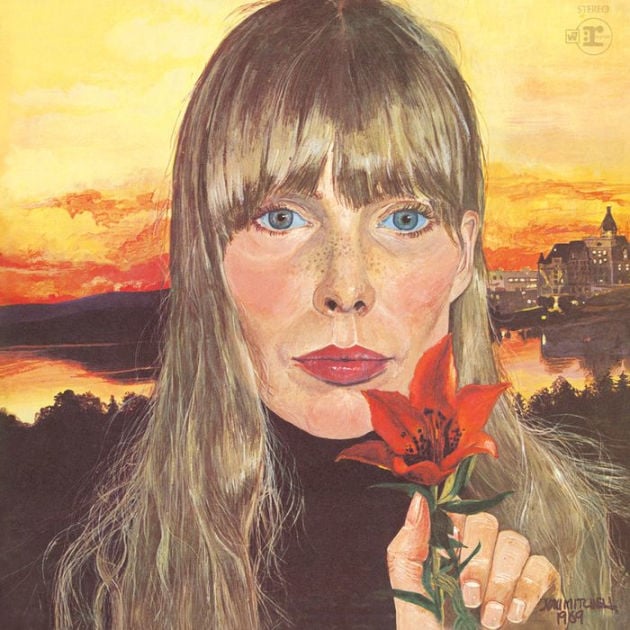
Like other entrants on this list, Mitchell likely wrote ‘That Song About the Midway’ with more than just one man in mind. Whether it was David Crosby, another of her former lovers, a close friend and the producer of Song to a Seagull, in the crosshairs at the song’s conception, is unclear, but what we do know is that she used the song to convey a message of closure to Crosby at a gathering. “It was a very ‘goodbye David’ song,” Crosby later remembered, “She sang it while looking right at me, like ‘Did you get it? I’m really mad at you’. And then she sang it again.”
Besides Crosby, this 1969 track is thought to reference Mitchell’s first encounter with Cohen, at the 1967 Newport Folk Festival: “I met you on a midway at a fair last year / And you stood out like a ruby in a Black man’s ear”. Of course, Newport was much more than a fair, and its “midway” would be more public than the backstage setting in which the pair of eyes first met. All the same, with the song first appearing in Mitchell’s repertoire in 1968, a year after the landmark festival, this interpretation is difficult to ignore.
A worshipper of women, Cohen was, for the most part, a respectful lover, but he was not immune to the throes of infidelity that haunted relationships in the 1960s artistic community. The ‘free love’ movement didn’t always end in eternal satisfaction, but more often in tears, as it would appear. Mitchell’s lyric, “You were betting on some lover/You were shaking up the dice/And I thought I saw you cheating once or twice,” could refer to both Cohen and Crosby, since both were unfaithful during their brief romantic spells with her.
‘The Gallery’ – Clouds (1969)
Ut dictum, Cohen’s passion for the fairer sex could, at times, be unbalanced by promiscuity. Relationships in the early bohemian scene were hallmarked by progressive fluidity and transience above respectfully frigid long-term commitment. With this in mind, one can better understand Mitchell’s response to Cohen’s infidelity and romantic affairs in ‘The Gallery’.
Introducing the song during the BBC’s In Concert series in 1970, Mitchell opined, “Artists are connoisseurs of beauty, and I always like to say that this is a song about a man who spent a lot of time riding around ‘connoisseuring’ all those beauties.”
The lyrics are frank, though not so much born in vitriol as in bittersweet reflection. Clearly, Mitchell is perplexed by his behaviour, but seems to accept it as an inevitable consequence of his artistic profile and studious worship of womankind. At the end of the third verse, she also alludes to his neurally spiritual side, “They’ve monitored your brain, you say / And changed you with religion”.
