



“I would probably quit”: Joe Strummer’s dark days after the demise of The Clash

In the summer of 1999, after wandering in the proverbial rock ‘n’ roll desert for a decade, former Clash frontman Joe Strummer found himself on stage with a new band, The Mescaleros, playing a festival gig in Cologne, Germany. Unfortunately, his triumphant return did not receive a hero’s welcome.
The crowd at the Bizarre Festival were kids in their teens and 20s, many of whom were there to see third or fourth wave punk bands like The Offspring, The Living End, and Lit, none of whom would exist without the path carved out by The Clash 20 years earlier. Rather than recognising Strummer as the granddad of their favourite bands, though, the German youth rained down boos and sarcastic jeers on the old man, or “alter mann”, at the mic; Strummer was only 47.
In a noble gesture, Offspring singer Dexter Holland and a few of his comrades marched out to the stage in between songs to reprimand the crowd and set the record straight. Strummer later acknowledged that it was “very cool” of them to have Mescaleros’ backs, but at the same time, he held no animosity toward the disrespectful audience.
“They’re young, and they don’t know nothing,” Strummer told The Age, “They haven’t figured anything out yet”.
Strummer might have had a very different response to the Cologne reception earlier in his career, but as part of growing older and wiser, some of his more aggro, ego-based punk instincts were now mercifully dulled, replaced with a much healthier perspective on failure and an appreciation for the full palette of the artist’s experience.
The temptation to reform The Clash had bubbled up numerous times since the band’s 1985 demise, and Strummer was on friendly enough terms with his old songwriting partner, Mick Jones, to seriously consider offers to do so. In the end, though, he’d found much greater rewards and personal joy by essentially starting his career over from scratch with The Mescaleros, rather than trying to recreate a moment that had already passed.
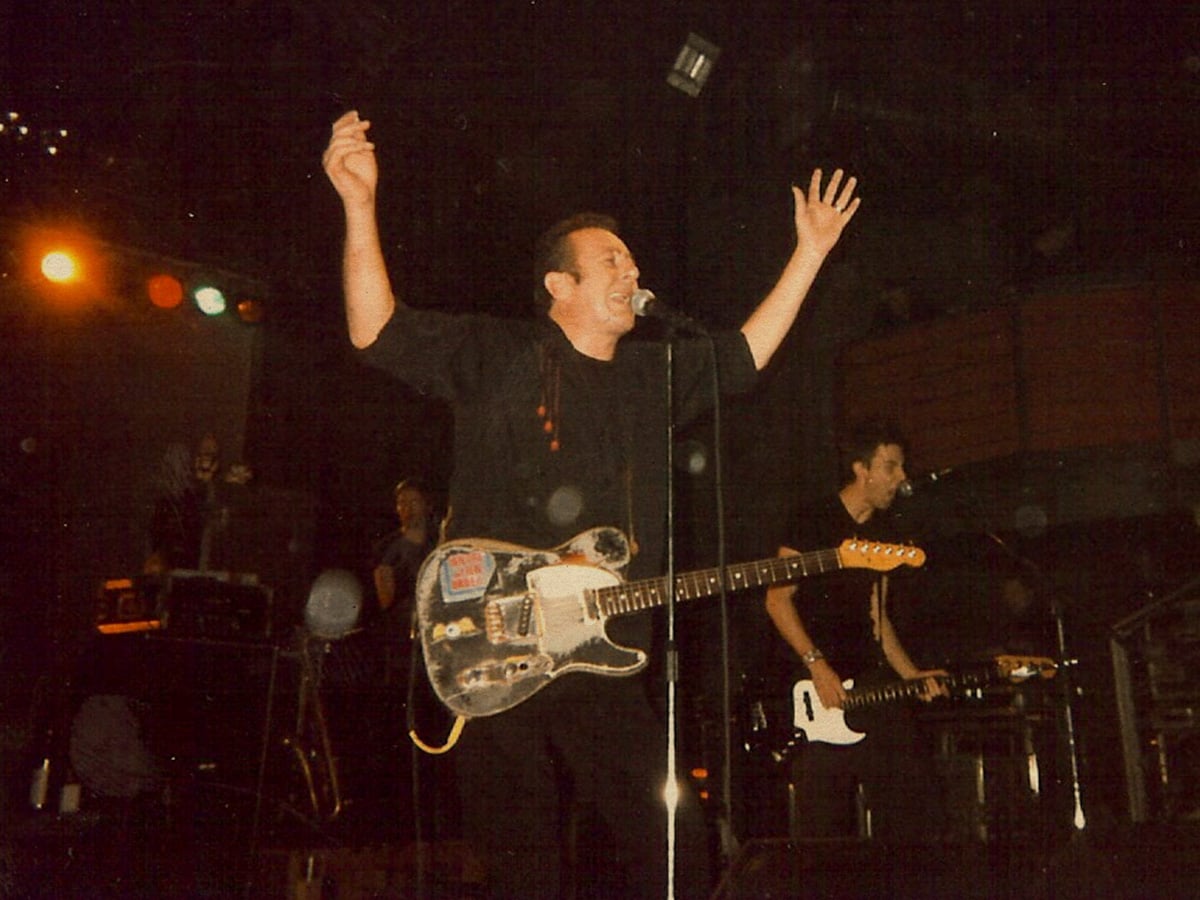
There were downsides to the trade-off, including swapping a tour jet for a ramshackle tour bus and occasionally getting booed at festivals rather than hailed as legends, but he was relishing all of it.
“It’s just as well, because it keeps you tough,” Strummer said, “You wouldn’t want to be goosed over… Inside the bubble [of The Clash], you lose all sense of its real place in the world, as one of many other interesting things, and that’s why I feel so relaxed in my mind now, because I can see where it is, what I’m doing in true relation to everything else. ‘There’s an interesting film’, or ‘that’s not a bad record’. I like to feel the reality of that. When you’re young, everything’s over-distorted.”
Because Strummer emerged in the mid 1970s as one of the most prominent, sneering faces of the UK punk scene, later playing stadiums as the voice of the “only band that matters”, few people imagined him as someone capable of feeling insecurity or doubting himself. When The Clash released their shockingly terrible final album, Cut the Crap, however, it sent the frontman down a surprisingly prolonged creative spiral.
That mess of a record had lost The Clash, the last of their defenders in the press, and essentially drained Strummer of his remaining reserves of patience following years of power struggles with bandmates and band manager Bernie Rhodes. The frontman who could once silence a room in anticipation of what he might say next was now inclined to keep things to himself, gradually fading out of the spotlight entirely during a time when rock music was in need of a political recharging, as hardcore retreated to the underground and hair metal ruled MTV.
Strummer spent most of the late ‘80s not exactly in exile, but certainly in the shadows, working on some film scores, becoming a supporting member of The Pogues touring band, and quietly transitioning into middle age, which is no easy adjustment for a punk, but there was a notable comeback attempt in 1988.
The singer put together a new band called the Latino Rockabilly War, a super-ish group featuring guitarist Zander Schloss of Circle Jerks, bassist Lonnie Marshall of Marshall Law, and percussionists Jack Irons from Red Hot Chili Peppers and Willie McNeil of Tupelo Chain Sex, leading them on a 40-date tour of the UK, promoted by an anarchist organisation called Class War.
Subsequently, a studio album called Earthquake Weather was released in 1989, but it went quietly into the night, sending Strummer firmly into retreat, and then in the early ‘90s, he separated from his first wife and settled into a new life in rural Hampshire with his new partner and eventual second wife, Lucinda Tait. It wasn’t an official retirement, but for all intents and purposes, it might as well have been.
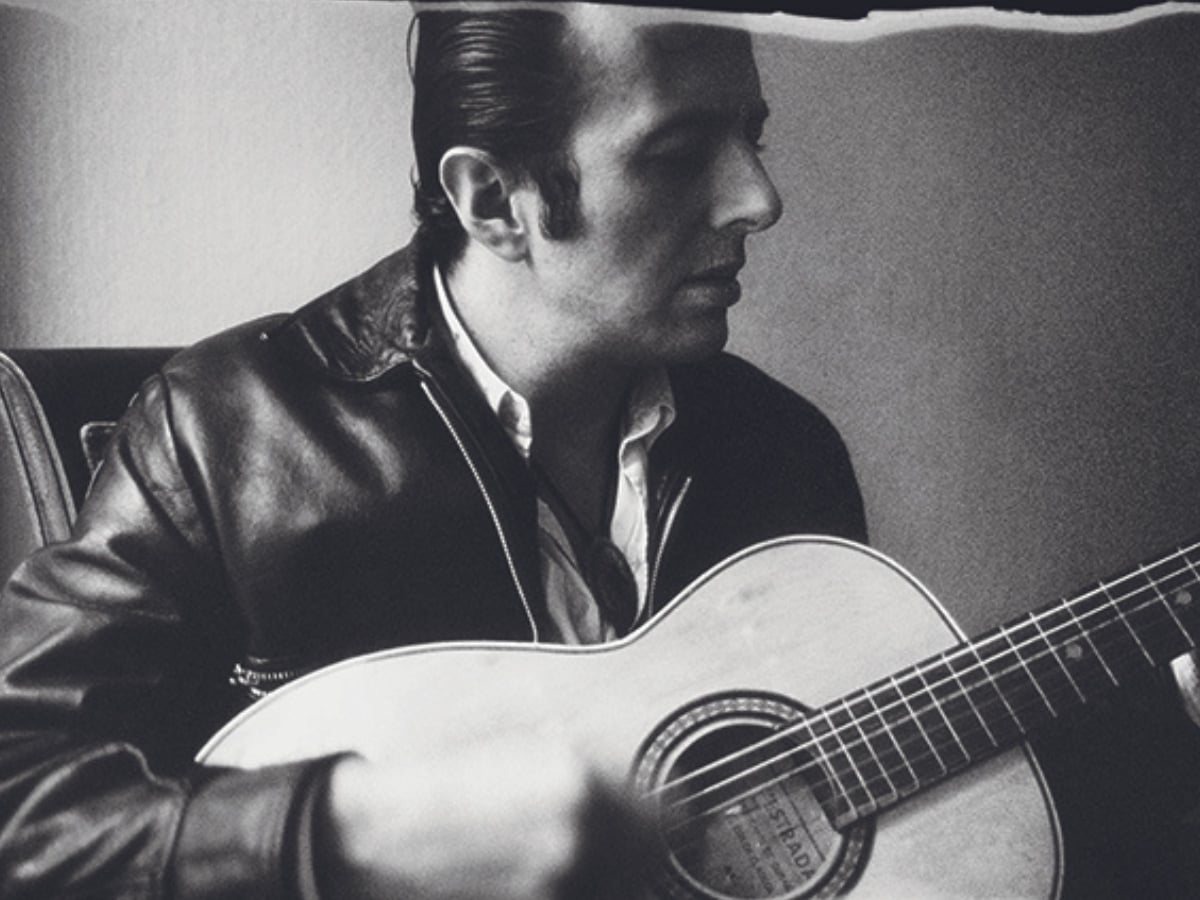
In the meantime, a new punk revival hit the mainstream, led mostly by West Coast American bands like Green Day, Rancid, and the aforementioned Offspring, all devoted fans of Strummer’s work. Joe, however, couldn’t bring himself to try and jump back on the bandwagon he’d helped build. By the time he finally decided to record music again, ten years had passed since Earthquake Weather, and a whole new sea of influences had re-inspired him, including the acid house scene he’d encountered as a frequent Glastonbury attendee, and the world music passing through the halls of Peter Gabriel’s Real World Studios.
“I’m not the quickest guy on the planet on the uptake,” he told The Age in 2000, “but once I get going, I get there. That’s why I’ve really needed ten years to kick back and have a look at what’s going on. After a trip like The Clash, you’ve got to unscramble your mind a little bit.”
Strummer’s 1999 debut album with The Mescaleros, called Rock Art and the X-Ray Style, was warmly received by fans and critics, and felt like a natural, sophisticated evolution of his singular voice, but it hadn’t come easy. He openly acknowledged to Classic Rock’s Stephen Dalton that he’d tried to find a new direction throughout the ‘90s, but that he’d kept “running into brick walls”. In contrast to his image as a visionary, no-fucks-given sort of artist, he argued that people like him are often “the most unconfident, really. The ones who give it the mouth and trousers. I’m like that”.
“If you stormed in here and said the new record was rubbish, I would probably quit”.
Joe Strummer
As The Mescaleros started playing more gigs and working on new material at the dawn of the 2000s, Strummer’s confidence began to repair itself. The band’s record sales never sniffed Clash territory, but there was a celebratory feel to their shows, and a steady stream of gratefulness from two generations of artists who’d looked to Strummer as a source of inspiration and missed him during his silent period.
In some ways, his disappearance from the mainstream might have even helped solidify his eventual legacy, as he refused to force himself into making a grunge record or a skate punk record in the midst of his midlife crisis, leaving no real embarrassing missteps after the lessons of Cut the Crap.
Strummer said of his return, positioned in the midst of nu metal and Britney Spears, “You know, after thousands of crap records came out and youth cults came and went, I found people were [looking at me] going, ‘Yeah, that’s quite dignified, that. You haven’t flooded the market with loads of crap records. You haven’t led us up garden paths and new directions that don’t go anywhere. You just chilled out, and you’re good company, and you don’t moan; you’re not snivelling in self-pity’.”
The tragedy of Strummer’s comeback story, of course, is that it was cut short just as it was taking off. Seemingly ready to take the mantle as one of rock’s elder statesmen as he turned 50 in 2002, he was hard at work on the third Mescaleros album, Streetcore, when he died suddenly and unexpectedly from a heart defect, three days before Christmas.
Just a month earlier, The Mescaleros had played a charity gig in London, which Mick Jones had attended as a fan. Late in the show, Jones was invited up on stage and wound up playing The Clash classics ‘White Riot’ and ‘London Calling’ alongside Strummer for the first time in nearly two decades. Neither man knew it was also for the last time.
“It was fate,” Jones later told Classic Rock, “It wasn’t planned in any way. I didn’t think I was going to be playing that night, I just went along. I wasn’t exactly pushed onstage physically, but it just felt right”.

Never Miss A Beat
The Far Out Punk Newsletter
All the latest Punk content from the independent voice of culture.
Straight to your inbox.