


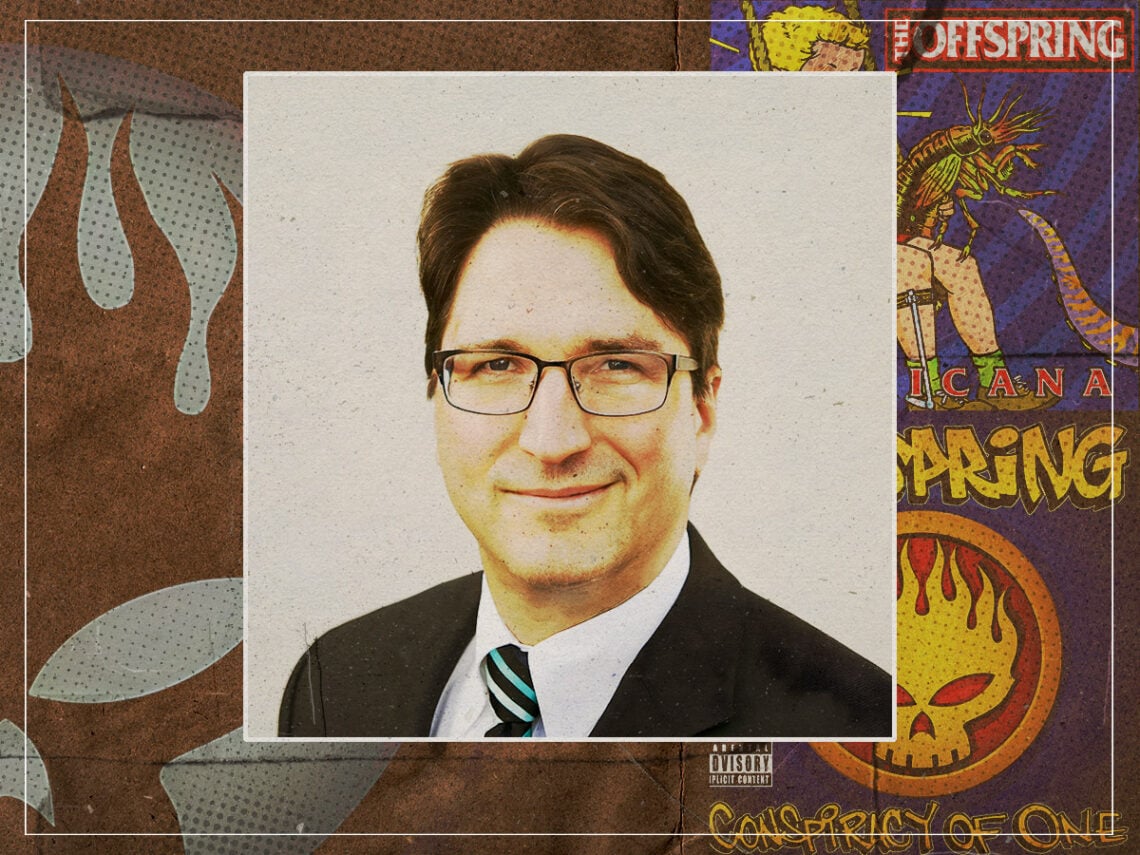
James Lilja: The Offspring drummer who quit the band to become a gynaecologist

The title says it all: this article will detail why The Offspring’s original drummer and one of the band’s founding members, James Lilja, left the band and became a gynaecologist. It would be very easy to make a joke about how none of The Offspring seems fit to be doctors or about how maybe Lilja left because he was in a band like The Offspring, and so wanted to discover what a vagina looked like, but we’re better than that, so let’s move past the jokes and get into what happened.
Lilja’s rationale for wanting to leave the band was pretty straightforward: he had always wanted to go to medical school and looked forward to life as a doctor more than he looked forward to life as a drummer. As such, when he was offered a place in medical school in the ‘80s, he made the difficult decision to walk away from music and pursue his medical career. Now, he lives in the San Francisco Bay Area, where he works in his private practice, specialising in treating cancerous and precancerous female reproductive issues.
It would be good if that is where the story stopped – if it was merely a case of someone wanting to pursue a career and then successfully doing that, but it’s much more complicated. In recent years, Lilja’s life as a doctor has been a lot more eventful than any of his former bandmates.
It turns out Lilja was recently on trial in California, facing a medical malpractice claim. The suit was filed by one of his former patients, Stephanie, and her husband, John. They alleged that Lilja was negligent when treating her and decided to press charges. So, what was the verdict? Well, it’s even more complicated than that.
There are frequent breaks throughout a court day as the jury is asked to listen to and comprehend a large amount of information. Breaks allow them to catch their breath and process everything they’ve been told. It was during one of these breaks that a juror collapsed, hit his head and became unconscious. 911 was called, but to ensure things were OK while they waited for the ambulance, another juror ran out to the courtroom to ask Lilja for help.
When Lilja tended to the patient, he realised that they weren’t breathing and had no pulse, so he administered CPR and also used a defibrillator to deliver two shocks, keeping the patient alive. At the same time, the paramedics rushed to the scene. The patient was then taken out on a stretcher and driven to hospital.
As well as the jury being able to retain and make sense of information, the other thing that they need is complete impartiality. Nothing can get in the way of the rule of law so that when a defendant is charged, they are done so based on the facts of their case, with nothing else playing into the decision. Due to the fact Lilja had just said somebody’s life, it was more than likely the jury would have been impacted, creating a bias that the judge described as “incurable”.
A mistrial was called. Upon leaving the court that day, awaiting a date to come back to face the same trial all over again, Lilja was relatively quiet, except for the brief announcement that “No good deed goes unpunished”.
