


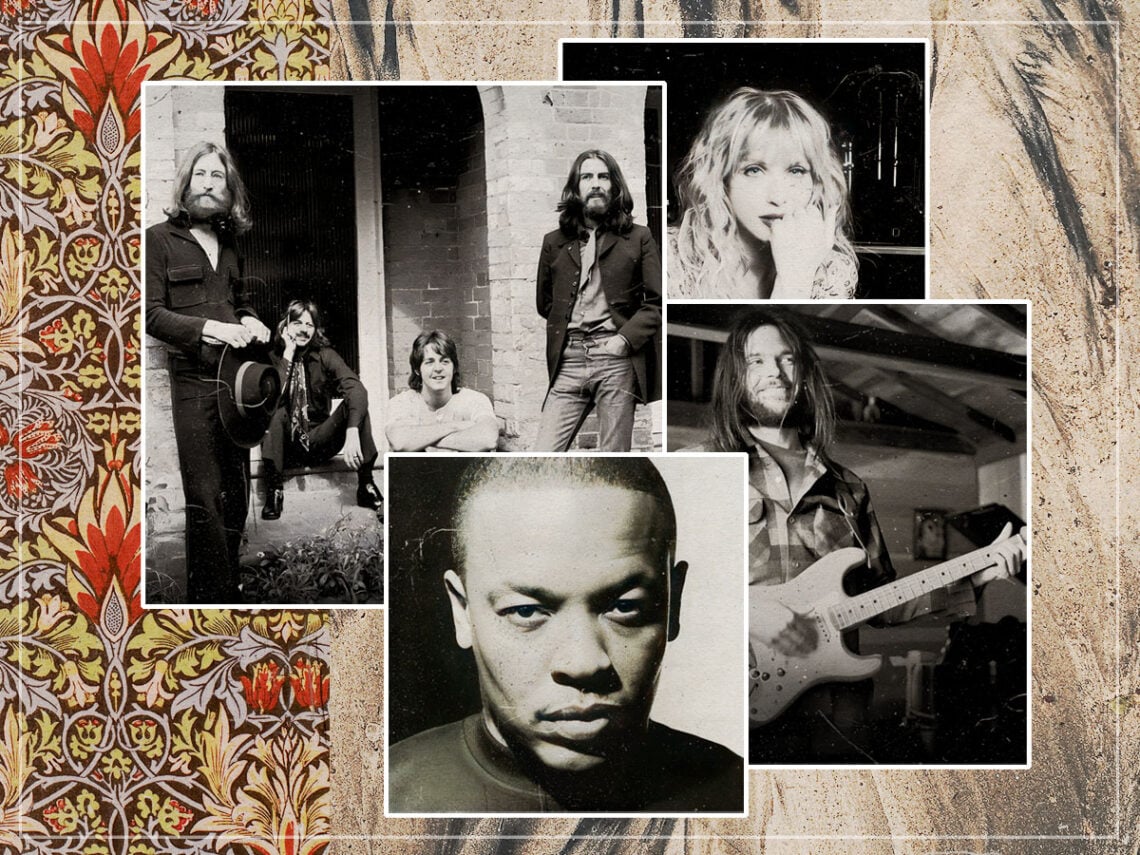
From The Beatles to Neil Young: 10 musicians who fought with their labels in court

Getting that hallowed record contract usually comes at the end of a long, hard road. Whether you’re in The Beatles or the latest laptop-carrying musician hoping to put pen to paper, chances are, if you’re sitting in the big offices of a major label, you are willing to sign whatever they put in front of you. That kind of attitude has left countless iconic bands and artists in hot water over the decades.
Music, whether you like it or not, is a business. While many modern performers may pine for the days of humongous signing-on fees or gigantic pre-release payments that reigned supreme in the 20th-century pop music boom, those contracts always came with small print. While Taylor Swift may have the genius idea to simply re-record her songs, others have had to duke it out in the courts.
In today’s sonic landscape, getting a major contract may be difficult to do, and, unlike decades ago, getting such a contract rarely guarantees success, but there is a genuine opportunity to go it alone. Streaming platforms are not without their glaring issues, but they do provide artists with a simple gateway to sharing their music. In the heyday of pop music, a label to help release your record wasn’t just a good thing to have. It was entirely necessary.
The labels certainly knew it, too. With a crop of talent ready to kill for a contract and have their music put on to record, cassette or CD, labels would regularly hang them out to dry within their contracts. Happily selling them down the river and reaping the benefits of their royalties for years to come. Is it really worth giving up control of your art just to have it shared with the world?
Below are ten examples of when the artist and label fought tooth and nail for control.
10 musicians who fought with their labels:
Little Richard
He’s widely regarded as one of the foundational stones in the pantheon of rock and roll, and Little Richard‘s influence can be felt throughout the genre’s evolution. Not only did he inspire the likes of Paul McCartney and The Beatles, but he opened doors for queerdom in a way that few could fight. However, in 1984, Little Richard was forced to initiate a lawsuit against Specialty Records, seeking over $100million in damages.
The conflict arose from Specialty Records purchasing his hit song ‘Tutti Frutti’ for a mere $50 and subsequently offering the artist a contract that entitled him to a mere half-cent for each record sold. Furthermore, he did not receive any royalties when Specialty Records’ songs were employed in films or covered by white artists – a distressingly typical practice during that era. Remarkably, Little Richard asserted that he had not received any royalties from the record company since parting ways with them in 1959.
John Fogerty
John Fogerty once discussed his legal disputes with his former record label, Fantasy Records. The label took him to court, accusing him of plagiarism and asserting that his song ‘Old Man Down the Road’ was essentially a rehash of his prior Creedence Clearwater Revival track, ‘Run Through the Jungle,’ albeit with a different title.
“In 1988, I had to go through a plagiarism trial where I was sued for sounding like myself, and people tell me this was unprecedented,” he told The Guardian in 2000. “I spent more than three years trying to resolve these issues, but sadly it didn’t work.” Ultimately, Fogerty emerged victorious in the lawsuit, but he had to navigate a labyrinth of legal proceedings to reclaim the $1.35million in legal costs.
Prince
Prince was never far away from an artistic stance and was notably vocal about his feud with Warner Bros following his signing of a $100million contract with the label in 1992. The artist sought the freedom to release music on his terms and to gain ownership of the original master tapes for his albums but was denied at every turn.
In a symbolic act, the iconic pop star appeared in public with “Slave” inscribed across his face and underwent a name change to an unpronounceable symbol, leading to him being commonly referred to as The Artist, Formerly Known as Prince. Eventually, he reached a resolution with Warner Bros, and after departing from the label in 1996, he began releasing music on the Internet.
The most surprising twist in this tale, though, is that, in 2014, Prince rekindled his association with Warner Bros to commemorate the 30th anniversary of Purple Rain by collaborating on a reissue of the seminal album.
Nine Inch Nails
While the old saying goes, “Don’t bite the hand that feeds you”, Trent Reznor snapped at his label when the pricing for his new record seemed to massively outweigh his expectations. He believed Universal was winching up the price to make their own ends meet rather than benefit him. And, in true fashion, he didn’t hold his tongue.
“As the climate grows more and more desperate for record labels, their answer to their mostly self-inflicted wounds seems to be to screw the consumer over even more,” Reznor shared from his Australian tour. “The ABSURD retail pricing of ‘Year Zero’ in Australia. Shame on you, UMG [Universal Music Group]. ‘Year Zero’ is selling for $34.99 Australian dollars ($29.10 US). No wonder people steal music.”
Courtney Love
In 2002, Vivendi Universal Music Group and Courtney Love put an end to their legal disputes through a settlement. The clash between the two parties began when Universal filed a lawsuit against Love in 2000, alleging that she had failed to deliver five albums as per their agreement. In response, Love initiated a countersuit, asserting that the label had mistreated artists and revealing that her rock band, Hole, had generated $40million in album sales while she and her bandmates had received only $2m in royalties.
As a component of the resolution, Universal agreed to relinquish any claims to future recordings by Love and restore her ownership of unreleased material by her band, Hole. In exchange, Love and the other individuals associated with the Cobain estate granted Universal the rights to release new Nirvana compilations, which encompassed an album with previously unreleased tracks, a boxed set, and a collection of rare recordings.
Tom Petty
Like many aspiring rock stars in the 1970s, Tom Petty was so eager to sign his record contract that he didn’t think about the implications of the clauses. His label, MCA, later threatened to cease his rights and songwriting royalties. Petty declared himself bankrupt so his contracts could be voided.
Talking about the lawsuit in Runnin Down a Dream, Petty mentioned not realising how much he had been screwed over, recalling, “I swear to God, I thought that publishing meant putting my song in a songbook. I had no idea that it meant owning the copyright and that I would never see a dime for it”. As the legal disputes were ongoing, Petty was making Damn the Torpedoes, which would be one of his most successful records.
But, if the record were to hit the shelves, it would be owned by MCA. Petty decided to hold the label to ransom and refused to release any content until his publishing rights were restored. MCA finally buckled, knowing that Petty would never back down from getting his songs back. Instead of welcoming him back to MCA, the label gave Petty his imprint, Backstreet Records, where he could release his albums without worrying about any of his royalties falling into the wrong hands.
Hawthorne Heights
It seems like it might be far easier for us to share who Victory Records wasn’t sued by. The label were taken to court by almost every band on their books over the years. In 2001, Thursday cited royalty and merchandise issues, with the latter being created without their knowledge. In 2006, Hawthorn Heights filed a lawsuit against the label, claiming it had made $10m from them while still owing $1m, citing Atreyu and Taking back Sunday in the suit.
Victory countered this suit and, in one of the sadder moments on our list, they settled. It led to Hawthorne Heights tweeting in 2020: “Dear Kanye West, please don’t sue your record label. Trust us. It doesn’t work.”
Dr Dre
It’s not just rock and roll that has suffered at the hands of devious record labels. Dr Dre also found himself fighting with his former business partner when, in 2015, he went to court over the rights to sell his debut album, The Chronic.
The record, his first following his departure from NWA, is regarded as a significant moment in hip-hop and one that rightly put Dre on the map as an artist in his own right. Its status as a pioneering record led to the label trying to re-sell the album online. The judge saw things differently, however, and ruled that the producer and rapper was owed more money from the online sales of the record and ensured he received 100 per cent of the revenue from now on.
Neil Young
Few musicians are as forthright in their views as Neil Young. Not only a diehard creator, Young has routinely stood up for what he’s believed in. Staring down the face of capitalism to benefit his own morality. But, in 1982, his refusal to shoot for commercial success saw him land in hot water with his label Geffen.
The album Trans is seen as one of Young’s most experimental and sentimental records. “My son is severely handicapped, and at that time was simply trying to find a way to talk, to communicate with other people,” Young defiantly stated to Mojo in 1995. “That’s what Trans is all about. And that’s why, on that record, you know I’m saying something, but you can’t understand what it is. Well, that’s the exact same feeling I was getting from my son.”
However, it did not appease Geffen. They demanded a more commercially driven LP to make good on their bet. “They told me they wanted me to play rock ‘n’ roll and told me I didn’t sound like Neil Young,” the singer recalled to the LA Times. “So I gave them Everybody’s Rockin’ and said, ‘This is a rock ‘n’ roll album by Neil Young after someone tells him what to do; this is exactly what you said you wanted.’ And we got way into it.” The album flopped.
On December 1st, 1983, Geffen Records entered into completely uncharted territory when they took legal action against Young for not releasing music that was commercially viable. In a rock and roll showdown, their efforts were met by bemusement from the singer, who filed a $21million countersuit that pointed to his contract stating that he has complete creative freedom. The suit monumentally backfired against Geffen, with label owner David Geffen personally apologising to Young for the inconvenience.
The Beatles
They might be regarded as one of the most pivotal bands of all time, but The Beatles didn’t have an easy time with their labels. The group would eventually set up their own imprint, Apple Records, but that didn’t stop their troubles. In fact, even in the late 1970s, after the group had been disbanded for nearly a decade, a ten-year-long lawsuit would ensue.
The suit saw the band seek $50million in underpaid royalties from EMI. In 1986, things went further as the band and Apple Records took umbrage with EMI, allowing Heineken beer to issue a cassette of Beatles hits. A year later, the group were again attached to a commercial campaign with Nike using ‘Revolution’ as part of its 1987 roll-out. A settlement was reached in 1989, though whether the group attained the full amount of $80m remains unknown.
