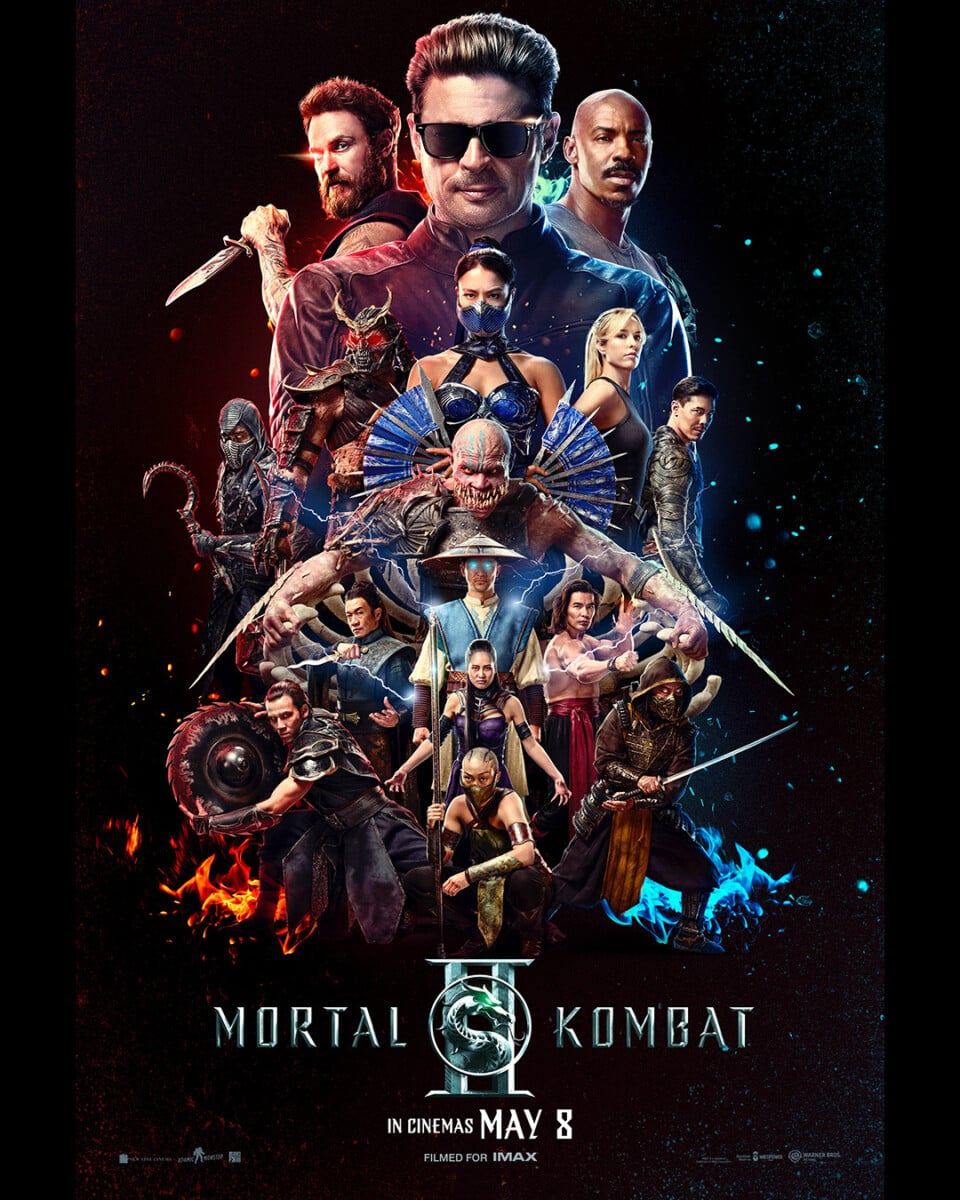
“It’s impossible to say no to something fun”: Jeremy Slater on ‘Mortal Kombat II’ and playing in Hollywood’s biggest sandboxes

Video game adaptations remain one of cinema’s most frequently poisoned chalices, but as a lifelong fan of the games, screenwriter Jeremy Slater didn’t hesitate when he was asked to pen Mortal Kombat II, which he also executive produces.
While this is the first time he’s scripted a console-to-screen movie, he’s no stranger to genre fare, with his previous credits including co-writing gigs on Adam Wingard’s Godzilla x Kong: The New Empire and Death Note, and Josh Trank’s ill-fated Fantastic Four, but the less said about that one, the better.
Slater is no slouch on the small screen, either, having created, executive-produced, and served as the showrunner on both the sequel series to The Exorcist and Marvel Studios’ Moon Knight, starring Oscar Isaac, not to mention his role in developing and executive producing The Umbrella Academy for Netflix.
It’s been five years since director Simon McQuoid’s Mortal Kombat was released, and as every sequel is wont to do, the follow-up seeks to increase the ante. Whether it’s characters, fight sequences, or bloody fatalities, the second instalment was written with the hope of giving the fans everything they wanted.
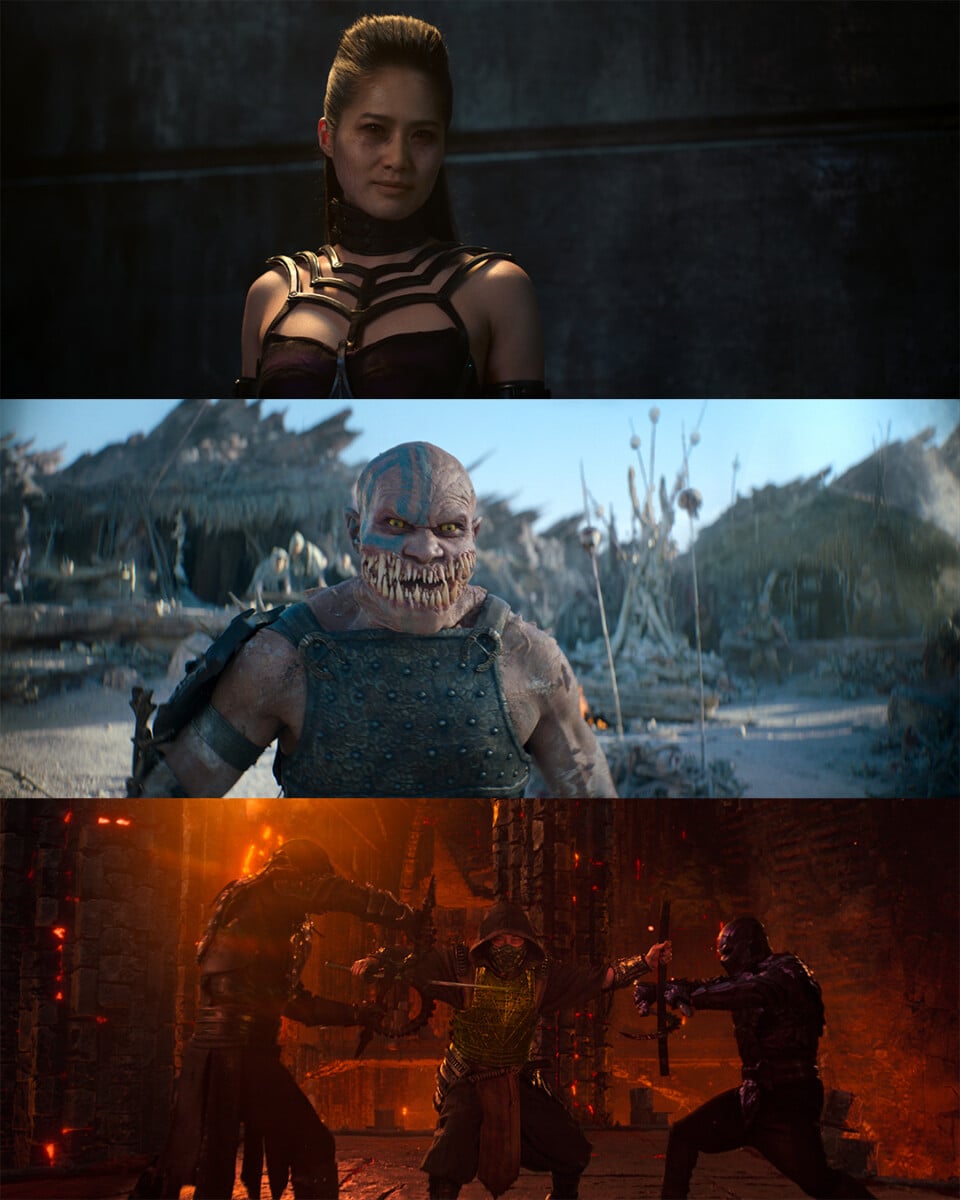
Even if you’ve never picked up a controller in your life, it’s not a hard film to follow: a hardy band of fighters from across the planet enter into the titular tournament, with the aim being to kick the shit out of everyone else until only one of them is left standing. That, and to save the world from the threat of the nefarious Shao Kahn, whose intentions for Earthrealm are anything but noble.
While it’s not an obligation to be a fan of an existing property before you write the script for one, it hardly hindered Slater’s enthusiasm for the task at hand. “Part of what got me the job is when I was initially talking to them about what I wanted, what I would potentially want to see in a Mortal Kombat movie, it wasn’t just about delivering on the promise of, ‘Yes, there’s a tournament coming. Yes, Johnny Cage is going to be one of the combatants,'” he explained. “It was also a tonal recalibration.”
“The first movie did a lot of things right,” the writer prefaced. “It had some really great casting discoveries, and some of the fights were really fun, and it clearly took the universe and the lore seriously, but I did feel that the franchise was missing some of the fun that I gravitated towards as a fan of Mortal Kombat.”
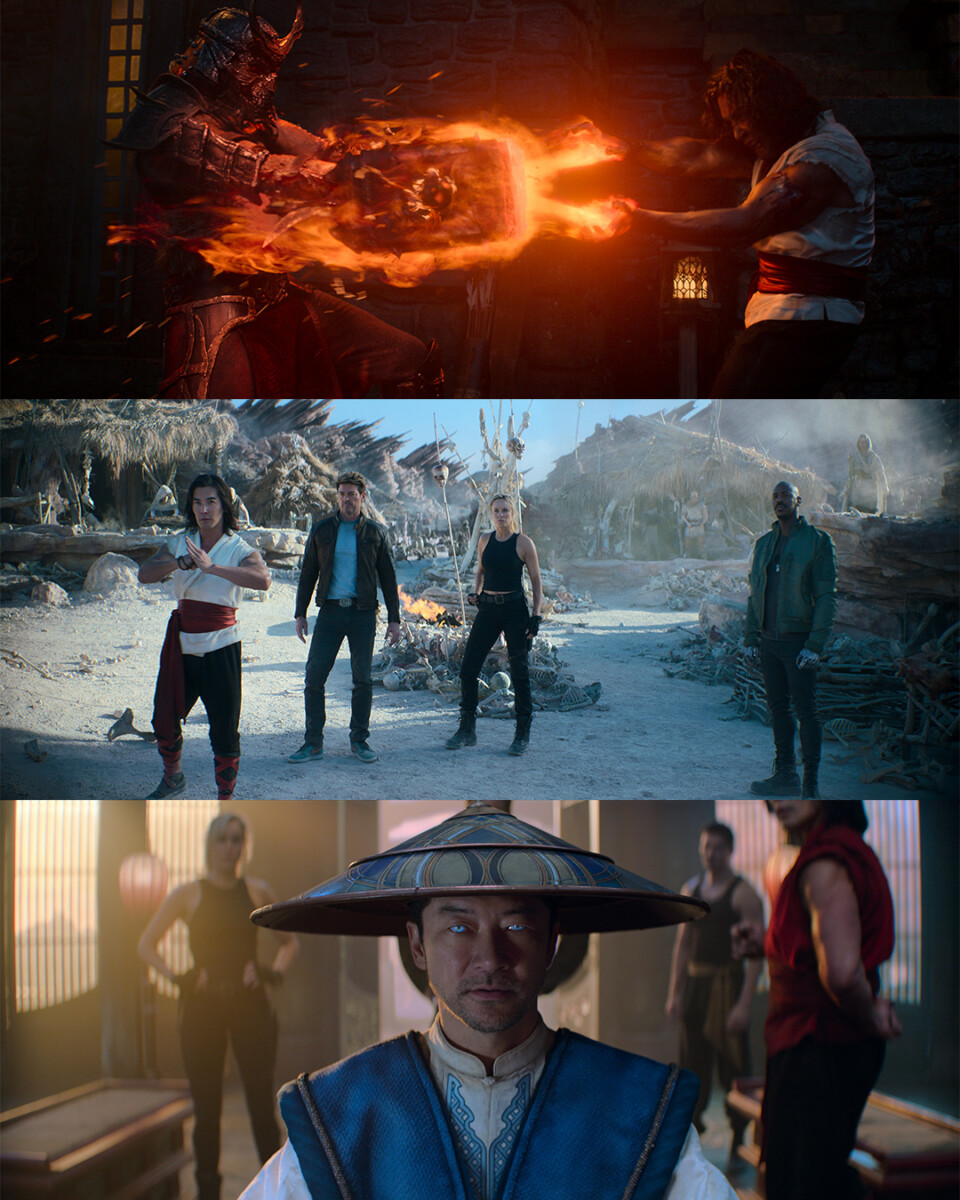
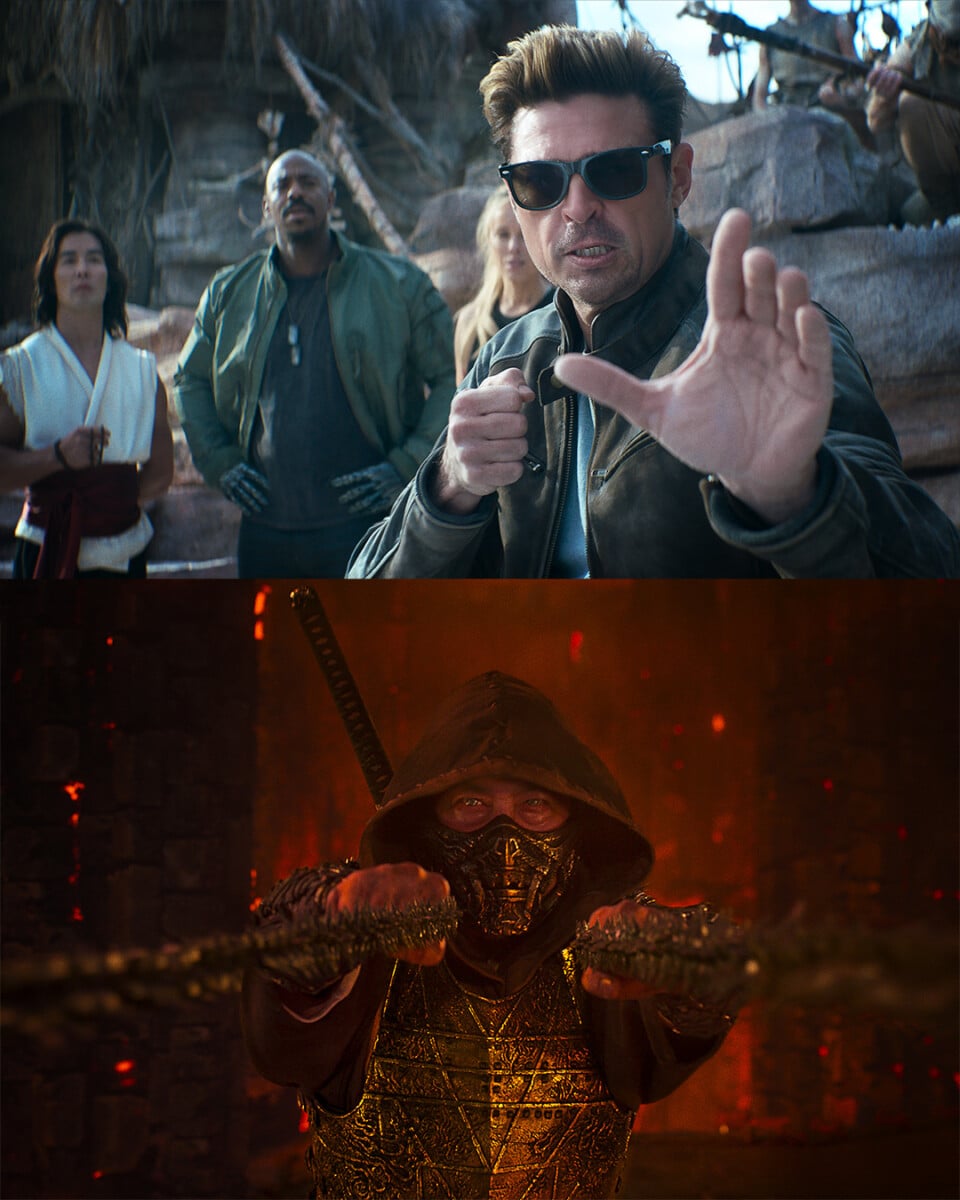
If you explained the basic concept of Mortal Kombat II to someone who doesn’t know anything about it, it sounds ridiculous: Karl Urban’s Johnny Cage, a washed-up actor who specialised in martial arts flicks, leads a hardy band of warriors into what’s guaranteed to be a fight to the death for most of them, where they’ll face adversaries with razor-sharp teeth and claws and mystical powers, among other things.
Hardly something you can treat with po-faced reverence, a needle that Slater was determined to thread. “It can’t be Deadpool, where the whole thing is winking at the audience that this is stupid, because it’s not,” he offered.
“This is a life-or-death situation for the characters, and they have to react in that fashion.”
“I think we did a pretty good job in this movie of knowing what the audience is there for,” Slater continued. “They’re there to have a good time. They’re there to really enjoy the fights. They want the fights to feel like spectacles. They want big moments of action and comedy and shocking deaths.” There’s plenty of that, but the scribe’s focus was constantly aimed at finding the right tonal balance.
“It’s kind of all things at once, and that tone requires calibration in the scripting phase,” he noted. “While we were in the editing room, there’s a lot of moments where we pulled back on jokes or pushed a little bit harder, based on looking at those early cuts and realising, ‘Oh, this might be a spot where we crossed over the line and tipped it a little too far into comedy,'” and the reverse was also true.
If Mortal Kombat II was getting a little serious for anyone’s liking, there was always Urban or Josh Lawson’s Kano to “add a one-liner to lighten the mood in here.” As mentioned, you can’t piss off the fans with a picture like this, but making it inaccessible to novices can be a death-knell at the box office, too.
Its predecessor earned a respectable $85 million at the box office, a decent return for a March 2021 release, a time when cinemas were still crippled by the pandemic. Not only that, but in the United States, it was also rolled out on the big screen and HBO Max simultaneously, further thwarting its earning power.
On the other hand, the follow-up is debuting amid a sea of blockbusters, sandwiched in between Michael and The Devil Wears Prada 2 and The Mandalorian and Grogu as the summer season kicks into high gear. Naturally, that creates a completely different set of expectations, which, again, Slater knows all too well.
“It’s very easy to say yes to a job like Mortal Kombat II, especially when you are a child of the ’90s who grew up with the arcade machines and the Sega Genesis game and the ’95 movie and the soundtrack and all those things that were a really important part of my childhood,” he admitted. That said, it’s what comes next that’s the hard part.
“It doesn’t take a lot of research to realise that this Mortal Kombat is the most important thing in the world to hundreds of thousands, if not millions, of fans out there who live, eat, breathe and sleep Mortal Kombat and have been waiting for this movie for most of their lives, in some of these cases, just wanting to see their favourite franchise done right,” Slater conceded.
As a creative, his mantra was straightforward: “Let’s give them the movie they’ve been asking for for the last 30 years.” That meant the fight choreography, gore, humour, and imagination levels had to be up to snuff, with the writer confessing that if that’s not how Mortal Kombat II is received, it’ll be his head on the pike and nobody else’s.
“Candidly, it’s also one of the first movies I’ve ever worked on where I’ve been the only writer involved,” he acknowledged. “There’s always been a little bit of, I would say, an escape clause in my previous works, where I could always kind of shrug my shoulders and be like, ‘Look, man, I was one of two writers’, or I was one of a dozen writers. If you don’t like it, don’t talk to me about it.'”
Obviously, that’s not the case this time around. “If the fans are happy, great, we did our job,” Slater added. “And if they’re not, there’s very clearly no one else to blame in this scenario.” On the plus side, the reactions and responses he’s been getting so far have him thinking that he’ll escape blame-free.
It’s clear that the existing fans have been at the forefront of his mind throughout the process, but they’re still only one half of the equation. “It is an absolute balancing act,” came the unsurprising confirmation of trying to serve two masters: fans and non-fans. “You can very easily tip overboard with fan service.”
He’s right, with many franchises reducing themselves to nods, winks, and key-jangling to appeal to the diehards, a mistake he didn’t want to make: “You can drown the audience in lore and mythology to the point where you know that that small segment of the ultra hardcore fans know exactly what you’re talking about, and everyone else kind of winds up getting lost.”
Fortunately, the Mortal Kombat premiere allayed those nerves. One guy told him that the franchise had been the most important thing in his life for the last 30 years, and he called the Slater-penned sequel “the greatest movie I’ve ever seen,” which was exactly the response he was hoping for on that front.
On the other front, somebody else’s wife, who’d only come along as a plus one, told him, “I’ve never picked up a controller in my life, I couldn’t have told you the name of a single character walking in here, and I had a blast, and I can’t wait to see it again.” A small sample size, sure, but that’s what he wanted to hear.
Still, when you’re dealing with something like Mortal Kombat II, there’s one unavoidable thing that needs to be taken into account for the hardcores and casuals all the same: exposition. Countless modern genre films have fallen victim to the curse of info dumps, slowing the pacing to a crawl, and with this many characters and locations to contend with, Slater was cognisant of not letting his script get bogged down.
“It’s a nightmare getting the amount of exposition across in a movie like this,” he surmised. “One of my mandates coming in was that a Mortal Kombat movie, in my mind, should never be boring. It needs to be all gas, no brakes.” In a film about fantastical fight sequences, that doesn’t sound too hard to accomplish, but it was everything in between that posed a challenge.
“We especially didn’t want a martial arts tournament movie where the only excitement was happening in the tournament, and once a fight ends, now the audience knows it’s going to be ten minutes before anything fun happens,” Slater pointed out. What he didn’t want was for the audience to think, “I can safely go to the bathroom. I can get a popcorn. I’m not going to miss anything.”
That meant he wanted his story to “step on the accelerator right from the first scene and never let up,” which makes expository dialogue harder to deal with. “With the exposition, give them the bare minimum of what they need,” was the mission statement, with three key points more than enough to get by on.
One: “They need to understand there’s a tournament happening.” Two: “If we lose this round, we lose the Earth.” And three: “That guy over there in the spiky helmet is the bad guy, and he’s coming for us.” That would be Shao Khan, and for Slater, “That was the bare minimum that you need to convey for the casual fans in the audience to understand what’s going on.”
With that, he placed enough trust in the audience to be confident they’d “understand everything that’s happening without having to stop the plot every ten minutes and reiterate, ‘Here’s everything that’s happened so far.'” Of course, plot is not the primary concern in Mortal Kombat II, with that honour going to the almost nonstop fight scenes, which were inspired by Slater’s love of the games.
Much like the long-running series, his approach was simple: he drew up a bracket of the characters in the movie, decided how and when he wanted to pit them against each other, and then went directly to the source to ask the co-creator of Mortal Kombat for his input on what people have been dying to see.
“Once we had a bracket structure in place, that’s where I really went and leaned on Ed Boon and NetherRealm Studios, as our sort of creative partners, and had that luxury of going straight to the horse’s mouth and saying, ‘What are the stages the fans have always been asking, I can’t wait to see this in real life?’ What have the fans been telling you for the last 34 years that they really want to see?” he asked.
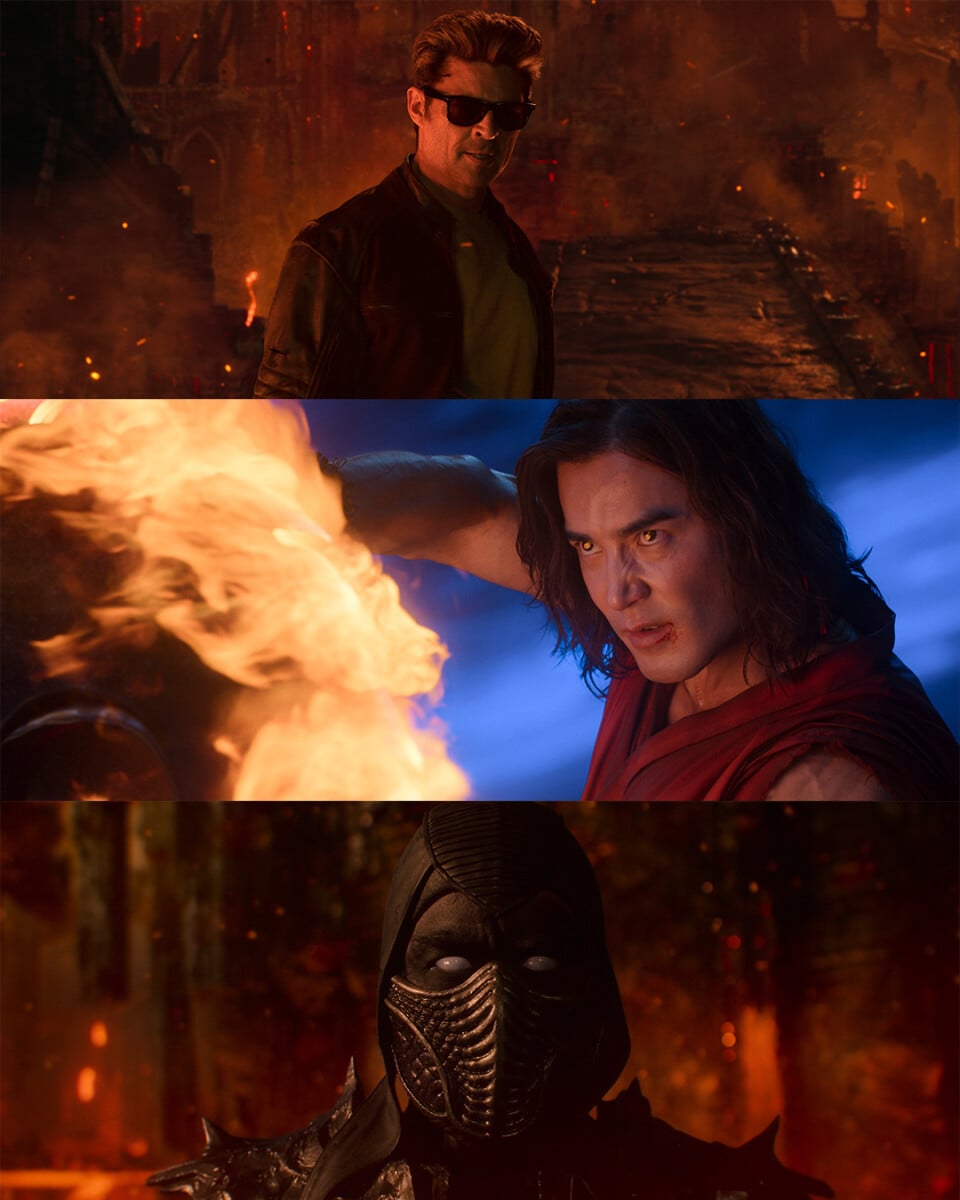
Ask, and ye shall be answered, with Boon pointing out the levels, stages, moves, and fatalities that the core audience wanted the most, and Slater was happy to oblige them. “Ed suggested the blue portal stage from Mortal Kombat on the Genesis is one of the fans’ favourite stages of all time,” Slater revealed. “That would be a great backdrop for this Kung Lao/Liu Kang fight we’re talking about because it’s so cinematic.”
In the end, he summarised the structure as “having all these puzzle pieces on the board and then shifting them around until it felt like they were all in the right place.” Expectations are high, then, and there’s clearly confidence in Mortal Kombat II at a boardroom level, since Warner Bros announced a third film, with Slater returning to write, in October 2025, seven months before the sequel’s release.
Since he suggested that the reception to the first movie informed the second, it seems reasonable to assume that the reception to the second will inform the third. “Absolutely,” he concurred. “In the same way that I think two is a better movie because we have the examples of one, I think three is going to be even better because we have the examples of two.”
Slater is currently on his second draft of Mortal Kombat III, and having been paying attention to the reactions to the sequel, particularly “the moments that didn’t land quite in the way that I had in my mind,” he’s revising the script with an ear to the ground. Or, as he put it, “You’re constantly trying to raise the bar on yourself and continuously make it harder, but I think that’s the way you deliver for the fans.”
Speaking of raising the bar and making things harder, Slater will be making the next leap in his career sooner rather than later when he starts work on Summoner, a horror script of his that will double as his feature-length directorial debut, an evolution that’s been years, if not decades, in the making.
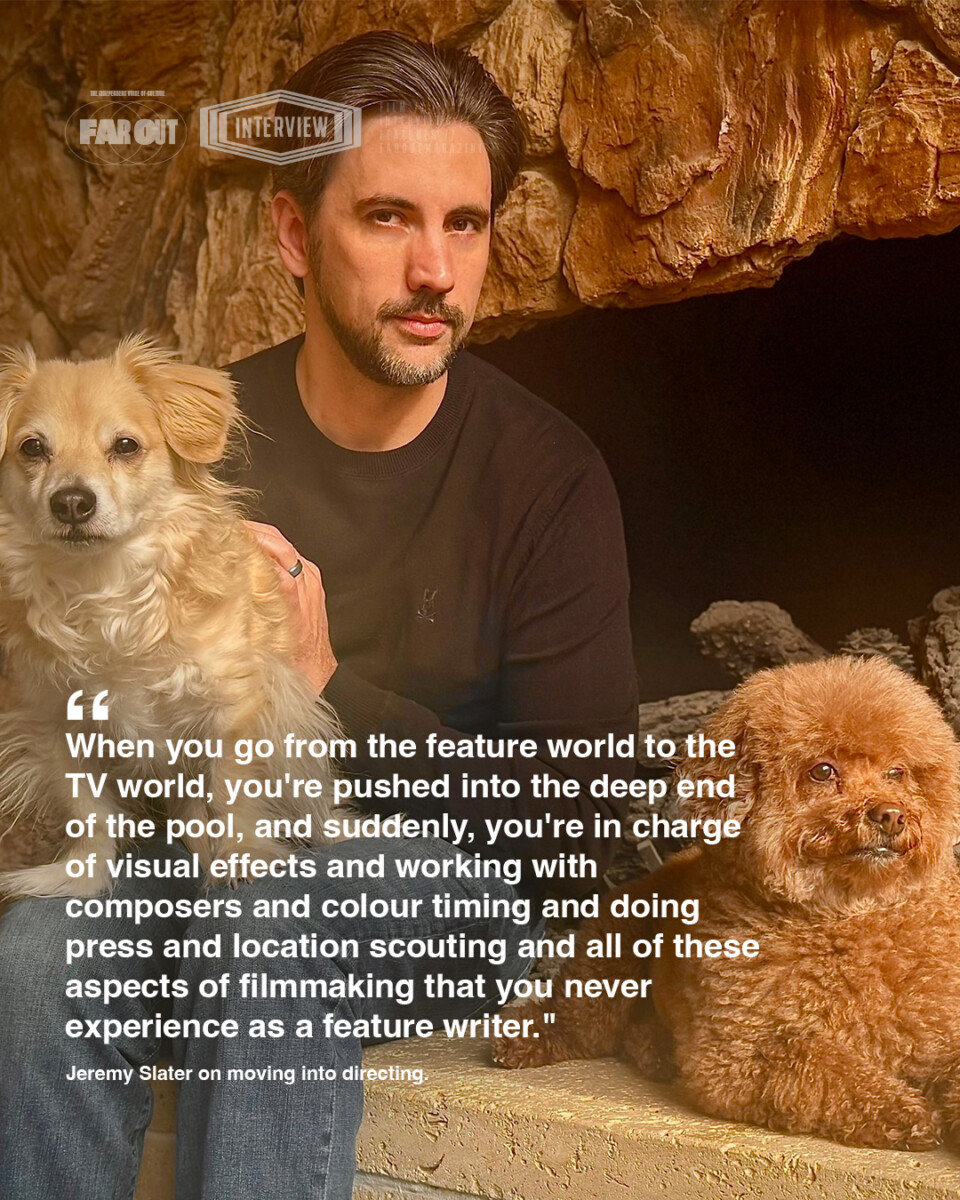
“It wasn’t until I was showrunning the Exorcist show that it really lit a fire under me, that this is something I can actually do,” he said. “When you go from the feature world to the TV world, you’re pushed into the deep end of the pool, and suddenly, you’re in charge of visual effects and working with composers and colour timing and doing press and location scouting and all of these aspects of filmmaking that you never experience as a feature writer.”
That experience “really demystified the art of directing,” for Slater, and he’s ready to helm his first film. “We are shooting that in early August somewhere, and I am just so excited,” he teased. “I’ve been dreaming about telling this story for five years at this point, and I think it’s going to be really special. So I cannot wait.”
With that in mind, it’s worth asking if a ‘one for me/one for them’ kind of career is something he’s thought about. After all, Summoner will be made for what you’d imagine is a fraction of the cost of Mortal Kombat II or Godzilla x Kong, and the cache he’s built up as a screenwriter means that Slater is more than familiar with writing for some of Hollywood’s biggest sandboxes.
He definitely sees his future behind the camera, but he’s hardly considering abandoning his day job, either. “I have been working 25 years to get my career to this point, where I’m finally getting to play in the really fun sandboxes,” he proffered. “So to walk away at this point would be crazy; I’m having way too much fun!” Summoner might open some new doors, then, but he’s not giving up Mortal Kombat without a fight.
“It would also break my heart to hand this franchise off to someone else,” Slater shared. “At this point, I feel a lot of ownership and a lot of love for these characters and these actors, and a lot of responsibility for the fans to keep the party going. They really enjoyed two, so I want three to be even better. Hopefully, we can continue to make these movies even more satisfying and even more of a ride for audiences, hopefully, for years to come.”
Technically, Mortal Kombat II isn’t even his only release of the summer. It’s been a long road to the silver screen, but after being cancelled and resurrected, Coyote vs Acme will finally get its day in the sun in August 2026. Slater shares a story credit with James Gunn and Samy Burch, but he was quick to point out that his association with the long-delayed movie is tangential at this point.
“I’ve been very honest with everybody: I wrote a draft for James Gunn like 15 years ago, and then it sat on a shelf, and it was really rescued by Dave Green and Sammy Burch,” he illustrated. “I still haven’t seen the film myself, but I don’t have any skin in the game in the sense that it’s not my script that they shot.”
Regardless, he was “broken-hearted” for everyone involved when it was almost locked away in the vault forever. “At the end of the day, not having that finished product to show your family and friends to say, ‘Here’s what mom or dad has been working on for the last two years’ is heartbreaking. My heart just went out to every single person in that production.”
Like most people, Slater suggested that “the whole thing felt really unjust,” which it was, and Coyote vs Acme making it to cinemas “feels like the best possible ending for a story that could have had a really dark, really unsatisfying ending.” He might not have any skin in the game, but he’s thrilled for everyone involved nonetheless.
Long after submitting that draft to James Gunn, in early 2023, Slater was announced to be part of the DC Studios co-CEO’s writers’ room and brain trust tasked with shepherding the future of the filmmaker’s shared superhero universe, which launched in multiplexes last summer with Gunn’s Superman reboot.
Funnily enough, he can’t say much about that. “I’ve signed so many NDAs,” he confessed. “The only thing I can say is that I love James and Peter [Safran], I have the utmost respect for them as artists and as human beings. I really am enjoying what they are building over there with the DCU. They have my phone number.”
Whether it’s, ‘Can you write something?’, ‘Can you look at something?’ or ‘Can you come in and just talk about something?’, if Slater’s phone rings, “The answer is always yes for those guys.” With Summoner, Mortal Kombat II, a horror lab he’s running for Netflix to develop new ideas, and a pilot episode for a comic book show that he’s working on for a major streamer, Slater is plenty busy anyway.
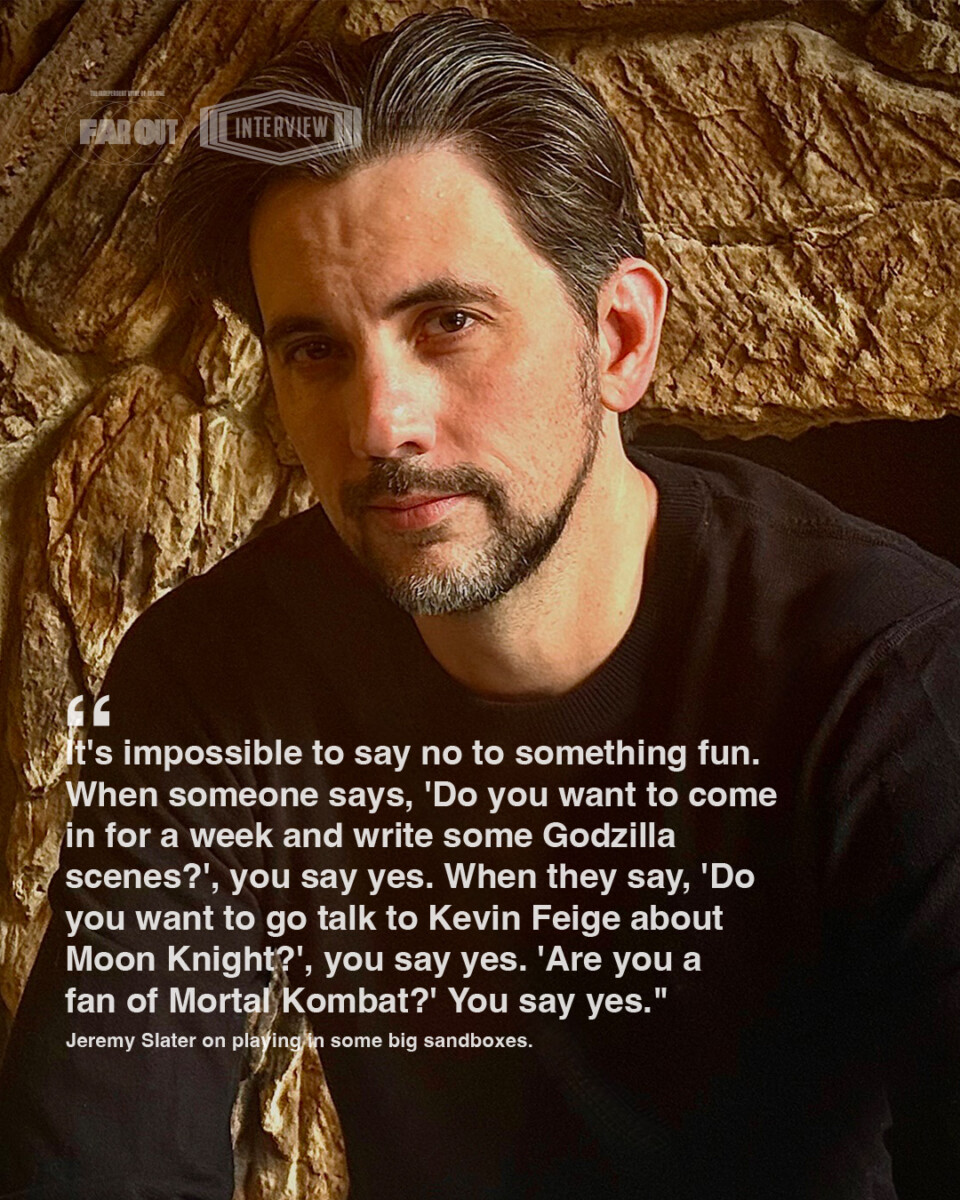
He’s juggling a lot of plates, but those aren’t opportunities he can turn down. “It’s impossible to say no to something fun,” he accurately stated. “When someone says, ‘Do you want to come in for a week and write some Godzilla scenes?’, you say yes. When they say, ‘Do you want to go talk to Kevin Feige about Moon Knight?’, you say yes. ‘Are you a fan of Mortal Kombat?’ You say yes.”
With Mortal Kombat, the Marvel Cinematic Universe, the MonsterVerse, The Exorcist, Looney Tunes, and The Umbrella Academy all ticked off in one way or another, Slater has worked on some massive properties. There’s still one on his wish-list, though, and you can probably guess what it is.
“Star Wars is my white whale that I’ve always been chasing,” he accepted. “Maybe someday it’ll happen. I’ve certainly had conversations with Lucasfilm on a lot of things that never really came to fruition. I also wouldn’t say yes unless I could do it the right way, unless I could feel like I could really deliver and make something special, because I can’t imagine anything worse than making a Star Wars project and falling on your face.”
A lofty ambition, but hardly an unattainable one, based on his track record. “That’s always been the dream,” Slater concluded. “That’s the one that it doesn’t matter what else is going on in my life, if they say Lucasfilm is on the phone, I’m always dropping everything to take that call. That’s the dream.”