


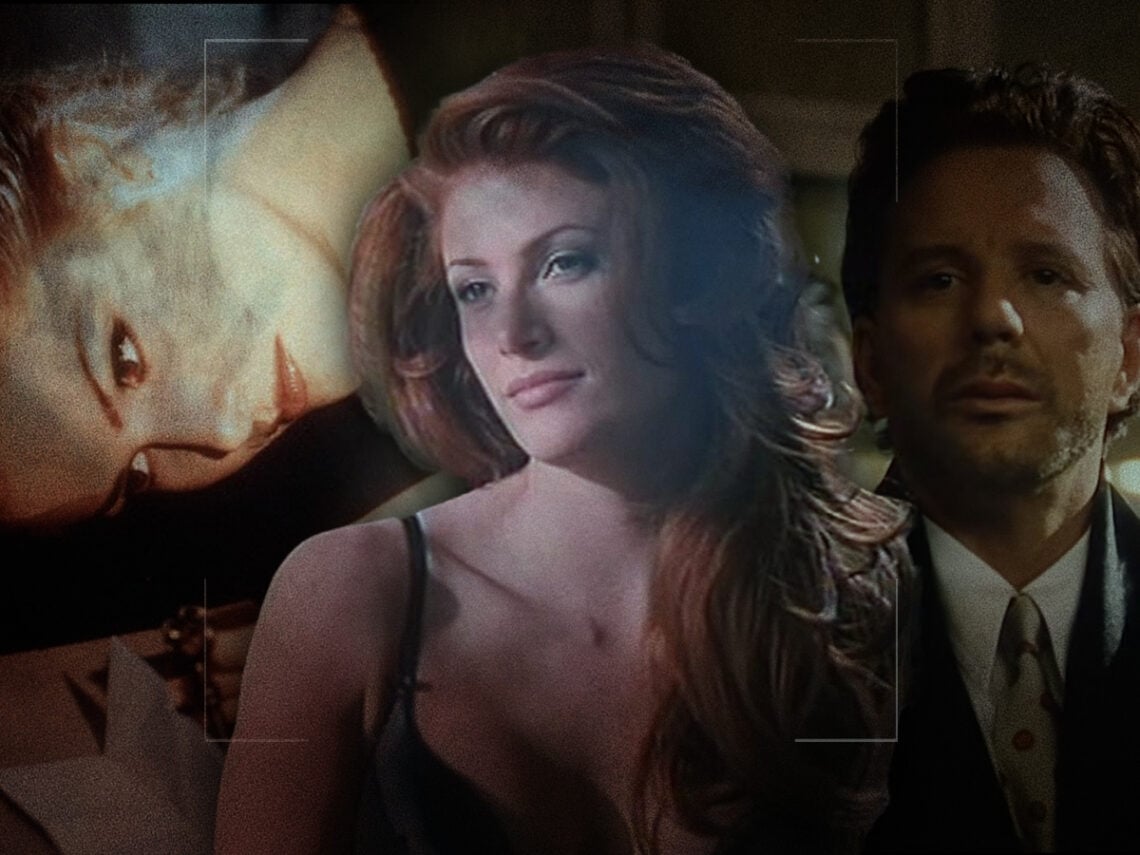
It’s been 29½ years since ‘Another 9½ Weeks’ was released

Before Adrian Lyne kicked off an eternal debate about feminism in film with Fatal Attraction in 1987, he made one of the most successful, notorious, and derided soft-core movies of the VHS era.
Based on a memoir by magazine editor Ingeborg Day, 1986’s 9½ Weeks chronicles a brief affair between a curator at a New York art gallery (Kim Basinger) and a finance executive (Mickey Rourke) who teaches her the ways of dominance and submission.
It’s a problematic film that disappointed just about everyone who was a part of it. Basinger, who is filmed with Lyne’s signature voyeurism, revealed that her director and co-star colluded to make her performance as realistic as possible. In one scene that was cut from the film, Rourke unexpectedly slapped her, leaving her shocked, humiliated, and in real physical pain. For her, the whole production was scarring.
Husband-and-wife writing team Zalman King and Patricia Louisianna Knop felt that the story was undermined by the studio, which insisted on toning down the abusive elements and making it more akin to a romance. As a result, even when Rourke’s character rapes and debases Basinger’s character, the audience is still meant to feel a tug of pity for him when she finally summons the strength to leave him at the end. Meanwhile, Rourke felt that the film didn’t go far enough in its explicitness.
Still, the film was a hit. Though many viewers in America waited until they could watch the movie in the privacy of their own home (which they did in great numbers), European audiences turned out, and it became one of the biggest movies of both stars’ careers. A sequel was an inevitability, but it would take more than a decade for it to come to fruition. The resulting film was simultaneously disastrous and fascinating.
Rourke and King initially tried to have a redo of the film in 1989, with Wild Orchid, which introduced the actor to his future wife, the supermodel Carré Otis. The film was panned, largely due to Rourke’s puffy appearance (rumoured to be the result of cheek implants) and poor acting. By then, he was already a pariah in Hollywood, a former prize fighter from a broken home whose dysfunctional life off camera was just as notorious as his conduct on set. Wild Orchid was the first in a string of flops that sent the actor back to professional fighting. After being hit one too many times, he retired again in 1994, underwent extensive plastic surgery, and was arrested for domestic violence against Otis.
To put it mildly, when the script for Another 9½ Weeks came his way in 1997, he was a desperate man. Karma had been hard at work in the decade since the first film launched his and Basinger’s careers. While Rourke was circling the drain, Basinger was a newly minted Oscar winner for her performance in LA Confidential. Now at the top of the Hollywood pyramid, she had no intention of revisiting one of the least enjoyable experiences of her career.
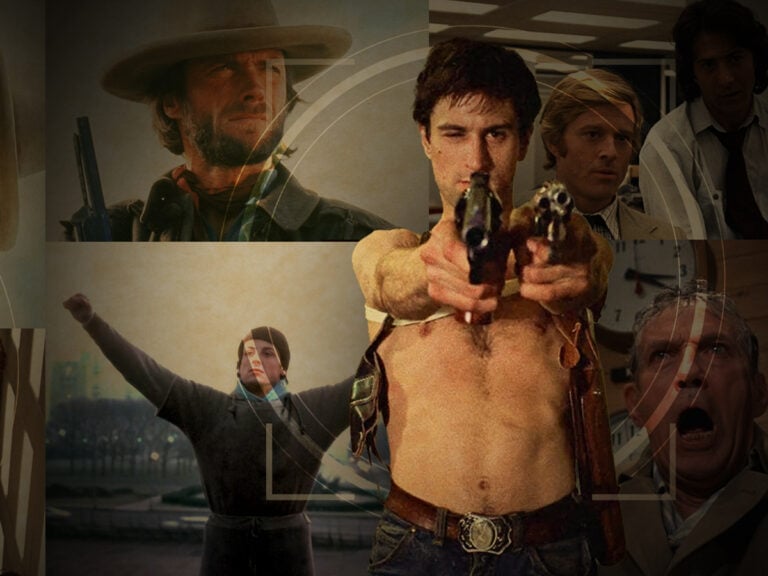
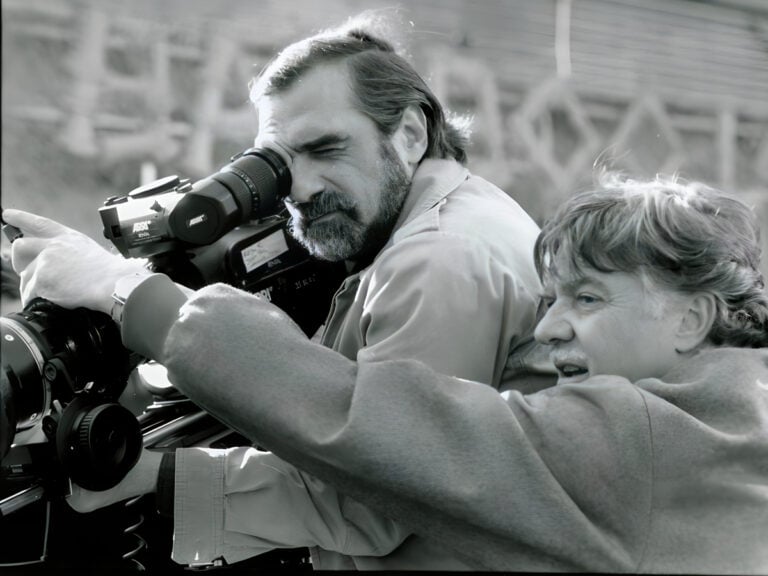
This is not the only hurdle facing the proposed sequel. Though Roman Polanski had expressed some initial interest in making the movie, years of development had rendered the story an aimless mess. Lyne had no intention of directing either, which left the job, rather improbably, to Anne Goursaud, an illustrious film editor who had lent her scissors to several Francis Ford Coppola movies, including The Outsiders and Dracula. By 1997, she had transitioned into directing low-budget, soft-core movies and TV series, but none of them had made it into cinemas, let alone taken the box office by storm.
Another 9½ Weeks begins in a hotel room in which John Gray (Rourke) appears to be simultaneously watching a horse die on the street outside his window, running a razor blade around the bare nipple of a blindfolded sex worker, and holding a gun to his head. It is, admittedly, a ballsy way to start a film. From there, we discover that his lost love from the first film, Elizabeth (Basinger, who does not appear in the film, even in archive footage), is selling her personal art collection at auction in Paris. He hasn’t seen her since she left him 11 years before, but he’s apparently never stopped thinking about all the time he spent spooning cough syrup and jalapeños into her mouth. So, he hops on a plane to the city of lights and emerges wearing a shiny, floor-length trenchcoat.
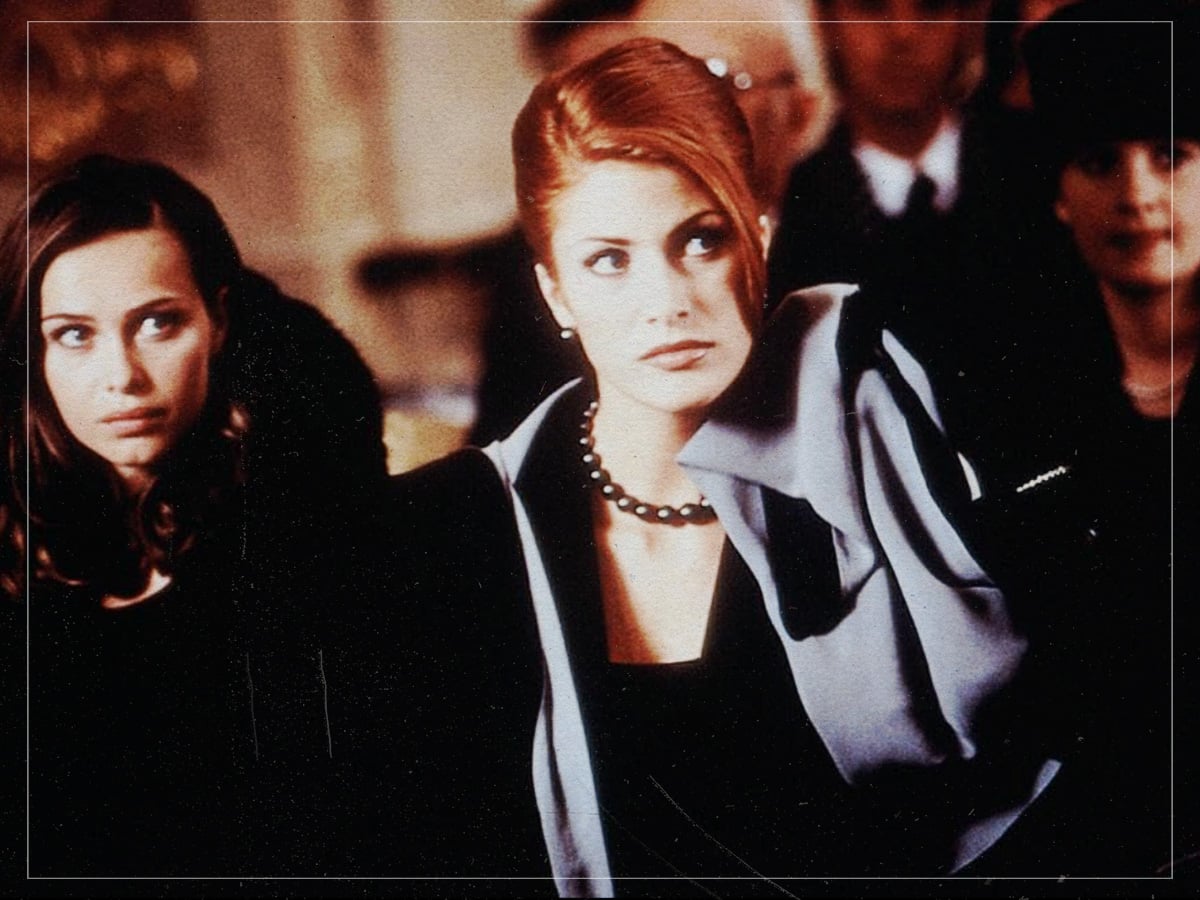
After buying all of Elizabeth’s art at the auction (setting him back several million euros), he meets her friend, Lea (Angie Everhart), a fashion designer who tells him that Elizabeth has gotten married and moved to Tangier. Convinced that this doesn’t sound anything like the Elizabeth that he knew for a handful of weeks ten years ago, John follows Lea around to get to the bottom of the mystery. Eventually, she reveals that she read Elizabeth’s diary chronicling their affair and wants in on the action.
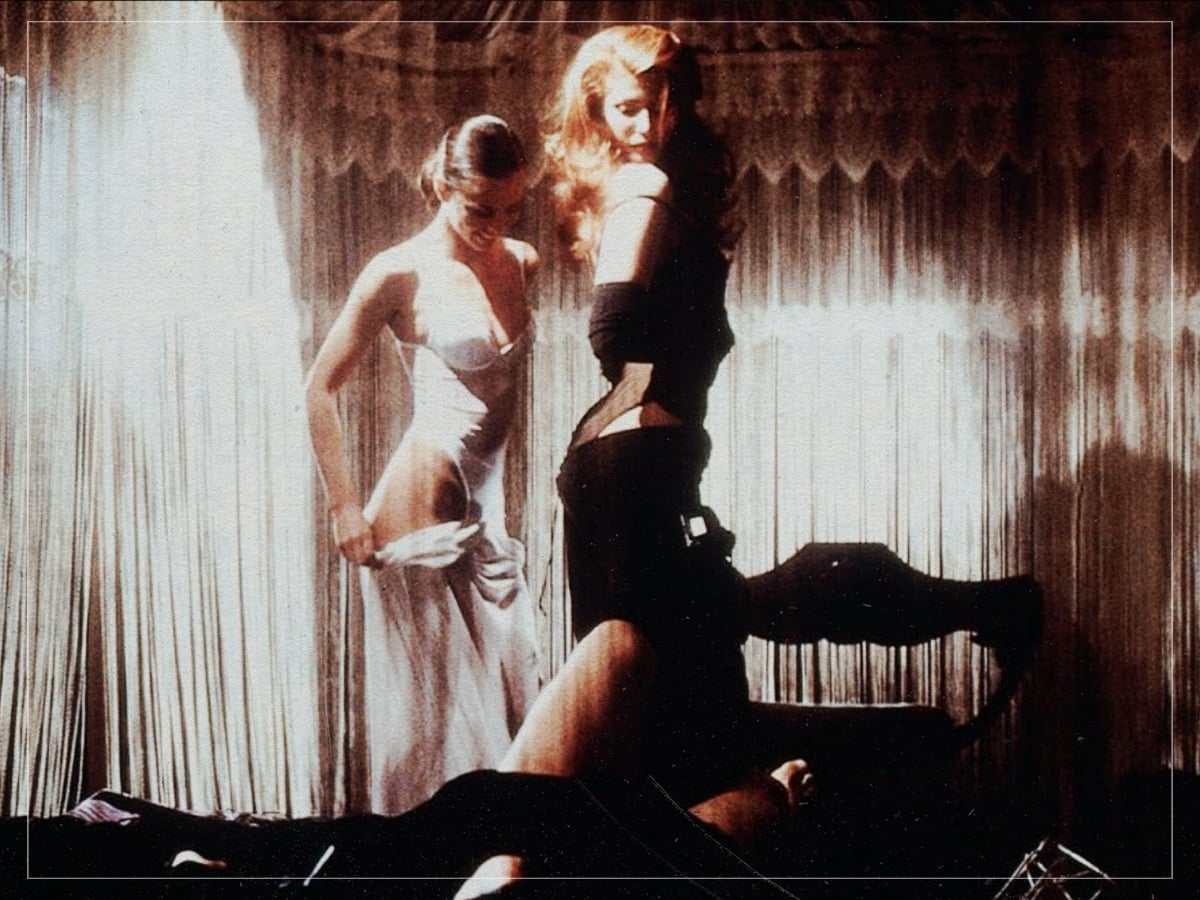
You have to give credit where credit is due: this plot device is pretty ingenious. Most sequels shamelessly rehash their predecessors’ highlights without explanation, but this one spells it out. Lea has read the diary, and she found it so enticing that she wants to recreate the various sexual encounters depicted in it, never mind the whole abuse thing. Cue a handful of scenes that rehash the first film. They have sex in a grimy, smoke-filled alley, he pours wine and honey over her naked body, and he washes her hair with the ease and naturalness of a person who has never seen hair or soap before.
There are some deviations from the original as well, mostly involving women getting sexually assaulted so that John can rescue them. He undermines his heroism, however, by telling one assault victim, “If you play games, someone’s going to get hurt.” Rourke is conspicuously clothed, as well. For all the nudity of his female co-stars, he himself remains positively prim about his attire. In the first film, you occasionally see his unclothed torso, but in this, you never see more than a flash of wrist.
It is difficult to evaluate both films in relation to each other because while one is a sleazily sexy, often troubling, but ultimately worthwhile erotic thriller, the other looks like a companion piece to Tommy Wiseau’s The Room. Rourke is not only unrecognisable through plastic surgery but also appears strangely ill at ease. The confidence and perennial smirk that the character wore in the first film are gone, replaced by a blank expression partially hidden behind a stringy black wig. There is not a hint of the playboy about him, either in appearance or in personality, which makes Lea’s attraction to John not only unconvincing but downright unsettling.
For all its catastrophic missteps and incompetencies, however, the film ends with a twist that is more profound than it has any right to be. In the middle of a threesome at a party (where else?), John demands, once again, to know what happened to Elizabeth. Lea finally reveals that her friend fell into drug addiction and eventually died destitute on the streets the year before. Why she didn’t sell her multi-million euro art collection before this point is not explained.
It is an ending that follows through on the darkness in Day’s memoir and King and Knop’s original vision in a way that the first film could not. In Day’s version, the affair ended in trauma and abuse, not sexual liberation and a bittersweet romance. For all of its narrative flailing and DOA acting, Another 9½ Weeks gets there eventually. It’s not the sort of film that anyone, in good conscience, could recommend, but there must have been a certain amount of freedom granted to a movie that everyone knew was going straight to video.
