


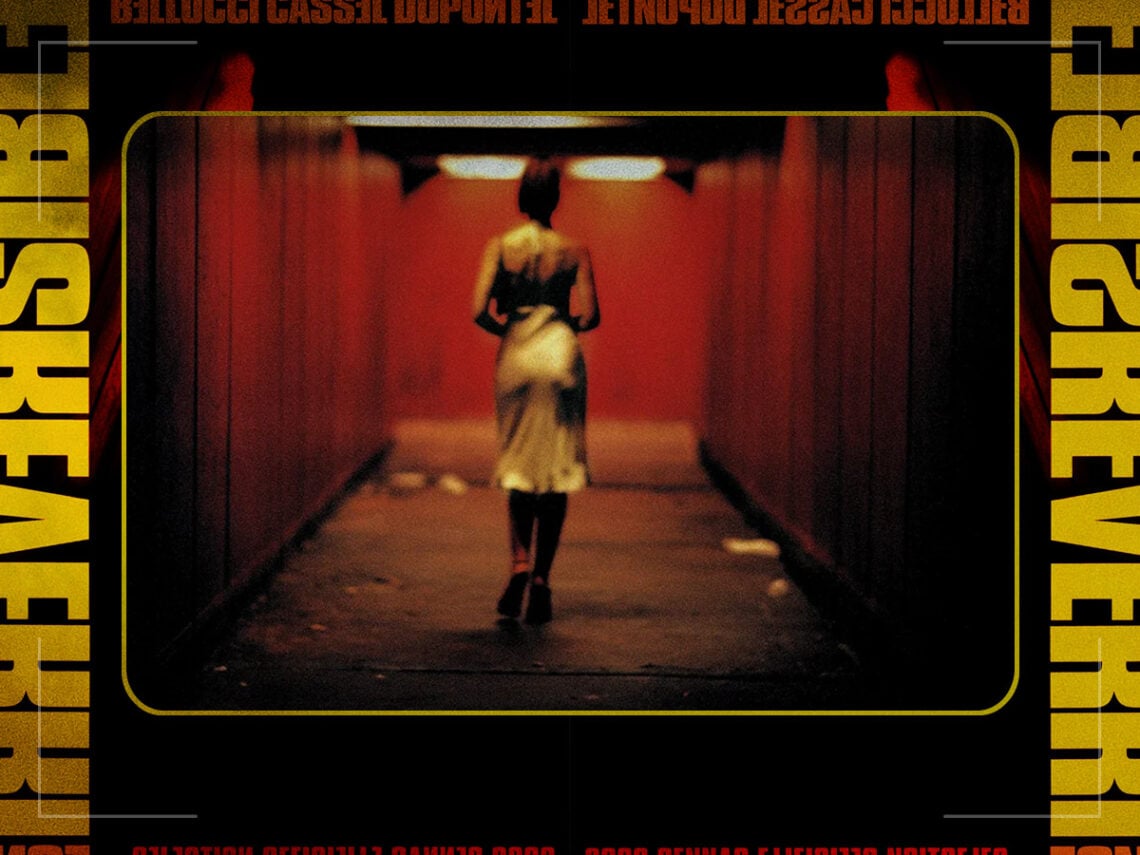
‘Irreversible’: The pointless pain of Gaspar Noé’s darkest film

Attempting to view Gaspar Noé’s work through the lens of morality is futile. That’s not what he’s about. He’s interested in bodily shock, unease, nuance and blurred lines. But as Irreversible does that in his darkest approach yet, it can’t escape the question: what was the point?
Noé’s obsession with pushing the boundaries of morality is so essential to his work that he is now categorised by it. He’s considered by many as a leader of New French Extremity, a class of filmmakers living and working in France, playing in the vein of graphic violence and making it stylish. While there are plenty of critics who would claim gore, violence, and abuse should never be cinematic or somewhat aesthetic, Noé and his peers utterly defy that.
The discussion is more complex than either agreeing or disagreeing with Noé’s use of intense images, though. Personally, I’m a fan of transgressive cinema. I’m unshaken by gore, and I’m not easily offended by depictions of abuse or sexual violence. It’s not the decision to show these things that raises a question, but the ways in which filmmakers approach such a delicate topic.
By now, the topic of sexual assault is a well-beaten horse in cinema. In particular, revenge flicks that stem from assault are a well-worn narrative. That alone brings up a whole host of considerations, as, more often than not, it’s a genre dominated by men. Rape and revenge films are their own genre by now, and while there has been a modern influx of women reclaiming these stories, like Emerald Fennell’s Promising Young Woman or Zoë Kravitz’s Blink Twice, it is primarily and historically a man’s game, instantly bringing up moral questions.

Is it right for a man to be in control of a story of a woman being assaulted? Is there a twisted voyeurism to that? I’m thinking of Teeth where director Mitchell Lichtenstein turns a story of assault and trauma into a comedy, or the scenes of assault in Blonde in which Andrew Dominik seems to delight too much in Marilyn Monroe’s pain, or the Nymphomaniac duology, where Lars von Trier shoots traumatic moments like porn, or the unrelenting discomfort of Larry Clark’s Kids. All of these are examples of deeply uncomfortable depictions of assault against women, all through the lens of a man.
But none are quite as sickening, or really as pointless, as Noé’s Irreversible. The director clearly thinks the film is very smart, messing with a linear order by telling the revenge flick in reverse order and shooting the whole thing through a dizzy, almost-constantly spiralling camera. Noé obviously believes his work is intelligent because of the outright challenge of the film, as he begins by embedding 30 minutes of a 28Hz tone into the start of the film, a sound frequency that aims to provoke anxiety and nausea.
Everything about Irreversible is supposed to be unsettling, yet, beyond that cinematic dare, the only purpose of the film stands at the midpoint when viewers watch Monica Bellucci be assaulted and then violently attacked for nine minutes, in a straight shot, unflinching scene.
As one of France’s biggest stars and an actor noted for her beauty, there will definitely be people out there who really, really got off on that scene where Bellucci’s character is pinned down and attacked with her face, writhing in fear and pain, in front of the camera. It is obviously a disgusting and hard-to-watch scene because of the content, but largely, it’s awful because it feels like a complete and utter rape fantasy come to life.
Beyond the drunken revenge that her character’s boyfriend and ex-boyfriend get in the scenes before the attack, there is no catharsis or critique of the event. From that point on, as the film continues to move back in reverse order, we merely see her at a party, sexualised in a conversation between the two men, and then, in what Noé perhaps saw as the ultimate “this poor woman!” move, we learn in the last moments that she was pregnant. That’s her only characterisation: an object of sexual affection, a future mother, a victim.
Is the revenge exciting? No. Are the scenes after the attack interesting? No. Irreversible is simply a vehicle for an exploitation scene that feels like a challenge for the viewers, as Noé would like his audience to believe, and more of a challenge for Noé to see just how much he could get away with.
