


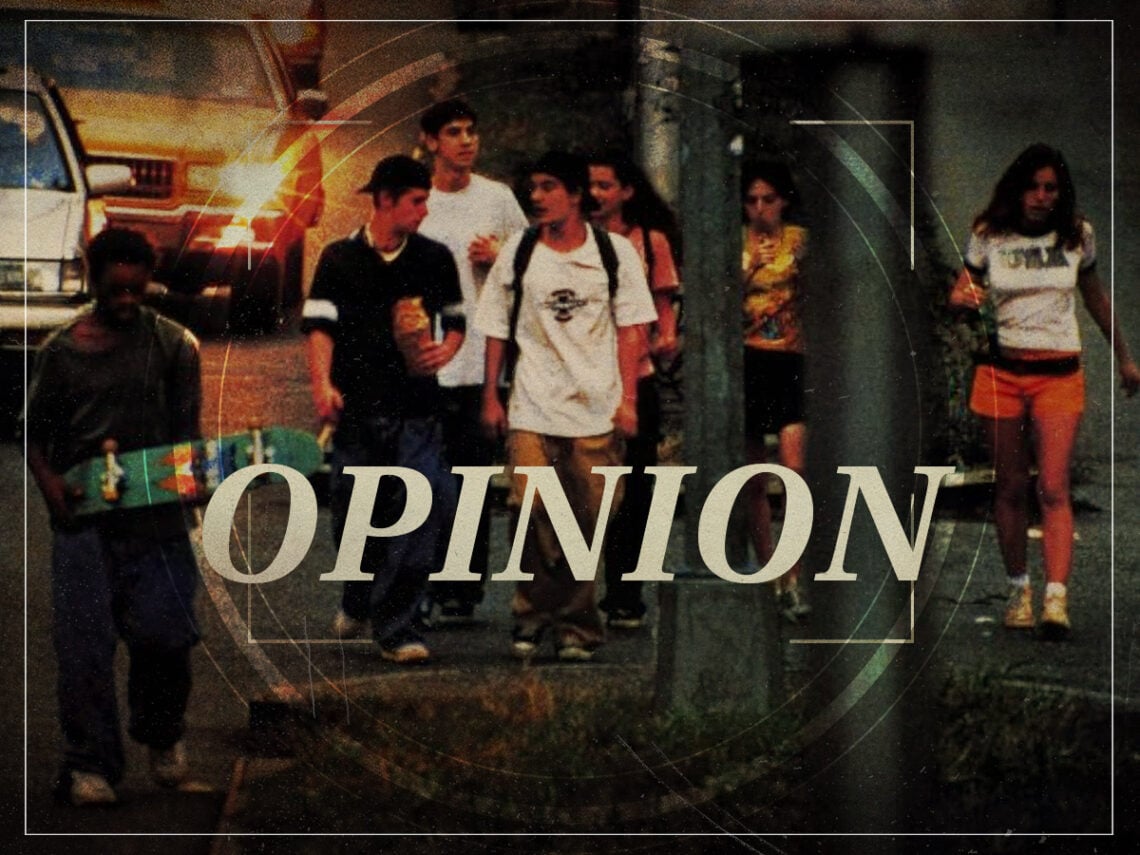
Hear Me Out: ‘Kids’ is the most disgusting movie ever made

Many grotesque films and shows are green-lit under the guise of being “subversive”. Sam Levinson famously described The Idol in such terms, implying that those offended by it simply lacked the bandwidth to understand its satirical take on how the entertainment industry exploits women. However, what was likely intended as a deep and meaningful commentary from Levinson about his personal observations of misogyny was met with widespread criticism. Thousands of viewers called out the hypocrisy of his so-called “genius” idea, pointing to the series’ overt sexual exploitation of its lead actor, its objectifying gaze, and its warped interpretation of “satire”.
If you don’t find it revolutionary when a male director objectifies his female characters and then labels it as satire, then it’s clearly because you just don’t understand what subversive entertainment is. But it’s not just Sam Levinson who has fallen into this trap, oh no, and that brings me to my everlasting hatred for Larry Clark and his 1995 film Kids.
Kids follows a group of New York teenagers over one hot summer’s day, with a number of intersecting storylines as they skate, smoke and, most notably, seek out children to have sex with under the belief that they cannot catch AIDS. I’m graciously pausing for dramatic effect and to allow time for you to throw up.
Cleverly marketed as a cautionary tale about the horrors of our youth and warped attitude towards sex, director Larry Clark managed to sell himself as the king of counterculture and subversive cinema, praised for his unflinching and gritty portrayal of the challenges facing teenagers at the time. The film centres around Telly, a 16-year-old boy with AIDS who believes that he won’t pass on the disease by sleeping with virgins, preying on increasingly young girls in his quest for sexual gratification and infecting all of them along the way.
Funnily enough, the film was picked up for distribution by Harvey Weinstein, who believed it to be a powerful message about the issues facing young people and shine a light on the gritty underbelly of urban living. However, while there may be some relevant messages hidden in the film, such as the sexual exploitation of women and normalised misogyny among young, the subject matter is handled so poorly that the weight/ validity of this message is completely ruined. In addition, Larry Clark’s behaviour during the production raised numerous alarm bells—so much so that it’s genuinely surprising he managed to avoid prison.

To create something subversive implies that it is critiquing something, and in the case of Kids, Clark uses the film to project sexual fantasies onto children, with graphic and gratuitous scenes of teenage boys sexually assaulting girls as young as ten years old. Clark chooses to film these with uncomfortably long close-up shots that are always aligned with the perpetrator of the assault, mostly revelling in the laddish culture of the boys as they joke about their actions afterwards. The director attempts to add weight by exploring this against the backdrop of the AIDS crisis, exploiting a very real issue by manipulating audiences into thinking he’s saying something ‘deep’ without saying anything at all, all for shock value and to create controversy.
By never showing the consequences of Telly’s actions or the impact on his victims, Kids feels like Clark’s disgusting exploration of perverse fantasies, with nothing in the movie that critiques or ‘subverts’ what is happening. The female characters exist as plot devices and objects for the boys to discover their sexuality, with no messaging that critiques their actions.
It isn’t an exposé into the dark side of adolescence or something that ‘really makes you think’ because half of the film is poorly shot footage of teenage boys (and some adults, too) sexually assaulting children for minutes on end.
“25 years ago, yes, I felt exploited.”
Hamilton Harris
Call me crazy, but there is never an excuse for children even to be simulating sex scenes, no matter the cause. And especially not on a project like this where there are filmed interviews with the lead actors (who were all underage) and with Larry Clark, who, according to some, was walking around set with his dick out and freely offering drugs to the children. Unsurprisingly, never was an intimacy coordinator present, with Clark presumably constructing the sexual scenarios himself, with no one to protect the safety of the underage cast.
Not only this, but one of the stars of the film, Hamilton Harris, has since spoken about the project and how he felt manipulated by the director. “25 years ago, yes, I felt exploited. Yes, I felt, ‘Aw, man, I thought it was going to be more than it actually was.’ 25 years later, today, in my late 40s, I see differently,” Harris said. “From an ethical standpoint, yeah, I wouldn’t do it that way. I’d do it differently. It’s not my place to say whether or not Larry is right or wrong. I think each of us can decide what that is for ourselves.”
What would’ve been truly subversive in 1995 would’ve been a story about female sexuality from the perspective of a young woman, such as Claire Denis’ 1994 film US Go Home, which follows a 13-year-old girl who seeks to lose her virginity one night at a house party, with disturbing consequences. The movie shone a genuine light on the issues facing teenagers today, but rightfully from the perspective of those who are oppressed by these issues, showing one girl who attempts to take control of her sexuality and is then faced with the inevitable danger of this and harshly reminded about the consequences of female sexual agency.
Kids is an exaggerated portrait of modern youth that is designed to shock audiences and exploit some sick fantasies about sleeping with underage girls, with no nuance or profound messaging about the consequences of this culture on those who are most affected by it. In simple terms, more eyes should have been on Larry Clark and then-justified work under the umbrella of ‘subversive entertainment’.
Hollywood’s preference towards these projects shows that men’s fantasies about sex will be continuously favoured over women’s truths, with no safeguarding carried out to protect young actors from working with a director who should be forced to answer questions.
