


Anatomy of a Scene: Dance unravels toxic masculinity in Claire Denis’ ‘Beau Travail’

The prickly topic of modern masculinity is a particularly pertinent one, with the toxicity of historic upbringings being criticised under the contemporary microscope. Such has led musicians and filmmakers to study this area of interest in their respective art forms, encouraging French director Claire Denis to make her celebrated LGBTQ+ drama Beau Travail in 1999, a visually stunning and emotionally wrought drama that picks apart the repressed desires of the modern man.
The enigmatic Denis Lavant is the actor at the centre of this quiet epic, playing Adjudant-Chef Galoup, a proud ex-Foreign Legion officer whose leadership of troops in East Africa is thrown into disarray when a beautiful man, Gilles Sentain (Grégoire Colin), joins his ranks. Observing his stature and enchanting good looks from afar, Galoup builds resentment towards his new recruit, fuelled by his own wishes to be able to return to the vim and vigour of his youth.
Despite his stoney, weathered facial features, Galoup hides a sorrowful inner core, studying the young man like an ever-evolving monolith. Such is helped by Denis’ cinematic approach to the group of soldiers, shooting their spectacular training regimes with an elegant poetic feel, making each exercise seem like a dance routine as the men leap, pirouette and glide across tough obstacles and high wires.
Seeing the abundance of community and purpose in his troops’ lives and the utter lack of satisfaction in his own, having been through the grinder of the military already, Galoup indirectly kills Sentain and is subsequently sent back to Marseilles, France.
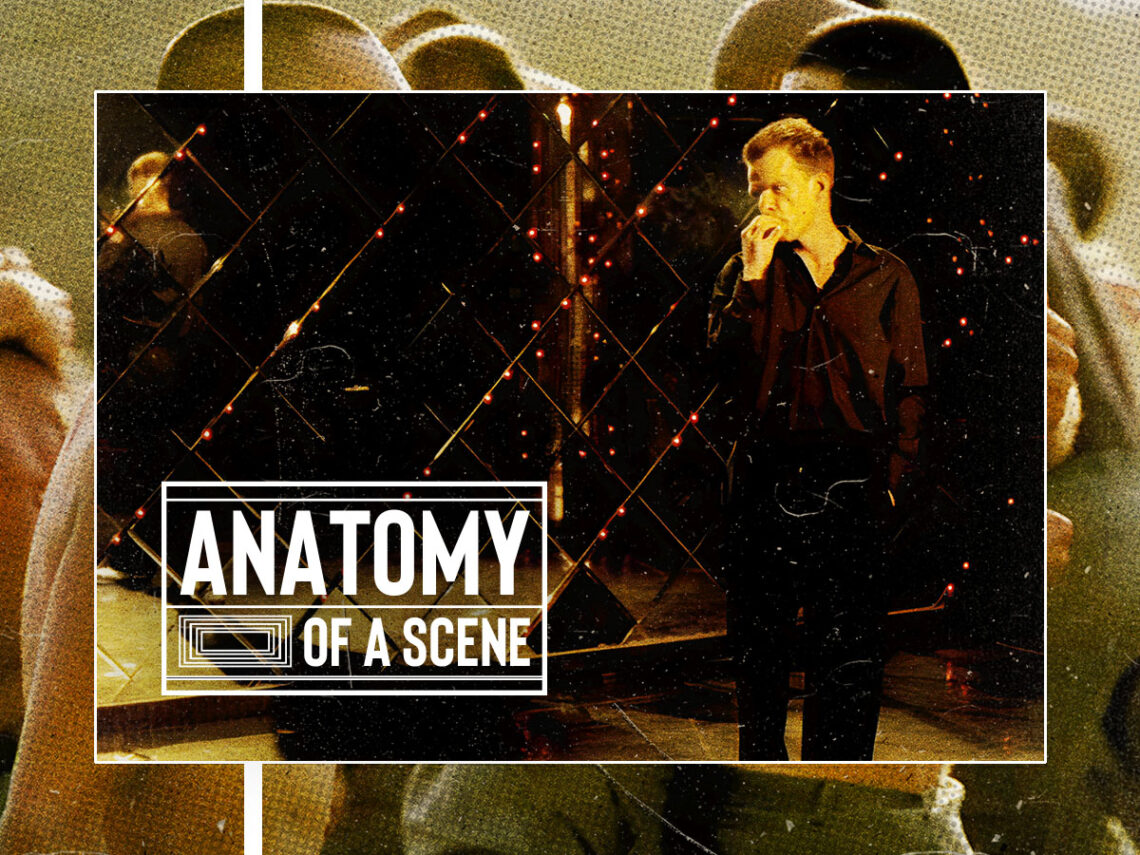
Many filmmakers would consider concluding the film on this thudding note, with Galoup unable to live with this living, breathing reminder of his own imperfection and age in front of him, yet Denis opts to bookend the film with an altogether more surreal note. Perfectly summarising the movie with a stylish epilogue, the final scene of Beau Travail takes us to a pink-twinkled mirrored dance floor on which Galoup smokes a cigarette and struts its space to the sound of ‘The Rhythm of the Night’ by Corona.
Dressed in a partially unbuttoned shirt and what looks to be black and white dancing shoes, Galoup grins whilst doing an altogether more liberating version of the stiff ballet he and his troops enacted earlier in the movie. Throwing himself across the dancefloor like a toddler at a wedding, Lavant explodes in a fit of self-expression. Finding a flow of explosive rhythm, he leaps from the wall and rolls on the floor, totally embracing his liberation away from the structure of military life, finding momentary exhilaration in the spontaneity of individualism.
Alone in this dark space, with only his mirrored image for company, the secrecy of this moment allows Galoup to truly embrace his eccentricity, reflecting the masculine urge to only express oneself for short bursts in moments of confidentiality. Indeed, his own dance moves embody this conflict, expressing the duality of his life, flitting between cooly strutting the dancefloor and manically throwing his body, a physical struggle between masculine and feminine, reflected in the polarity of his mirror image.
This epilogue is so furiously strong, especially when considering that Galoup’s suicide seemed to be the movie’s most natural conclusion, ending his life once he’d lost all purpose outside of the boundaries of military life. Yet, instead of this bleak final note, Denis turns the film into a frenetic celebration and affirmation of life, shooting a victorious final dance that shows that it’s possible to break free from the structures of social order.
