


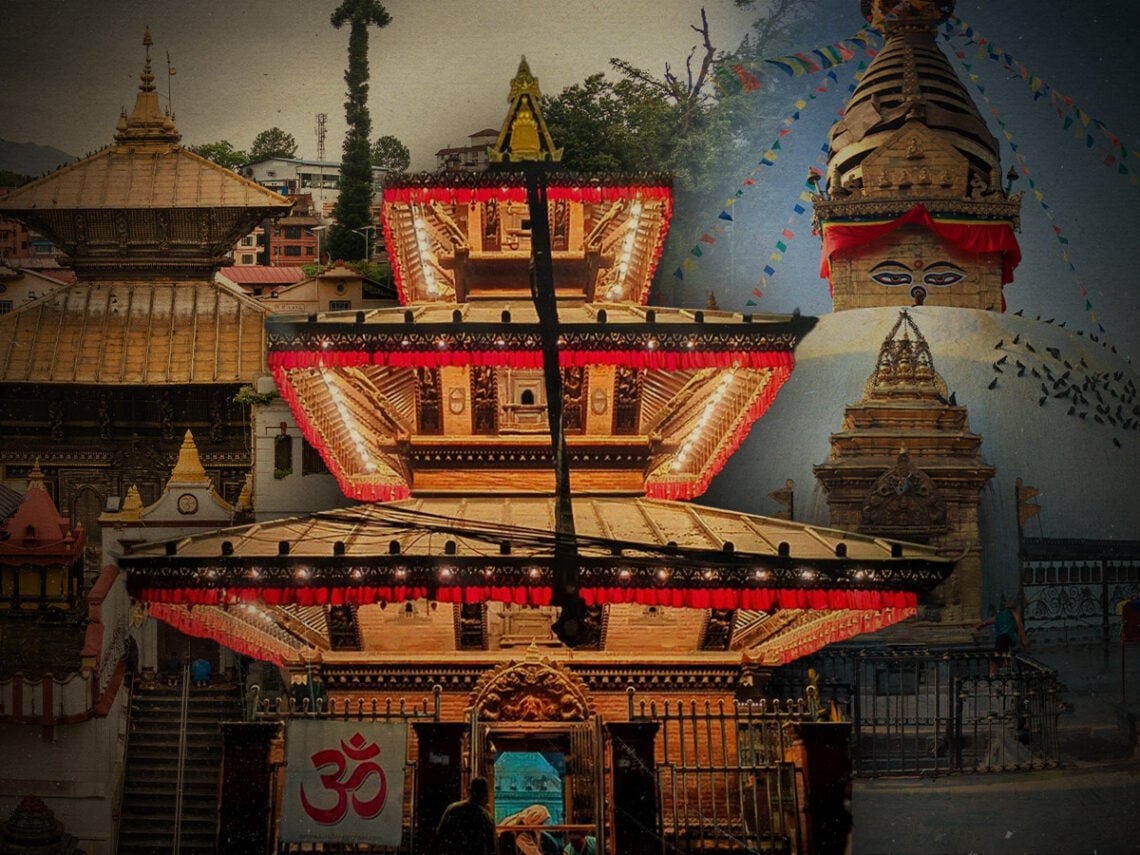
Is Kathmandu still a hub for spiritual tourism?

The white, snow-topped mountains of the Himalayas separate the subcontinent of India from the Tibetan Plateau, and at just 1,400 metres above sea level, nestled in Kathmandu Valley, sits Nepal’s capital of Kathmandu.
In many ways, its unique geography has played a part in Nepal and its capital occupying a special place in global spirituality and in both Hindu and Buddhist traditions, acting as a crossroads between India and Tibet.
Kathmandu Valley was also part of a route that ran through the region, allowing trade between Northern India, Tibet and China, through which, alongside textiles and spices, also came ideas and religious thinking, and in time, temples and monasteries also became part of the landscape.
It’s one of the longest continuously inhabited places on the planet, and has long attracted pilgrims, but with modern tastes changing and the city still rebuilding some of the damage that it was dealt in 2015’s earthquake, the question is whether Kathmandu is still a hub for spiritual tourism.
Over the decades, the city has seen many problems, with urbanisation, heavy pollution, poverty and infrastructural issues at the fore, and those combined with a wider evolution in tourism, now Kathmandu is broadening its remit, with wellness and cultural tourism meeting the idea of the traditional pilgrimage.
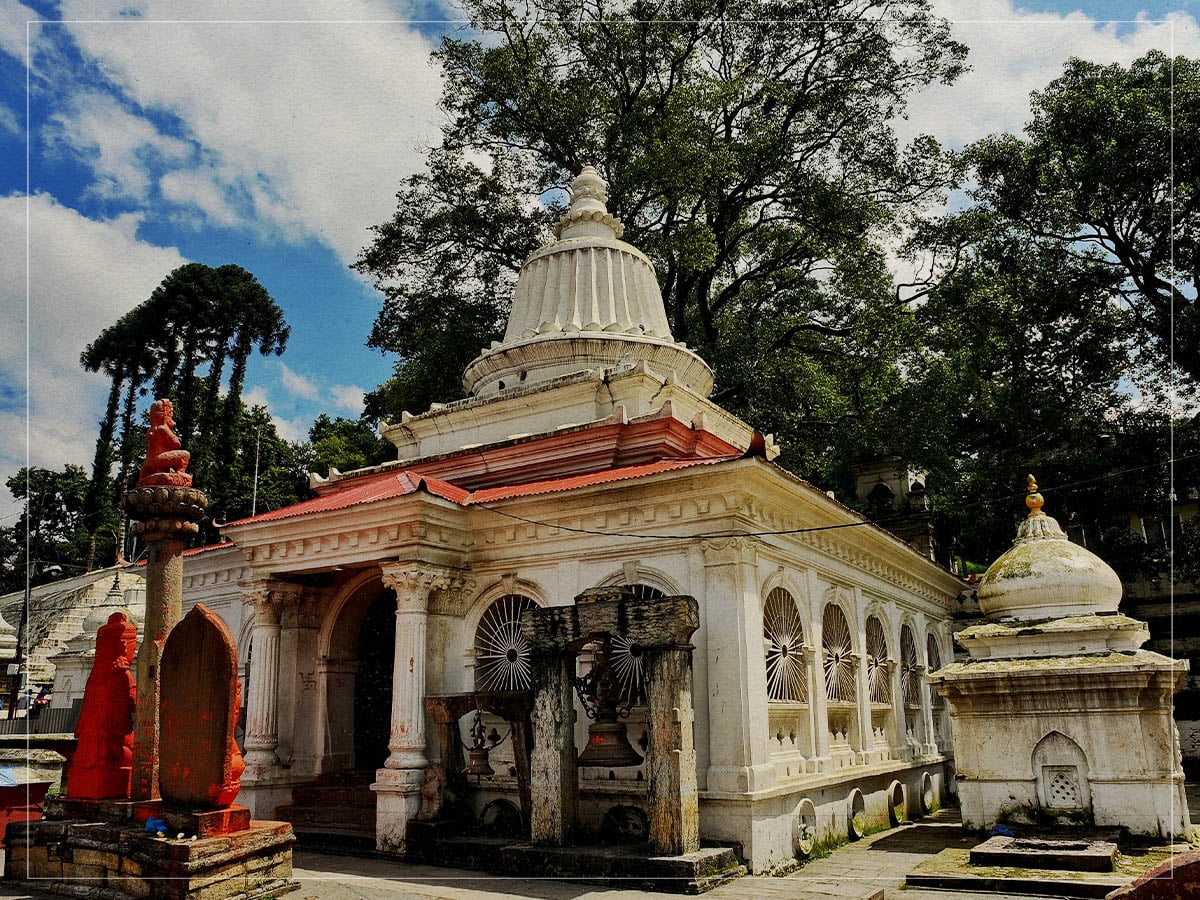
It’s hard to imagine now, in a time in which religious lines are causing rifts across the Middle East, but Kathmandu saw its Hindu and Buddhist traditions not only co-exist but even at times overlap, where some of its most visited sites, the Pashupatinath Temple and Swayambhunath, often known as the Monkey Temple, held significance for both faiths, cementing Kathmandu’s place as a site of religious convergence rather than isolationism.
Air travel truly opened up the region, with visitors increasing from as little as 6,000 in the early 1960s to half a million at the turn of the millennium, and over a million in 2025. It was these earlier travellers, in the 1960s and 1970s, who helped grow Kathmandu’s reputation as a spiritual hub in the global consciousness.
As part of the hippie trail, a glut of Western travellers, attracted by Nepal’s mysticism, arrived in the foothills of the Himalayas seeking enlightenment and meditation, for something outside of traditional European religions, and Kathmandu, with its mix of faiths, was the perfect place.
Faith still remains hugely important to Nepal’s travel industry. Both Buddhists and Hindus make pilgrimages to the region, particularly during their festivals, as well as making wider sacred journeys, with some using Kathmandu as the gateway into Tibet.
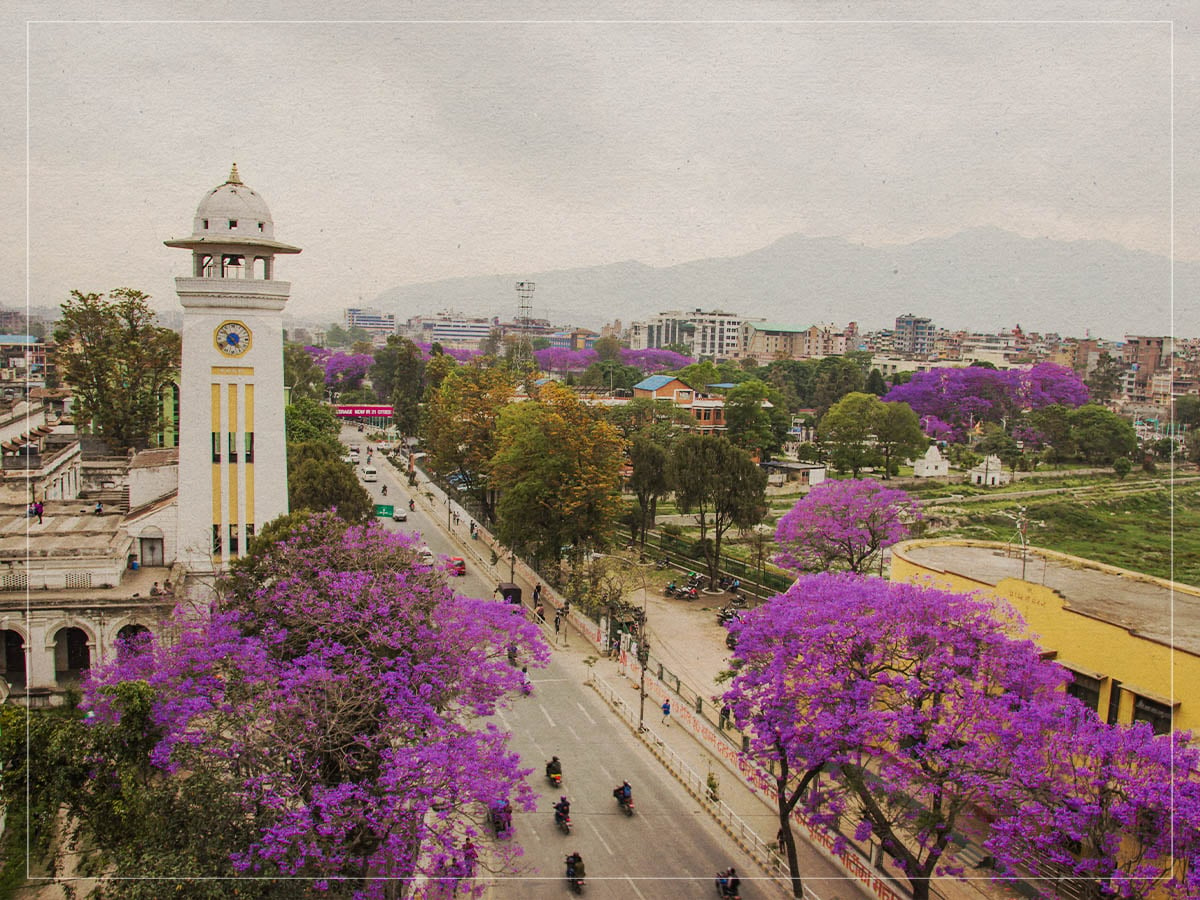
Like many popular destinations, it’s been a victim of its own success. There are other places in Nepal that still feel calm, tranquil and at peace, but Kathmandu is busy. A lot of unplanned expansion has caused both congested roads and, as a by-product, a lot of pollution. I was struck by how thick the air was with dust and dirt, and the city itself is littered with rubbish and the very visible effects of poverty, which is why you’ll see a lot of Westerners there working for NGOs and charities. It’s a great city, with tremendous people and a lot to do and see, but if you’re expecting a peaceful Himalayan sanctuary, you’ll need to go elsewhere.
Important historical structures, alongside other buildings, were damaged in the 2015 earthquake, with restoration still not complete in some instances, and for some, the perception of cultural authenticity has dimmed since the restoration began.
As the Western world has gobbled up the idea of spirituality and wellness, it’s seen other parts of Asia experience travel booms, like Bali and Chiang Mai, which are now overrun by Britons, Aussies and Americans wearing hemp and looking for their spiritual fix, and somewhere to practice their yoga.
Kathmandu is fighting back though; as wider trends have seen young travellers search for curated wellness experiences, these ways are being adopted by those in Nepal too, with retreats, yoga schools and Buddhist meditation programmes attracting visitors. Modern spirituality is more about personal development and growth rather than religious participation, and it’s a realisation that seems to have dawned on Kathmandu as well.
Over the past decades, we’ve seen Kathmandu grow and evolve, responding to challenges and changing tourist trends by being versatile. The parameters and meaning of spiritual tourism have changed, with cultural exploration and wellness mixed in with the longstanding history of pilgrimage and seeking of enlightenment, but the city remains a spiritual hub.
