


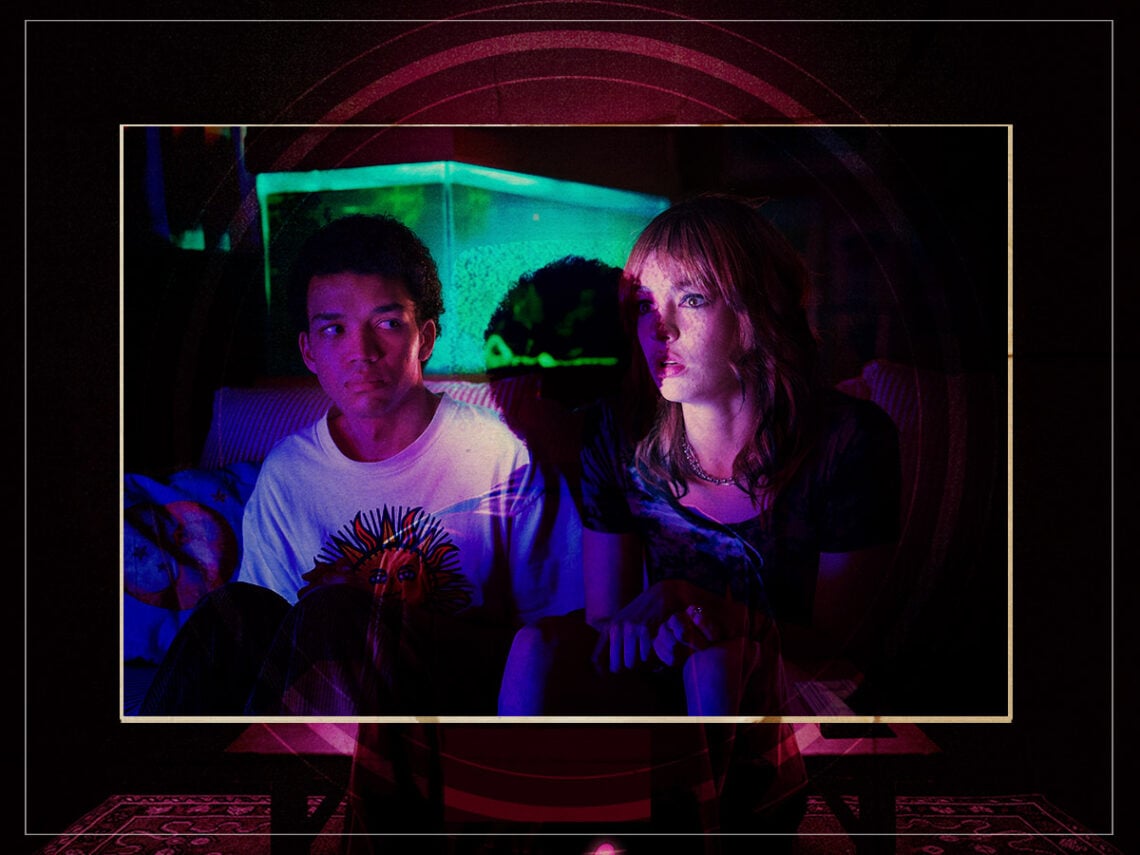
The profound impact of ‘I Saw The TV Glow’ and Jane Schoenbrun’s unmade fantasy masterpiece

The experience of watching Jane Schoenbrun’s 2024 film I Saw The TV Glow remains the most transcendental cinema experience I’ve ever had. After sneaking into a late screening at Sundance this year, I was completely unprepared for the confrontational and heartbreaking story that followed, shattering my heart into a million pieces and haunting me for many weeks. The film follows Owen, a quiet teenager who is introduced to a TV show called The Pink Opaque through his classmate Maddy, becoming obsessed with the show and creating cracks between his waking world and the one on screen.
It captures the lonely and soul-crushing process of queer assimilation: a person being pressured to conform to what is deemed “normal”, slowly losing the unique parts of themselves and the boundless potential they once dreamed of as a child. Schoenbrun explores this through the concept of “the shadow realm”, a metaphorical hell for living without the freedom to express one’s true self.
In this bleak existence, the world loses its colour, and you fade into the background, becoming a ghost of who you once were. It’s like screaming internally while living in a state of resigned disbelief as the distance from your authentic self grows so vast that it feels unreachable. You begin to observe your life as though through a screen, clinging to fantasies for survival, only to realise you’re no longer certain what you’ve been watching—or who you’ve been—this entire time.
The film resonated deeply with audiences, becoming one of the most powerful pieces of queer media in recent years. It captures a journey rarely depicted on screen, carrying an urgency that feels increasingly poignant as trans communities around the world face the erosion of their rights. Schoenbrun has created something entirely unique, breaking new ground in queer storytelling. Even legendary filmmaker Martin Scorsese praised the work, stating, “There was one film I liked a great deal I saw two weeks ago called I Saw the TV Glow. It really was emotionally and psychologically powerful and very moving. It builds on you, in a way. I didn’t know who made it. It’s this Jane Schoenbrun.”
Many people have since wondered what Schoenbrun will create next, but during a conversation on the A24 podcast, the filmmaker revealed their plans for a fantasy epic television series that HBO abandoned because of a bizarre rule created after the production of Succession.
Schoenbrun revealed how I Saw The TV Glow and their first feature film, We’re All Going to the Worlds Fair, are both part of a trilogy called the screen trilogy, explaining that the third part is “…this massive universe that I created called Public Access After World… and I just wrote like 1600 pages of a screenplay that was meant to be the first two seasons of a three-season TV show,” they said. “And plotted it out like beat by beat in this whole mythology and this universe. I’m so terrified of television, but I basically told my managers lets pitch this but tell everyone that I will only do it if I get a greenlight to make at least one full season of it”.
The idea of a fantasy epic series that expands on the ideas within I Saw The TV Glow is almost too much for me to handle, and the reasoning behind why this has yet to be greenlit is almost unbelievable, with Schoenbrun explaining, “I pitched it and a bunch of the networks were like ‘it’s a little too young for us’. There was this person at HBO who really loved it but couldn’t pick it up because, at the time, there was a strict edict that they could only pick up new shows that were like Succession and about dysfunctional families”.
So, in order for HBO to find new and groundbreaking stories, they’re imposing strict requirements for all upcoming projects to directly reflect the themes and ideas of their existing most popular series? It’s a situation that makes no sense to you, me or Schoenbrun.
Like many production companies, after one film is successful, they look for other authentic and revolutionary stories, looking for stories that are exactly the same to try to replicate its success. It would be like A24 looking for more stories about Black gay men in Miami who are coming to terms with their identity after the success of Moonlight instead of searching for other new voices that will resonate with an entirely different demographic, allowing everyone to feel seen through the stories we see on screen.
There are far too many people in positions of power in this industry who completely miss the mark when it comes to discovering new talent and supporting emerging directors. Despite knowing little about it, Public Access After World already has my full attention, and I can’t wait to see what Schoenbrun creates next. However, if networks like HBO continue filtering proposals through the lens of whether they replicate the concepts behind previous successes, we’ll never see true diversity on screen. People will remain too afraid to take risks on stories that haven’t been told before. This approach stifles underrepresented narratives and, in doing so, becomes counter-productive to real progress, trapping us in a vicious media cycle of the same ideas over and over again.
Succession was great because of its innovation and authenticity, and if you think that you’ll find other innovative and authentic projects by putting boundaries on other filmmakers to mimic this, then you’re kidding yourselves. There are countless other projects that could be equally as impactful if given the opportunity to flourish, and I’d like to imagine a world in which this is cherished in the same way as a dysfunctional white family, which seems to be an apt reflection of HBO itself.
