


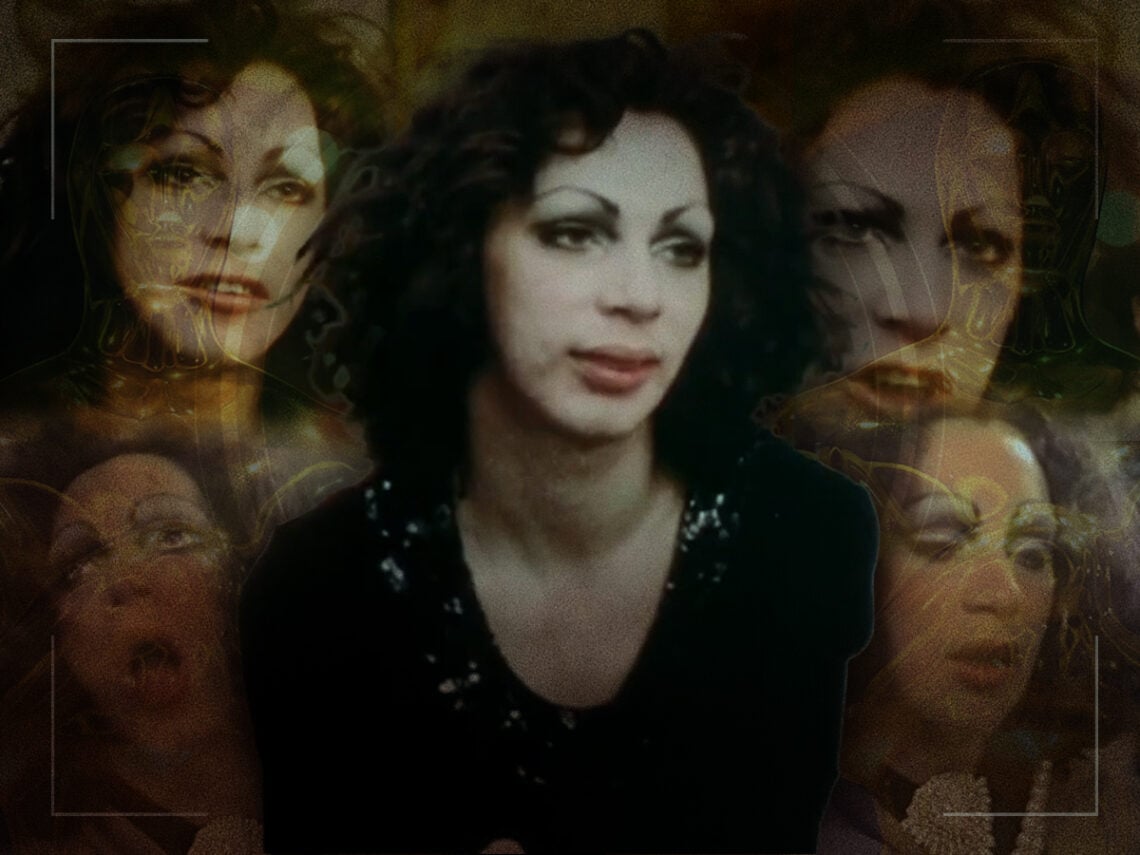
The Holly Woodlawn story: How transphobia halted an Oscars campaign in 1970

“Holly came from Miami, FLA/ Hitchhiked her way across the USA/ Plucked her eyebrows on the way/ Shaved her legs and then he was a she,” sings Lou Reed in his classic 1972 song, ‘Walk on the Wild Side’, referring to Holly Woodlawn.
One of several Andy Warhol superstars who formed Reed’s portrait of New York outsiders, which included other transgender figures such as Candy Darling and Jackie Curtis, Woodlawn initially rubbed Warhol the wrong way when she impersonated Factory icon Viva, and thus attempted to charge a camera to the artist’s account. Woodlawn was audacious, but that wasn’t the only time she impersonated someone, as she once tried to convince people she was the wife of the French ambassador, which only led to her arrest.
Clearly, she had a penchant for performance (I guess the clue’s in her name, which literally features the word ‘Hollywood’), and what she desired was to be a star, especially one who was in with the Factory crowd. She’d moved to New York as a teenager with a new name, picking Holly because of the character in Breakfast at Tiffany’s. In the big city, all she tried to do was get by, even if that meant turning to sex work and stealing, not by choice but by necessity. It wasn’t going to be easy, but Woodlawn managed to sustain herself long enough to become a womenswear model for Saks Fifth Avenue.
In the ‘Big Apple’, it was hard for Woodlawn to avoid the allure of the underground art scene, where glamorous stars, many of whom were also transgender, worked alongside Warhol, attended lavish parties, and made subversive works of film. Funnily enough, it was her Viva impersonation stunt that secured her stardom, because director Paul Morrissey, who was casting a film called Trash, to be produced by Warhol, was intrigued by her boldness. She was soon cast opposite Joe Dallesandro.
Her performance in Trash as Dallesandro’s transgender girlfriend was pretty groundbreaking, wherein she improvised most of her lines, and considering that much of the movie’s plot reflected parts of her own life, including drug abuse and living on the margins of poverty, her performance felt utterly real.
It was none other than Hollywood filmmaker George Cukor, maker of hits like The Philadelphia Story, My Fair Lady, and A Star Is Born, who rallied for Woodlawn to be nominated for an Oscar; Cukor knew talent, having worked with stars like Judy Garland, Katharine Hepburn, and Audrey Hepburn, so if anyone was an authority on awarding a solid acting performance, it was surely him.
Yet, no one would listen to him, and it all came down to transphobia. In an article published in The News, Woodlawn is referred to as a “transvestite star”, with the article explaining, “Holly’s the character whose Warhol-junk flick Trash impressed director George Cukor, who said she merited an Oscar nomination; but Gregory Peck said the Academy couldn’t decide whether the nomination should be for ‘Best Actor’ or ‘Best Actress’.”
Shockingly, it wasn’t until 2025, over 50 years on from Woodlawn’s unfair Oscars snub, that the first transgender actor was nominated for an Academy Award. The landmark was hit by Karla Sofía Gascón for her role in the musical drama Emilia Pérez. But if the Academy had any sense back in the early ‘70s, Woodlawn could’ve made history as the first transgender nominee.
Sadly, transgender people were wholly misunderstood back then, considerably more than they still are today, and Woodlawn knew there was a slim chance of her ever being considered for awards as a result. But it was thanks to her, as well as the likes of Darling and Curtis, that transgender identities became more visible in the mainstream, and they played a significant part in paving the way for the LGBTQ+ community within the film industry.
