


Five songs inspired by Candy Darling

During the 1960s and early ’70s, Andy Warhol surrounded himself with people whom he referred to as his superstars, immortalising them in his artworks and propelling them into the clutches of fame in the process. The notorious artist had a collection of muses, one of the most well-known being Candy Darling.
Candy Darling was born in 1944 in New York and had a tumultuous childhood. Struggling with her gender identity, Darling found refuge in Hollywood cinema and television, learning to impersonate her favourite stars, such as Kim Novak and Joan Bennett. From that moment on, she decided to model her life on “Hollywood glamour-queen prettiness” and started dressing in female clothing, a decision which led her to be outcast by the neighbourhood. At school, she was “relentlessly bullied”, and a group of boys tried to lynch her, leading Darling to drop out.
Eventually, Darling would start taking the train to Manhattan, where she began hanging out in Greenwich Village. After starring in Jackie Curtis’ play Glamour, Glory and Gold, with Warhol in the audience, she was cast in his 1968 film Flesh before starring alongside Curtis and Holly Woodlawn in Women in Revolt. Darling’s career as an actor extended outside of Warhol’s circle, and she appeared in films such as Klute, Silent Night, Bloody Night, Some of My Best Friends Are… and Lady Liberty.
She was later cast in Tennesse Williams’ original production of Small Craft Warnings at the playwright’s request; however, Darling was not allowed to enter the female changing rooms, instead confined to a broom cupboard which she adorned with a star on the door. Darling was an underground star and a trailblazing transgender icon, illuminating a path of greater visibility. Tragically, Darling died when she was just 29 from lymphoma.
On her deathbed, she wrote a letter intended for Warhol and friends, which read: “Unfortunately, before my death, I had no desire left for life … I am just so bored by everything. You might say bored to death. Did you know I couldn’t last? I always knew it. I wish I could meet you all again.”
Despite her short life, Darling’s influence remains strong. Since the 1960s, a collection of songs have been written about or inspired by Darling’s legacy. Below, we explore some of the best.
Five songs inspired by Candy Darling:
‘Candy Says’ – The Velvet Underground
‘Candy Says’ appeared on The Velvet Underground’s eponymous third album, released in 1969. Written by Lou Reed, the track was sung “as a matter of circumstance” by bassist Doug Yule. The gentle song opens with the words, “Candy Says, ‘I’ve come to hate my body/ And all that it requires in this world”, alluding to Darling’s gender dysphoria. Reed’s lyrics are painfully sad, and Yule’s delivery, paired with the bittersweet guitars, makes the track even more emotive.
Discussing the track, Reed shared: “Yeah, it’s about Candy Darling – and trying to see things from that point of view, but it’s also about something more profound and universal, a universal feeling I think all of us have at some point. We look in the mirror, and we don’t like what we see. […] I don’t know a person alive who doesn’t feel that way. That’s what the song is really about – and not only in looks but in what you require.”
‘Walk on the Wild Side’ – Lou Reed
Multiple Warhol superstars are commemorated in Reed’s iconic solo track ‘Walk on the Wild Side’ from Transformer, released two years before Darling’s death. The song references stars like Joe D’Allesandro, Holly Woodlawn, Joe Campbell, Jackie Curtis, and Darling, with Reed singing: “Candy came from out on the Island/ In the back room she was everybody’s darling.”
Reed was slightly apprehensive of the reactions from his song’s subjects. However, he once shared: “Candy Darling told me [s] he’d memorised all the songs and wanted to make a ‘Candy Darling Sings Lou Reed’ album. It probably wouldn’t sell more than a hundred copies!”
‘Candy Darling’ – St. Vincent
On her 2021 album, Daddy’s Home, St. Vincent paid homage to Darling after getting “pretty obsessed with her”. Detailing further, the artist shared with NME: “I had a friend who was friends with her and was at her bedside when she died, and I just started thinking about her.” In the song, St. Vincent sings: “So, queen of South Queens/ We never did stop cheerin’ for you, babe/ And your wig, blonde, rolls home/Wavin’ from the latest uptown train.”
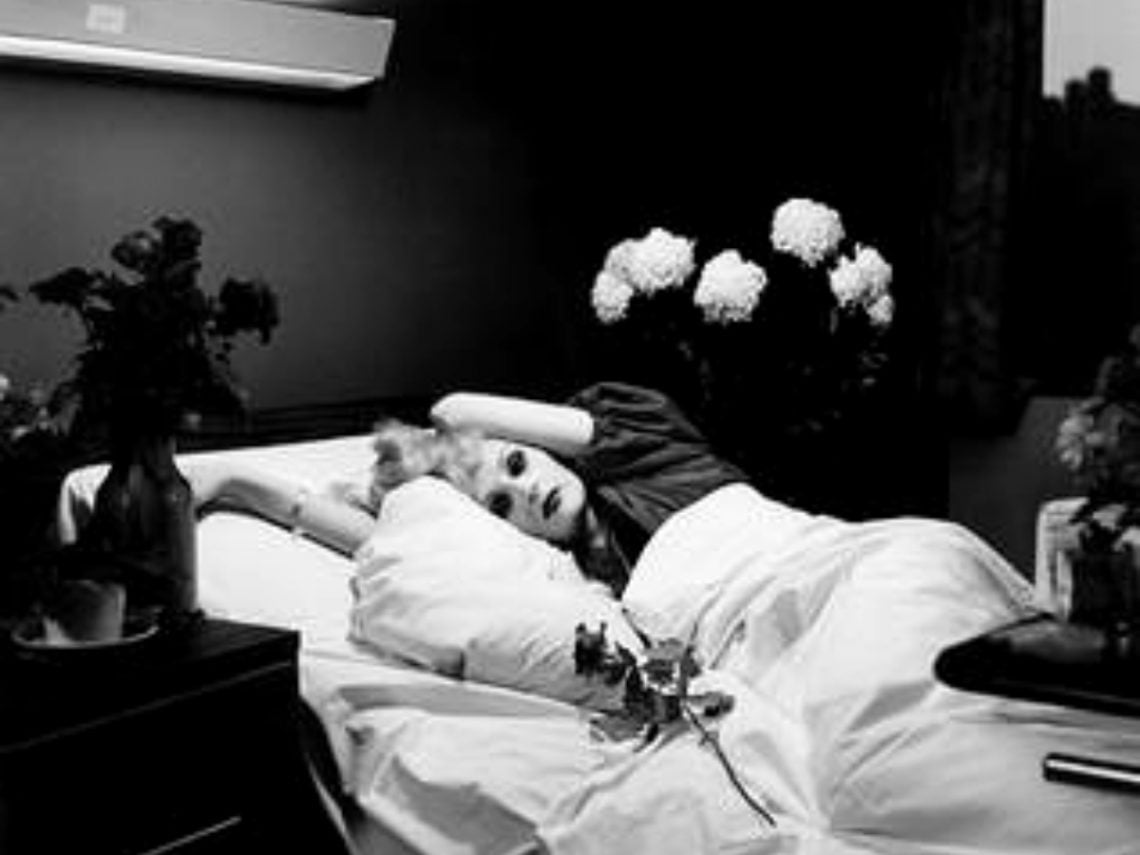
The musician was inspired by the image of Darling ascending to heaven, ready to take on another adventure. “I just kept picturing that we were all on the platform seeing her off, and she was taking that last uptown train to heaven, slow motion waving with the tiniest bit of subway wind in her hair.” She was also inspired by the famous image, ‘Candy Darling on her Deathbed’ by Peter Hujar, which depicts the star lying glamorously amongst flowers not long before her passing.
‘Citadel’ – The Rolling Stones
Taken from The Rolling Stones’ psychedelic release Their Satanic Majesties Request, ‘Citadel’ is powered by a heavy electric riff whilst saxophones, mellotrons and flutes are also present. The song features the lines, “Candy and Taffy, hope you both are well/ Please come see me in the citadel.” “Taffy” refers to one of Darling’s friends, who helped to give the star her last name due to constantly dragging her around the West Village, saying, “Come on, let’s go, Candy, darling”.
Darling recalled her and Taffy’s encounter with The Stones: “We were on the floor above them [at the Hotel Albert], and we dangled a bunch of grapes down on a string outside their window. You see, the Citadel is New York, and the song is a message to us – Taffy and me.” According to Warhol, “Candy didn’t care one bit about rock and roll – her mind was always back in the thirties and forties and the cinema fifties – so it was really strange to hear her use her Kim Novak voice to talk about rock lyrics.”
‘Lola’ – The Kinks
One of The Kinks’ biggest hits, ‘Lola’ was long rumoured to be inspired by Darling. Appearing on their eighth studio album, Lola Versus Powerman and the Moneygoround, Part One, the song explores an encounter between a man and a transgender woman, with Ray Davies singing, “She walks like a woman and talks like a man.” Despite the controversy that the song garnered upon its release, with many radio stations fading the track out when it is revealed that ‘Lola’ is biologically male, it has since become of the band’s most recognisable songs.
Near the end of the track, Davies praises ‘Lola’ for her ability to clearly define her identity, even though “it’s a mixed up, muddled up, shook up world.” Davies has since denied that the song is about Darling, although the two did go for dinner together once. Whether Darling really inspired the song or not will never be known, but the actor’s constant association with the song is a testament to her captivating influence during the 1960s and early 1970s.
