


Shooting for the red stars: How the space race sent Soviet art to the cosmos

The Soviet Union travelled many creative courses throughout its shifting visual identity, from the early constructivist burst of bold, revolutionary impact illustrating the new communist state’s birth to the socialist realism set to “engineer the souls” of the proletariat with its happy workers and farmers under Joseph Stalin’s watch.
None proved so romantic and stirring as the USSR’s Space Age artwork, however. Often draped in dreamy tinctures and stylised vistas of the heavens above, a wide-eyed cosmonaut looks out to the universe before them, sporting a look of both intrepid bravery and curious wonder as they commence a mission to spread Marxism-Leninism to the galaxy’s final frontier. As ever, the system that’s made such a voyage is never without doubt: the cosomanut’s helmet routinely adorned with the USSR’s “CCCP” Cyrillic abbreviation, or the Kremlin’s red glow looming in the distance.
Where did such fascination with the stars come from? There was some precedent. Even during the Tsar’s reign, early adherents to the ‘Cosmism’ movement would illustrate their intriguing mix of natural philosophy and Eastern Orthodox tradition via a Voyages extraordinaires beam of sci-fi fantasy. Once the Bolsheviks had seized control, Moscow artist Konstantin Yuon depicted the drama of the October Revolution in 1921’s New Planet, a nascent political dawn told via an orange, cosmic eruption plunging the distressed and anguished beings on the ground in awe-struck terror.
Yet, the Soviet Space Age’s artistic dazzle would reach a feverish peak once Yuri Gagarin completed his historic orbit around Earth on 12th April, 1961. Only four years after Sputnik 1 marked the first artificial satellite sent to space, Gagarin’s near two-hour cruise around the planet in the Vostok 1 turned the Soviet pilot into a socialist symbol that briefly shared stature with Vladimir Lenin in deified elevation. Such a scientific achievement brought some eager propaganda flexing on the world stage. In full gratuitous view of a demoralised USA growing ever more anxious at the Soviets’ ballistic rocket might, the Politburo sent Gagarin all over the world as the very vindication of the socialist system, a rural boy from a sovkhoz collectivist farm blasted into space 27 years later.
“Sorry Apollo!” crowed Pravda, the official broadsheet paper of the Soviet Central Committee. “The so-called system of free enterprise is turning out to be powerless in competition with socialism, such a complex and modern area as space research.” The States were hurt, evidenced by President John F Kennedy’s refusal to allow Gagarin’s celebratory world tour to cross American borders.
Space proved the ideal canvas for a new explosion in national pride and ideological legitimacy on the international stage. A vast, cosmic terrain that even Uncle Sam’s imperial muscle couldn’t reach, the unclaimed hinterland beyond the stars afforded communist propagandists the chance to evoke some of the old ‘Cosmosist’ spirit via a futurist vision for socialism’s Utopian expansion into a secular realm untainted by religious superstitions or inconvenienced by counter-revolutionary residue, all forged by the immortal, proletarian cosmonaut.
“In the 1960s, suddenly everyone is very enthusiastic about the idea of being in space,” director of the Moscow Design Museum, Alexandra Sankova, told BBC Future in 2021.
“Designers were making images inspired by these space achievements not because it was a ‘mass’ thing to do, but because they were hugely proud and inspired.”
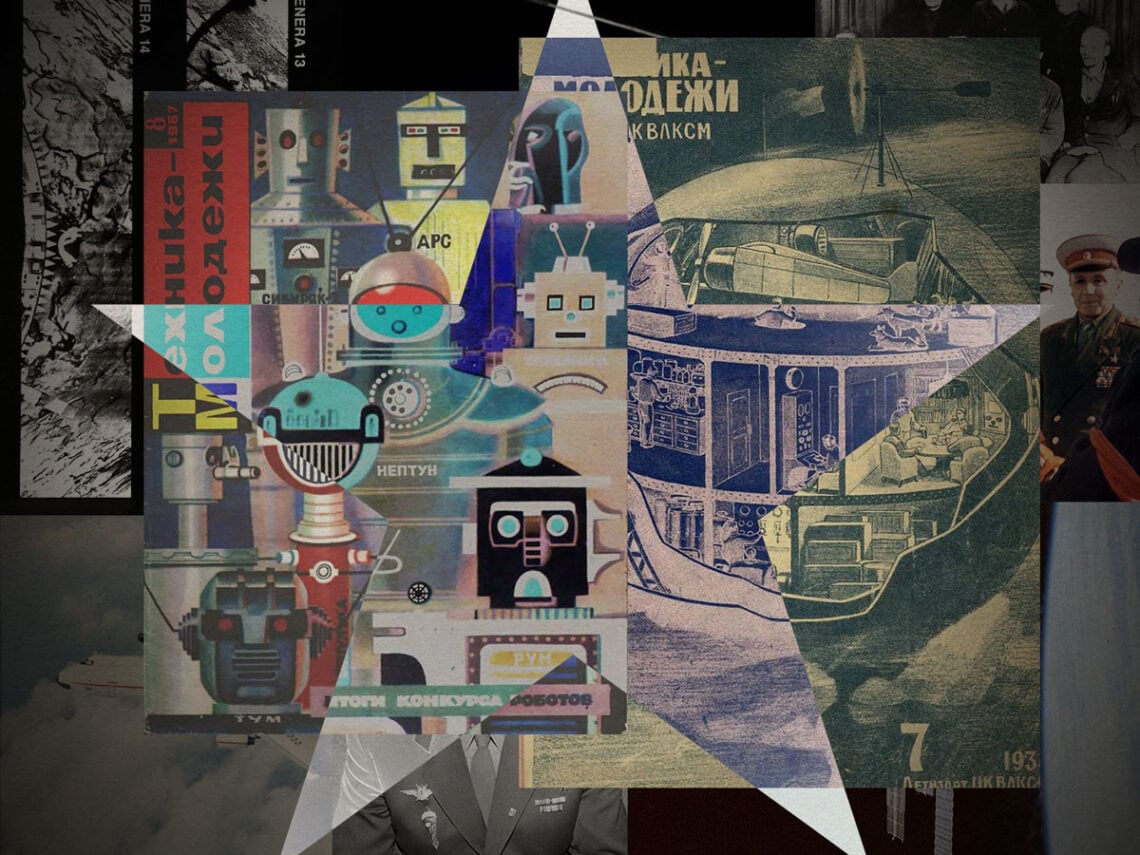
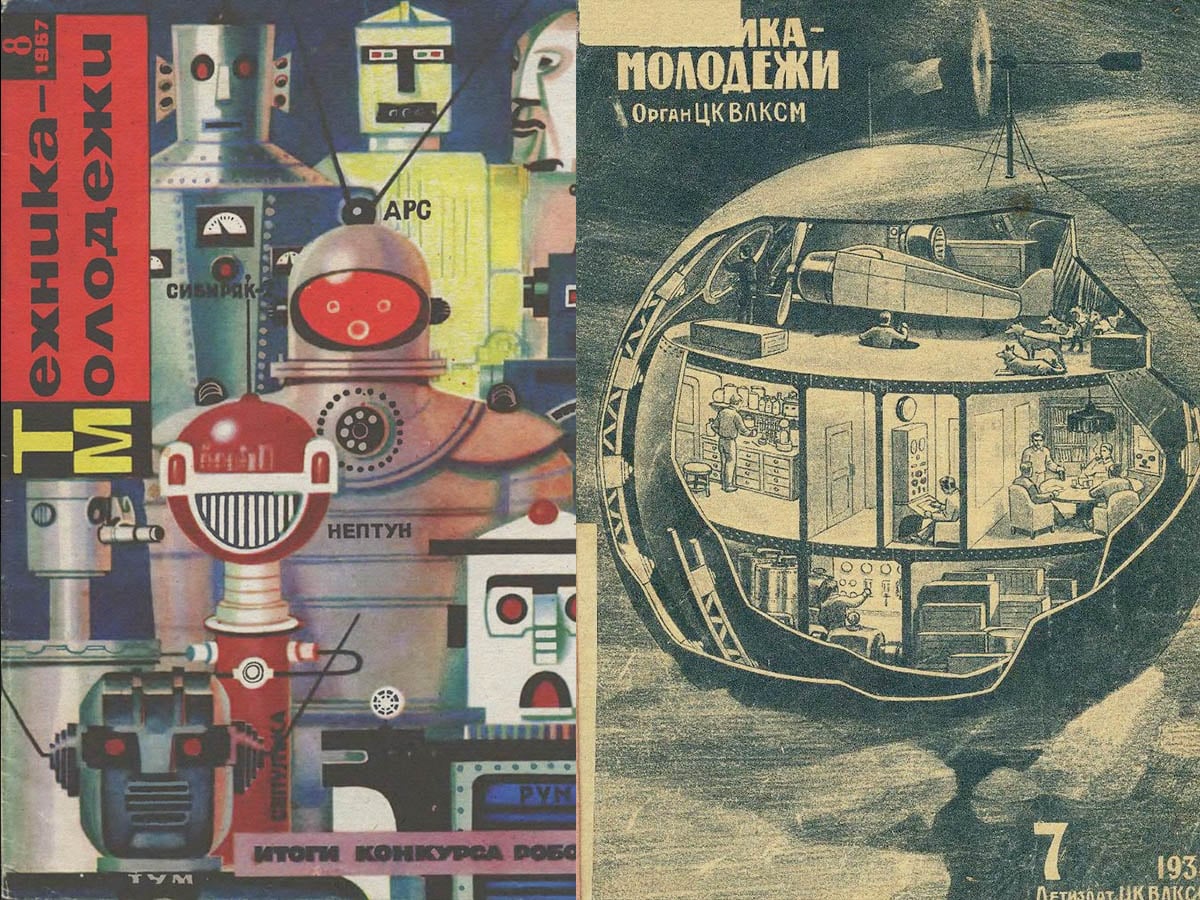
Such space fever among the Soviet pop culture would last a good 20-odd years from Sputnik’s launch and surge with enduring intensity with Gagarin’s pioneering orbit. The artistic foundations would be paved by Tekhnika Molodezhi, the popular science magazine that similarly dwelled in the West’s anticipation of a hi-tech futurology but was teeming with a brighter sense of enchantment and idyllic purpose. Space travel, terraforming missions, and light-speed operations all permeated the heart of the Soviet propaganda machine, with whizzing red rockets gazed upon by Soviet comrades in arms across the many republics marvelling at the voyages their labouring has indirectly helped bring about.
Soon, the Space Age began shaping the domestic space and public realm. Wind-up shavers modelled after the Sputnik, the Saturnas vacuum cleaner shaped like a planet, or the plethora of postage stamps honouring everybody from Gagarin, the first woman in space, Valentina Tereshkova, and even the early canine space pioneer, Laika. On the ground, impressive feats of architecture and public works were crafted, looking to the stars. In Uzbekistan’s Kosmonavtlar Metro Station, the underground train stop is festooned with cosmonaut frescoes and a Milky Way made up of chandeliers, and Moscow’s Monument to the Conquerors of Space reaches an impressive 107 meters with its titanium launch ode to Soviet space milestones.
Such star system wonderment became the default aesthetic embraced by the top of the ruling communist party down to the rocket-shaped children’s toys and books, even swapping the Russian Father Christmas’ sleigh for a spacecraft in a cosmic twist of the beloved ‘Ded Moroz’. It was clear the state saw the New Soviet Man as achieving just as much propaganda potential via the public fascination with space as he could heroically holding aloft the hammer and sickle, taglines like “From student’s models to spaceships!” or “Glory to the conquerors of the universe!” evoking the imagination while priming for a future delivering for Lenin’s state.
The artistic cosmic craze would endure long after the USSR’s space triumphs, even after NASA finally sent the Apollo 11 team to the Moon and victoriously planted its Stars and Stripes, the name Neil Armstrong supplanting Gagarin’s in global stature from then on. But even into the 1980s, the Soviet taste for cosmonaut art persisted, still wedded to the Utopian imagery of red space pioneers spreading Marxism out into the unknown, all the while the superpower was beginning to stagnate and inch towards implosion.
The world’s first socialist state is long behind us, the USSR dissolving in December 1991 and bringing with it much of the Eastern Bloc. While it’s important to remember the role top-down propaganda played in the push for Soviet Space Age art, it’s hard not to feel swept up in the pieces’ romantic vision of humanity. In an age where a shared future feels impossible, and the failing capitalist system is more paralysed by scleroticism every day, the radiant optimism beaming from the cosmonaut’s visor points to a path of hope sorely lacking in today’s age of corporate endtimes.
