


Buzludzha Monument: Bulgaria’s iconic UFO monument to their communist past

When you travel across Eastern Europe, you can find some of the world’s most iconic and stunning communist architecture, with buildings built in the 1900s to showcase the power and strength of what was a growing ideology sweeping the world.
The Soviet Union has since fallen, and its communist ideals have been replaced by something else, but the streets are still full of relics from that era, such that the towering Seven Sisters impose Stalinist power across the Moscow skyline, while Lenin’s Mausoleum sits at the heart of Red Square. Elsewhere in the east of Europe, Romania’s Palace of the Parliament is the heaviest building in the world and a memory of Nicolae Ceaușescu’s reign, and the Genex Tower is a breathtaking skyrise in Belgrade, which was built to spread the word about Yugoslavia’s bright future to the rest of the world.
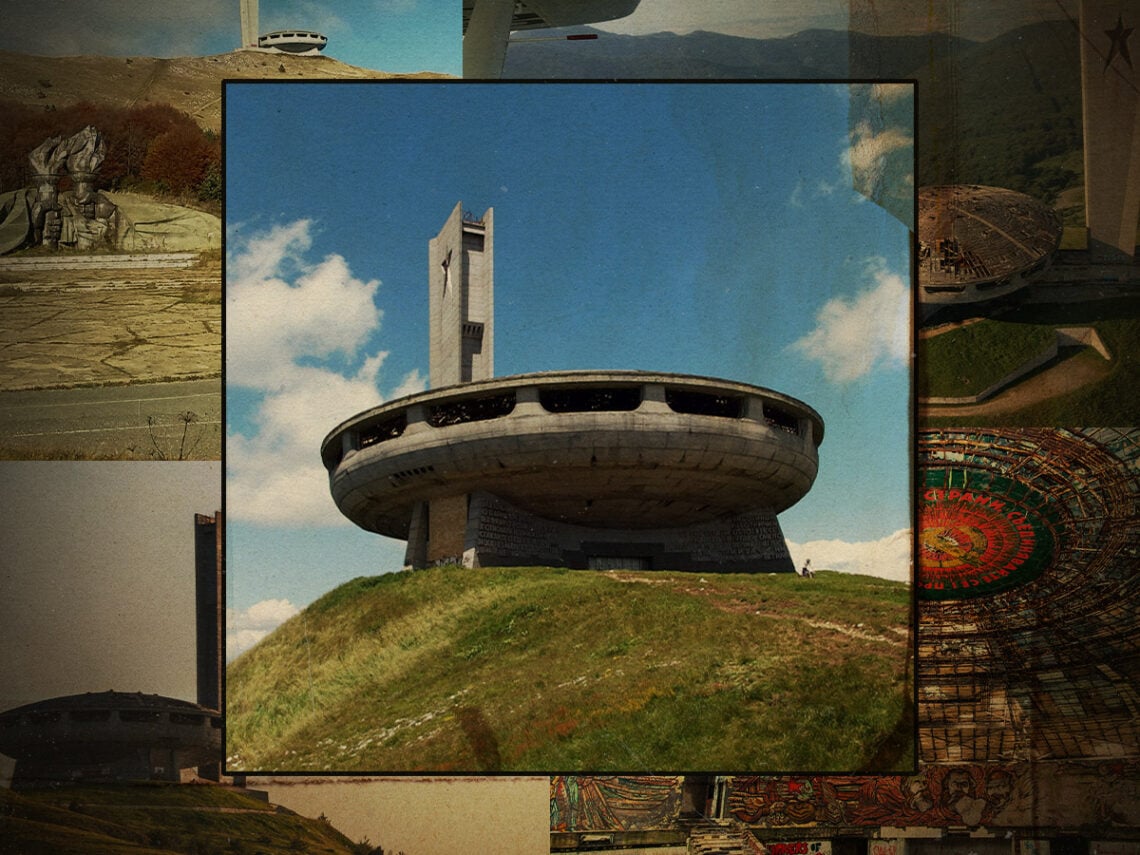
Then there’s Bulgaria, which is home to the Buzludzha Monument, which is without a doubt one of the most unique, jaw-dropping structures on the planet, and an iconic example of socialist modernism that sits abandoned on a remote peak in the mountains.
Otherwise known by its official title, the Monument House of the Bulgarian Communist Party, sits in the Central Balkan Mountains, roughly 241 kilometres from the capital city Sofia, on Buzludzha Peak and was built to commemorate the founding of Bulgaria’s socialist movement, in which a group of socialists met in 1891 to hold congress on Buzludzha Peak, ultimately leading to the formation of a group which was a predecessor to the Bulgarian Communist Party.
The construction started in the 1970s with the building opening in August 1981, and it was designed by Georgi Stoilov, such that every part of its design holds significance. For starters, this bold, disc-shaped building sits isolated upon a mountain peak, appearing like a getaway for a Bond villain, where the main hall is saucer-shaped, looking otherworldly against the Bulgarian landscape, like a visiting UFO has parked itself, which was built to hold huge functions.
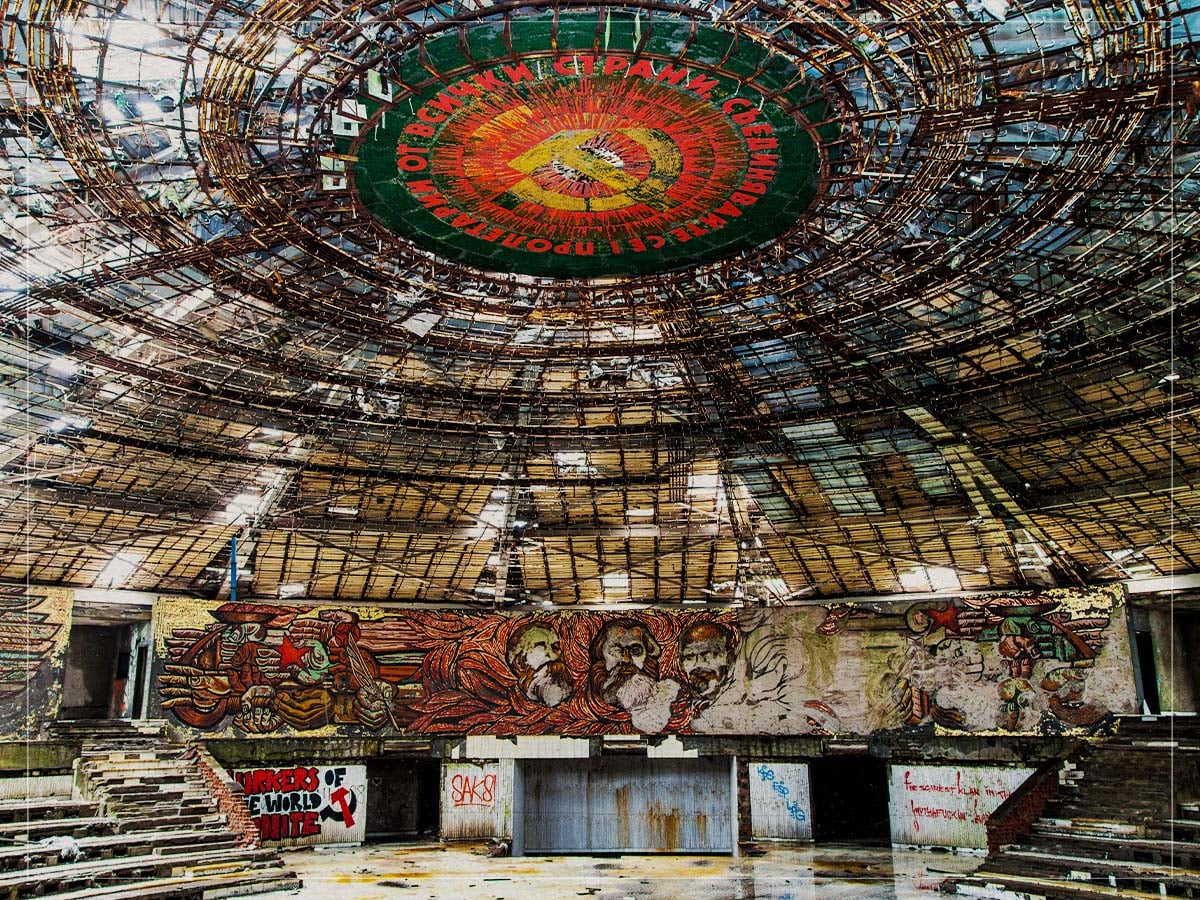
Then there’s the 70-metre high tower topped with the illuminated red star, which could be seen from huge distances away but inside the building is perhaps the most important part of the design: the grand mosaics which tell the story of the Bulgarian Communist Party, celebrating its history and promoting its ideology that is hundreds of square metres in size, featuring tiny pieces of coloured glass, standing as a triumphant achievement.
Building a structure of this size on top of a mountain naturally caused a lot of difficulty, with the construction involving levelling the top of the peak in order to create a stable platform, but it was achieved to showcase the eternal future of the Bulgarian Communist Party and its huge power.
However, within eight years, communism had fallen in the country, and now, decades later, the Buzludzha Monument is in dire condition, standing as a ruinous, desolate concrete structure. As a symbol of a failed and hated regime, it’s understandable that the building was not cared for after communist rule fell, and with maintenance effectively paused immediately, as well as being situated in a remote, mountainous region, decline was inevitable. With severe weather, neglect and vandalism all taking a toll, the rain and snow entered the building, and that moisture has damaged the mosaics and had an even harsher impact on the fabric inside the building.
Despite being officially closed, it still gets visits from hikers, urban explorers and architecture enthusiasts, which has led to its growth as a cult icon, as well as allowed for documentation of its decline, and that has resulted in calls to rescue the building and conserve its truly unique social modernist looks, but these haven’t developed into firm plans as of yet.
Thanks to its location and the structure itself, it would be a hugely expensive and difficult fix, while there are still questions over the political challenges that conserving the building would create, so, for now, the building lays dormant as a modern marvel amongst the mountains that was built to celebrate communism and display its power. In many ways, its decline echoes that of the ideology it was built to champion, a school of thought that has largely been abandoned and bastardised in the years since the fall of the Union.
