


‘The Banshees of Inisherin’ and ‘Girlfriends’: a guide to dealing with friendship breakups

For anyone going through a breakup, there are a million movies that can comfort and reassure you of the universality of your pain. From High Fidelity to Modern Romance and Eternal Sunshine of the Spotless Mind, there are a myriad of fictional characters that are nursing their own pains and broken hearts around the one that got away. And from these movies and the collective importance that we place on romantic relationships, we have created a concrete guide on how to approach each stage of the mourning period; we know to lean on our friends, to avoid any contact within the first two weeks, to block them on social media and remind ourselves of all their flaws. We know not to accidentally like their old photos on Instagram or stalk their Letterboxd diary to see who they’re going to the cinema with, only to whip yourself into a panic when you see they watched a rom-com with someone of the opposite sex, only to find out it was their sister.
But, considering the dense media list that revolves around these romantic quandaries and dilemmas, there are very few films about platonic breakups and hardly any mainstream conversations on the best way to handle them. We know that when a romantic relationship ends, we have a conversation and definitive ‘break-up’ – it’s the best thing to do. We know that, at the very least, you should hear someone’s voice as it happens and that if you want to make a nemesis for life, then doing it via a post-it note, personalised cake, or four days before Christmas is a certified route to becoming public enemy number one.
But how should we handle a friendship breakup? And from the very limited movies about this subject, what can we learn about the correct way to end a friendship? In order to create a definitive guide on the best and most ethical way to do this, let’s look at my two favourite films about the mess and heartbreak of fading friendships – The Banshees of Inisherin and Girlfriends.
Girlfriends, directed by Claudia Weill in 1978, follows a photographer called Susan who lives with her best friend Anne in New York. But when Anne suddenly gets into a relationship, Susan is left alone and struggles to begin a new life without her friend. It captures the devastating loneliness and perceived betrayal when your friend seemingly abandons you for a romantic partner, highlighting the sudden loss of emotional intimacy and closeness of a female friendship that leaves a gaping hole in its wake.
It’s a uniquely soul-destroying experience and not one that garners much sympathy due to the fact that it isn’t a romantic connection, despite how these friendships can sometimes be more intimate and all-encompassing. You simultaneously feel guilty for resenting your former friend’s new-found happiness within their relationship, but also angry because it caused them to abandon your friendship, feeling conflicted over your own pain and frustration that makes you feel like a bad friend, even if they’ve been a worse friend. You feel worthless and small, like your friendship was just a placeholder until they found what society deems as the ultimate fulfilment for a woman – a boyfriend.

You wonder what will happen if they break up – will the friendships suddenly become a priority to her again? When will you start to matter? And then you begin to hate the boy that stole her away, even if he’s perfectly fine and seems to make her happy, again, making you feel like a demon for harbouring any kind of hatred towards someone you hardly know. Whenever you see pictures of them together, you feel a pang of jealousy and a bitter sting of sadness. But he did steal your best friend away, so you justify your anger and nurse the pain away by… doing what? How do we deal with it?
It feels as if there is no clear way to deal with it. It feels too harsh to inform them that you no longer want to be their friend, and you’ve already tried telling them how they’re making you feel. So what next?
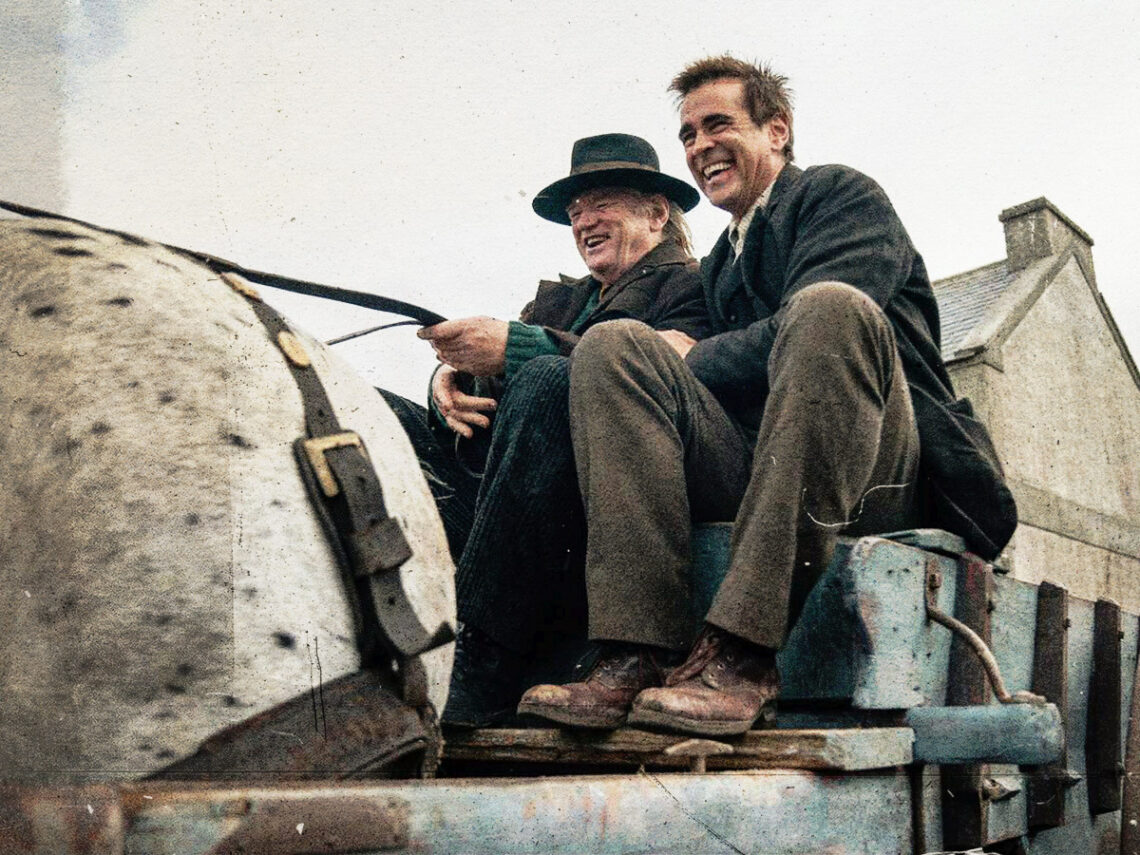
While Girlfriends is a reflection on female friendships, McDonagh’s 2022 film is an exploration of male friendships and the emotional shrapnel after one falls apart, particularly if you’ve been living on a remote Irish island. While women are perhaps less blunt with their communication, being taught how to tiptoe around what they really mean/feel from birth, men are stereotypically more likely to resolve things either physically or through direct honesty. And this is where the central conflict in the film comes from, with Colm abruptly informing Pádraic that he doesn’t want to be friends anymore.
What ensues is a subtle war of bubbling resentment and confusion as Pádraic tries to understand why this happened, plagued by the ambiguity of the decision and sudden coldness shown towards him. He’s desperate for closure and a definitive moment that killed the friendship, pained by the simplicity of Colm’s reason that “he just didn’t want to be his friend anymore”. Colin Farrel’s desperate pleading as he shouts, “you used to be nice!” is completely heartbreaking, showing a man who is desperate to understand and make amends, faced with the impending loneliness of life without his best friend. He is unrelenting in his quest to find peace, twisting himself into someone he no longer recognises in an effort to find closure.
What’s interesting about both films, as that they show opposite ways of dealing with a friendship breakup, and perhaps by finding the middle ground between the two, we can find a new way of approaching platonic heartbreak.
In Girlfriends, Susan nurses her pain silently, choosing not to directly confront her friend and trying to move on with her life – there is no civil break-up conversation, just an argument. But Susan manages to discover newfound independence in the aftermath of the ordeal, and her life begins to flourish in ways she couldn’t imagine, experiencing a burst of success in her career and creative passions, as well as eventually finding her own healthy relationship with equal time spent together and alone. However, she still feels the same level of hurt over her old best friend, and she eventually speaks to Anne about the impact it had on her, reconciling their friendship and trying again.

In Banshees of Inisherin, there is a definitive break-up conversation in which Colm clearly and bluntly expresses his desire to no longer be friends with Pádraic. However, the lack of explanation or emotional sensitivity in this approach leads Pádraic to slowly lose his mind, haunted by the fact that he must’ve done something deeply wrong despite the fact that Colm’s reasoning is supposedly very simple. While Colm allows for a conversation around this, it feels cold and robotic, which isn’t reflective of their warm memories together.
Obviously, there are many factors to any friendship, and each one has its own complex dynamic and history. Sometimes, friendships fizzle out naturally and mutually, and in that case, nothing needs to be said. Sometimes, a friendship resolutely ends after someone does something hurtful, and nothing needs to be said because it is known that the bond won’t recover. But sometimes, there are a number of reasons that all point towards one option, and you know that something needs to be said.
Should it be done in person? Over the phone? By text? In the case of The Banshees of Inisherin, an in-person conversation only does more damage because it isn’t handled with compassion, and in Girlfriends, it becomes too heated and leaves the pair on bad terms. So, is there a kind way to do it?
While the term ‘breakup’ might not be the correct one to use, perhaps we should infuse elements of this language into our platonic relationships when they end. We learn to handle these situations with so much care when romantic love is present, but perhaps we can learn to approach the ending of a friendship with the same weight we’d apply to a romantic relationship, to consider how, while it might not have lasted forever, our lives were enriched by it in some way, adding to our tapestry of experiences and the memories we’ll one day recall. We reminisce about the good times and bad because it all eventually just becomes another story to tell.
The dissolution of any connection is painful, but if we learn how to resolve the hurt we feel, then maybe we can slightly ease the despair and be a bit kinder to our old friends.
