


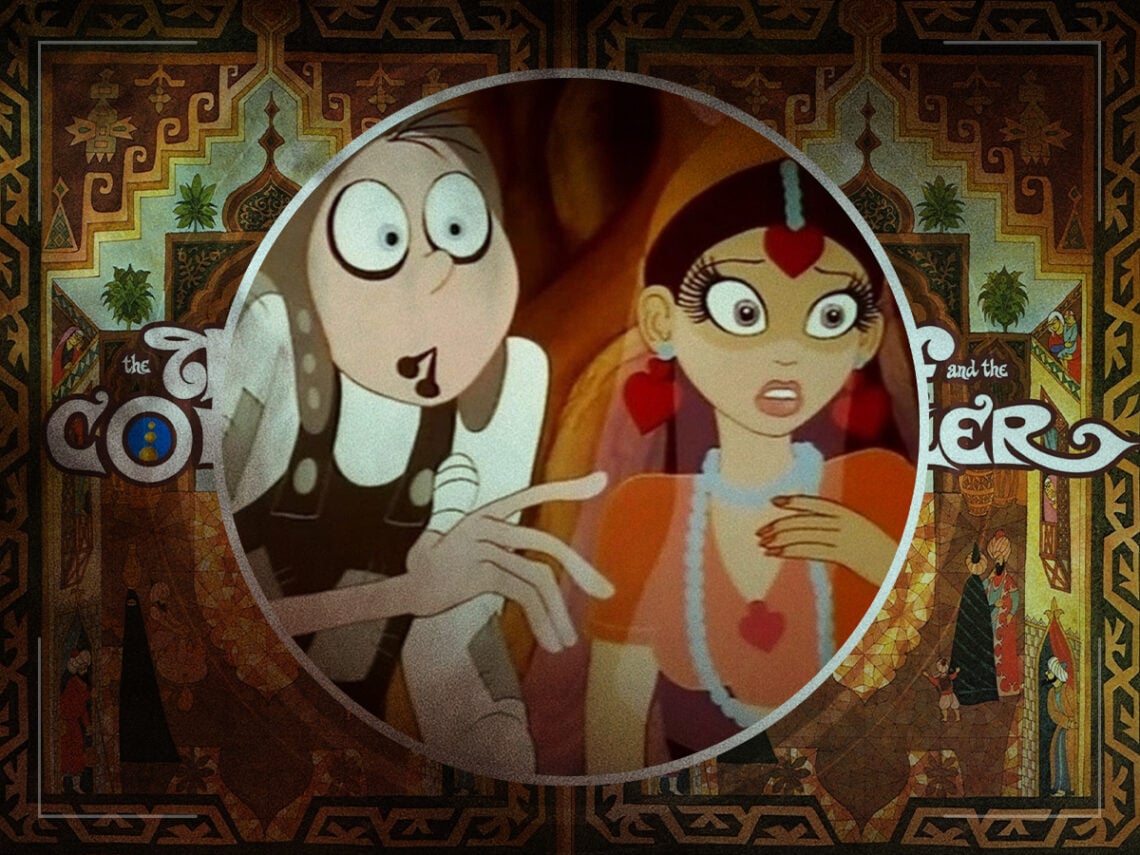
‘The Thief and the Cobbler’: The forgotten animated film that took three decades to make

After nearly 30 years in production, the long-gestating animated feature The Princess and the Cobbler was forced by British production company Allied Filmmakers to release in 1993, still in an unfinished form.
It wasn’t even the original name. For years, the Arabian Nights-inspired cartoon was primarily known as The Thief and the Cobbler, an obsession of Canadian animator Richard Williams as far back as 1964. Running a studio in London specialising in commercials and live action special effects, a stumble across the 13th century tales of Mulla Nasruddin in Eastern folklore prompted the arcane stories of the ‘wise fool’ to start mapping out his own vision for an animated adventure set in the Islamic Golden Age.
Trouble was, constant rewrites, name changes, and a deathly slow practice of funding the project from other commissions along the way meant The Thief and the Cobbler was nowhere near any kind of provisional deadline. Then there was Williams’ artistic ambitions. He did not want his Arabian opus to resemble the Disney pictures still popular into the 1970s, if drifting off course after the recent death of the House of Mouse founder, and pushed for a monument of animation history that would surpass the Disney marvels, “To make the best animated film that has ever been made – there really is no reason why not.”
Still, it didn’t stop Williams from hiring plenty of Disney veterans like Art Babbitt, Emery Hawkins and Grim Natwick to try and accelerate The Thief and the Cobbler’s production, stubbornly remaining a side-gig across the 1970s until Saudi prince Mohammed bin Faisal Al Saud decided to fork out $100,000 for at least the privilege of a completed ten-minute sequence. Trying to polish off a penultimate sequence of the titular thief’s navigation of a series of traps, Williams went over budget by an extra $150,000 and missed two deadlines. Mohammed bin Faisal backed out, as did every other potential financier.
It was starting to look like Williams’ folly. Yet, the entire animation industry was jolted into resurgent life after 1988’s Who Framed Roger Rabbit, kickstarting the next decade’s Looney Tunes cartoon boon, Disney finally shaking off its Don Bluth-bludgeoned doldrums, and Williams at the centre of the hand-drawn renaissance, walking away with two Academy Awards for his visual effects work.
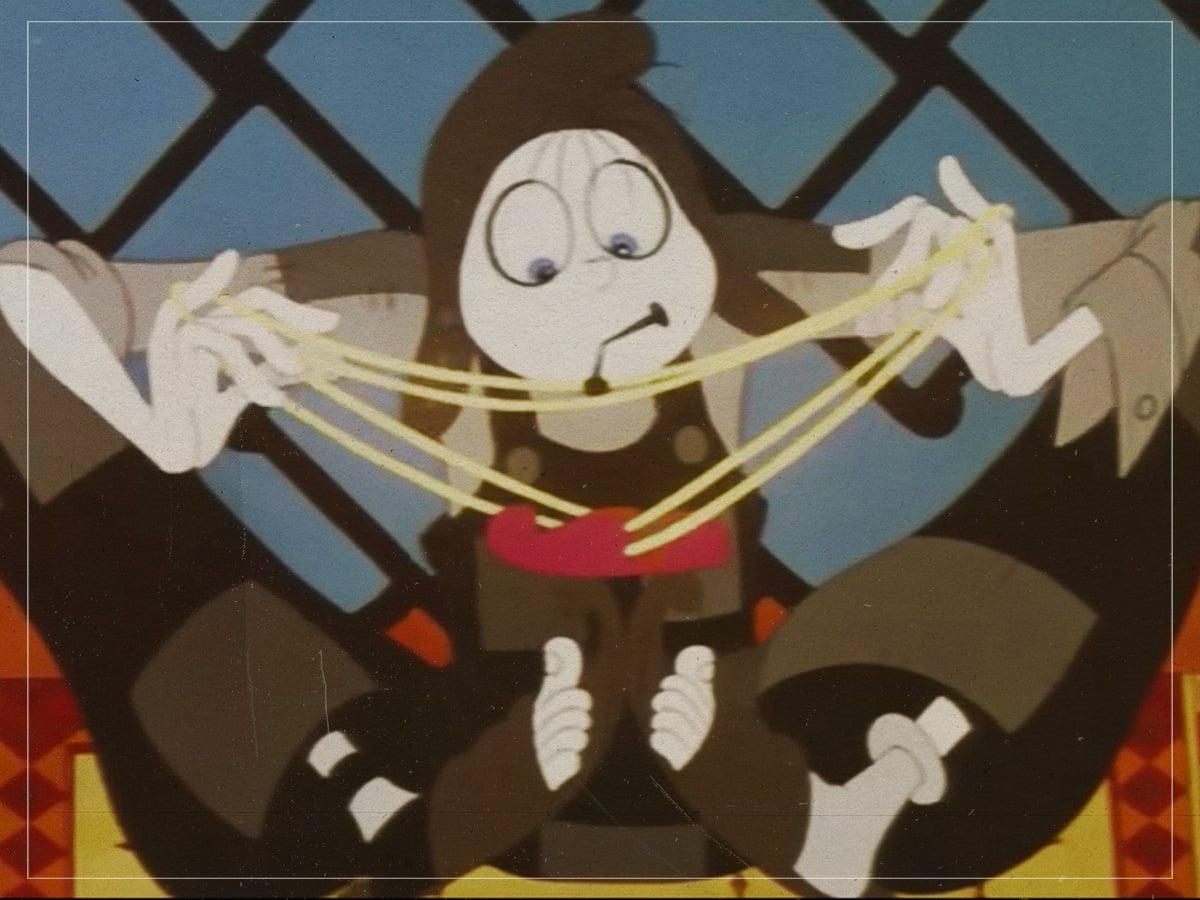
Surely now was the time to finally nail his The Thief and the Cobbler masterwork? Warner Bros thought so, injecting Williams’ studio with the major budget for a full-time production in 1989 and scheduled for a release date two years later. Perfectionism got in the way again. Rumour had it that Williams was approaching the feature like a live-action, pumping out extra footage to be cut later, innovating three-dimensional motions without the use of CGI, and pushing for animation at 24 frames a second rather than the industry practice of 12. Despite the team working 60-hour days, no end was in sight.
Warner Bros’ confidence was plummeting, and then there was the little fact of Disney’s similarly Arabian fantasy Aladdin in the pipeline. After nearly 30 years devoted to his animation dream, Williams was booted off the project, and the responsibility of finally finishing off The Thief and the Cobbler landed on animator Fred Calvert’s plate. “I really didn’t want to do it, but if I didn’t do it, it would have been given off to the lowest bidder. I took it as a way to try and preserve something and at least get the thing on the screen and let it be seen.”


What transpired was a rushed production that shoved in some forgettable musical numbers, downgraded animation frames to the regular 12, and chaotically outsourced various sequences everywhere from Taiwan, Hungary and Ireland. Finally seeing an exhausted release internationally in 1993, Miramax acquired US distribution rights and ordered various voice recasts and rewrites, shaving the end result down to a lithe 72 minutes ready for exhibition in August 1995, unleashed to the world as Arabian Knight with little fanfare and undwhelming box office return.
Hacked apart and mired in various messy workprints and differing versions pulled in commercial directions, The Thief and the Cobbler enjoys no definitive, Williams cut, or even settled narrative. Broadly speaking, there’s a Thief who steals magic golden balls from The Golden City and plunges the area into peril as prophecy foretold, then there’s the Cobbler, who becomes swept up in the epic quest to protect the City from the villainous One-Eyes army. Across all alternate versions is a roll call of overlapping voice cast, Vincent Price cut as early as 1972 and featuring on all releases, but including anybody from Donald Pleasance, Matthew Broderick, Kenneth Williams, and It Ain’t Half Hot Mum’s Windsor Davies, depending on which one you watch.
Nearly three decades of blood, sweat, and tears saw Williams’ noble animation quest butchered and commercialised beyond anything he recognised, “I’m not interested, but my son, who is also an animator, did tell me that if I ever want to jump off a bridge, then I should take a look,” he quipped at BFI Southbank in 2014. Williams died five years later, but not before seeing dedicated fans committed to his vision begin to assemble the lovingly crafted ‘Recobbled Cut’, an ongoing process of piecing together the various footage and upscaling to an eventual presentation capturing the director’s original vision.
Including new material drawn from the original plans under animator Garrett Gilchrist’s quasi-direction, The Thief and the Cobbler may well receive the dues Williams was gunning for over 60 years ago.
