


Five utterly disturbing songs from the 1980s

As a small child, the scariest thing I’d ever seen in my life was the beloved, squeaky clean pop star Michael Jackson transforming into a werewolf; not in the music video for ‘Thriller’, but in a 3D ‘Viewmaster’ reel containing still images from that video. Looking through those lenses somehow made it much, much worse.
Maybe being terrified of Michael Jackson wasn’t such a bad instinct for an ‘80s kid to have anyway, but for those who remained relatively unfazed by the mild horror of ‘Thriller,’ there were plenty of other disturbing things from mainstream ‘80s pop culture to haunt you in your dreams, from the puppetry of Gremlins or Spitting Image to “Large Marge” in Pee-Wee’s Big Adventure, the heart-ripping scene from Temple of Doom, or the horrific demise of Atreyu’s horse in The Neverending Story.
The children of the ‘80s often wear their movie trauma as a badge of honour, judgmentally looking down on Gen Z’s comparatively sterilised cinema shocks, now preceded by warnings and disclaimers, like putting gutter bumpers on a bowling alley. The idea was that everybody was flying by the seat of their pants back in the pre-internet era, a world of latch-key kids stumbling into matinee screenings and walking out as damaged but wiser souls.
On occasion, you’ll hear similar defences of the 1980s as a more proudly dangerous time for popular music, as well, as artists really began pushing the limits of noise, violence, sex, politics, and good taste to the nth degree, as evidenced by the simultaneous rise of goth, hardcore punk, thrash metal and death metal, industrial rock, and Australian pop songs by the cast of Neighbours.
In the middle of the decade, the Parents Music Resource Centre famously tried to police the trend of “inappropriate” music in America by putting out a list of offensive songs known as the “Filthy 15,” a free advertisement for some of the more sex and violence-centric tracks by everyone from Judas Priest and Motley Crue to Cyndi Lauper and Madonna. By the end of the decade, things had escalated to the point that Judas Priest literally had to go on trial to prove that their music hadn’t directly forced two teenagers to shoot each other through some kind of Satanic subliminal messaging.
Naturally, much in the way conservative Americans had shit a brick over the hip swivelling of Elvis Presley in the 1950s, most of these freakouts over pop music in the ‘80s look comparatively tame from a 2020s perspective. This isn’t necessarily because filthy or disturbing content is more pervasive in music or film today, but perhaps because artists are less inclined to explore those limits in the first place, as the taboos themselves have been dulled a bit over time, whether thanks to Marilyn Manson making the whole thing passé, or the internet making everyone’s worst thoughts far more accessible.
Looking back on ‘80s music now, the “disturbing” songs certainly aren’t the sexually suggestive ones the Parents Music Resource Centre had in mind. Instead, the ones that seem to stand out often capture an uneasy feeling about the future (now our present) or shine a light on something we might not have considered all that bothersome at all 40 years ago, but which now can have us asking hard questions of ourselves. In some cases, the artists in question clearly had the intention of being subversive and making the listener uncomfortable. In others, they were merely speaking freely as crude 1980s dudes, unknowingly flying the flag for anti-wokeness before that became the obnoxious stance du jour.
The word “disturbing,” much like “offensive,” is highly subjective to begin with, but if we go with the idea of creating a strong sense of unease in the listener, intentionally or not, here’s a variety pack of five of the 1980s’ most disturbing songs.
Five disturbing songs from the 1980s:
Oingo Boingo – ‘Little Girls’
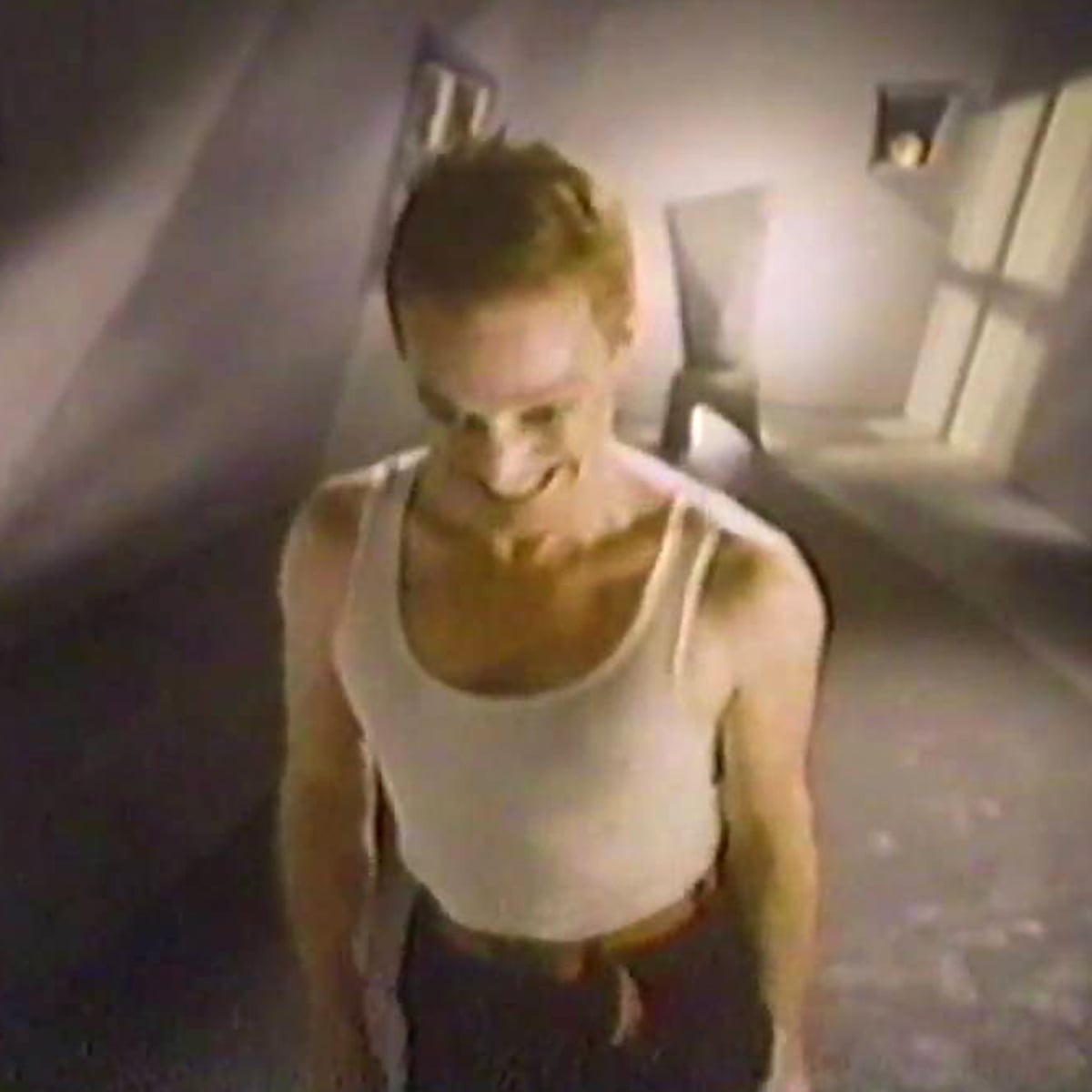
In its defence, this song is probably easier to listen to than Serge Gainsbourg’s infamous 1985 duet with his 12-year-old daughter Charlotte (‘Lemon Incest’), and as singer-songwriter Danny Elfman has insisted for over 40 years, it’s a satirical number told from a villain’s perspective, making it arguably less disturbing than plenty of heart-on-the-sleeve rock songs about teen girls from prior decades. If you didn’t know what you were getting into with this synth-pop song in 1981, however, the opening lyrics could certainly raise an alarm: “I, I, I love little girls / They make me feel so good / I love little girls / They make me feel so bad.”
“I was a practical joker as a kid and spent most of my free time at the neighbourhood theatre watching horror films,” Elfman told the San Francisco Examiner in 1982, several years before beginning his career as a film scorer with Tim Burton.
“I love things that are sardonic, and I try to combine that quirk with humour when I write songs. Naturally, the things I find funny, others might find disgusting. Our video of ‘Little Girls’, which is about a character who has certain unacceptable inclinations, was banned on Canadian TV.”
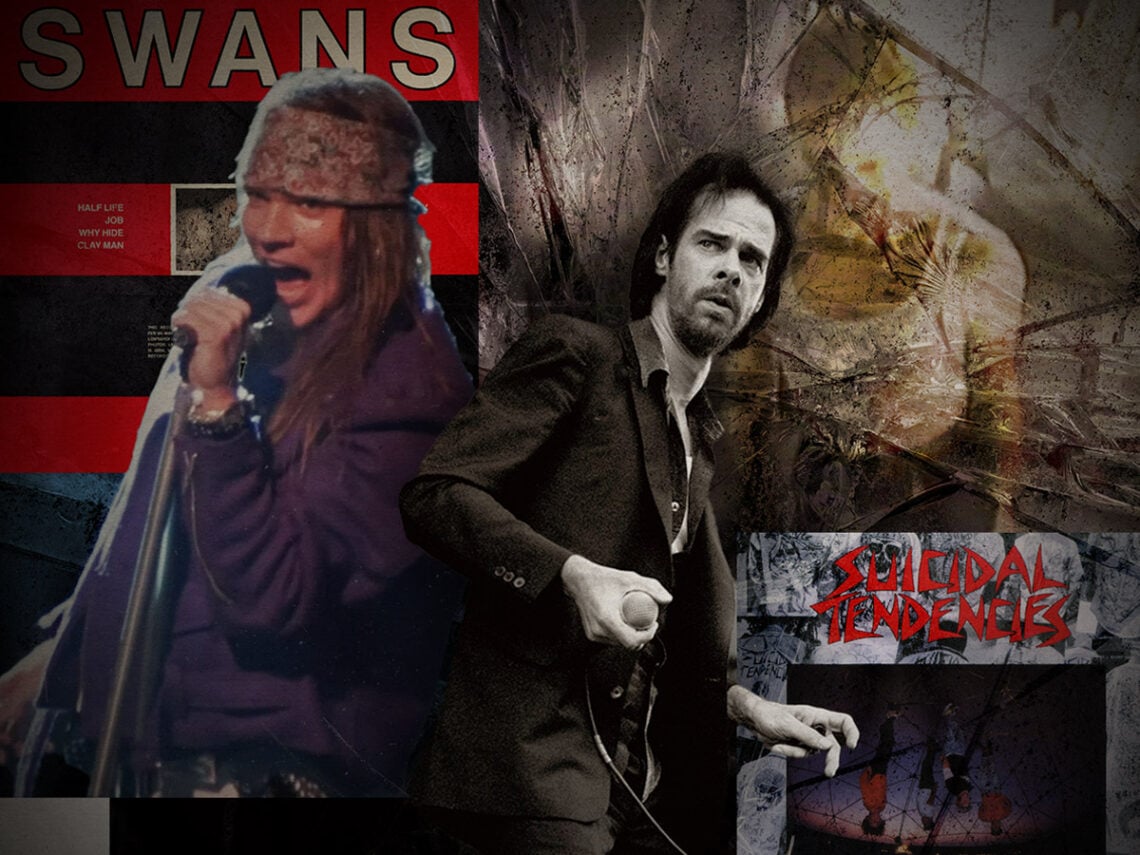
Swans – ‘Raping a Slave’
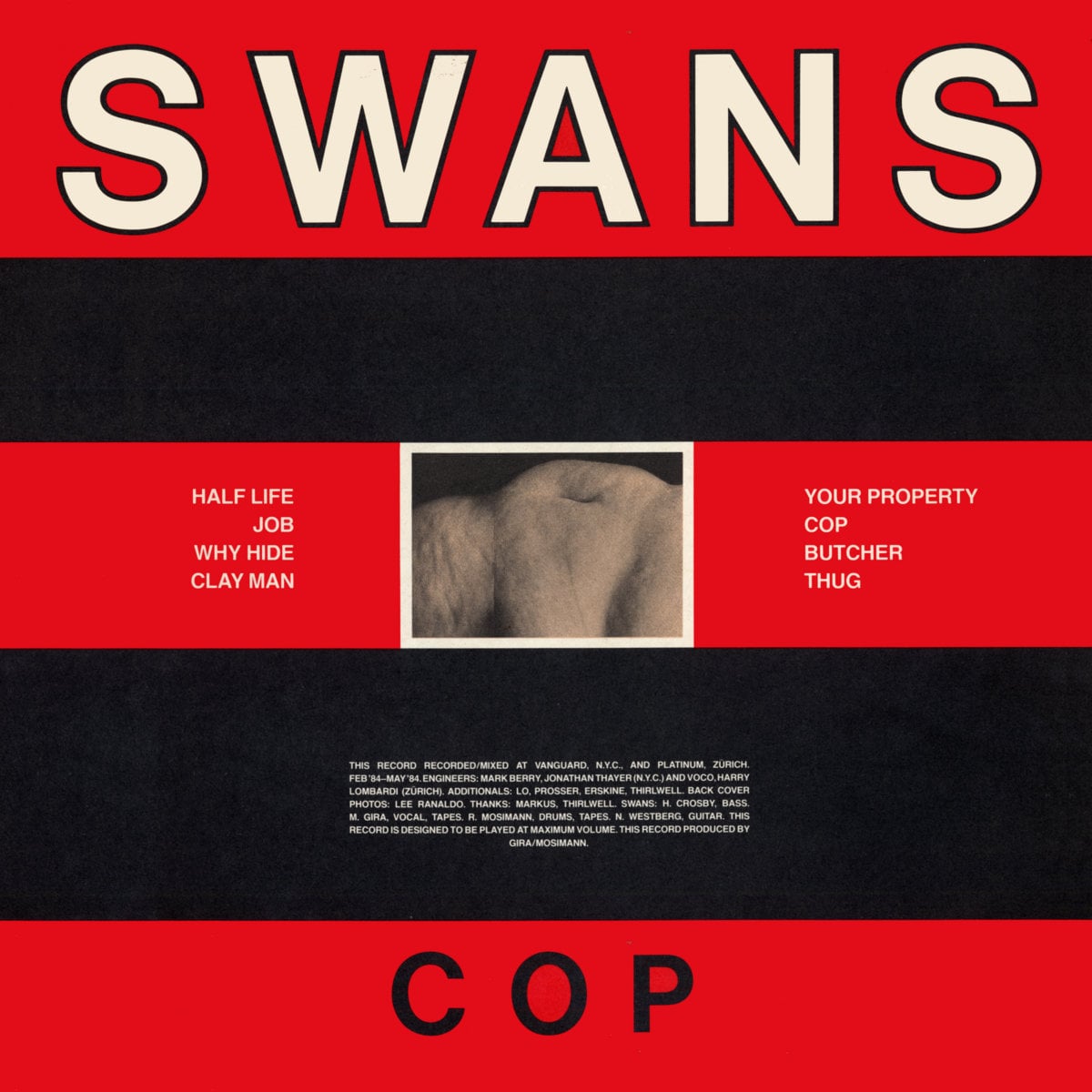
“Our music used to be like a giant fist,” Swans frontman Michael Gira said in 1989, referring to his band’s early records from the start of the decade; aggressive, confrontational No Wave focused as much on the gut feeling of an experience as any sort of commentary on it. “When we did what we did in the early days, there was no context for it, so it was shocking,” Gira later told the Guardian in 2014.
“It seemed brutal and offensive. What we did may have been hard to take, but our relationship with the audience was definitely hostile because of the responses we got. They were hostile first. For all its Götterdämmerung, it was ultimately a positive act.”
That German word, for those uninitiated in common Swans themes, translates to the “death of the gods,” or Ragnarok in the old Norse sense. Suffice it to say, none of the songs from Swans’ 1984 Young God EP became radio hits or MTV staples, but they did earn Gira a diehard fan base, many of whom appreciated that being disturbed, in this case, was the correct and intended response to a visceral song written from the view of someone who has experienced, or is experiencing, an assault of some kind. The lyrics are intentionally vague, but the sound isn’t.
If “chill out” music has a polar opposite, something so brutal and relentless that you can’t possibly distract yourself from it, this is it.
Guns N’ Roses – ‘One in a Million’
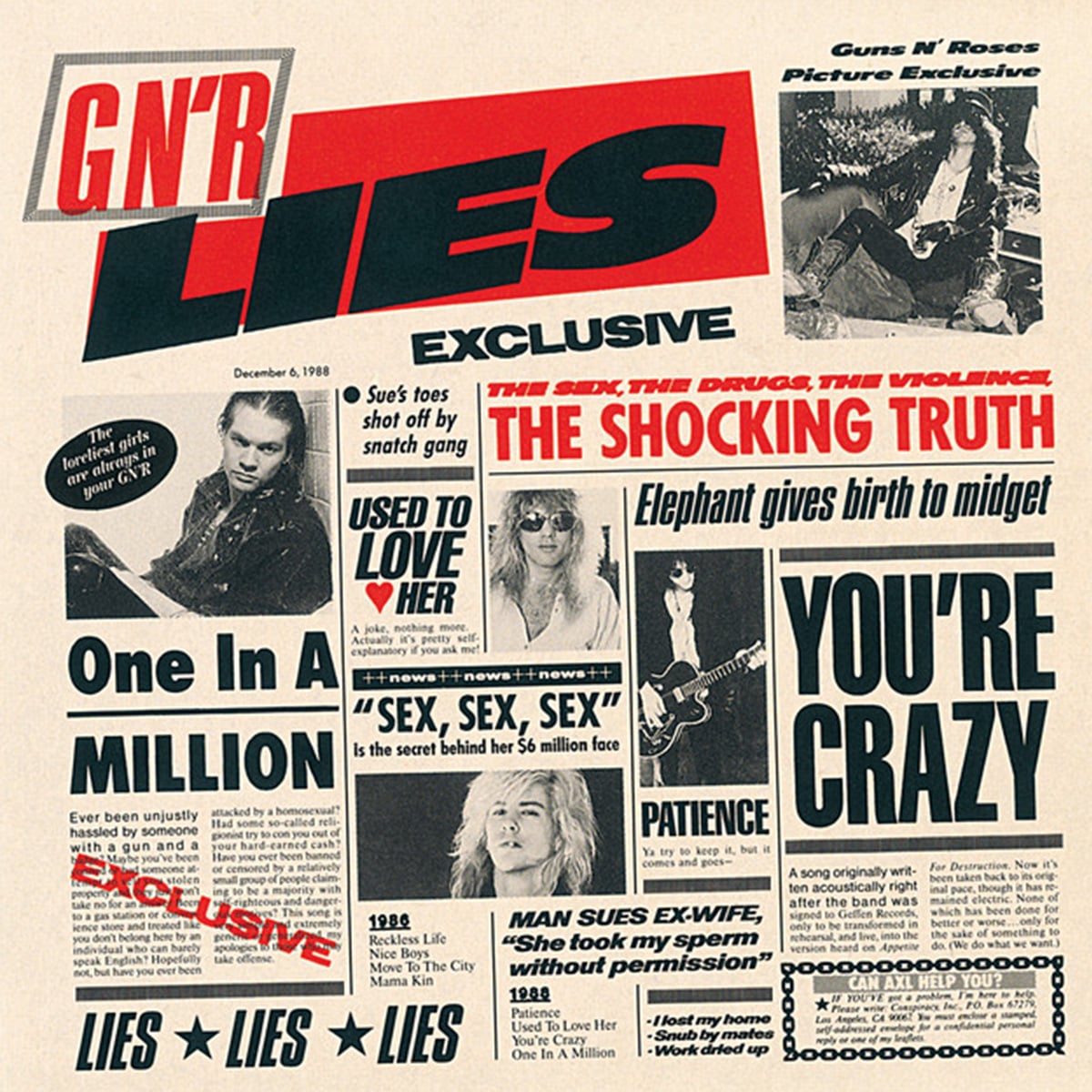
The “other” whistle-heavy acoustic ballad on 1988’s G N’ R Lies album, this song is decidedly not a character study, but a casually racist, homophobic, xenophobic, and paranoid rant direct from the life experience and worldview of a 26 year-old Axl Rose: “Immigrants and f*****s, they make no sense to me,” he sings, expressing his shock and annoyance at running into a variety of different people at an LA bus station.
“They come to our country and think they’ll do as they please / Like start some mini-Iran or spread some fucking disease / They talk so many goddamn ways, it’s all Greek to me.” Ha, it’s all Greek to Axl! Kudos to mixing in a rhymey quip with one’s hate speech.
‘One in a Million’, which also includes a nonchalant dropping of the N-word, certainly generated some blowback for Rose, but incredibly, he managed to shake off the controversy with shameless Trumpian resolve, using the classic argument that, since black artists use the word all the time, why shouldn’t he?
“[Axl and I] come from small towns,” Kurt Cobain later said of Rose, “And we’ve been surrounded by a lot of sexism and racism. But our internal struggles are pretty different. I feel like I’ve allowed myself to open my mind to a lot more things than he has. His role has been played for years. Ever since the beginning of rock ‘n’ roll, there’s been an Axl Rose. It’s just totally boring to me.”
Suicidal Tendencies – ‘I Saw Your Mommy’
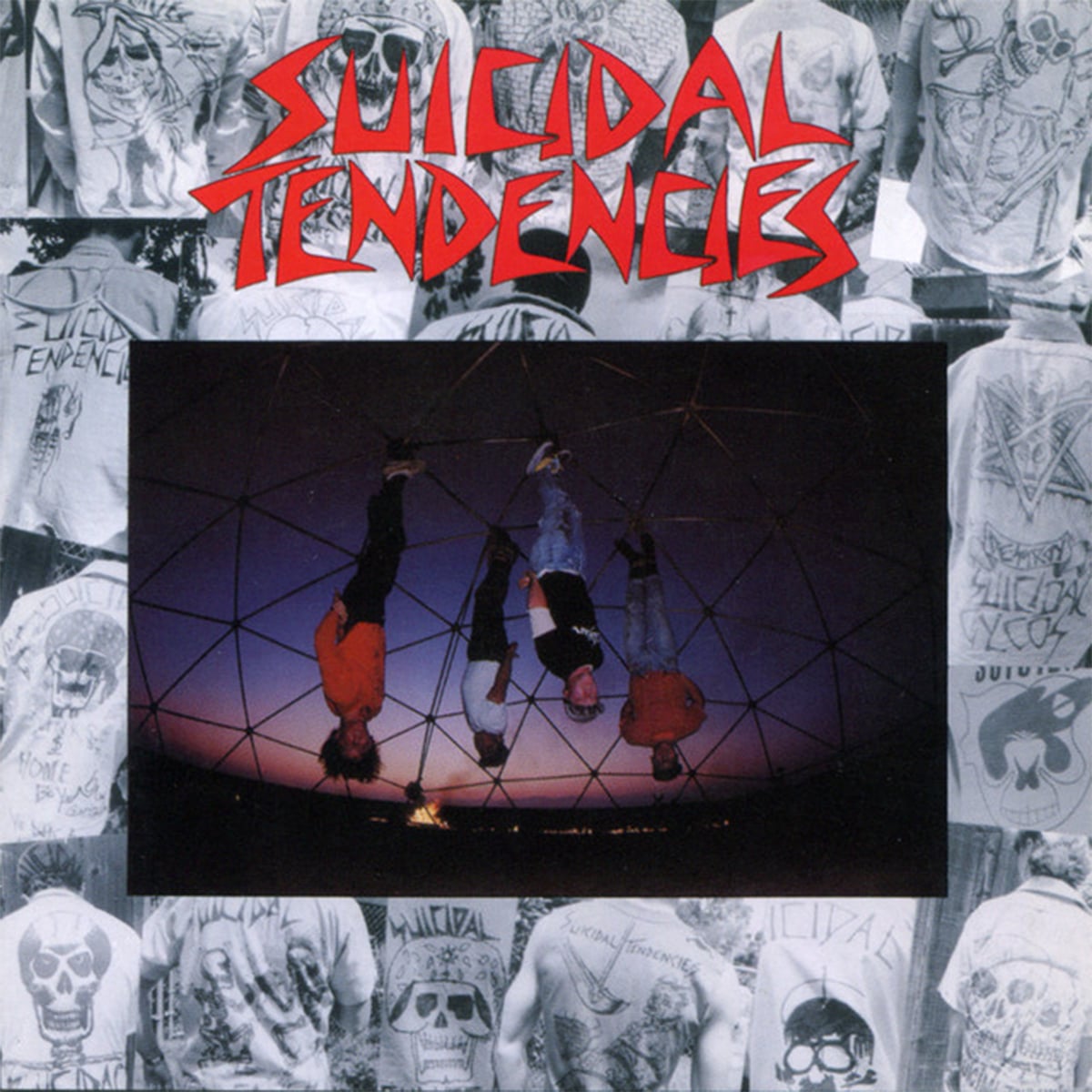
The 1983 debut album from Suicidal Tendencies includes one of the all-time great tracks in SoCal punk history, ‘Institutionalized’, but a song on side two generated almost as much buzz, piling a new level of controversy on a group already forced to defend its choice of band name in every interview.
On ‘I Saw Your Mommy’, singer Mike Muir comedically describes finding the dismembered body of a woman on the street before joyously informing the woman’s son of her demise: “All her organs coming from her insides / Slashed up skin, sliced up hide / Turned her over and saw the tar tracks on her head / That’s when I realized she was dead / I saw your mommy, and your mommy’s dead!”
In some ways, it’s only as disturbing as the ‘Garbage Pail Kids’ cards of the same era; cartoonish gruesomeness played for laughs on a fast, sneering hardcore sing-a-long anthem. That disconnect between the brutality of the scene and the song’s bratty humour is exactly what bothered some critics, but Muir was quick to throw up the “mirror to society” argument; not always an easy sell for a 21-year-old punk.
“People are trying to judge me for my lyrics when they don’t know why I wrote the song,” he said in a 1984 interview. “They’re saying I’m sick, but it’s society that’s sick. If they’re making fun of those lyrics, they’re making fun of society.”
Nick Cave and the Bad Seeds – ‘The Mercy Seat’
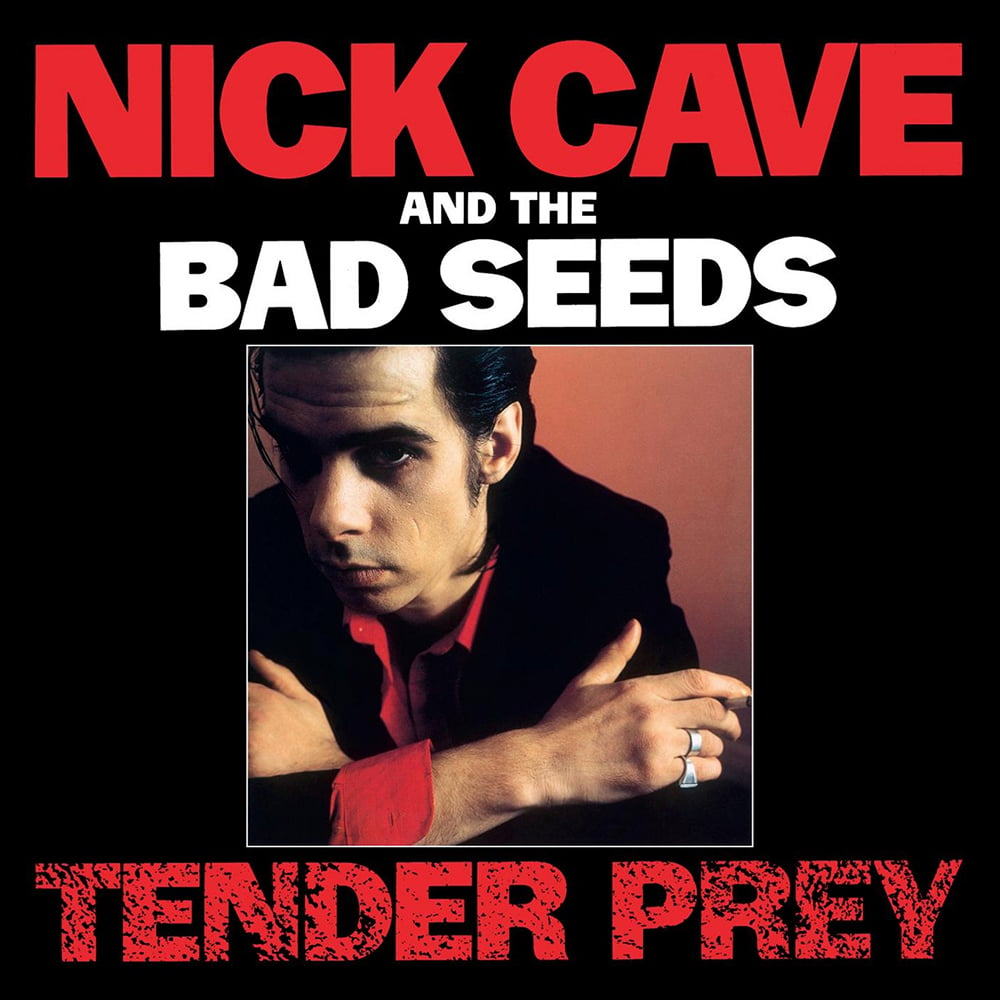
Unlike some of the more accidentally horrifying songs on this list, Nick Cave absolutely knew what he was doing with ‘The Mercy Seat.’ Released in 1988, the Bad Seeds classic is written from the perspective of a man awaiting execution in the electric chair, gradually spiralling between defiance, terror, religious hallucination, and possible confession. Over a relentless, hammering arrangement that feels almost physically claustrophobic, Cave repeats the line “and the mercy seat is waiting” like a doomed prayer.
What makes the song so unnerving is the psychological ambiguity at its core. Is the condemned man innocent? Guilty? Delusional? By the final verses, even he no longer seems sure. Cave drew heavily from biblical imagery and old murder ballads, but filtered them through the clattering anxiousness of the Bad Seeds’ goth-industrial ‘80s sound, creating something that feels removed from time altogether.
Johnny Cash would later record a brilliant cover that stripped the song back to its gallows folk roots, but Johnny played the role of the ‘dead man walking’ in that version. In Cave’s original, you, the listener, feel like the doomed character, which is why this track remains one of the bleakest and most emotionally suffocating singles ever to flirt with semi-mainstream alternative rock success.
