


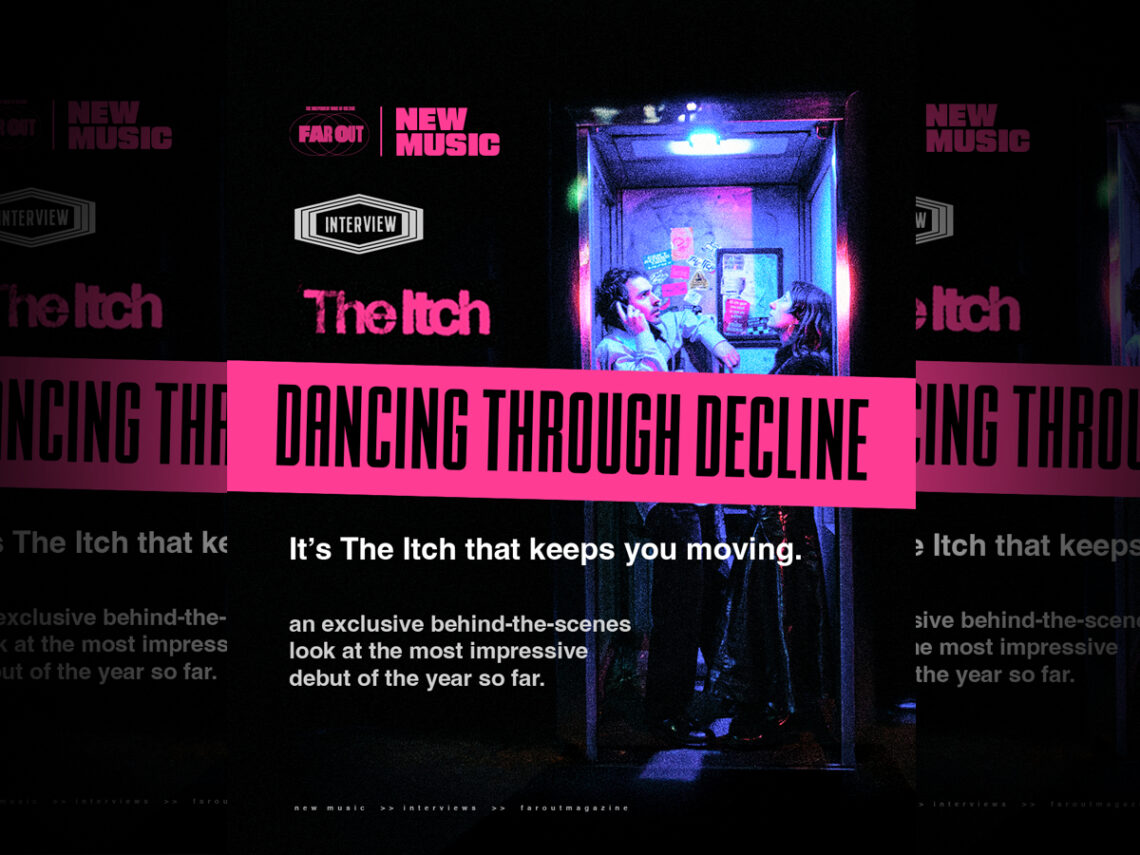
Dancing through the decline: It’s The Itch that keeps you moving

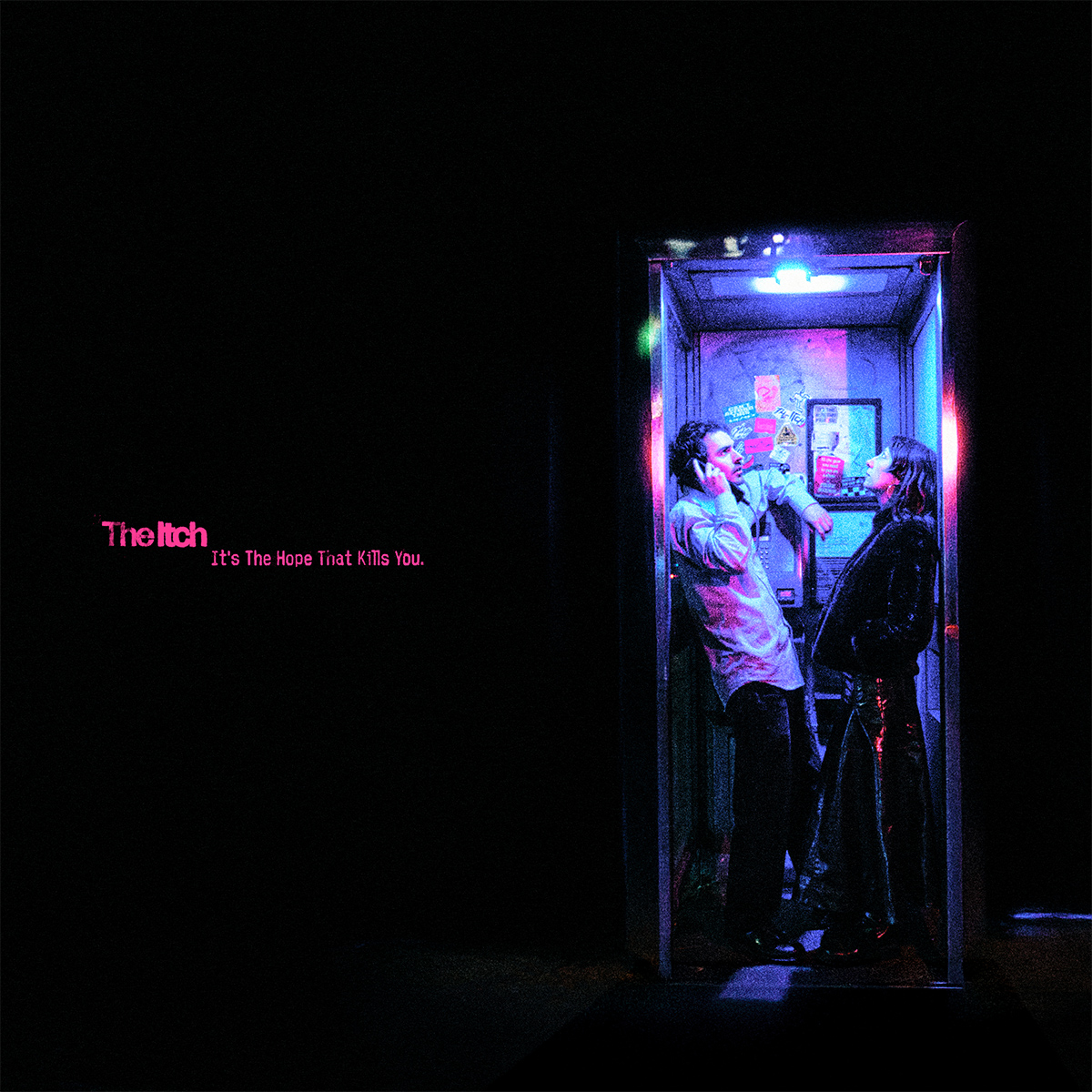
A bank holiday Sunday, a basement bar in east London, clouded by a few glasses of sugary wine, a text illuminating my screen: NO MORE SPRECHSGANG with a link that pulls you through to a pixellated screen teasing the next single from indie-electro duo The Itch, and their last before their debut album, It’s The Hope That Kills You.
It might be my day off, but the pair are always relevant, not just through the straight-to-inbox SMS marketing scheme they employ, recalling a familiar MySpace era, but further still: their disillusioned, ebullient and jostling music is the exact soundscape for a night of bacchanalia in the chaos of the country’s capital. Through one message, I feel part of the in-crowd.
Their strategy hit the bullseye: “I think we were subconsciously tapping into that feeling of wanting another way of being part of a community,” the pair tell me, packed suitcases all but visible in the background of the call. After we speak, the 30-somethings will charge off on tour with Paris electro artist and former Eurovision contestant, Sébastien Tellier. “We’re always trying to think of ways to bypass boring hurdles,” they add.
The last word one might use to describe The Itch is ‘boring’. Their debut album, released via Fiction Records and I Oh You, is one born out of LCD Soundsystem’s pulsating disco experimentation, post-punk’s cynical existentialism and a post-Covid British despondency.
The Itch, consisting of Georgia Hardy and Simon Tyrie, scratch away at the album’s mystique and provide Far Out with an exclusive behind-the-scenes look at the most impressive debut of the year so far.
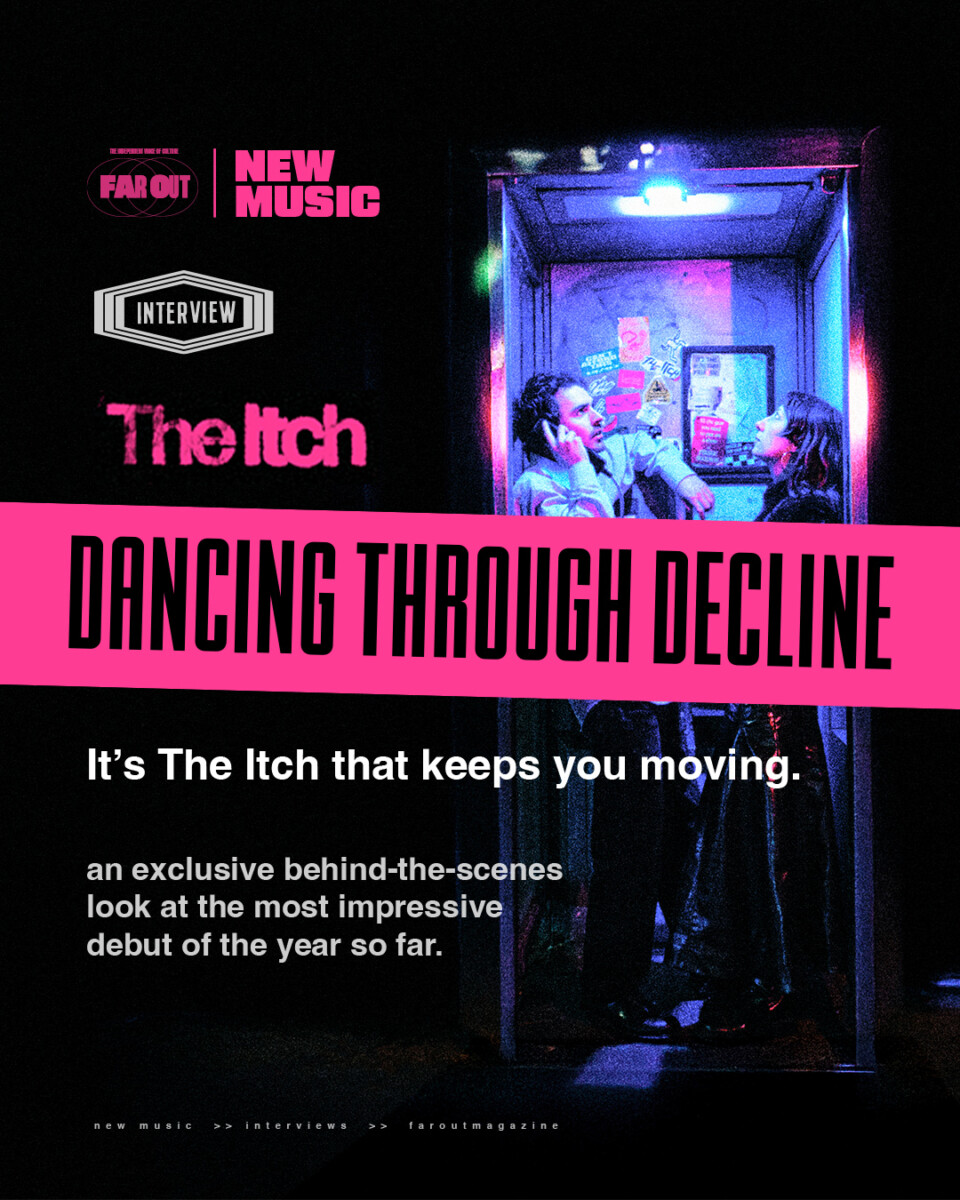
One thousand and one references
Sure enough, the pair have never been ones to play by the rules of the game. In 2024, The Itch burst onto the London scene with a seven-minute aquatic epic inspired directly by sci-fi writer and literary legend, Ursula K Le Guin, and a single headline performance. I’ve yet to see a bolder entry into an atrophying market than that.
Thankfully, the pair have only become the conduit for even more niche references. On It’s The Hope That Kills You, it seems that every visual, sonic, or literary stimulus the pair have engaged with has in some way informed their disenchanted, shimmering Euro-pop world. In our interview, we touch on everything from Charlie Parker to Harry Styles’ use of the Eurorack modular. Similarly, on single ‘Aux Romanticiser’, the song samples both the viral webseries Subway Takes and Pearson Sound’s ‘WAD’. The human, usually the passive site on which culture plays its hermeneutic experiments, becomes an active participant.
Tyrie further elaborates upon this unravelling, glossy and curiously macabre experiment with culture through Sega Bodega’s niche theory of the dreamworld, which suggests our collective unconscious downloads data from the dream world, which, in turn, creates cultural trends. Tyrie admits laughingly that the electronic artist might’ve been “trolling” the interviewer, but the intention is there, obviously a great influence for the way The Itch use their platform to comment upon “the way we absorb cultural feeling and desires that interact with so many different things”. Celebrating the thing that entraps us takes power from the age of pessimism.
This acebic, humorous self-referentiality from axiom to aphorism creates a pastiche that might seem low-stakes (sure, you only spend your time sinking half pints at French House in Soho, so what?), but partying has always been in resistance to sociopolitical infrastructures that choke any future possibility of revolution.
In short, partying has always been political, bodies in a room pressing needs of their own, so it’s no wonder that on their debut, The Itch touch upon the fascist government in the US, the cost of living crisis, climate disaster, the disconnect between influencer culture and reality, and so on.
“What do you do when the world wants to start a war? I’ve got a week to negotiate, and I’m bored. And these freaks in the USA just want some blood sports. And I know I should be settling down by now, but what for?” Tyrie sings on ‘Pirate Studios’. When I press to know more, Tyrie shrugs, revealing that they recorded the song over a year ago and wrote it even before that.
“I can’t even remember what war I was referencing,” he admits, a vision for the likely timeless appeal of the funk-splashed project.
Still, despite the pessimism, The Itch are an antidote to the overexposed modern psyche. The titular phrase, “It’s the hope that kills you”, was lifted from football phraseology, in keeping with the album’s charming British cynicism. The Itch reaches through the despondency that plagues the island; between their lyrical totalising global viewpoints and localised personal additions, there’s a place for everyone.
Music for the age of absence, music as music critique
“This is a record for coming out of youth,” Hardy tells me, bolstering the project’s ethics of pessimism. She explains that the pair represent the last of a generation which had “everything promised to us: a house, a steady job”, which could be attained through a standard, normative working life. These deep-rooted structures are no longer viable, and so, unlike the youths of today, millennials are the last group with a vision of society as one of absence, something actively taken away from them that was otherwise a safe, core, foundational belief, or relief system.
Venues are shutting down, and groceries are unaffordable. “My parents had factory jobs, but we went on holiday,” Hardy muses. Millennials aren’t doing what is expected of them because it doesn’t make sense anymore with the world we’ve been handed. The furious, sardonic energy across tracks like ‘Can’t Afford This‘ and ‘Never Change’ can be explained through the idea that we’ve been slighted, that possibilities have withered and died. So why not make your own?
If Tyrie and Hardy can no longer emulate the future set out for them, the usual working-to-middle-class complacency, they may as well warp and change when they see fit. In an algorithmic era which demands we stay in exactly one shape for prime digital manipulation, The Itch is busy spiralling into several different forms: the pair made up two-thirds of the post-punk band Regressive Left after meeting at a Talking Heads tribute night, but, unimpressed by the creative stagnation they felt, they broke off into the DJ-duo formation they are often billed as.
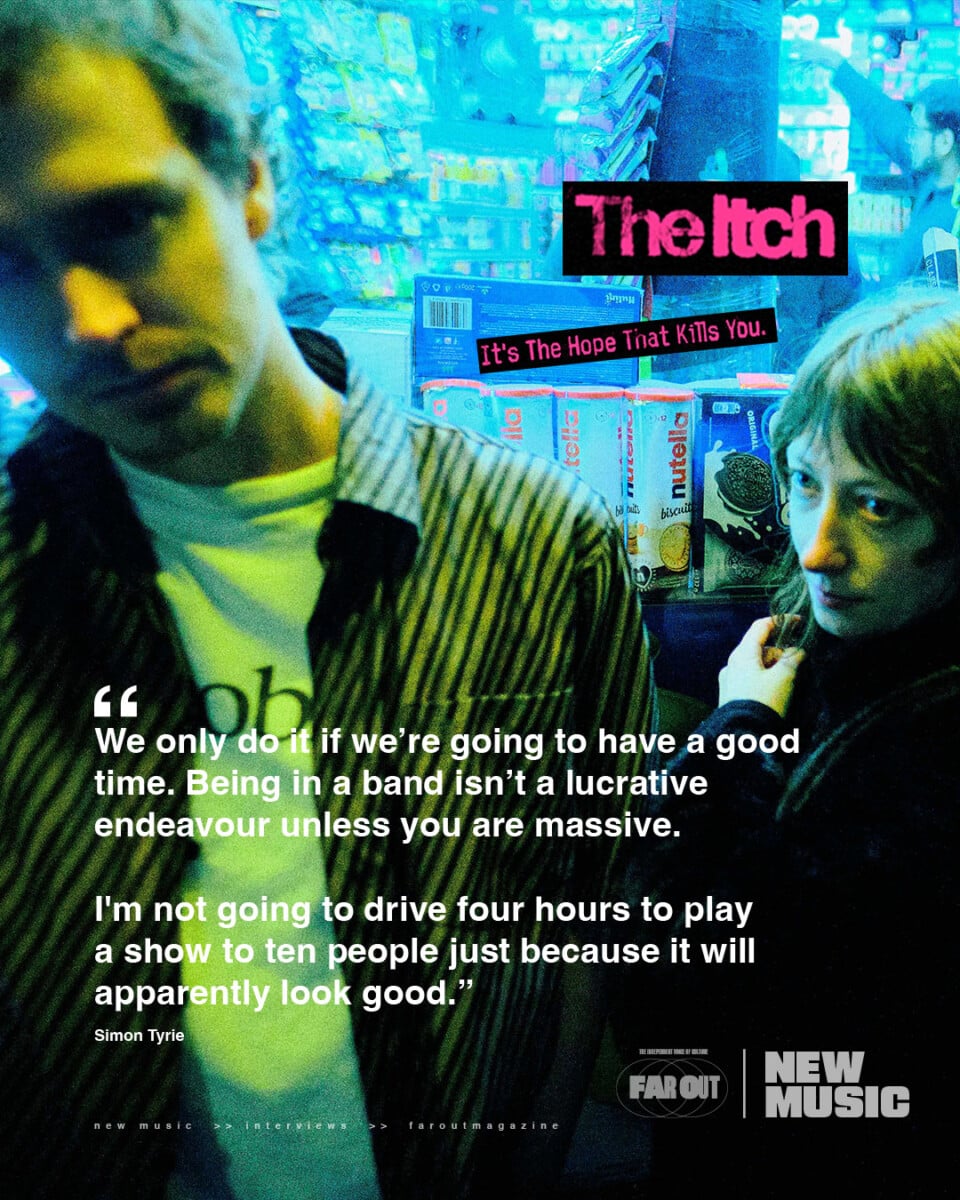
But Tyrie and Hardy are often joined by a full band on stage, too. With one eye on booking shows, they share, “We only do it if we’re going to have a good time. Being in a band isn’t a lucrative endeavour unless you are massive”.
Not only, they explain, is this more economically viable, but they can claw back much of the top-down power in the cut-throat industry. Tyrie adds, “I’m not going to drive four hours to play a show to ten people just because it will apparently look good”.
The butt of the joke here is the industry itself; their debut album doesn’t shy away from critiquing the arena in which it is forced to operate. We return to the watery text I received that fateful Sunday night: the album’s second entry, ‘No More Sprechsgang’, which pokes fun at the overdone post-punk sing-speak style regurgitated in every gig space across the country. The lyrics came from Tyrie’s deadly-serious notebook scribblings amid an awful gig, propped up by an awful industry.
“Everything is fucked, let’s just turn to hedonism”
Georgia Hardy
After all this time, the meaning has changed; it’s “less like a call to arms and more like a melancholic ode to the scene we once belonged to,” according to Tyrie. With a smile, and after I promise the pair I won’t be offended, he adds, “For a long time, music journalism has been non-critical”. Because magazines need to survive, he ruminates, they must play it safe to avoid “pissing off too many people”.
Tyrie is quick to add, “I really love good music journalism […but] it’s like the entire ecosystem that supported that pillar has morphed into something that just doesn’t help.”
For some outside of the capital, The Itch might seem to have appeared out of thin air. But for the last two years, the pair have been busy handling London’s it-crowd party scene, with a recent sellout show in the basement of Soho Swiss restaurant, St Moritz, continuing a history whereby the likes of Lou Reed and Metallica passed through its unsuspecting doors. The Itch don’t do it in halves.
Everything on the album is made for dancing: strong, punchy basslines, a generous use of clapping tracks, bright 1980s synths and oozily reverbed vocals. Though their vision is entirely singular, electronic music in the mainstream has been on the rise, and for this, The Itch have a hypothesis.
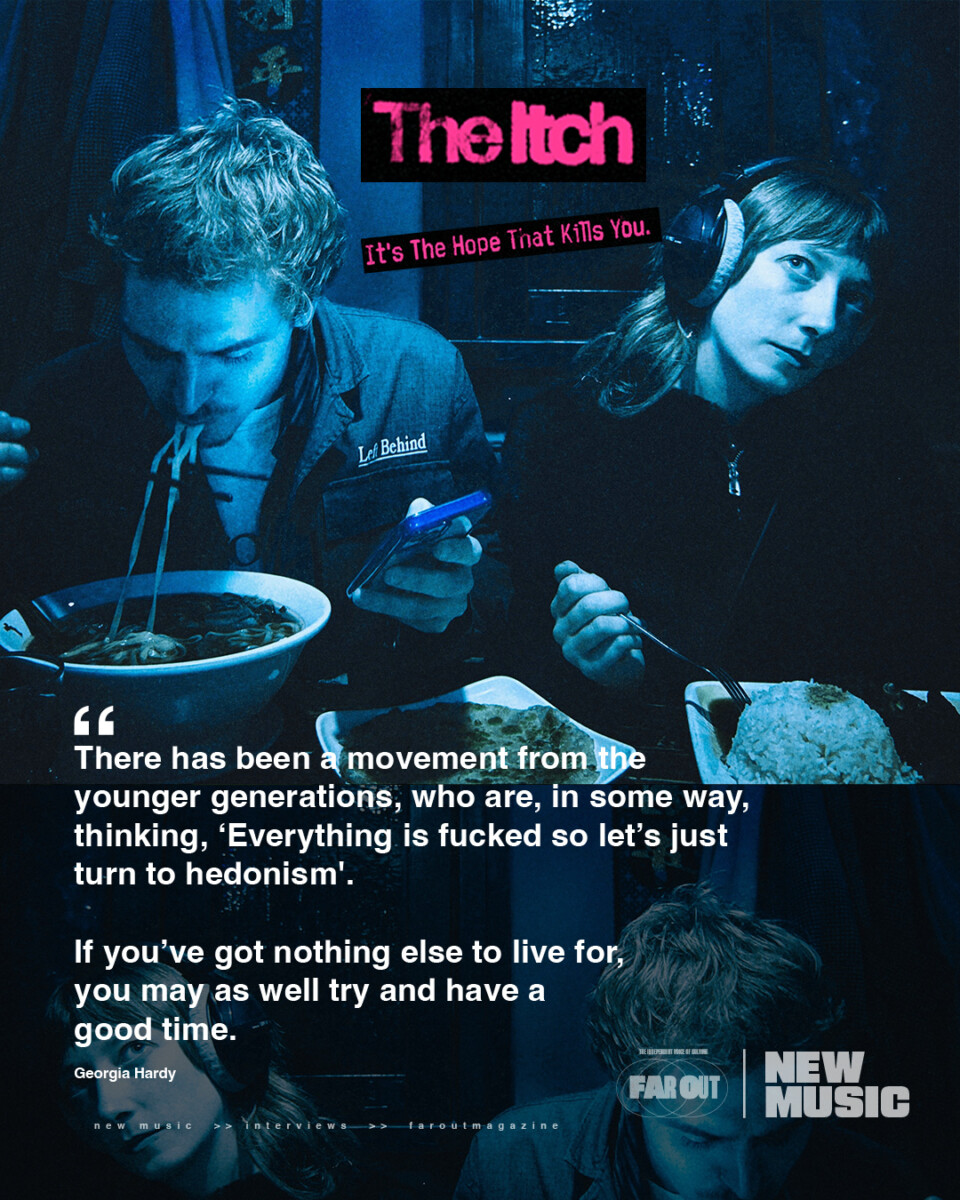
“There has been a movement from the younger generations, who are, in some way, thinking, ‘Everything is fucked so let’s just turn to hedonism’,” Hardy laughs, “If you’ve got nothing else to live for, you may as well try and have a good time. That’s been brewing for quite a while. People are sick of being downtrodden and having to graft so hard.”
“AI can’t create zeigeists”
Simon Tyrie
The Itch locate themselves in a tapestry of mainstream electro-influenced artists: “When The Dare first started, we were already writing the album in the UK,” they reveal, aware of the similarities between their danceable despondency and his trashy NYC club music, dripping into indie-sleaze and electroclash.
Similarly, they add, “We weren’t thinking, ’I want to make an album like LCD Soundsystem’”. They were pulling poems from their notebooks, scrolling on social media, and throwing it all together.
These are obvious influences, but everything is welcome in the world of party music, as, unlike many other genres, it centres wholly on the lived experience of the dancefloor; it centres the human. With this in mind, Tyrie shares one last comment: “AI is never actually going to be that important. AI can’t create zeigeists”. We all share a defiant nod, and the elusive pair are off into the world of Parisian electro-pop.
The screen goes black. Sure, it might be the hope that kills you. But it’s The Itch that’ll bring you back.

Never Miss A Beat
The Far Out New Music Newsletter
All the latest New Music from the independent voice of culture.
Straight to your inbox.