


The Cannes Film Festival unveiled new AI-generated porn from the 1970s, for some reason

In the latest edition of “What are we doing here, people?” an AI company just unveiled a new series of short films at the Cannes Film Festival that turn erotic magazine spreads from the 1970s into moving images.
The fact that this project exists isn’t particularly surprising. Pornography has been a key motivator in technological innovation for more than a century. The daguerreotype was publicly released in 1839, and within a year, erotic photography had become an artistic medium unto itself. Even celebrated photographers who didn’t publicly share their nude work were quietly making money on the side by selling 19th-century porn.
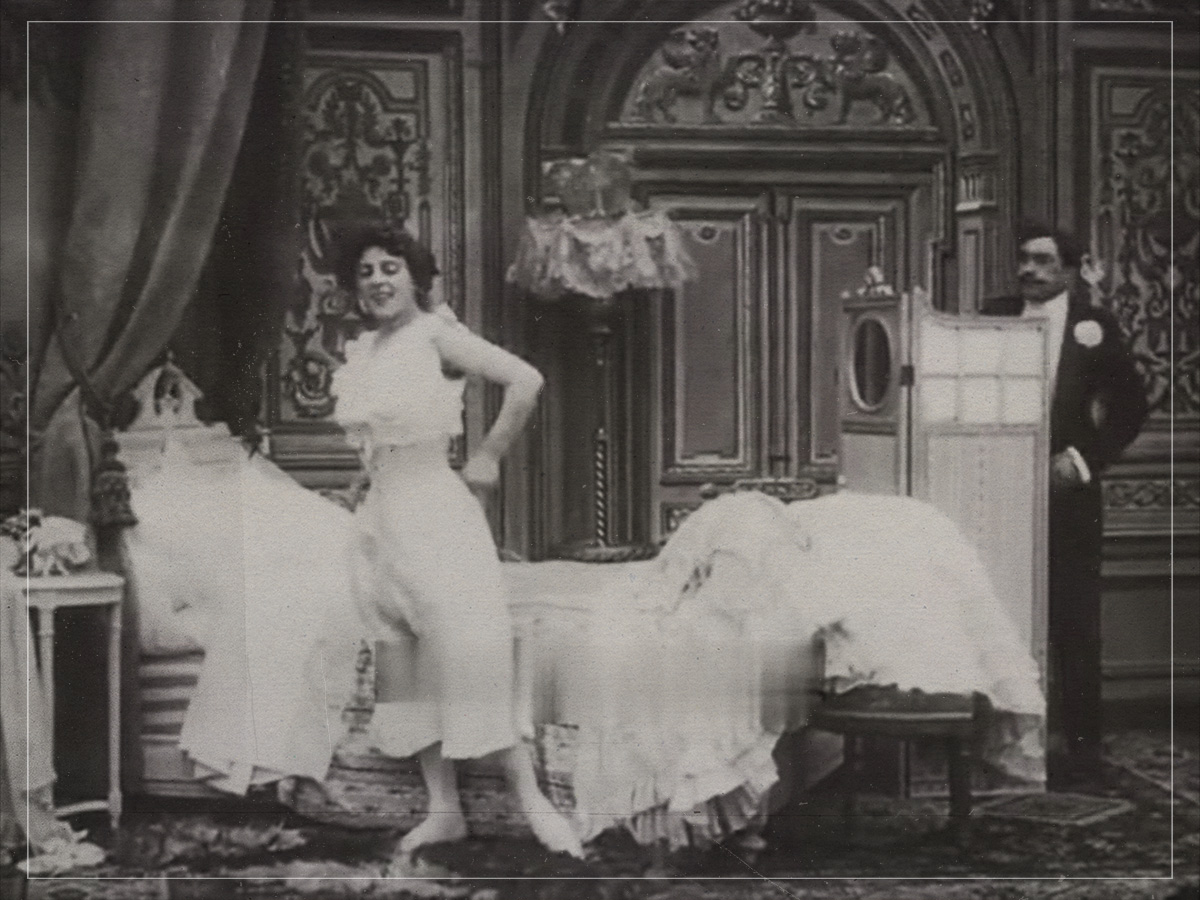
Barely a year after the Lumière Brothers held the first public screening of a motion picture, Albert Kirchner debuted Le coucher de la mariée (“bedtime for the bride”), which is considered to be the first erotic film. Porn was also the first genre to be widely distributed on home video. Even by 1978, when home video was more widely available, 70% of rentals and sales were adult titles.
AI has outdone them all, of course. Thanks to the combination of text-to-image generation and a total lack of regulation and accountability, tools like Grok AI are being used to generate nude images of real-life women and children. A study published in early 2026 found that, within a period of 11 days, Elon Musk’s chatbot had generated three million sexualised images, 23,000 of which appeared to depict children. Seems like a great time for Cannes to platform another instance of AI turning apparently unconsenting subjects into adult film stars.
As reported by Variety, the films were developed by the Norwegian company Multiformat and are streaming on Cultpix, a platform specialising in exploitation movies. According to Cultpix CEO and Co-Founder Rickard Gramfors, the whole endeavour is merely an attempt to spark a thoughtful public conversation about sexuality.
“By bringing these static images to life through AI,” he said, “We’re creating a conversation between past risqué aesthetics and new technology, exploring how our attitudes to the human body and sexuality have evolved over 50 years.”
Based on that argument (which sounds as if it was also generated by AI), you’d think that pornography didn’t actually exist in the 1970s. In reality, the adult film industry of the ‘70s is so iconic that the period has been dubbed ‘The Golden Age of Porn’ and has spawned countless movies and TV shows, from Paul Thomas Anderson’s Boogie Nights to the HBO drama The Deuce. If you want to explore “how our attitudes to the human body and sexuality have evolved over 50 years,” why not just stream actual adult movies made at the time, like Deep Throat or The Opening of Misty Beethoven, instead of making fake ones?
The idea that AI is giving us unprecedented access to a very well-documented past is one of the many idiotic defences that the tech industry is throwing at us, right up there with, “It’s here now, so we better just use it,” and “Ladies, you’d better learn how to vibecode if you’re going to call yourself a feminist.”
On one level, this is clearly a publicity stunt. That part has obviously worked. Here we are talking about it. But it’s also a cynical ploy to reposition AI’s relationship with cinema as something akin to archival work or art restoration. The big-name creatives in the industry (as well as the major unions) have largely rejected AI, so the tech boosters are trying to find new ways to couch the technology as a valuable, conversation-starting social exercise.
As Variety noted, this year’s Cannes Film Festival also premiered the new restoration of Ken Russell’s The Devils, one of the most censored cinematic releases of all time. Both the Cultpix films and The Devils contain sexual content, but they are about as different as movies can be. Russell’s film, with all its maximalist production design, jarring soundtrack, and thematic complexity, is a shining example of cinema as art. It is creativity in its purest, most human form, and its themes of religion, exploitation, and power are as dense as a Victorian novel.
Of all the things that could start a substantive conversation this year at Cannes, it’s that movie. Presenting AI slop at the same festival is cinematic heresy.
