



‘California Schemin” is a love letter to Scottish identity

When you think about movies that delve into Scottish identity, you might think about Braveheart, Mel Gibson’s Oscar-winning 1999 epic about William Wallace, a national hero and leader of the country’s first war of independence.
But it has very little to do with history or Scotland, treating the country and its past the way the Indiana Jones franchise treats the archaeology profession. Luckily, a new film offers a much better option. If you want to really familiarise yourself with Scotland and its identity, watch James McAvoy’s 2026 directorial debut, California Schemin’.
Based on a true story, it follows a young rap duo from Dundee, Billy ‘Silibil’ Boyd (Samuel Bottomley) and Gavin ‘Brains’ Bain (Séamus McLean Ross), who go by Silibil N’ Brains. They work soul-sucking jobs in telemarketing while laying down tracks and sending demos to every record label with an address. When they finally get their big break with an audition for Polydor in London, however, they can hardly get one verse out before they’re laughed out of the room. No one, it seems, would even entertain the notion of a rap duo with Scottish accents, let alone sign them.
Instead of going to more auditions or simply giving up, Billy and Gavin opt for a radical alternative – they pretend to be American. In one of the most charming parts of this infectiously rambunctious movie, the boys hone their California accents in a Rocky-style training montage, using familiar phrases like the Friends refrain, “We were on a break,” to find just the right inflexions. Miraculously, their ruse works, and they soon find themselves signed by a major label with a penthouse apartment and a cool £35,000 in their pockets.
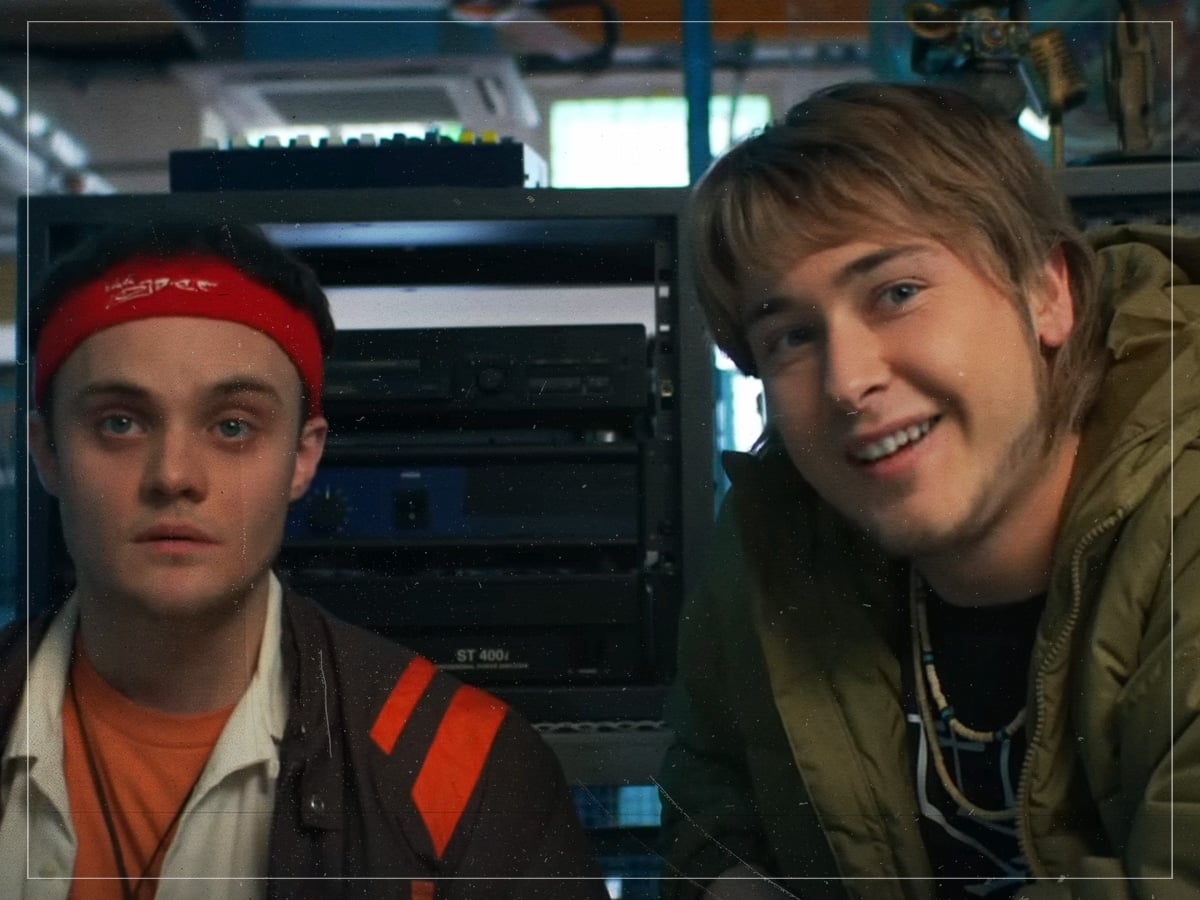
It’s the early 2000s, and the US dominates the music industry, especially hip hop. Eminem, Outkast, and Wu-Tang Clan are the voices of the genre, and anyone with a non-American accent – let alone a Scottish one – has little chance of succeeding. Billy and Gavin don’t just lean into the sound of their claimed homeland, though; they also cultivate brash, juvenile personas based around cargo shorts, jokes about ‘your mom,’ and a lot of unruly behaviour on stage. To their audiences, they are an electrifying combination of bravado and actual, undeniable hip hop prowess. To their label, they are a potential cash cow.
Despite all the fame and money, the duo is determined, at first, to expose the industry for its hypocrisy by revealing their Scottishness on the biggest platform possible. This opportunity arises when they appear on MTV for the first time, but at the last minute, Gavin changes his mind and avoids spilling the truth. It’s a turning point. For the rest of the film, Gavin becomes increasingly caught up in his alter-ego, refusing to acknowledge, even privately, that he’s never actually been to the US. In contrast, Billy, who is struggling to maintain his relationship with his girlfriend back in Dundee, becomes progressively more burdened by their charade.
In the movie, it’s this rift that signals the beginning of the end for this elaborate industry con. When Silibil N’ Brains opens for D12, Billy and Gavin get into a fistfight backstage over their differences. Billy is exhausted pretending to be someone he isn’t, and Gavin is so intoxicated with their success that he’s beginning to think that he is, in fact, from California.
The resolution of the film is Gavin’s breakdown and slow return to his true identity. In the final scene, he appears alone onstage at an open mic night in Dundee. When Billy appears at the door with his now-pregnant girlfriend, Gavin improvises an acapella verse of apology, admitting that he lost his way but has found the path back to himself and his home again. It’s ultimately a film about Scottish marginalisation, particularly at English hands, and the process of losing and regaining a sense of self and place.
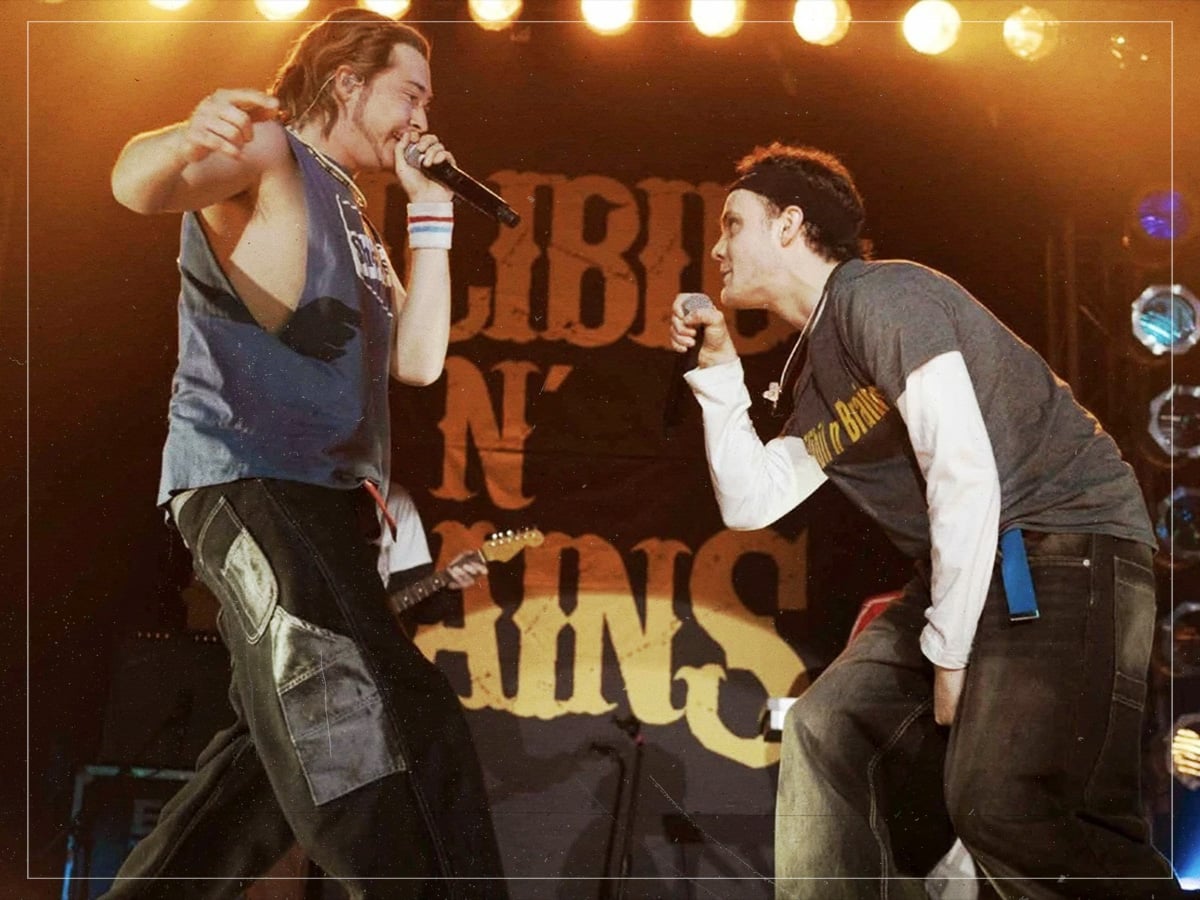
The true story is even more sensational in many ways than the one depicted in McAvoy’s movie. Silibil N’ Brains actually received £75,000 when they were signed by Sony. They partied with Madonna and hung out with Eminem. They successfully maintained their lie for nearly four years. And one of the key factors in their exit from the industry was turmoil within Sony rather than the duo’s personal conflicts. The film reduces their wealth, omits much of their celebrity proximity, appears to shorten the timeline, and implies that their careers were still on the ascent when all the lying began to take a toll on Boyd’s conscience.
That might seem like a misstep. Why downplay real-life drama when adapting a story that’s supposed to be a more entertaining version of the truth? An American filmmaker would no doubt have thought along those lines and focused on the duo’s meteoric rise, glamorous partying, and sensational fall from grace. But McAvoy and screenwriters Elaine Gracie and Archie Thomson were too smart for that. Their version ends with something more akin to a return to grace, and it’s as satisfying as it is muted.
It’s an arc that holds more than a little personal resonance for McAvoy. “With my accent, I’ve had that experience where I’m suddenly no longer a person with infinite possibilities and potential,” he said in an interview with The Guardian. “I am ‘that Scottish person’. I’m reduced to a noise that comes out of my mouth.”
That’s the spirit behind the film, a scrappy, independent, and ultimately triumphant approach to a story that could so easily have been reduced to its most dramatic plot points. California Schemin’ could have been a hip-hop version of Braveheart. Instead, it’s one of the more gleeful and attentive explorations of Scottish identity that has come out in the past few years.
