


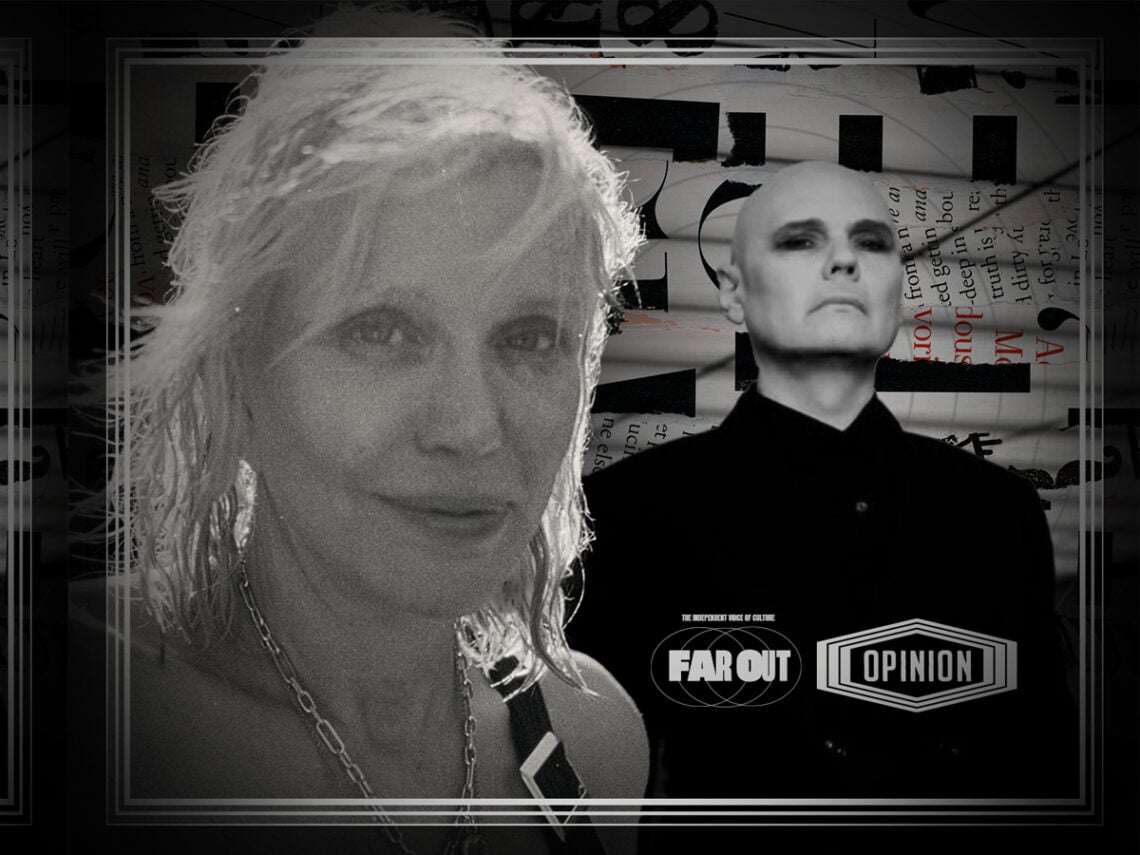
Billy Corgan and Courtney Love: Still at war with the indie gatekeepers

It’s hard to imagine any two musicians who’ve navigated more feuds, spats, and fallouts over the last 30-odd years than Courtney Love and her ex-boyfriend/adversary Billy Corgan, and in an almost comforting way, they’ve proven lately that they’re still able to stir the pot with the best of them.
Some recent shit-talking, combined with a stockpile of old drama always a Google search away, has seemingly helped endear these two 1990s icons to a whole new audience: Gen Z kids who were raised on Real Housewives and drag queen ‘reads’.
Riding this wave of fresh attention, Corgan has collaborated with Yungblud in recent months and has his Smashing Pumpkins booked to co-headline Lollapalooza in his native Chicago this summer. Love, meanwhile, is mentoring the pop star Baby Queen, and is preparing to release her first new album in over 20 years, with rumours of a full-on Hole reunion also percolating.
It’s never easy to know how Corgan, 59, and Love, 61, are getting along with each other at any particular moment in time, as they’ll be writing songs together one week and then criticising each other’s parenting the next. With both on a general career upswing at the moment, though, it was a fitting time for Courtney to make her first appearance on Billy’s podcast The Magnificent Others earlier this month, presumably for the purposes of a tidy, career-spanning interview.
Unsurprisingly, though, the formal Q&A quickly turned into a loose, tangent-rich, and name-drop-heavy chat between two people who’ve known each other since 1991, back when Hole played a gig at the Avalon in Chicago, and Corgan found himself in awe of the screaming frontwoman.
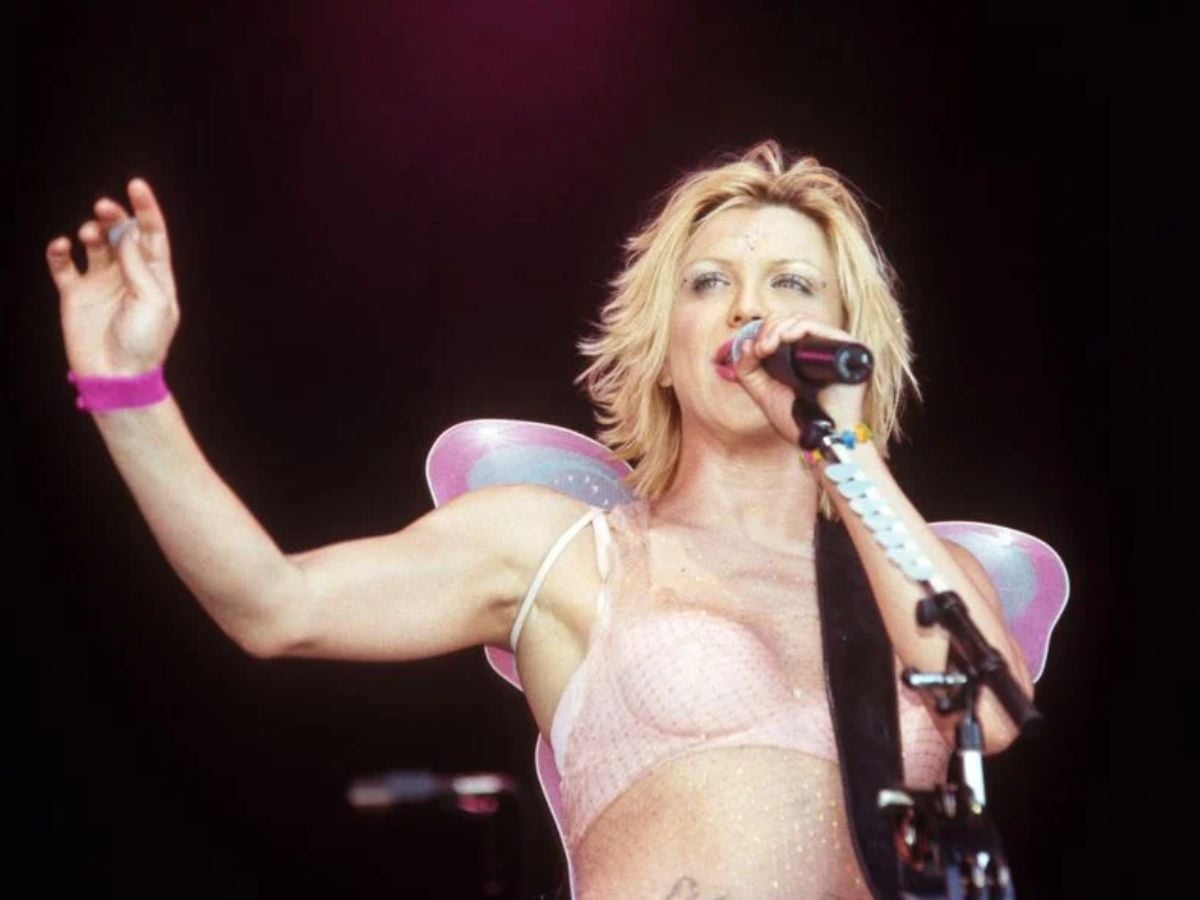
There was a brief chapter in their lives, before either of them was properly famous, that they dated one another and spent some time living together in London. During the podcast, Corgan reminded Love of a very strong memory he’d always held from that time, of a walk they’d taken down a high street, during which she had stopped for several minutes to stare in the window of a Prada store. Neither of them had anywhere near enough money to be shopping at that place, and he castigated Love a bit: “Why are you even looking at this stuff?”
“One day,” Love supposedly responded with supreme confidence, “I’m gonna have it all”.

Love laughed with embarrassment at this story, ever sensitive to being seen as the shamelessly ambitious person she was in her 20s. Corgan, though, felt it represented something more meaningful, something that aligned him with Love back then, and continued to put them on the same side of the pop cultural fence in 2026. Commercial ambition, sometimes seen as the least cool thing a person could have in the ‘90s, was a central driving force for Courtney Love, and it helped Corgan realise, as a youngster, that it wasn’t so bad if he embraced more of that drive in himself.
As much as Gen Z kids might look back on the ‘90s as a glorious era, when unique and challenging artists could also sell a lot of records, that wide-open playing field was also filled with a lot of landmines. As the underground, college-radio bands of the ‘80s suddenly became the ultimate judges of artistic authenticity during the new ‘alternative’ explosion of the ‘90s, emerging bands like Hole and the Smashing Pumpkins were often ridiculed for their lack of true indie-rock chops. Love was seen as a phoney by many of the other women in the Pacific Northwest’s riot grrrl scene, while the Chicago-based Pumpkins were accused of all sorts of offences against the DIY ethic, particularly Billy’s insistence on playing glammy, self-indulgent guitar solos.

Sonic Youth’s Kim Gordon, who produced the first Hole album, was about a decade older than Love and Corgan, and apparently represented all the most oppressive aspects of the “us vs them” indie regime. “She was really horrible in the ’90s,” Love told Corgan in their chat, receiving a nod of agreement in return, “I remember in Holland I was hanging out with you, and they [Sonic Youth] were so mean”.
Gordon might have had reason to be cocky and judgy, as she was one of the undeniable badasses of indie rock, and Sonic Youth was partly responsible for crafting the unofficial rules of ‘90s authenticity, refusing to write songs for radio play or with commercial aspirations. It was all about the art, in theory, but there was also a power dynamic in place, an ability to manipulate critical narratives.
If Gordon had any regrets about being “mean” to Love or Corgan in the ‘90s, she certainly didn’t show it in her 2015 memoir Girl In a Band, in which she described Courtney as a “tarantula: LA glamour—sociopathy, narcissism”, and summed up Billy as someone “nobody liked because he was such a crybaby,” adding that “Smashing Pumpkins took themselves way too seriously and were in no way punk rock.”
It’s no fun under any circumstance being the kid in high school that the cool older kids throw spitballs at, but the stakes were quite a bit higher at the top of the rock ‘n’ roll food chain. By 1993, Love was now married to the frontman of the biggest band on earth, and the Pumpkins’ second album, Siamese Dream, had established Corgan as a celebrity in his own right. They were still in their 20s and could have used a healthy support system from their fellow artists to deal with the pitfalls ahead of them. In many cases, though, even if other bands weren’t openly hostile to Hole and the Pumpkins, they still refused to defend them, for fear of facing the wrath of the authenticity police.
Plenty has been written about just how mind-bogglingly awful the press was toward Courtney Love during this period, both before and after Kurt Cobain’s death, but neither Love nor Corgan respected the music press very much to begin with. The much tougher pill for both of them to swallow was being cast out and ostracised by musicians they had respected, the sacred cows of the new alt aristocracy.
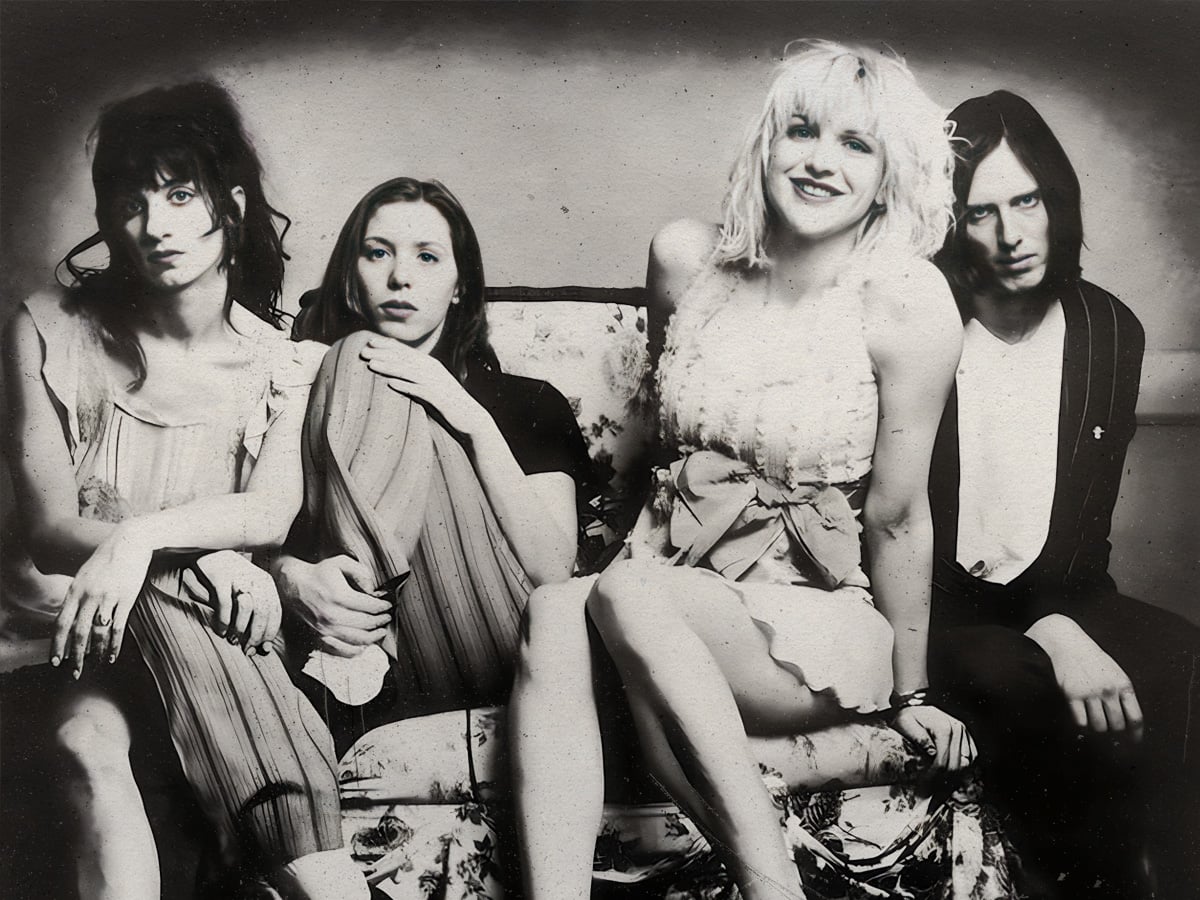
It’s certainly worth noting that Love and Corgan haven’t always been the victims of every bad interaction they’ve had with other artists over the years. Blunt communicators with sizable egos have a knack for rubbing people the wrong way, and no one would call either of these people ‘easy hangs’. It is quite fascinating, though, to see just how much the gatekeeping trends of the ‘90s affected these two world-famous rock stars at a critical time in their careers, and how much they’re still clearly bothered by it over 30 years later.
The critical injustice both Corgan and Love seem to agree about, and which has probably helped them set aside their own feuds of the past, is the idea that someone’s artistic authenticity could ever be judged by an outside committee. “If anybody would romanticise the ’90s as a more egalitarian time,” Corgan said during the pod, “Then they don’t know what the fuck they’re talking about,” Love completed.
“We’re castigating the indie rock system of the ’90s,” Corgan continued, “and its bullying and its perniciousness”.
When Corgan was getting the cold shoulder from Sonic Youth or lightly jabbed in the lyrics of Pavement songs, or when Love was being raked over the coals by the likes of Kathleen Hanna, the suggestion was usually the same: these two people were ambitious glory chasers and opportunists, not honest artists.
Corgan and Love’s argument, embittered though it may be, is that the opposite was actually true. While indie purists were willing to torpedo their own potential and ignore their own musical instincts for the sake of following the sacred Sonic Youth rulebook, Courtney and Billy did what they actually wanted to do and made the music they wanted to make. This, along with a comparison of respective record sales between the snobs and the anti-snobs, provided ample proof for Corgan about who got the last laugh.
“When you win, there’s nothing to crow about,” Corgan told Love toward the end of their pod chat, “We won. But it doesn’t mean it didn’t hurt at the time”.
“It doesn’t mean it didn’t scar,” Love added.
