


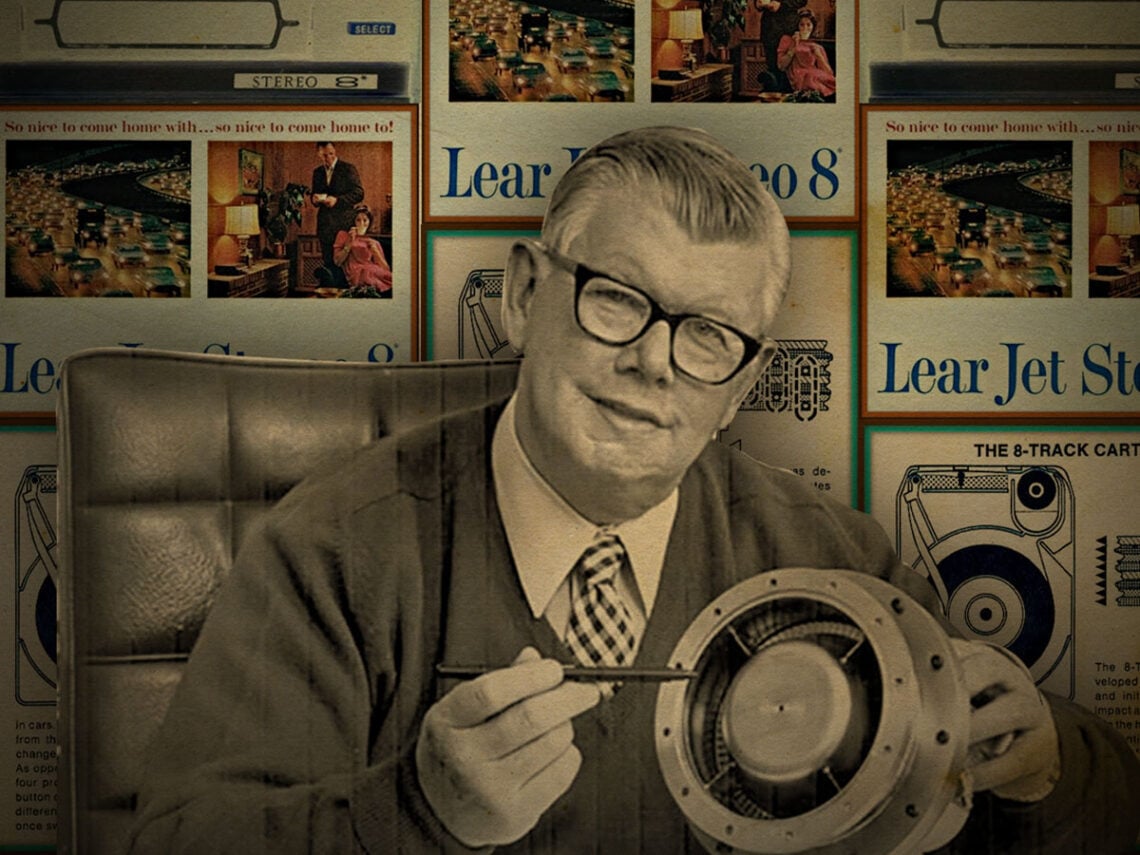
Bill Lear: The 1920s jet designer who also pioneered portable music

“If I were alive 100 years from now,” the American inventor and industrialist William Lear told a reporter in 1956, “It wouldn’t surprise me to be able to televise my entire body through the air by electronic waves.”
Maybe that sounds like the sort of far-fetched, sci-fi prediction a lot of people would have been making at the dawn of the Space Age, but Bill Lear was no ordinary, pie-in-the-sky dreamer. Had he somehow managed to live deep into the 21st century, his track record of more than 150 patents suggests that digital teleportation might well have become another innovation added to an already ludicrous CV.
Today, the Lear name is probably best remembered for its association with the Lear Jet, the first mass-produced private jet aimed at wealthy business executives. When Bill Lear developed the first Learjet, Model 23, in 1963, he was already 60 years old, but rather than preparing for retirement, he seemed to be finding a second wind, presenting himself to the public as a sort of elder statesman of new tech, a Thomas Edison for the rock and roll generation.
Not wanting to limit himself to a rather exclusive clientele of super-rich jetsetters, Lear announced a brand new venture in 1965 that generated a major buzz in both the automobile industry and the music business. In February of that year, he set up a warehouse in Detroit, Michigan, which would be dedicated to his new ‘Lear Jet Stereo Division’, makers of the first eight-track tape cartridge.
Tale of the Tape
Up to that point, the four-track format had been the standard in the upstart tape industry, but there were no car manufacturers that included tape decks as a standard feature in any of their models.
Instead, car owners who wanted to embrace this new technology and choose the music they listened to while driving rather than relying on the radio would have to have a four-track unit custom-installed in their vehicle as an aftermarket purchase.
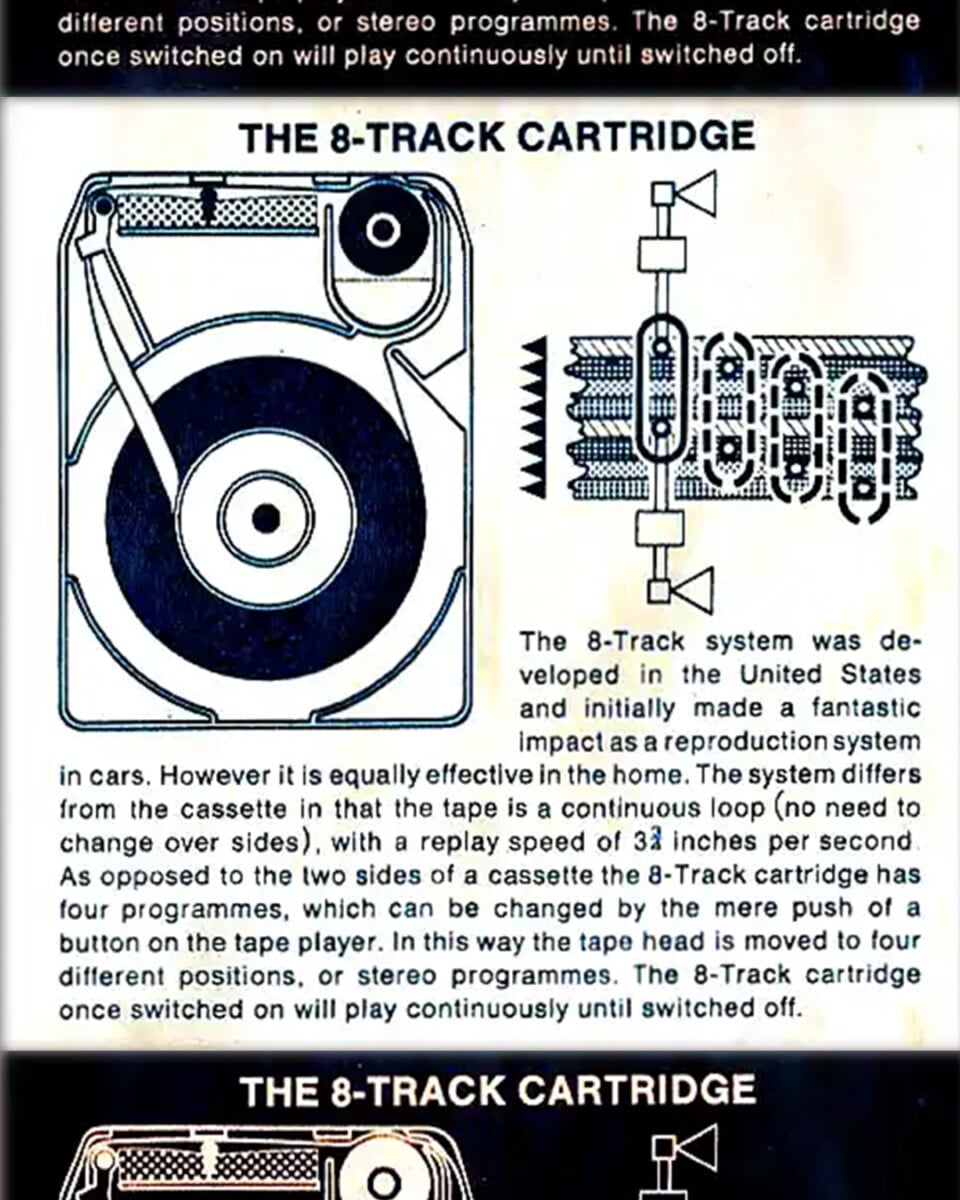
Bill Lear’s eight-track enterprise, by comparison, represented a legitimate revolution in on-the-go audio. Not only did the eight-track version of the magnetic tape cartridge allow for considerably more music than the four-track model, but its more efficient design also got it sold to the Ford Motor Company, which started including built-in eight-track tape players on some of its 1966 models.
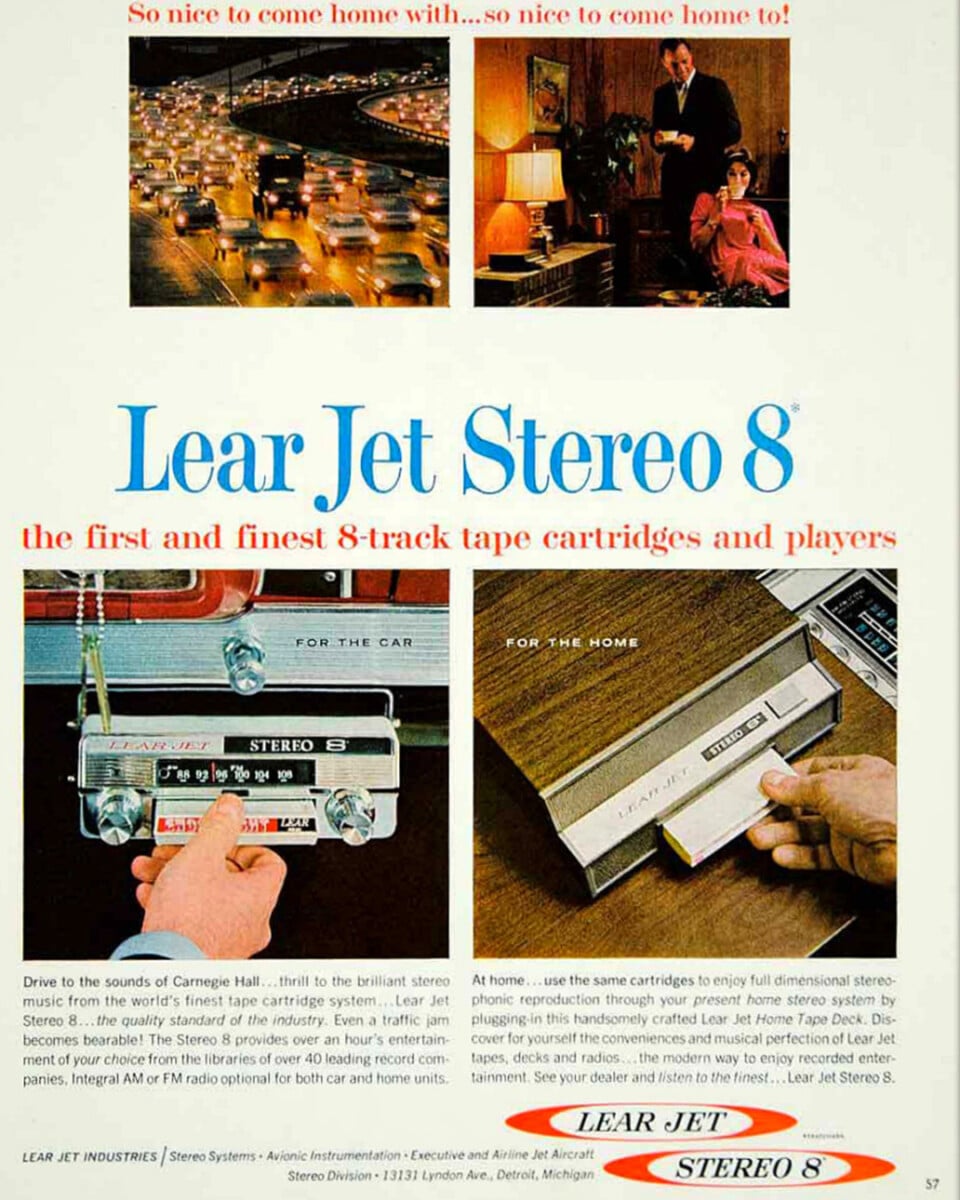
Lear’s genius seemed to be dependent not so much on understanding the complexities of a design, but on deconstructing them. He was a minimalist in many respects, always looking to utilise the fewest parts, the fewest moving pieces.
“Two of something is twice as likely to go wrong as one,” he once said, “Keep it super simple. If something isn’t designed into [a machine], it can’t go wrong, and it will never require service or replacement.”
Lear applied the same philosophy to the company he kept; the fewer counter-opinions in the office, the better. “Could 500 men have painted the Sistine Chapel?” he asked one reporter, “Suppose one man wasn’t there?” It was pretty clear that he was comparing himself to Michelangelo in that analogy.
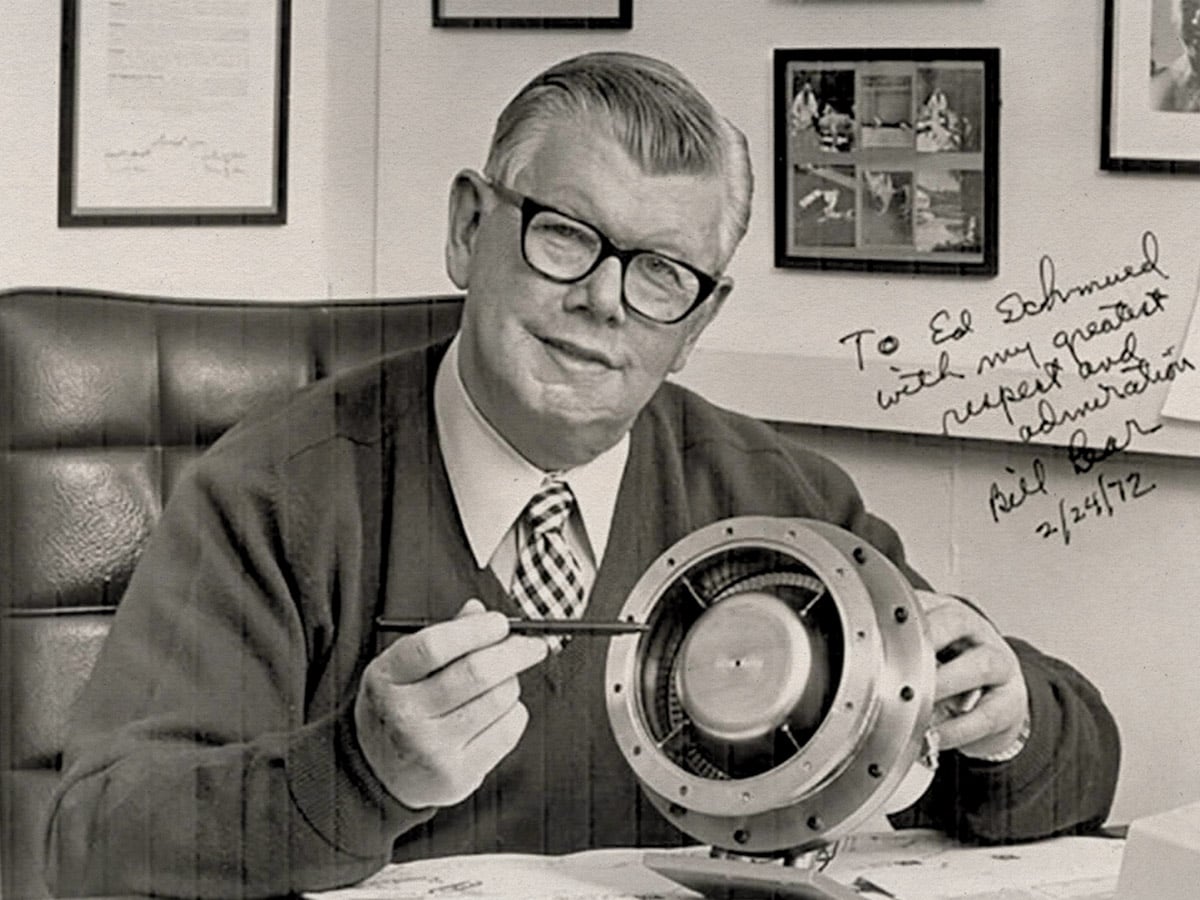
In the case of the 8-track tape cartridge, Lear did have a small bit of assistance from engineer Sam Auld, who’d worked with him on the invention of the first automatic pilot system for aircraft in the mid 1950s. Auld later recalled how Lear had tackled the “impossible” challenge of doubling the recording capacity of a tape cartridge while simultaneously reducing its bulk. Rather than making a schematic and handing it off to his team, Lear was routinely “running a lathe, handling a soldering iron, making things in the middle of the night. Can you imagine the chairman of the board doing that?”
The result was “the simplest tape transport system ever devised,” Auld told Lear’s biographer Victor Boesen.
Along with big carmakers in Detroit, Lear’s cartridge design also impressed the executives at the major record labels, many of whom were willing to start working with his company, and several other businesses that sprang up in its wake, to start sharing master recordings of their artists for the purposes of adapting popular albums into the new format.
The whole thing went from the drawing board to a realised, commercialised reality in the span of roughly a year, and once the public saw the tape decks in action, demand skyrocketed exponentially over the next few years. For a while, Lear’s eight-track tape cartridge became the most popular form of musical media in America, grossing over $2billion for Lear Jet Stereo, Inc in 1970 alone.
It was a pretty impressive leap forward in portable audio technology spearheaded by a man in his 60s, and yet, it was arguably only Lear’s second most important innovation in that specific field.
‘Motor-ola’
Way back in the 1920s, Lear was just a struggling high school dropout from Hannibal, Missouri, trying to make his way as a self-taught radio engineer during the very early days of ‘wireless’ tech.
Arriving in Chicago, he began to show a knack for improving the power and functionality of radio frequency coils, and eventually came under the employment of the Galvin Manufacturing Company, the precursor to the giant international telecom behemoth known as Motorola.
Speaking to Billboard magazine in 1965, just as he was entering the tape cartridge industry, Lear recalled how he’d personally developed the original means of listening to music in an automobile: the car radio.
“It happened in 1928,” Lear said, beaming with pride, “I was then with the Galvin Manufacturing Co in Chicago, who was making storage batteries and ‘A’ battery eliminators. In the fall of 1928, I placed the first car radio ever built on Paul Galvin’s desk. It created some interest around the plant, but the general feeling was that radios in cars would never go over. The chief concern was that they would be legislated out of existence for driving safety reasons. Two weeks later, we made a 100 of them to see what would happen. Then, we made another 100, and then we were on our way to being in the car radio business.”
Paul Galvin himself, the founder of Motorola, is generally credited as the inventor of the car radio, and in his own memoir, Galvin greatly diminishes the contributions of Bill Lear in the development of that first prototype.
Still, while Lear might have been prone to exaggeration, it’s hard to question the claims of the man with 150 patents and a personal line of self-developed jet planes. Galvin, by comparison, had already gone bankrupt twice in the 1920s and seemed doomed to fail again before the car radio landed on his desk.
According to Lear, he and Galvin travelled together to an automobile convention in Atlantic City, New Jersey, in 1929, during the same week that the stock market collapsed.
On that trip, in which they’d be introducing their car radio to the world, they also supposedly came up with the product’s new, official name: ‘Motorola’, a combination of ‘motor’ for motor car and ‘ola’, the popular tack-on suffix of the era (see Victrola, pianola, Crayola, and more).
As the legend goes, Galvin and Lear, not having enough cash for a proper space inside the convention hall, rolled up on the Atlantic City boardwalk and parked a Studebaker out in front of the building. They then proceeded to blast the car’s brand-new Motorola radio for passers-by to hear. If a dealer stopped to have a listen, Lear and Galvin would invite him to hop in the car and take a spin with the radio playing.
The novelty of the showcase helped generate just enough new business to push the Galvin MFG Company into the black in 1929, enabling the business to do what few others could in the 1930s: survive and grow. Within a few years, the company changed its name to reflect its best-known brand and became Motorola, Inc.
Bill Lear, despite the massive success of the car radio, didn’t hang around the Motorola offices for long. In 1932, he shifted his attention to aviation communications, nearly went broke, then resurrected his career by improving the design of all-wave home radio receivers, selling his concept to RCA Victor. From there, he was able to return to the aviation field, developing radio direction finders, autopilot systems, automatic landing systems and of course, a pioneering line of portable aircraft radios.
Basically, if you’ve operated a vehicle on the road or in the sky, Bill Lear is the man to thank for having your custom soundtrack for the journey.
