


What was the payola scandal and how did it change music?

When the Rock and Roll Hall of Fame Foundation started looking for a city in which to build a proper brick-and-mortar museum in the mid 1980s, they received the predictable offers from New York and Los Angeles, as well as a strong pitch from Memphis.
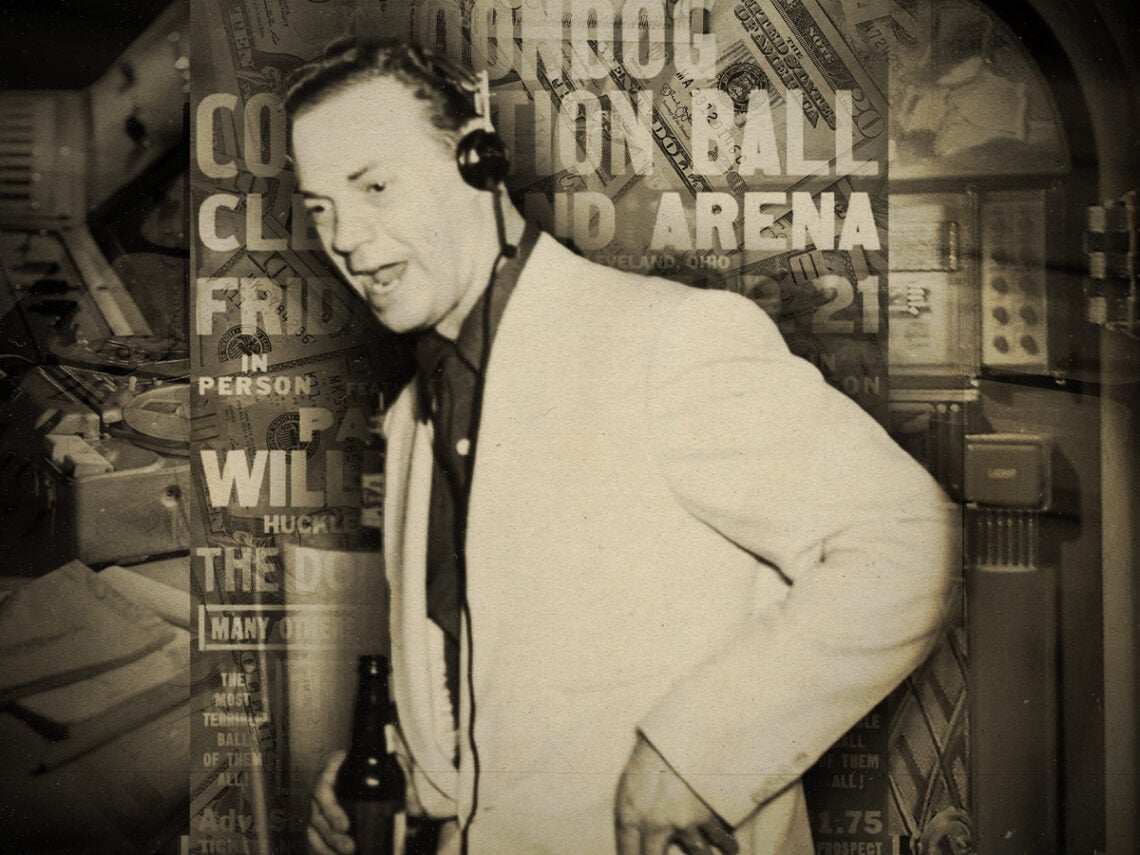
The winning bid, however, went to Cleveland, Ohio, a downtrodden, post-industrial town that was willing, in desperation, to offer up a huge amount of public funding toward the project, but it also had a legitimate, historical argument for housing the museum. A local disc jockey, Alan Freed, often credited with coining the term ‘rock and roll’, played a vital role in the ascent of the genre through his late-night WJW radio show, ‘The Moondog Rock and Roll House Party’, which in turn spawned the first major advertised rock concert, the Moondog Coronation Ball, in 1952.
In the end, though, the foundation was primarily enticed by the money Cleveland was willing to give them, rather than their ‘birthplace of rock’ credentials. Some might call this a simple case of deal-making or lobbying, but in practice, it’s not all that different from one of the supposed long-standing crimes of music promotion, the thing that ultimately got poor Alan Freed scapegoated out of the music industry entirely: Payola.
Payola was a fancy word, cooked up in the 1930s to refer mainly to band leaders who would take bribes from song publishers to play certain songs. The ‘pay’ obviously referred to the exchange of cash, while the ‘ola’ was tagged on as the en vogue branding suffix of the era (see Victrola, Motorola, Crayola, and the like).
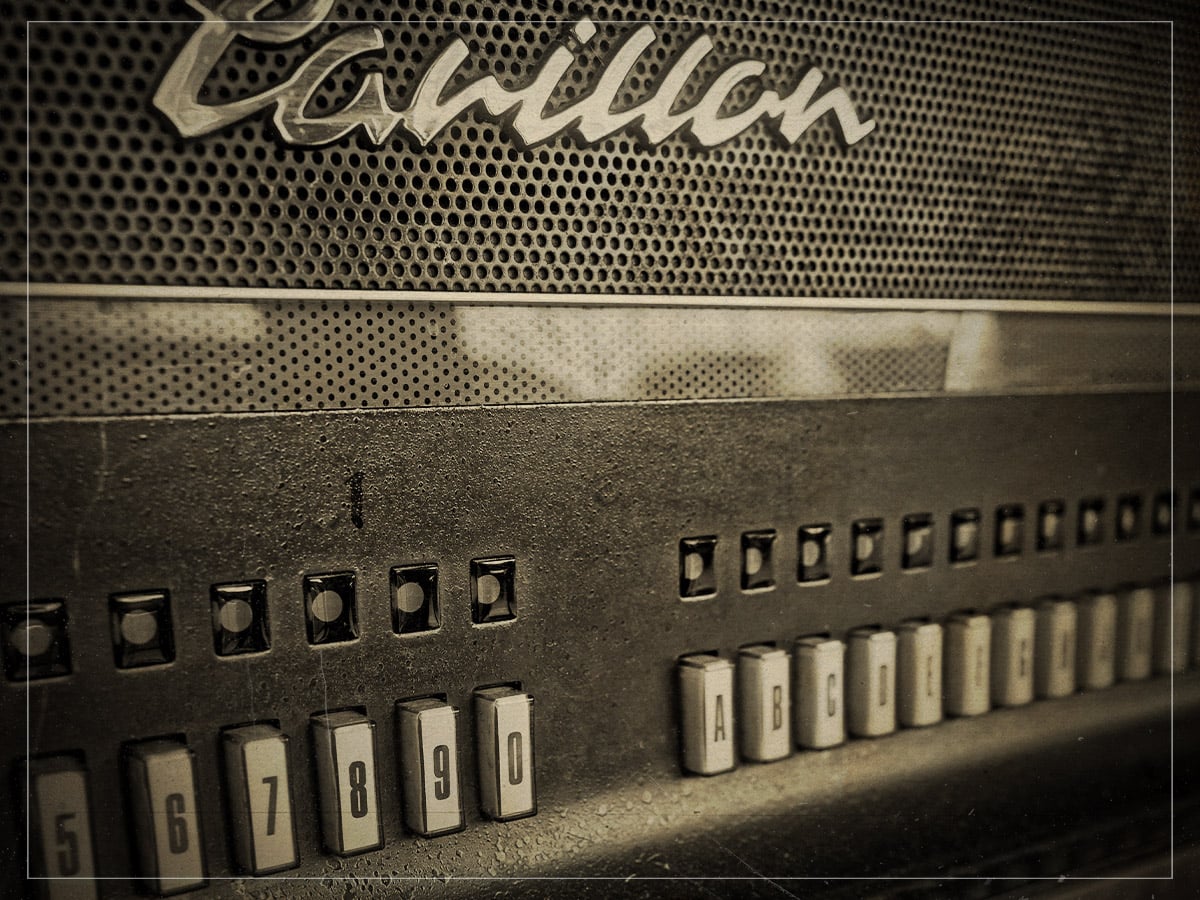
By the 1940s into the ‘50s, the phenomenon came to be associated more with radio disc jockeys, who were rapidly gaining significance as regional tastemakers. During that same period, a huge percentage of the records produced in America went straight into public jukeboxes rather than individual collections, and many of those jukeboxes were run by the same mobsters who controlled the coin-operated gambling machines in any given city. Suffice it to say, there was a growing opportunity for shady practices to infiltrate the music industry, and without question, payola was a big part of it.
While the actual legality of paying a DJ to spin a record varied from state to state, it certainly wasn’t something that artists, their managers, or the radio stations were eager to talk about openly. Inside the industry, it was recognised for years as an almost uncontrollable part of ‘the biz’, and was rarely policed, considering that most deals were seen as a win-win for the parties involved: the record company got its new artist heard, the DJ or station manager got a handout, and the general public was none the wiser.
Obviously, if you were a recording artist or record label with less muscle or cash on hand, you could certainly feel like you were in a dirty, fixed game, with no hope of competing, but even many upstart indie labels found their workarounds, focusing on smaller radio stations and trying to build a cult, regional following rather than breaking out across the country. It was all carrying on this way, under the proverbial laws of the jungle, until 1959, when the rock and roll mania that Alan Freed helped launch was now threatening to completely take over the radio airwaves of America.
While it’s easy to associate the America of the 1950s with Elvis Presley, pink Cadillacs, sock hops, and post-war prosperity, it was also a time of extreme paranoia and internal conflict, from the Communist witch hunt of the McCarthy hearings to the violent confrontations of the early Civil Rights movement in the segregated South. The simultaneous arrival of television brought all of these images into the homes of the average American family, and many of them were understandably a bit freaked out.
Already anxious about whether their friendly neighbours might be secret commies, people now began to hear rumours that even the extremely popular game shows on TV might be rigged; that not even the most innocent forms of entertainment could be trusted.
The US Congress, still caught up in the McCarthy blacklist fervour and President Eisenhower’s emphasis on sorting out America’s moral compass, held hearings about the game show controversy in 1959, and it caused a media sensation, as several producers and contestants admitted to taking bribes or receiving answers to questions in advance. Major new regulations were brought in, and the public was left bloodthirsty for a similar tidying up of the music business, which many felt had been handed over to gangsters hellbent on replacing nice, inoffensive jazz music with this increasingly loud, scandalous, and multi-racial rock and roll.
By this point, Freed had left Cleveland to become one of the top rock and roll DJs in New York City. He was hosting shows on both WABC radio and ABC television in November of 1959, when he was subpoenaed to appear before a grand jury investigating the scourge of payola in the music industry. The executives at ABC tried to get ahead of the problem, asking Freed to sign a statement proclaiming that he had never accepted ‘pay for plugs’. Freed refused to do so and also failed to show up at the district attorney’s office in New York when asked.
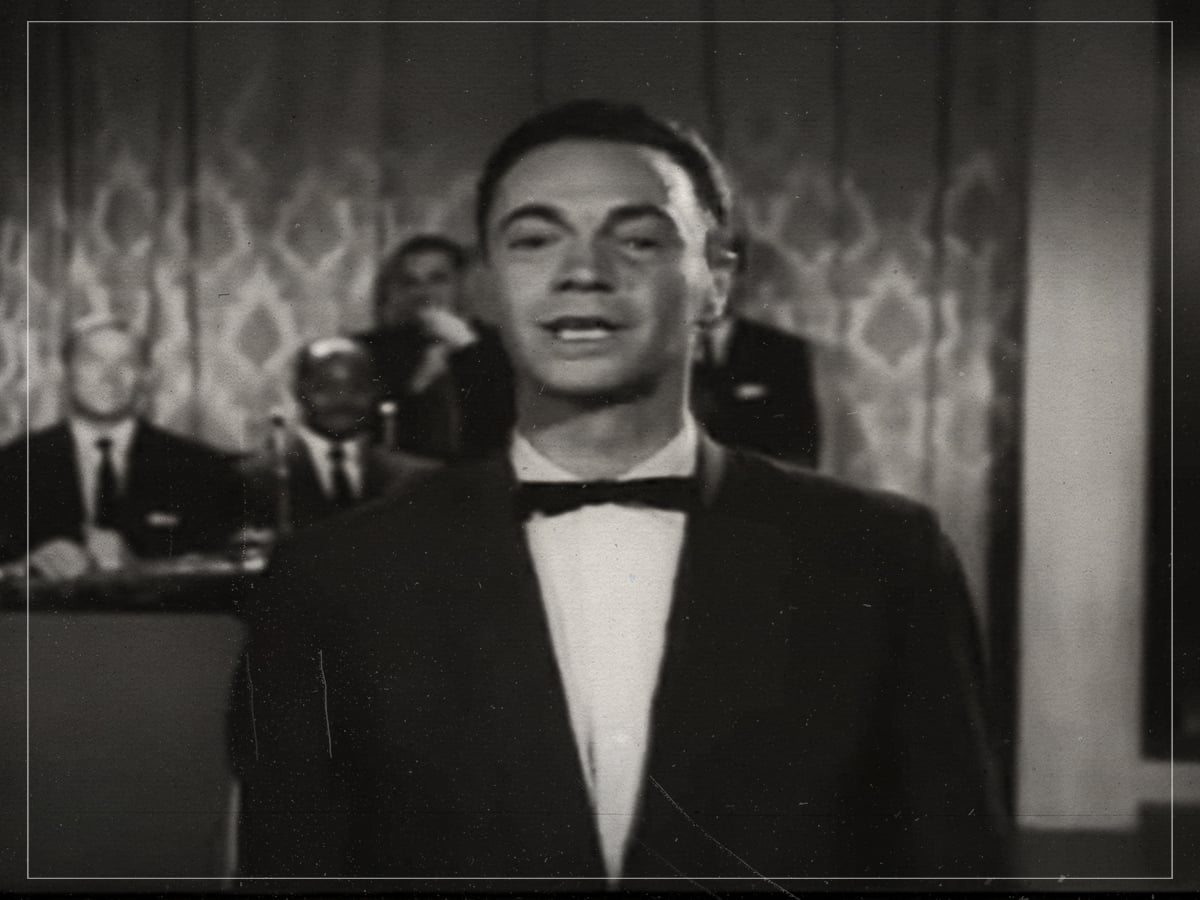
“I will not volunteer for anybody,” he told reporters after his no-show, “My grandmother once told me, ‘Never volunteer for anything’”.
Freed, who got into radio broadcasting while serving in the army during World War II, was half-Jewish, his father an immigrant from Russia, and that automatically made him a target for some segments of the American government. Of greater immediate concern, though, was Freed’s role in bringing African-American dance music to a largely young, white listenership.
Not only was he one of the great innovators and influencers in rock and roll radio, but he’d also remained loyal to the Black artists he championed. This was of particular importance as more and more white performers attempted to water down and white-wash the components of first-wave rock into something more acceptable to a conservative audience, with Pat Boone’s infamous cover of Little Richard’s ‘Tutti Frutti’ as just one example.
Under pressure, ABC fired Freed once he refused to sign their statement, even though he publicly continued to state that he hadn’t taken payments to play songs. Soon, hundreds of lesser-known disc jockeys across the US were under similar scrutiny, facing the same fate if they couldn’t prove their innocence.
Many chose to come clean, framing their side hustle earnings as ‘consultant fees’, a phrase Freed himself had offered as a defence. In the end, over 300 DJs admitted to the US House Oversight Committee that they’d taken money off the books, with one Chicago DJ, Phil Lind, almost proudly noting that he once made $22,000 for playing a single record.
While the ‘Payola Scandal’ of 1959 was treated in the media very much like the quiz show scandal that preceded it, the fuel behind the investigations didn’t necessarily come from a desire to stop criminal activity or to create a more ‘honest’ entertainment industry.
For one thing, the flames were fanned from within the industry by the American Society for Composers, Authors and Publishers (ASCAP), an organisation that represented most of the old-school songwriters from jazz and classical circles who were getting clubbed to death by rock ‘n’ roll. The ASCAP saw the payola madness as an opportunity to attack and weaken their rivals from the fast-growing Broadcast Music Inc (BMI), which represented most of the new, diverse songwriters in rock, blues, and R&B.
The argument from ASCAP and many conservative reporters was that all the popular rock music of the day, especially the really lively, sinful stuff, was only succeeding because radio stations were being paid to saturate the market with it. “Rocking records with no artistic value have been payola-ed to million sellers, merely by constant play,” argued the syndicated columnist Bob Thomas of the Associated Press, “If teenagers hear the record often enough, they’ll buy it.”
This idea, that anything that gets heavily promoted will be inevitably successful, has been disproven time and again, from the days of Tin Pan Alley to today’s TikTok influencers. Rock and roll, as Alan Freed certainly knew, hadn’t exploded because of a mob scheme. It succeeded because some perceptive individuals recognised something of value in it and invested in getting it heard by more people, betting that those people would agree about its merits. As Freed explained to a panel of Congressmen during his testimony, “What’s payola to you is the same as lobbying to me”, a rebellious pointing out of hypocrisy to the men seeking to end his career.
Ultimately, when the dust had settled and the American public had moved on to its next scandal, Alan Freed and a few other disc jockeys were sacrificed to create the illusion of justice being served on the matter, while others who’d benefitted from the system, including the clean-cut Dick Clark, escaped unscathed.
New federal regulations were established for radio stations, but they didn’t include criminalising payola. Instead, any payments now had to be above the table, so to speak, and the broadcasters would have to “disclose if airplay for a song has been purchased”. Disc jockeys also surrendered most of their negotiating power to station managers, which actually made it easier, rather than harder, for record companies to control the airwaves.
The enforcement of payola control, which would have been hard enough in the 1960s, is almost a laughable concept today, when virtually all of modern media is based around one form of influencer-based lobbying or another.
Sadly, Alan Freed never made his way back from being the fall guy in 1959. After a few short stints at smaller radio stations on the West Coast, his alcoholism took a turn for the worse, and he died from complications of it in 1965, just 43 years old. In 1986, he would be part of the inaugural class of the Rock and Roll Hall of Fame in Cleveland, forgiven for the somewhat imaginary sins of a paranoid time.
