


Terror on the big screen: the best movie monster of each decade since the 1920s

Ever since humanity has been telling stories, monsters have always struck terror in the collective imagination.
Derived from the Latin “monstrum” meaning to “warn” or “caution”, the aberrations of nature, dark harbingers of destruction, or perverters of the ethical code all came rooted from our basest fears. An elemental archetype of disorder and peril, the perennial monster has poured into it all of Man’s primordial fears, standing as eternal deterrents of wandering too deep into the dark wood or straying afar from the safety of the village.
Monsters inhabit the realm of the unknown, yet when at their most frightfully effective, they flash a disturbing mirror to mankind’s dark half and existential anguishes. The rageful Minotaur marauding the labyrinth like one wanders the impossible terrain of their own psyche, Grendel’s howling imperil of Beowulf’s fragile Anglo-Saxon settlements, or the demonic evils that torment heretics for eternity in the illustrated bestiaries of medieval Christianity, the eternal monster is always all too human.
Naturally, monsters found a suitable home on the big screen. Drawing from a potent well of folkloric superstition and prominent literary precedent, cinema’s visual art form eagerly grappled with gothic fiction and ghost stories behind it to thrill audiences fascinated with film’s new storytelling escapism. Not long after Georges Méliès’ 1896 short The House of the Devil, horror soon became one of the most marketable and reliably revenue-generating genres of the emerging Hollywood, the public eagerly queuing to see the latest macabre and eerie tales during the silent era’s heyday.
Trends come and go, but horror remains, changing forms and shapes in the dark and reflecting the social anxieties of the day. Just as the campfire elder warned of the dangers lurking in the dark wood, the monster’s place in the arts and culture remains firmly entrenched, always offering something disturbing yet pertinent to say about humanity’s trajectory, albeit often wrapped in lots of frightful good fun too.
“Horror is boot camp for life,” chiller maestro and A Nightmare on Elm Street director Wes Craven once stated. In a celebration of the monster’s essentiality to cinema’s evolution, we take a look at the aliens, undead, and evil entities that left the deepest impression on horror cinema and beyond.
The best movie monster of each decade since the 1920s:
‘Nosferatu: A Symphony of Horror’

While just surpassed in the popular impression by Bela Lugosi’s immortal depiction of the undead aristocrat, the enduring template for all future vampires on the silver screen hailed from Germany’s silent horror classic, Nosferatu: A Symphony of Horror.
Adopting a more Central European take on Bram Stoker’s Dracula tale, FW Murnau’s expressionistic gem renames the source material’s cast of characters and swaps contemporary London for the fictional Biedermeier-era German town of Wisburg. So close to the original novel, Stoker’s widow sued over copyright violations, with a court ruling that all copies were destroyed.
Thankfully for horror cinema, several reels were saved from destruction, treating the world to actor Max Schreck’s grippingly frightful portrayal of Count Orlok. Pursuing a more ghoulish and insectoid interpretation of the Transylvanian nobleman, Nosferatu eschews the elegance of Dracula for an infinitely more monstrous denizen of the dark, creeping up stairwells and animated by the sight of blood with primal threat.
Excellent revisits would come years later with Klaus Kinski and Bill Skarsgård, but Schreck’s unsettling haunt of the 1922 classic will always cast the deepest shadow across film history.
‘Frankenstein’

If there was any central icon to Universal Studios’ monster golden age, it’s the deathly green, bolt-necked, angular-skulled death stare of Dr Frankenstein’s abomination of science.
Assembled from the pilfered limbs and body parts of the recently deceased, the mad titular doctor, backed by his hunchbacked assistant Fritz – Igor would arrive in later sequels – enters the ethically fraught planes of ‘playing God’ and wields the sky’s lightning to bring his artificial being to dangerous, irresponsible life.
While taking many creative liberties from Mary Shelly’s original 1818 Gothic novel Frankenstein; or, The Modern Prometheus, James Whale’s 1931 feature stands as the definitive image of the unnatural creation. Aided by Jack Pierce’s pioneering make-up, English actor Boris Karloff fit the role like a glove, capturing the monster’s radiating threat while also imbuing an effortless pathos for the creature bearing the brunt of a shunning society he’s unwittingly pulled into.
A gloop of mostly inferior sequels would follow, but none touched the dramatic terror of Frankenstein’s first lumber to the silver screen.
‘The Wolf Man’
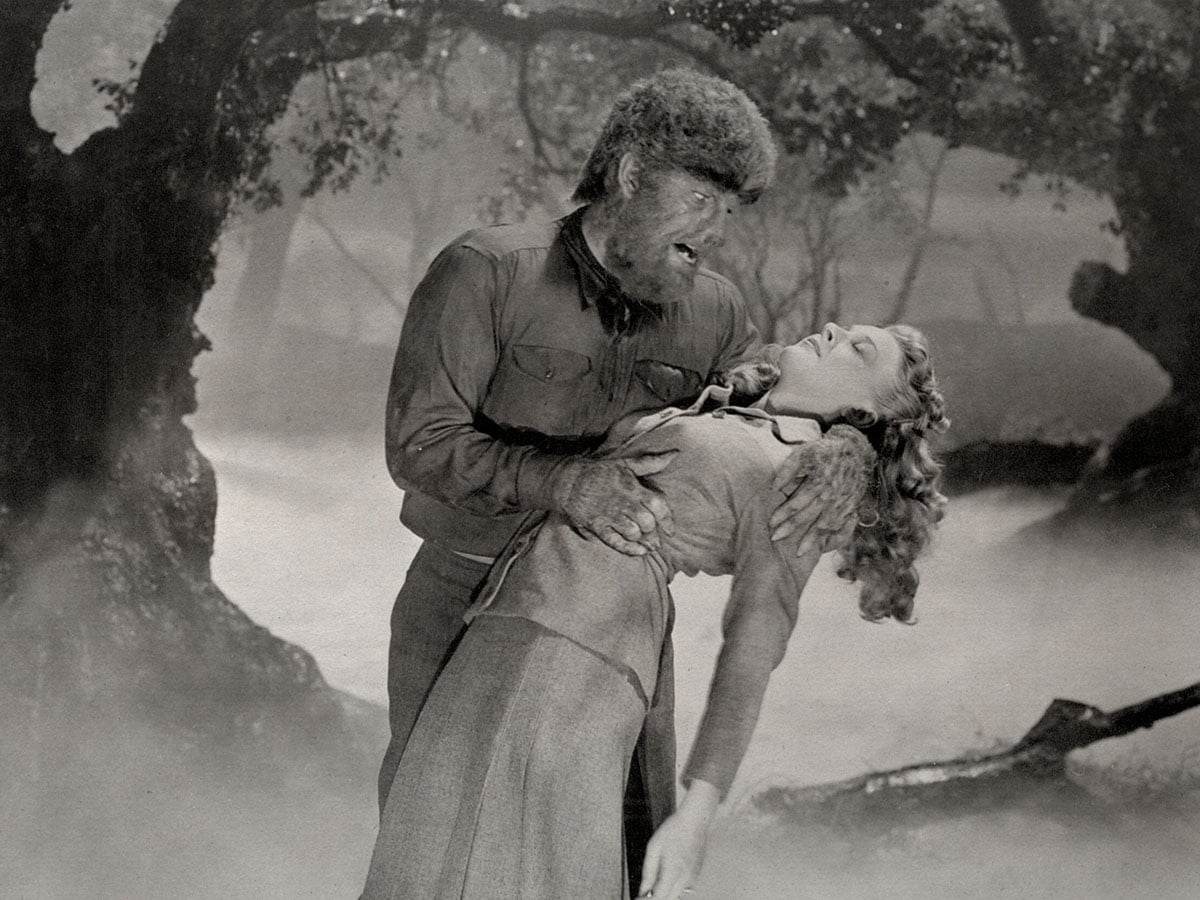
While Universal was nearing the end of its classic run, the horror house were still able to knock out another stalwart of the monster canon a decade later.
Drawing from European folklore, The Wolf Man recounts the eerie tale of Larry Talbot, played by the Jr son of silent horror icon Lon Chaney, who’s bitten by a mysterious lycanthrope in the Welsh marshes and afflicted with the violent curse, transforming into his violent werewolf persona every night and wreaking bloody havoc before waking every morning with no memory of the chaos he’d meted out.
Once again, it’s the make-up that propels the picture, Pierce realising the Wolf Man’s hairy menace and fanged growl with impeccable detail. As with every great monster, Talbot’s alter-ego taps into the well of the human condition’s dark side, capturing an unreined and visceral flash of the buried id unleashed onto civil society with slavering, carnivorous primalcy.
‘Godzilla’
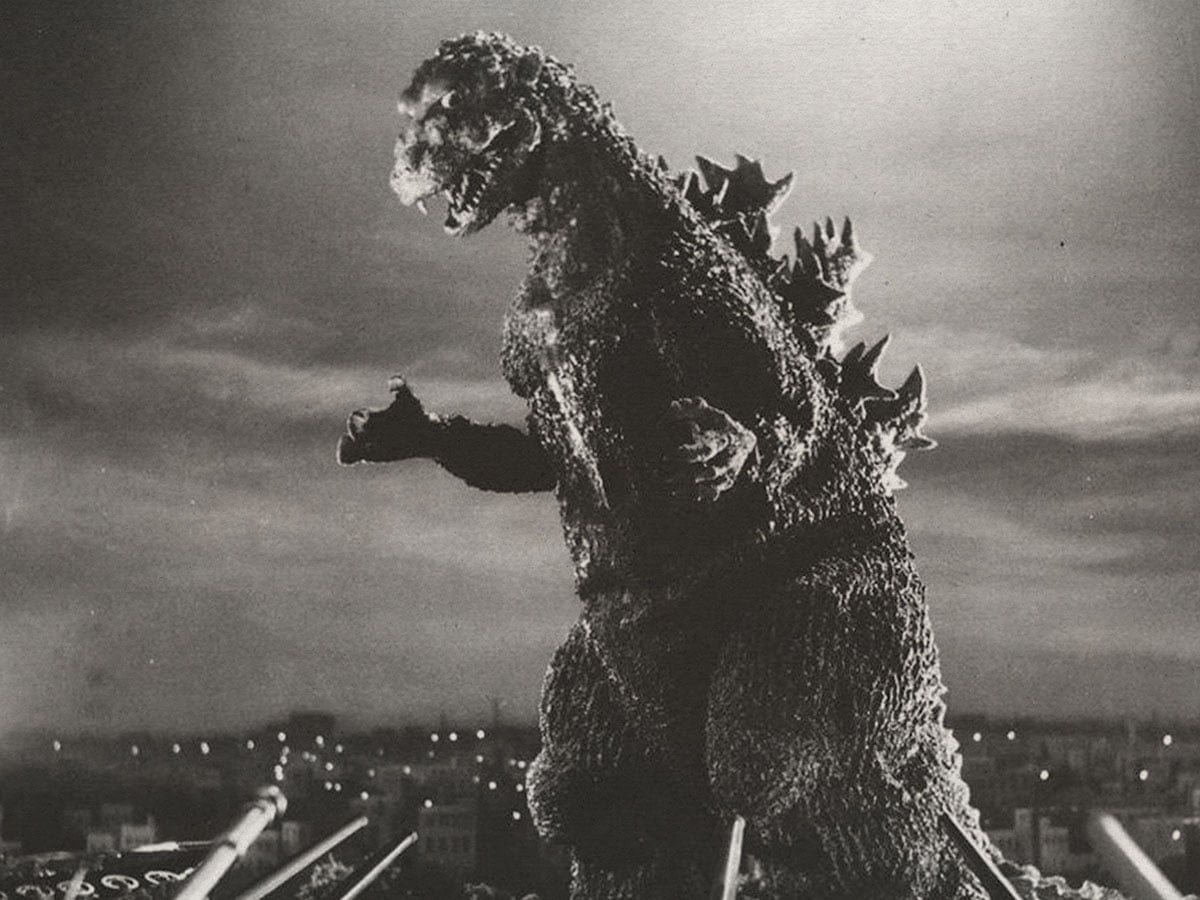
Long before wrestling matches with rubbery costumed Kaiju characters, Japanese production company Toho dreamed up a darker and more pertinent burnish of the nation’s most iconic gift to cinema.
Awakened by an underwater hydrogen bomb, the ancient, prehistoric entity known as Godzilla rouses from its slumber and heads straight for Tokyo, laying waste to the urban landscape and terrifying the population with its atomic breath and indestructible march to Armageddon.
Released in 1954, Ishirō Honda’s Godzilla struck a potent chord with the public, landing only several years after US Forces’ nuclear bombing of Hiroshima and Nagasaki on the Second World War’s close. A colossal franchise would follow, including the excellent 2023 Godzilla Minus One kamikaze exploration, but no future chapters ever matched the original’s sheer gangantuan, elemental threat.
Enjoying a pop-cultural presence extending beyond the monster genre, Godzilla stands as the towering emblem of Japanese cinema in its entirety.
‘The Time Machine’
It wasn’t the first time director George Pal had grappled with English sci-fi writer HG Wells, producing the Martian invasion The War of the Worlds seven years earlier, but 1960’s The Time Machine stands as his finest hour.
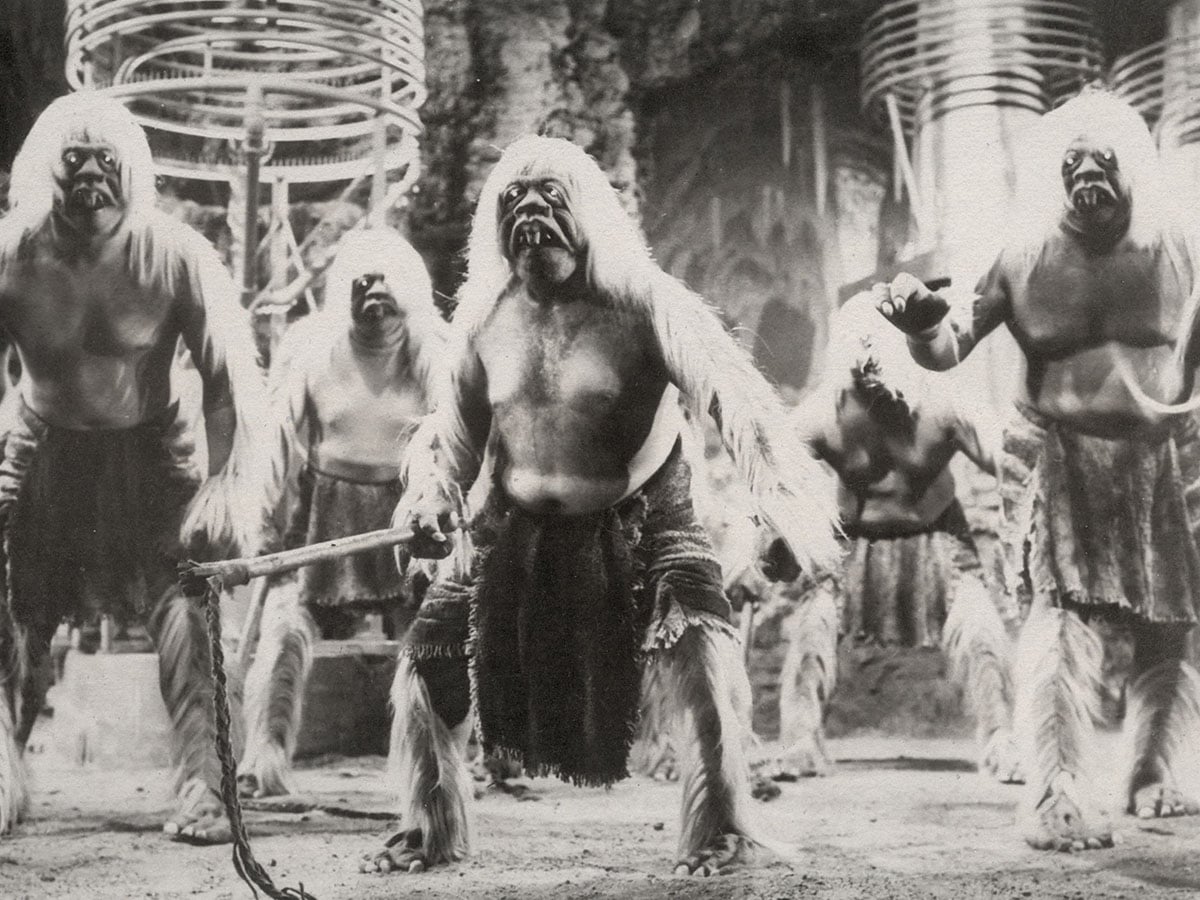
Starring Rod Taylor as the 1900s inventor, his latest device yields the ability for Man to travel in the fourth dimension: time. Accidentally hurtling to the year 802701, Wells discovers that mankind has taken two distinct evolutionary branches in the aftermath of nuclear war: the docile and childlike Eloi, who live lives of recreation and abundance above ground, and the Morlocks, cavernous creatures who turned to cannibalism and farm the Eloi above to consume.
For a feature leaning toward sci-fi, the Morlocks pack a terrifying punch. Realised by Wah Chang’s expert make-up, everything about the underground creatures all hit a nightmarish bullseye. With long, thinning hair, pallid blue skin, and bloodthirsty grimaces hungry for Eloi flesh, the image of the Morlocks’ glowing eyes emerging from the darkness is enough to spook even the adults in the room.
‘Alien’
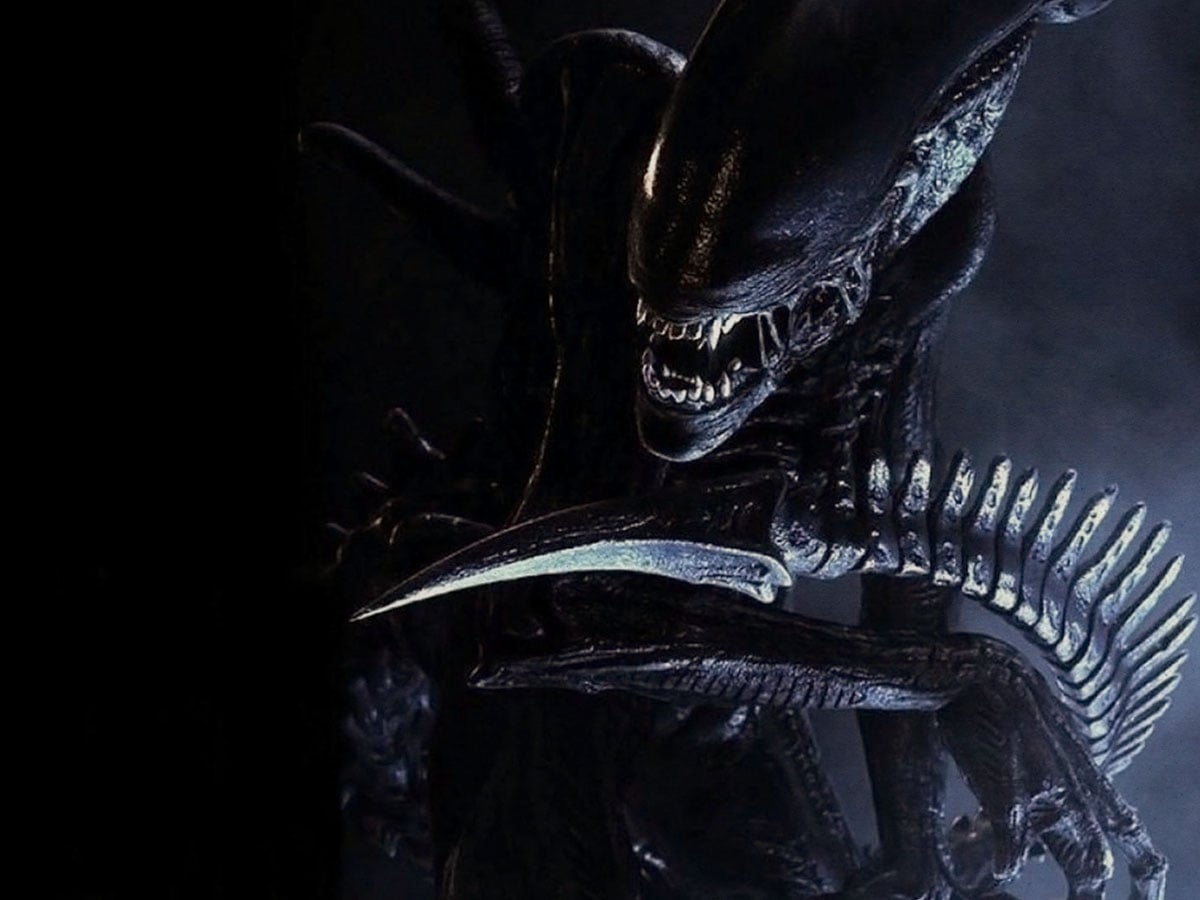
Before 1979, extraterrestrials largely inhabited the movie world as green beings with rayguns demanding “take me to your leader”, or tentacled oddities in spaceships with much left to imagination.
Yet, an exposure to Swiss artist HR Giger’s biomechanical surrealism provided director Ridley Scott with the perfect conceptual vision for the sci-fi feature he’d signed up for, elevating the essentially B-movie horror premise to a new realm of sophisticated terror.
Depicting the Nostromo space crew’s lethal encounter with a hostile organism, Alien unleashed on the world a creature that invaded the screen with visceral potency. Long before the franchise lore and Xenomorph labelling, the alien was unnamed, and more scary for it. Phallic domed head, double-jawed, acidic maw, and a frightening 7ft of hulking weaponry, Alien plucks a creature not just from outer space but from Man itself, like a Lovecraftian entity formed in the shadows and crevices of the ship, revealing new dimensions of its threat with every predatory strike.
‘The Thing’
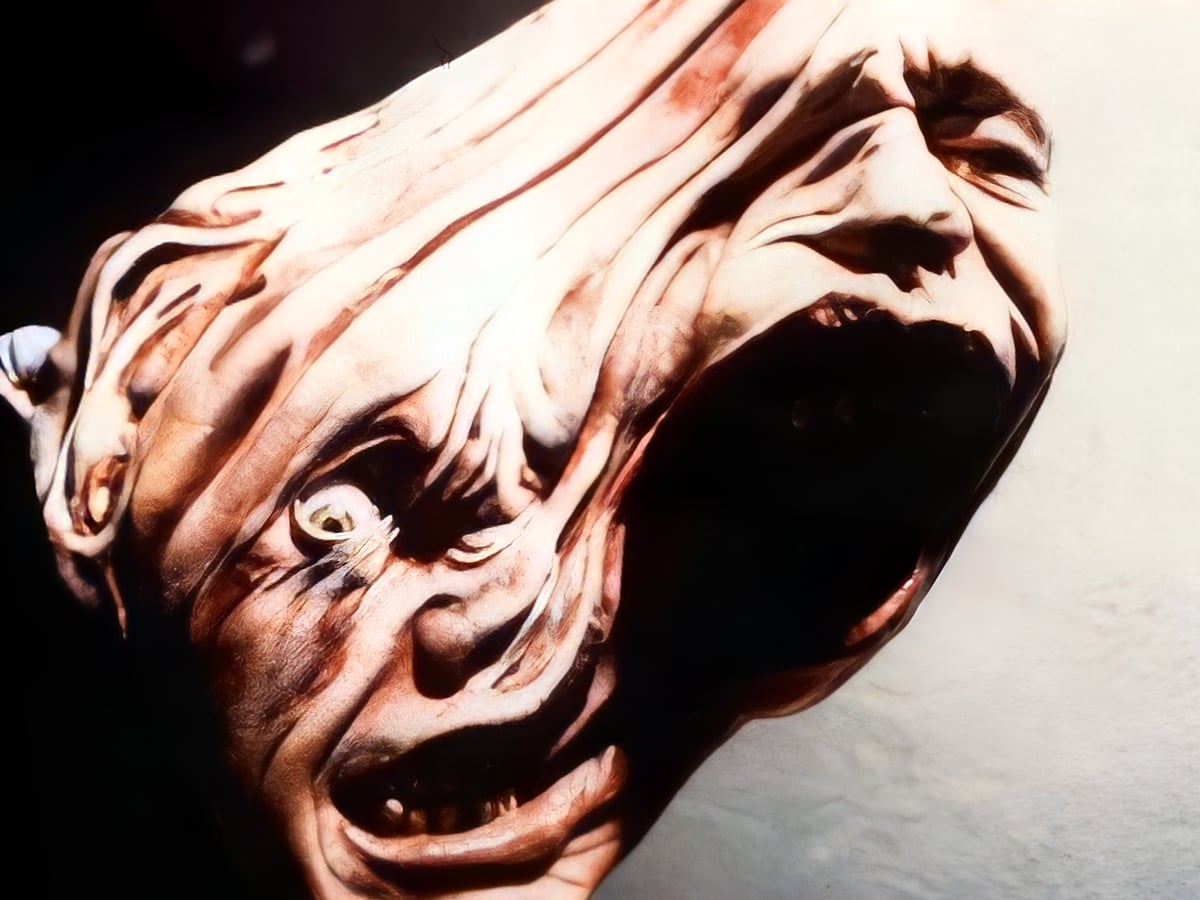
One of horror legend John Carpenter‘s favourite movies as a kid was The Thing from Another World, a sci-fi B-movie set in Antarctica, in whereby scientists have accidentally unfrozen a plant-like humanoid alien.
Years later, when tasked with directing the remake, Carpenter looked to the source novella, Who Goes There? by John W Campbell Jr, and took guidance from the original imagining of the creature as a parasite that can adopt the form of any host it invades.
Released in 1982 but eclipsed by ET the Extra-Terrestrial at the box office, The Thing would stand as a gem of the pre-digital special effects era. Showcasing the skills of FX head Rob Bottin, the Thing’s myriad transformations still look jaw-dropping to this day, from insect legs sprouting out of disembodied heads to dogs shooting bloody appendages from their faces, the parasite’s physical seizure of man and animal alike offers unforgettable grotesquery, piercing that more terrifyingly in the South Pole’s cold isolation.
‘From Dusk till Dawn’
The mid-1990s were Quentin Tarantino’s zenith.
With his acclaimed Reservoir Dogs and Pulp Fiction behind him, a script first treated by FX guru Robert Kurtzman but further developed by Tarantino finally found the light of day with Robert Rodriguez in the director’s chair, boosting the principal writer’s lauded stature as the king of independent cinema.
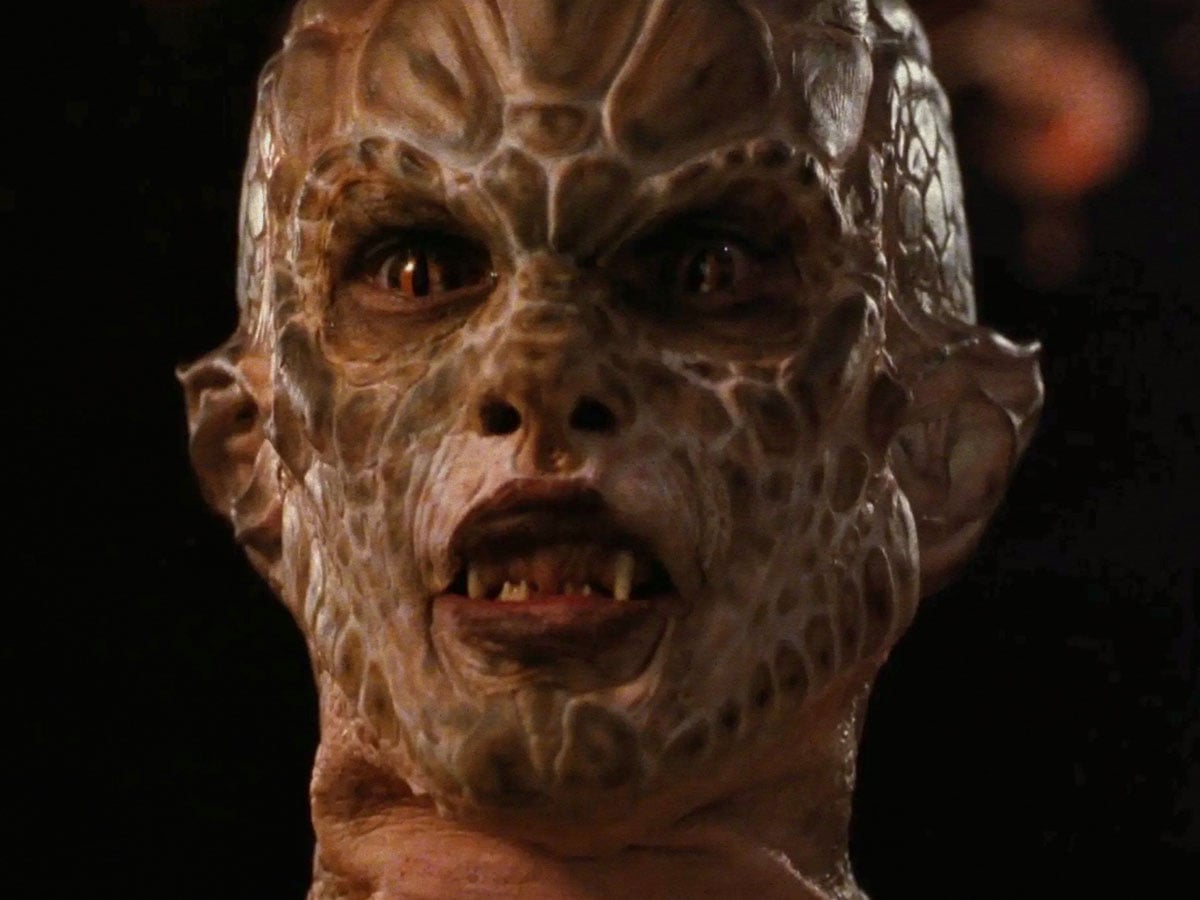
Released in 1996, From Dusk till Dawn would ostensibly follow a comic crime thriller with George Clooney and Tarantino cast as the Gecko brothers, heading south of the US border with hostages in tow.
Stopping at the mysterious Titty Twister strip club, the dancers and bar staff turn into monstrous vampires and begin feeding on the patrons. Cue a fun and cartoonishly violent shoot-out with our hostage and gangster ensemble surviving the night with the uniquely Aztec, Latin-inspired undead. To top things off, Tom Savini’s Sex Machine character mutates into a hideous rat-like being, offering a new take on the well-trodden vampire flick.
‘Pan’s Labyrinth’

It was an audacious, creative step for Spanish writer and director Guillermo del Toro.
Applying a dark fantasy lens to the country’s turbulent history with the right-wing Franco regime of the late 1940s, 2006’s Pan’s Labyrinth’s magical fable follows the travels of ten-year-old Ofelia as she navigates Spain’s descent into authoritarian militarism alongside a dreamscape filled with mythological characters who lend her guidance and assistance, while also spelling monstrous threats.
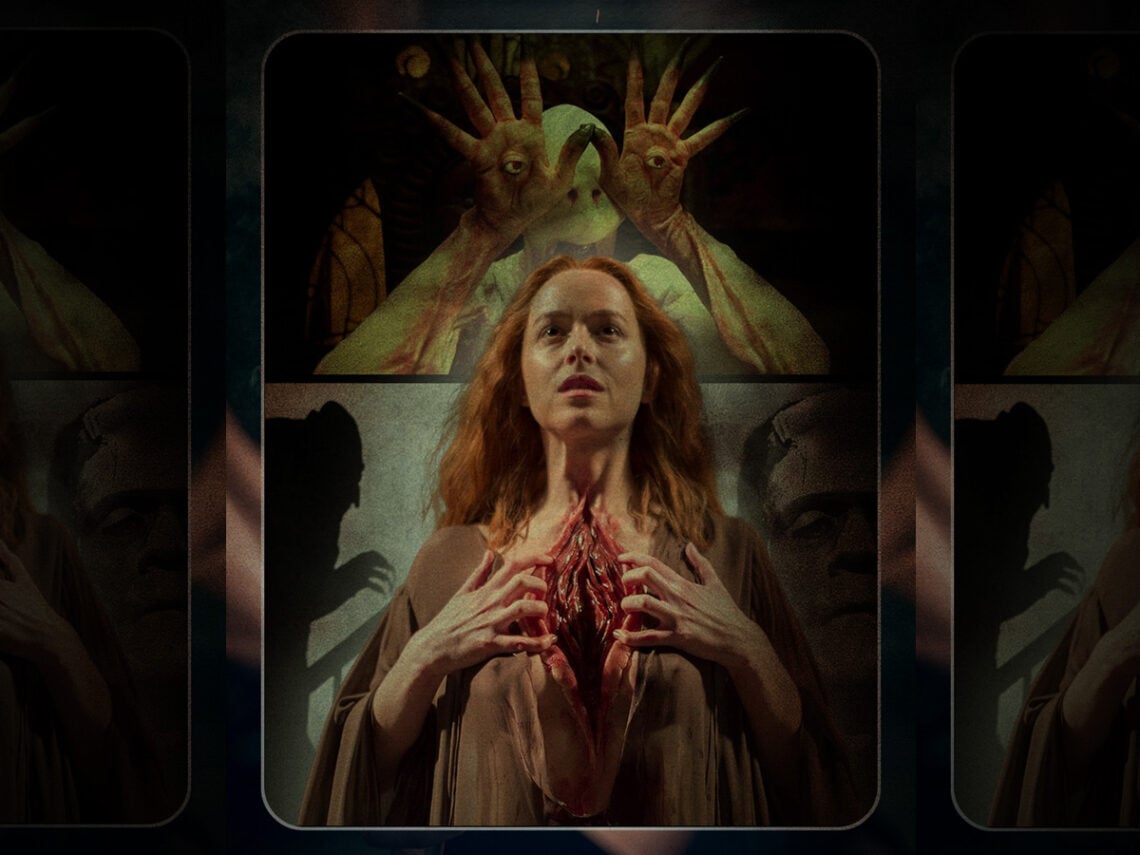
One such evil entity is the Pale Man. Sent on a task by the mystical faun to retrieve a dagger from the child-eating creature’s lair, Ofelia is cautioned not to eat anything from his vast banquet. Hunger overrules her better judgment and takes two grapes, awakening the Pale Man with instant peril. Everything about him is chillingly realised, from the sagging, sallow skin, rodent-like teeth, and eyeballs placed in his spindly palms and held to his face for sight, the Pale Man is likely the first image when thinking of del Toro’s defining masterpiece.
‘Suspiria’
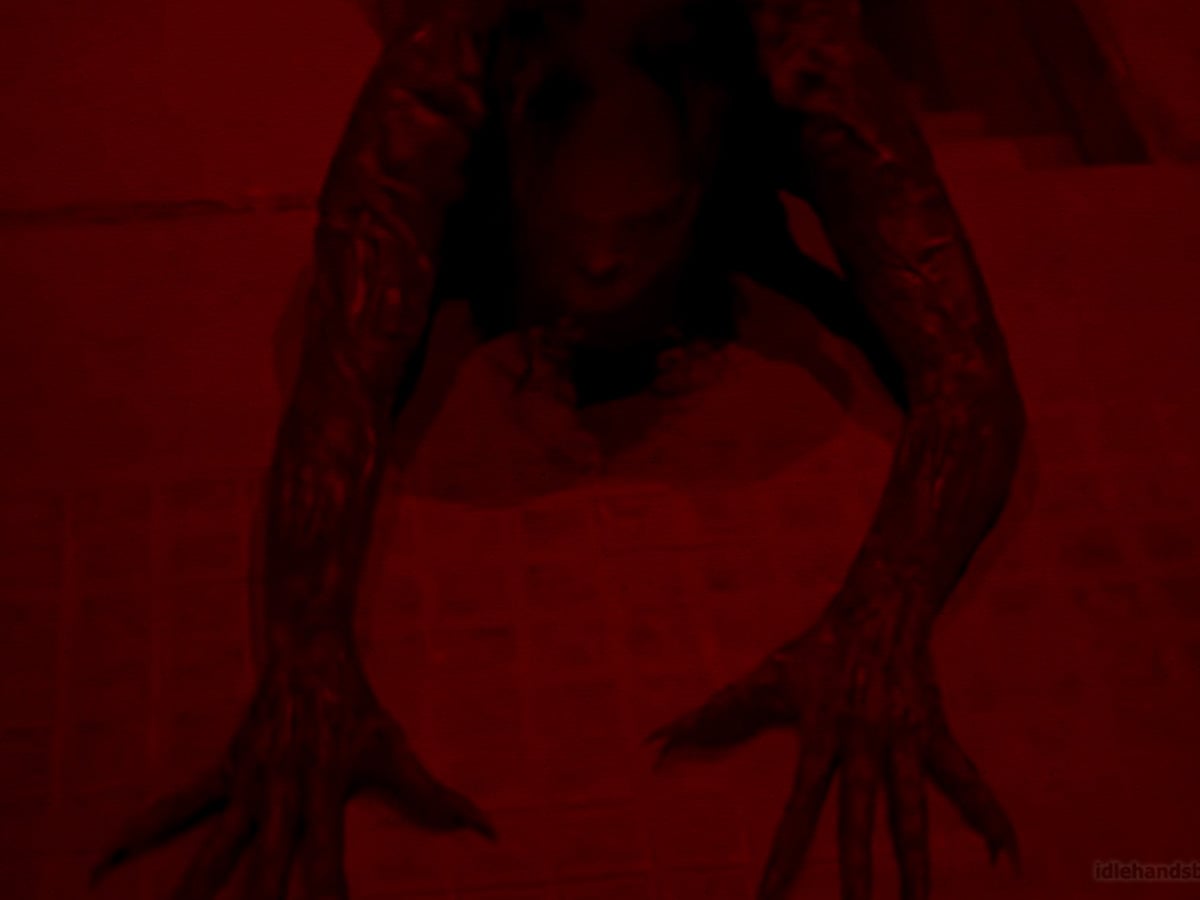
Dario Argento’s giallo supernatural horror Suspiria stood tall in Italian cinema and beyond, celebrated for its psychedelic cinematography and immersive soundtrack exploring a budding dancer’s admission to a prestigious West German ballet academy, only to uncover it’s managed by a coven of witches.
The cinema wasn’t holding its breath when a remake was announced in 2008. Yet, with Luca Guadagnino behind the camera, Radiohead’s Thom Yorke stepping up for his first-ever score, and award-winning choreographer Damien Jalet handling the dance sequences, the project looked set to match its pioneering predecessor, finally seeing release in 2018.
Soaking up the anxiety of a 1970s Berlin in the midst of left-wing terrorism, Dakota Johnson’s Susie Bannion navigates through the school before entering the campus’ sabbath and declaring herself matriarch after a journey of coven spells and esoteric conjurings. Before Suspiria’s bloody and mesmerising finale, the witches unveiled to us are some of the most frightening ever committed to film, showing the witchcraft ritual bathed in deep red light and filled with entranced dancing, demonic entities, and a hideously deformed crone, performed with palpably evil glow by Tilda Swinton.

Never Miss A Take
The Far Out Quentin Tarantino Newsletter
All the latest Quentin Tarantino content from the independent voice of culture.
Straight to your inbox.