


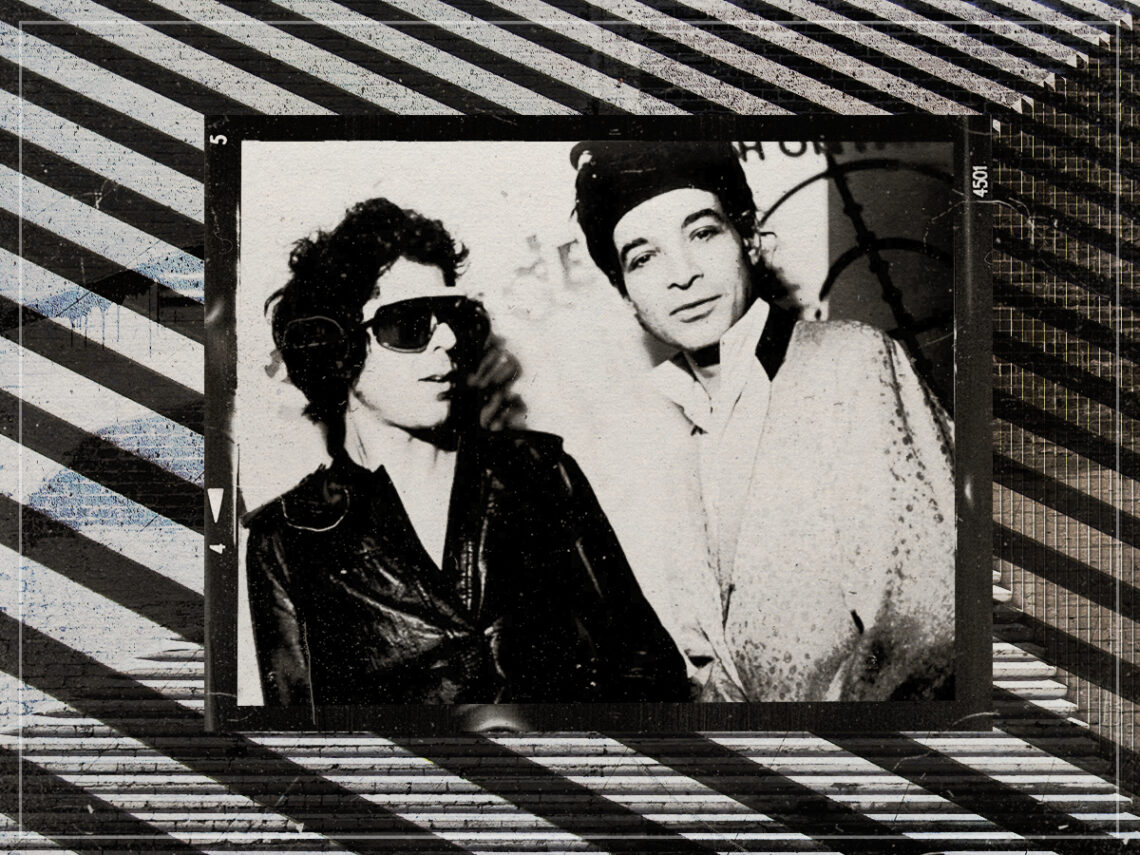
“It changed my life”: the band that transformed Alan Vega in 1969

If the band name alone doesn’t tell you everything you need to know, then the artistry of New York synthpunk pioneers Suicide will probably be able to provide you with a more complete picture.
A project established with an evident intention to shock and provoke a strong reaction, the duo of Alan Vega and Martin Rev were trailblazers, seemingly unbothered with the idea of fitting into any preconceived bracket. The music they made was abrasive in parts, but it was often the thematic elements and the way in which they delivered it at shows that made them appear more confrontational, and therefore a one-of-a-kind spectacle for their time.
However well it may have seemed to coalesce, that doesn’t stop them from being an unlikely duo in the first place. Vega was a whole decade older than his bandmate, but what they had was a complete synergy that produced music that was far ahead of the curve, so why should it matter if there was a generational disparity between them? Well, for someone born before the outbreak of the Second World War to develop an interest in something so transgressive and forward-thinking is unusual, and for Rev to have come across him in the first place is rather remarkable in itself.
It took them a while to find even the slightest amount of success, with their self-titled debut album coming out a whole eight years after they’d formed, when Vega was on the cusp of turning 40, but their respective backgrounds in the wider world of art were always going to heavily inform their approach, and eventually it paid off.
Despite eventually settling on the minimalist style that they’d become known for, it was one particular gig that prompted Vega to make the transition to this in the first place and almost instantly inspired him to find the right people to start a band with.
It was following a show at the New York State Pavilion in 1969, where he witnessed Detroit punk pioneers The Stooges perform, that Vega felt the impetus, teaming up with Rev and original guitarist Paul Liebgott only a year later. He would later go on to refer to the show as his eureka moment, and the no fucks given attitude of Iggy Pop spurred him on to become a similarly brash and confrontational frontman.
“Iggy came out, and he’s wearing dungarees with holes, with this red bikini underwear with his balls hanging out,” Vega recalled. “He went to sing, and he just pukes all over, man. He’s running through the audience and shit. He was just wild-looking, staring at the crowd and going ‘Fuck you! Fuck you!’ It was one of the greatest shows I ever saw in my life. It changed my life because it made me realise everything I was doing was bullshit.”
Vega would go on to become notorious, particularly in Suicide’s earliest shows, for terrorising audiences and making himself appear as threatening as possible, and fortunately for him, it appeared to come naturally rather than be forced, eliciting strong audience reactions that can be heard on live bootlegs from the mid-1970s.
It may have appeared as though Suicide arrived without precedent, but witnessing an act like The Stooges as early as 1969 is bound to be transformative for anyone. Vega was just in the right place at the right time, and fortunately, never gave up on chasing the dream of someday emulating what Iggy Pop could do.

Never Miss A Beat
The Far Out Punk Newsletter
All the latest Punk content from the independent voice of culture.
Straight to your inbox.