


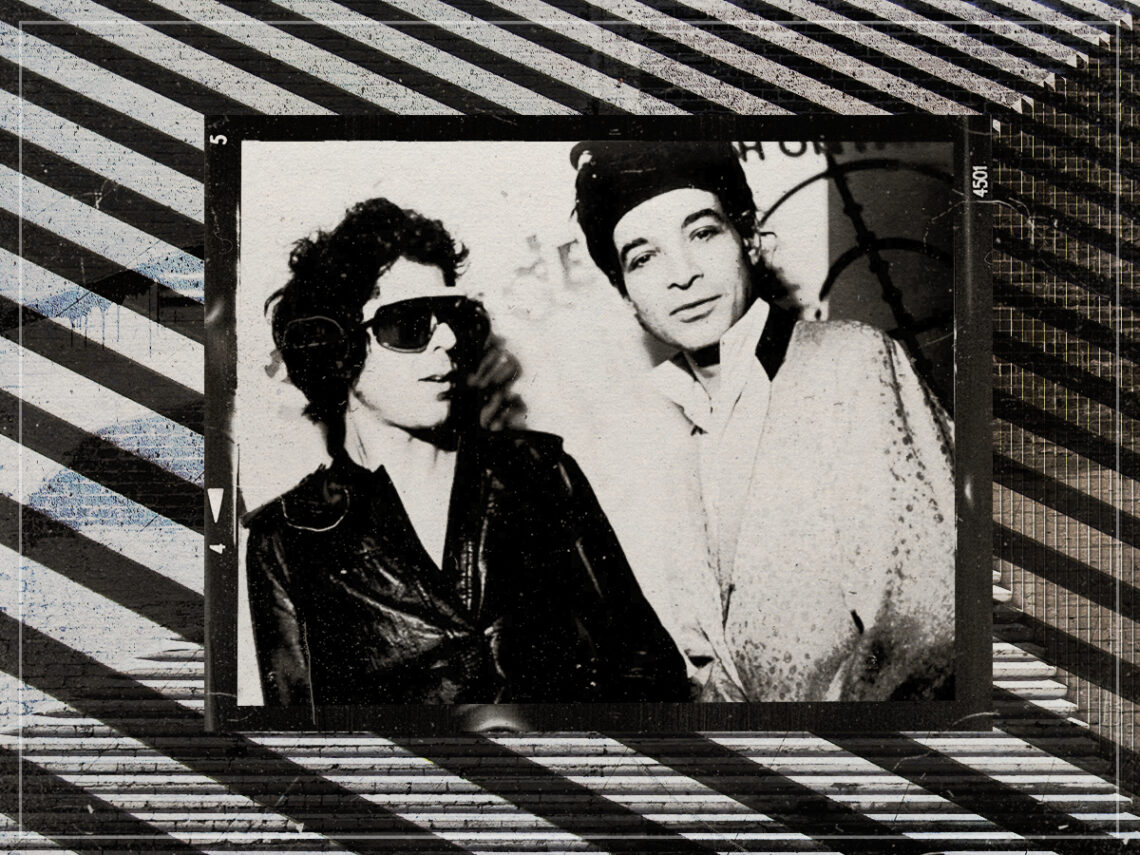
Lyrically Speaking: How Suicide created the scariest song ever with ‘Frankie Teardrop’

“Oh let’s hear it for Frankie.” – Suicide, ‘Frankie Teardrop’, (1977).
It’s the mid-1970s, and the unruly streets of New York have descended into the dystopian nightmare forecast in a thousand bad acid trips from the decade earlier. The technological fix for a society that the post-war progression promised has been swallowed up in nothing more than the sprawl of concrete and the rise of brutalist architecture. With no life ring cast from those in power or prominence, who were more concerned with threats from afar than the onset of internal decay, the denizens of the city sink into the postlapsarian plashy mire of crime and punishment.
Watching it all unfold from the dangerous view of a city cab steering wheel, like some Gonzo incarnation of the documentarian Adam Curtis, who has lost all subjectivity and snapped in a fit of despairing rage, is Travis Bickle. Martin Scorsese’s Taxi Driver typified the increasing rot of the Big Apple. Between 1969 and 1974, the city lost 500,000 manufacturing jobs. Subsequently, a million homes depended on welfare, drugs ran rampant, rapes and burglaries tripled, and murders hit a high of 1690 yearly. However, much of art comes from chaos and defiance—New York was a creative cocktail of both.
So, Suicide decided to pick up where Scorsese left off and showcase music’s true potential to perturb the imagination. Their tale was similar. The song tells the story of a hard-working factory who is caught up in the mechanical grind of daily life, and his struggles to make ends meet despite blood, sweat and tears slowly drive him towards insanity. And that’s just the half of it.
In a state of snapped despair, one day, Frankie, our fallen protagonist, returns home and kills his wife before taking his own life. The fate of his six-month-old child is left ambiguous among the harrowing squeals of Alan Vega. The song then follows his decrepit descent to hell, ending with the line: “We’re all Frankies / We’re all lying in hell.”
Lyrically, the song is boldly simplistic. The diegesis of the story is right to the point, and no line exceeds more than five words. This bluntness, ironically, makes the song more pointed. The song is so truly distressing that it never wants to let you off the hook with poetry. Thus, it makes its points unmistakably, allowing the music to bring horror texture to proceedings. Not only are the sounds crafted synonymous with an eerie spookiness, but they also mimic the industrial nature of New York’s crumbling decline. Moreover, it simply creates a quick beat to match the heartbeat of fear, which naturally induces a sense of anxiety.
However, the song might be harrowing, but it is a mark of artistic defiance. When the rot set in, Vega was part of the radical NYC collective known as the Art Workers’ Coalition. The goal of the group was mainly to pressure the city’s museums into reform. Essentially, they wanted to make the art world more open and inclusive and in order to achieve this, they barricaded the Museum of Modern Art. If culture offered an outlet and community, then it should welcome everyone and encapsulate life.
It is symbolic of the state of New York in the mid-1970s that ‘Frankie Teardrop’ encapsulated life there. However, it is equally symbolic of its defiant, artistic citizens that Suicide were able to turn the truth of the dire situation into a piece of work that is horrific in all the best ways.
