


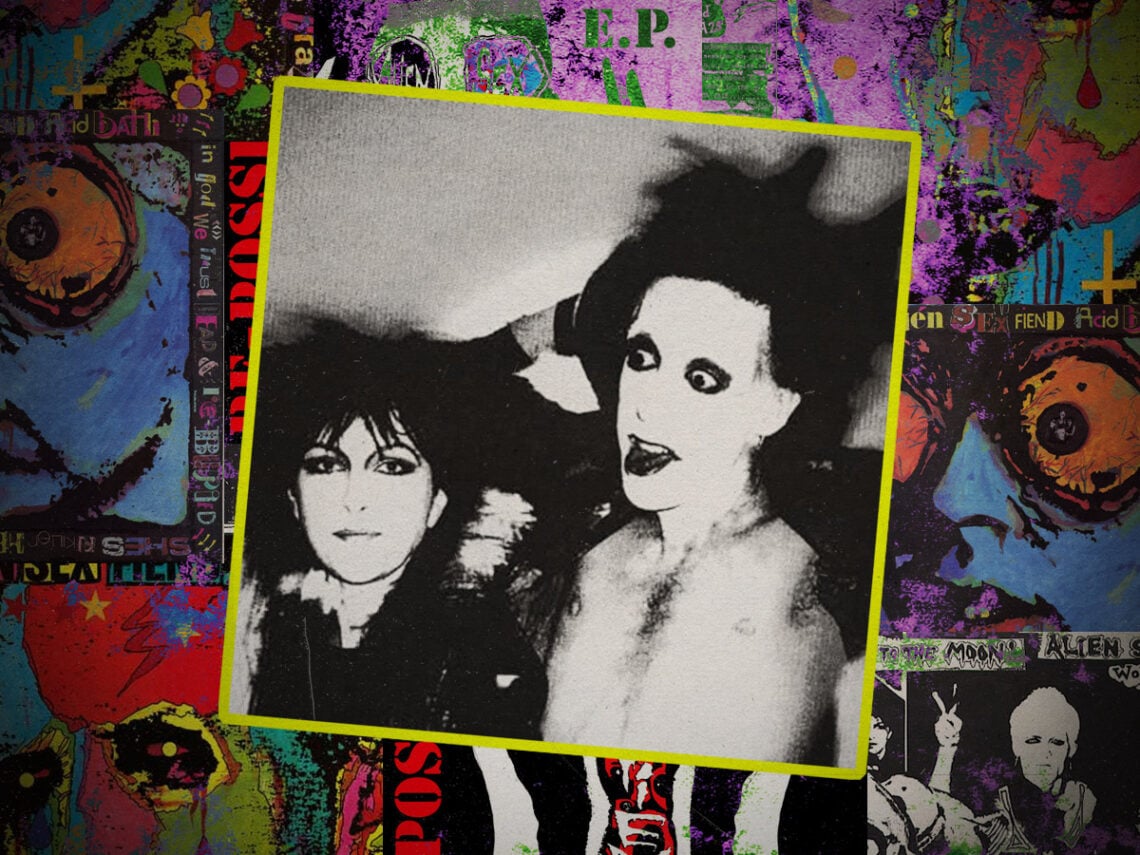
Alien Sex Fiend: The 40-year journey of a goth-rock original

In 1984, less than a year after the release of their debut record, London’s Alien Sex Fiend were already being received by some members of the international press with a dismissive eyeroll, summarised in one Canadian newspaper headline as “one more dose of schlock rock from the Batcave”.
The Batcave was the London club night that helped launch a lot of the fashion, sensibilities, and at least some of the musical elements of the UK’s ‘goth’ culture. In 1982, Nicholas Wade, aka Nik Fiend, was employed at that club at 69 Dean Street, and as a result, found himself regularly rubbing shoulders with some of the gloomiest badasses of the era, from the members of Bauhaus and The Cure to Siouxsie Sioux and Nick Cave. Inevitably, he felt inspired to take a shot at bringing together some of his own personal influences, from Alice Cooper to the 2000 AD comics to A Clockwork Orange, and start a project of his own.
“For me, it was nothing to do with ego or fame or any of that shit,” Fiend told Collide Art and Culture in 2019. “I just wanted to do music and art; it was my outlet, and it’s the most important thing to me… If you truly believe in something, then nothing and no one will put you off doing it.”
When Fiend and his partner/keyboardist Christine Wade, AKA Mrs Fiend, recruited a couple of bandmates to move in with them and make some noise, the resulting album, 1983’s Who’s Sleeping In My Brain, quickly pushed Alien Sex Fiend to the forefront of the expanding Batcave scene; another ‘gothic rock’ band that wore a lot of chalky ghoulish make-up, leaned into Hammer Horror tropes, and mashed together punk guitars with spooky halloween synthesisers. If you recognised the good-natured satire, theatrical spirit, and sense of humour, you became an ASF acolyte. If you took it all too seriously, as many critics often did with the early goths, then it was all too easy to brush it aside as pretentious, trend-chasing hogwash.
When that first record was making the rounds, even the supposedly high-minded college rock fanzine crowd weren’t entirely sure what to make of it. In the March 1984 issue of Discorder, a zine put out by the Student Radio Society of the University of British Columbia, editor Chris Dafoe wrote that Alien Sex Fiend sounded like “Flock of Seagulls trying to be The Cramps”, and that while their embrace of pop cultural trashiness was “fun”, it wasn’t necessarily inspired, but decadent, like “a pair of deliberately torn fishnet stockings”.
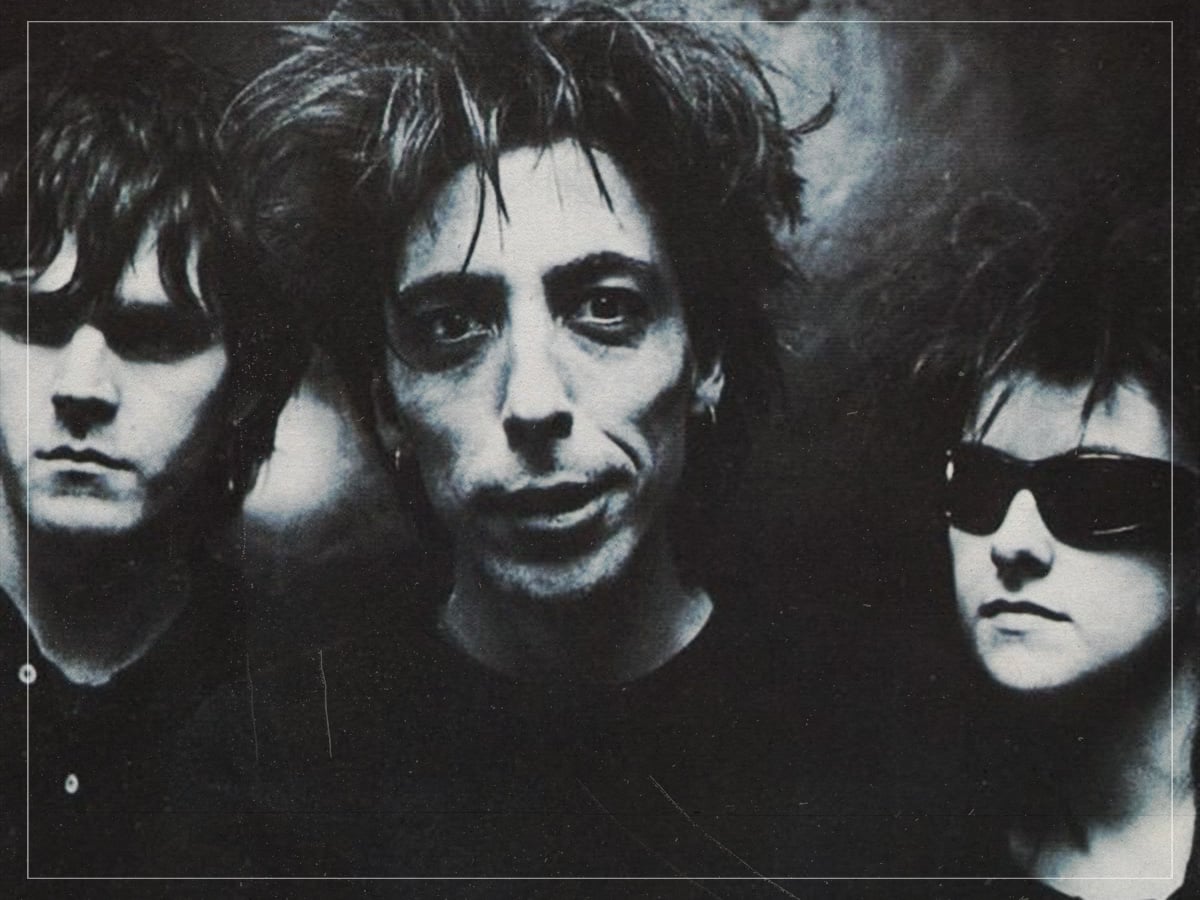
Some 40 years ago, that was basically the equivalent of calling a band “Hot Topic emo”.
Unlike Flock of Seagulls, or even The Cramps for that matter, Alien Sex Fiend never quite elevated themselves above the underground, but their first five albums all performed well in the UK indie charts, and the band’s increasingly outrageous, prop-filled live shows built them a devoted audience of diehard fans. It was a joyously low-class kind of theatre, in which Nik Fiend could often be found growling out his lyrics while crawling through a tangled clump of fake spiderwebs, never suggesting any careful execution of pre-planned choreography. Very little of anything Alien Sex Fiend did, in fact, was heavily refined or practised.
“This is the gospel truth,” Nik Fiend told Toronto’s Globe and Mail in 1984, “Everyone in this group lives in one house, sort of like The Munsters, and periodically we converge together and make some racket with a guitar and a drum machine. But we’ve not rehearsed since November, 1982. We live it out all the time, and as the time for a performance comes near, my personality changes. I emerge into my character.”
Even in those early days, Fiend was brash and bold in his promotion of the ASF experience, calling their shows an “hour-long orgasm”, but he also made it clear that while they might look like The Munsters and live like The Munsters, they were, in fact, normal human performance artists of a sort.
“I don’t come out on stage like, ‘Boo! We’re from the graveyard!’ It’s more of a surrealist creation than that. Anyone who comes to our shows without preconceptions should understand that. All this stuff about ‘the latest London fashion band’ is rubbish. We’re just one band in a thousand that got a break, and we’re giving it everything we can now.”
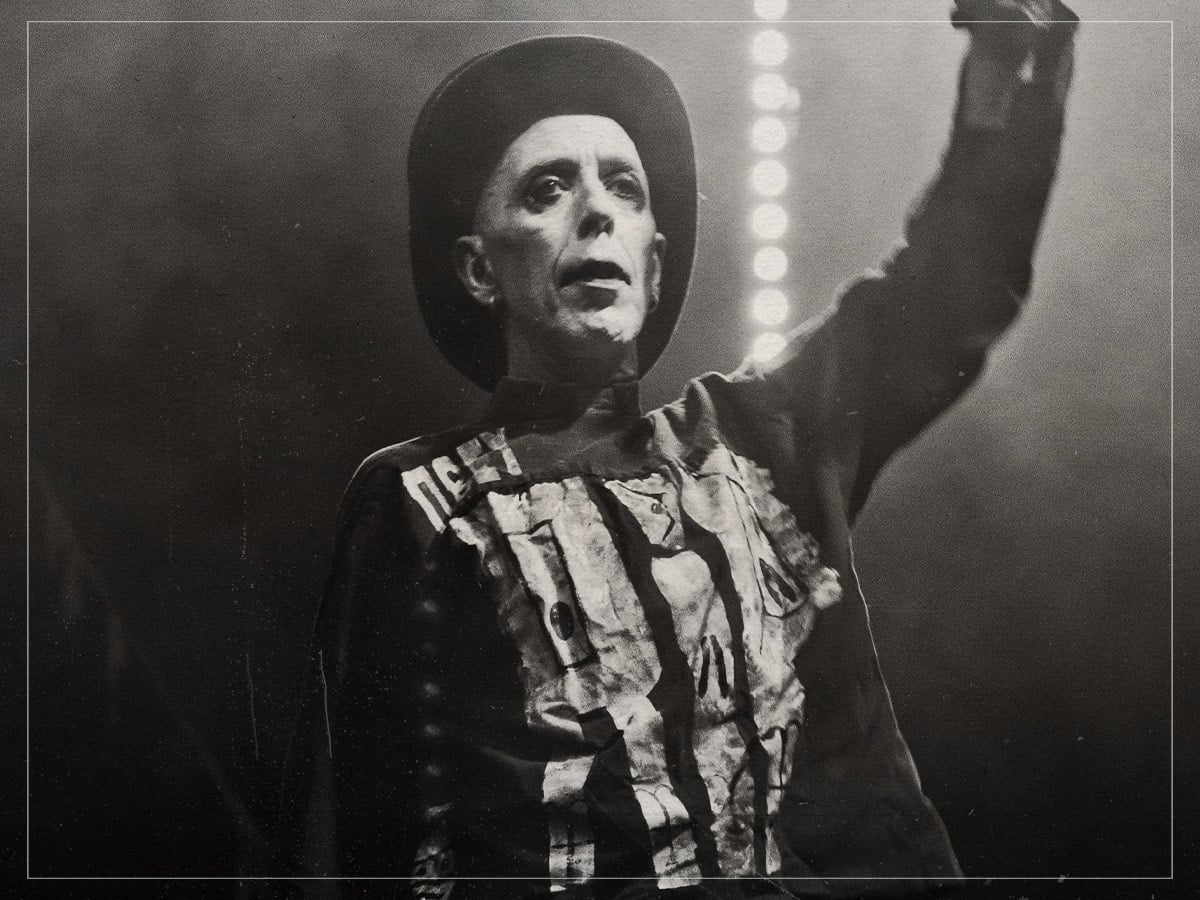
Almost immediately, Alien Sex Fiend achieved part of the goal of any punk-adjacent band in the 1980s, as their name and appearance alone earned them the disdain of a large portion of the British public. Rumours of the band’s increasingly over-the-top histrionics played their part, too, as some reports suggested they were using dead chickens as stage props, repeatedly “exploding” them into the audience. Not all criticism was coming from the frightened squares, though.
From the other end of the spectrum, some more open-minded new wave listeners questioned whether ASF were putting their style over their substance, using their horror pantomime as a cover for some outdated, subpar punk tunes. To their credit, though, they made little effort to fit themselves into the narrowing pigeon-hole of goth rock in the mid to late ‘80s, when the genre was generating more mainstream understanding in middle America.
In fact, for the most part, America never really ‘got’ them at all. It was Japan and its highly attuned art-rock audiences that did the most to confirm the band’s international cachet. Their surprising success there, where venues were routinely sold out, even convinced Nik Fiend’s own father that his son wasn’t totally wasting his time.
“Before that, he hated us,” Fiend said of his dad, speaking around the time ASF released their 1985 live album Liquid Head in Tokyo, “Now he can see the humour in what we do. Since we went to the Far East, we have proved to him we’re not a joke; the reception we got in Japan has shown him that we’re serious.”
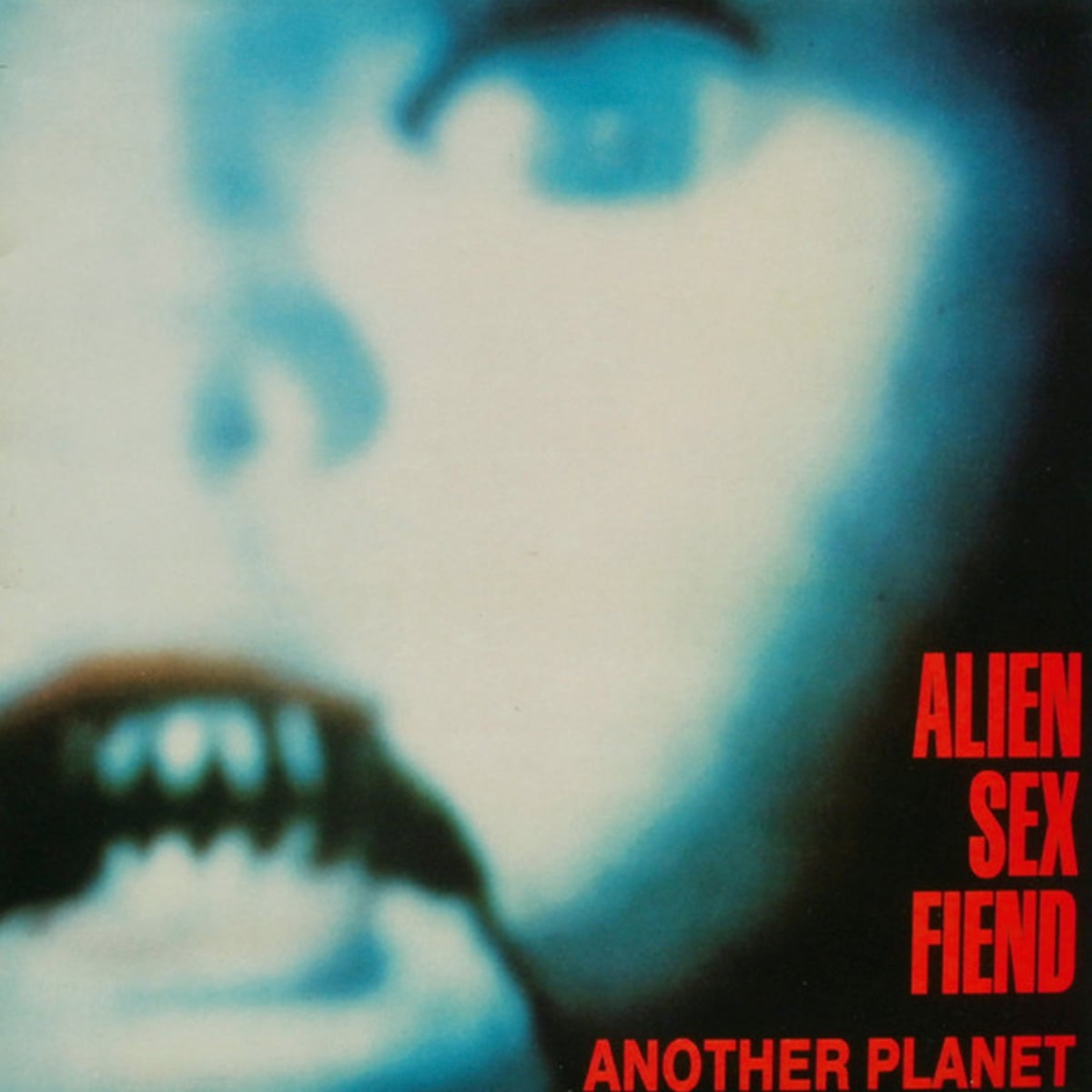
ASF’s sixth album, 1988’s Another Planet, was their first that failed to dent the UK indie charts, but it wasn’t because the goth bubble had burst. If anything, ASF’s music was simply getting too difficult to define and market to any specific audience. The reviews for Another Planet and its follow-up, Curse, were both largely positive, and the band seemed to be entering a new comfort zone as its first decade came to an end.
“All we used to do was sit down with various machines, bits of percussion, strange-sounding keyboards, and just make noises,” Christine Wade/Mrs Fiend told the Connecticut newspaper The Day in 1989, “That’s basically still what we do in the studio; just turn things on and plug things in and have a good time.
“We end up laughing a lot at some of the things we come out with,” she continued, noting that the ASF oeuvre now included everything from hip hop to heavy industrial stuff to psychobilly, “but in our own style. People have often said, ‘Oh, you can always tell an Alien Sex Fiend song’, and it’s true. It has a peculiar stamp on it.”
The early single ‘Dead and Buried’ is arguably ASF’s trademark song, sounding sort of like an industrial-tinged cross between Devo and The Misfits. ‘She’s a Killer’ and ‘Ignore the Machine’ are good introductory tunes, too. The band’s most-streamed song on Spotify, however, is their 1986 track ‘I Walk the Line’, not a cover of Johnny Cash, but Nik Fiend’s own account of keeping himself just barely on the straight and narrow: “I walk the line / Between good and evil / My business is a little cloak and dagger / I drink so much I don’t walk I merely stagger! / No, you wouldn’t listen, and I don’t blame you”.
The ‘live fast, die young’ message of that song, however, didn’t play out in the career arc of Alien Sex Fiend. Mr and Mrs Fiend continued to record into the 2000s, and after a nearly decade-long hiatus, they put out their 13th studio album, Possessed, in 2018, on Cherry Red Records. The Fiends are still actively promoting various career-spanning compilations and re-releases on social media and on their fantastically retro ‘90s style official website. In 2025, Nik Fiend also did something he rarely does these days, taking part in a proper interview and discussing the long journey of ASF on an episode of the What Goes Around podcast.
“I just wanted to take part,” Nik said, looking back at more than 40 years of music and mayhem, “I think the main thing for me is that I’m still a fan, as well. I think, for a lot of people, they got their heads up their asses… [Before Alien Sex Fiend], I was told I was a waste of space. ‘Expect nothing from life. You’re useless’… So I’m not worried about having compliments, or that my every move is really important for the world to turn or nothing like that. I’m just happy to take part.”
