


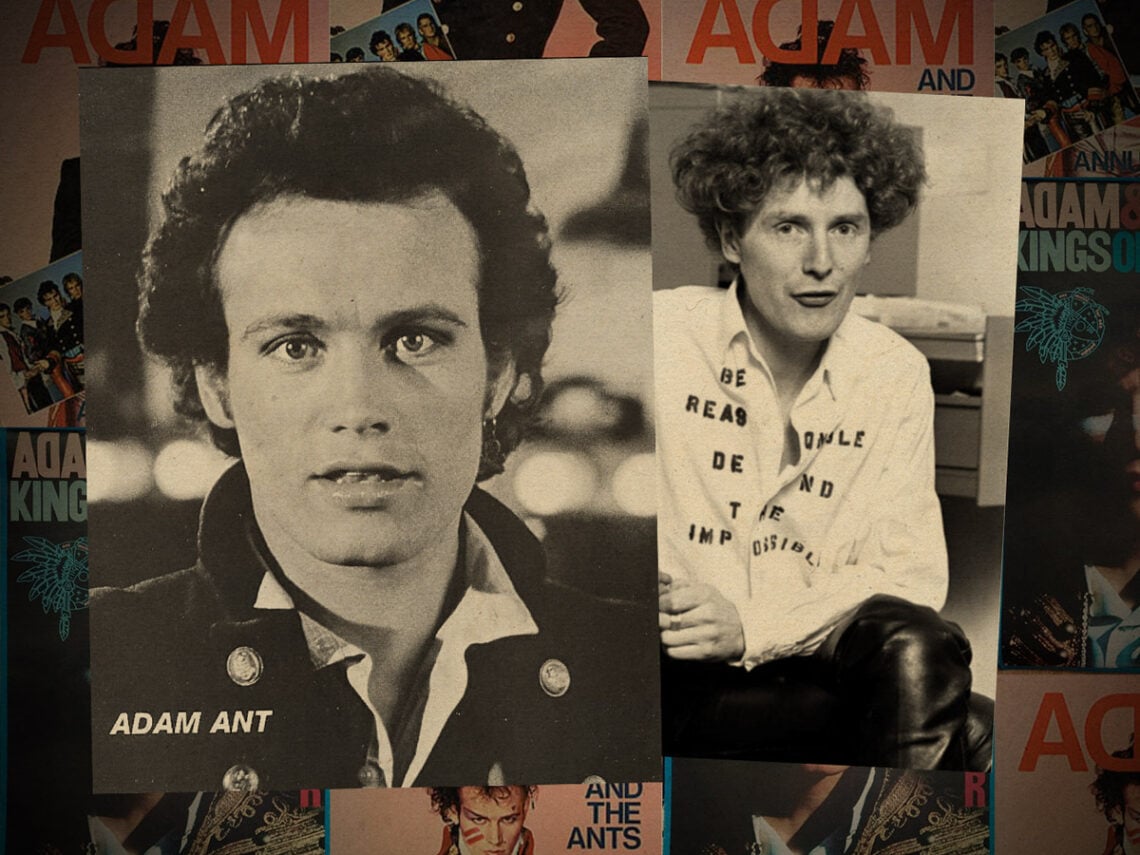
Adam Ant vs Malcolm McLaren: The betrayal that launched the ‘New Romantic’ movement of the 1980s

“I hope showbiz never becomes a dirty word,” Adam Ant said in 1981, “I love it”.
Ant, who was born in London as Stuart Goddard in 1954, was then the biggest pop star in the UK at just 27, where between 1981 and 1982 alone, he racked up three number one UK singles, more than David Bowie or Elton John had managed in the entirety of the 1970s. Ant’s imminent leap to America was also about to align perfectly with the emergence of MTV, as his swashbuckling pirate-dandy style would soon help overhaul international scenester fashion, setting the stage for the over-the-top make-up and costuming of the New Romantic movement of the 1980s.
The specific phenomenon of Antmania tends to be looked back on through the lens of novelty rather than revolution these days, but it was an important swing in a new direction; a coming together of the British punk ethos with the older sensibilities of glam, as young people seemed eager for something a bit more fun and theatrical than the cynical politics of punk in the aftermath of the Sex Pistols.
What a lot of his fans didn’t realise is that Adam Ant was actually a veteran of that same punk scene, and in many ways a total creation of it. When the Sex Pistols played their first ever gig in 1975 inside the Common Room of Saint Martin’s School of Art, in front of 20 or 30 people, they were opening for a retro-minded pub rock band called Bazooka Joe, whose bassist was a 20-year-old Stuart Goddard, not yet aware of his inner ant. Being a rock and roller meant a certain thing before the Sex Pistols, and being literally among the first people to ever witness the Pistols live, Goddard became one of the first to fall under their influence.
“All four of them came in, and they did their soundcheck, and they did their gig, and I was very impressed,” Ant recalled to the St Louis Post-Dispatch in 2024, describing a 20-minute Pistols set that most onlookers remember as being a chaotic shambles, “It was very disrespectful, but it added a certain appeal to me at the time, and I thought, ‘This is gonna be the new thing!’ I left Bazooka Joe that night and formed the Ants. So it was a catalytic moment for me.”
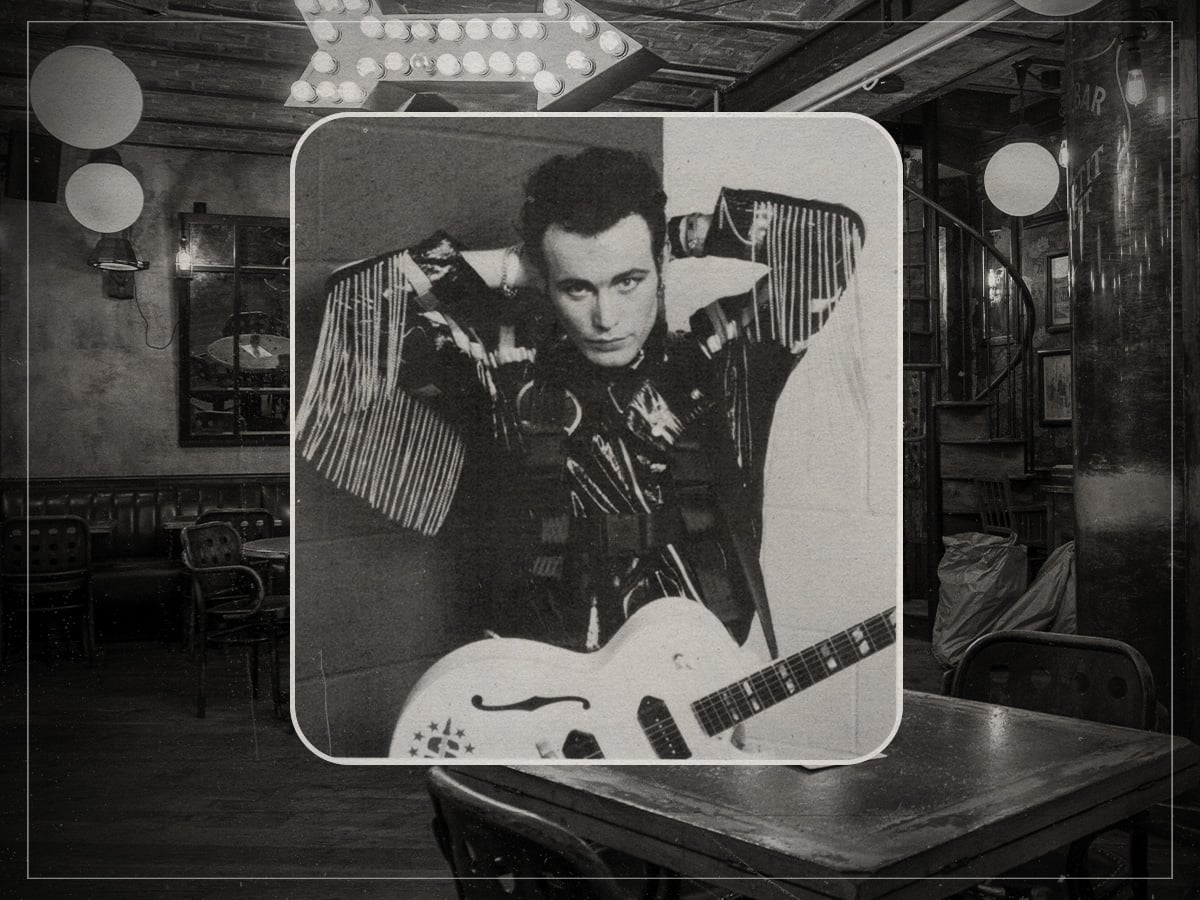
Adam and the Ants didn’t properly turn into a band until 1977, but Adam Ant himself was already deep in the belly of the beast when it came to the London punk scene, frequenting Vivienne Westwood and Malcolm McLaren’s famous SEX boutique and fraternising with all the most recognisable characters from the neighbourhood, including Siouxsie Sioux and Pamela Rooke, AKA ‘Jordan’, the latter of whom was recruited along with Adam to appear in Derek Jarman’s 1978 film Jubilee, a vitriolic time capsule of the London punk underworld.
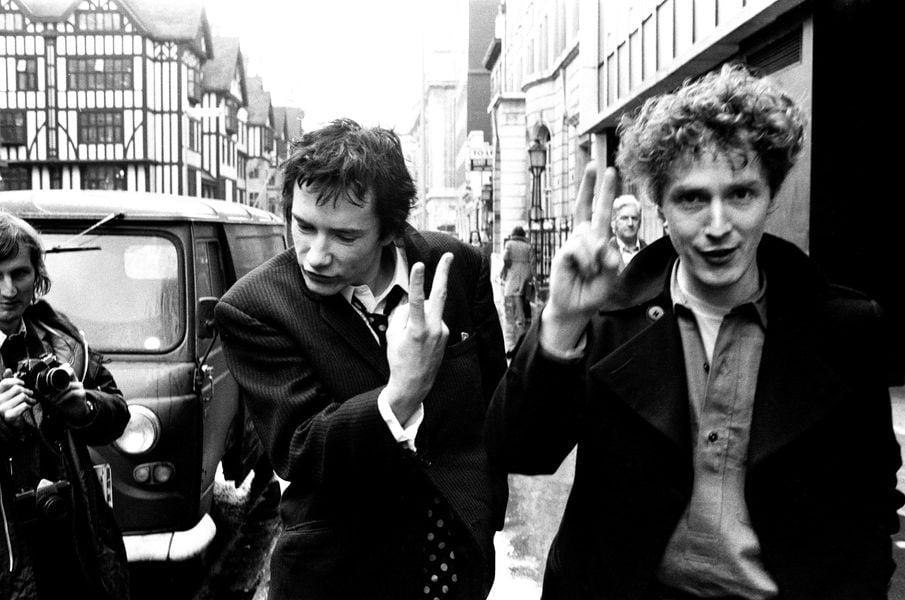
It wasn’t until 1979, though, just after the release of the first Adam and the Ants album, Dirk Wears White Sox, that Ant finally met the godfather of the scene, Malcolm McLaren, face-to-face inside his shop. “’Allo, Adam,” McLaren said with a smile, “‘ow are the Ants?” The answer was that the Ants were in a bit of a pickle. Their first album was a dark, rough-and-tumble post-punk affair that captured their live sound well enough, but it was released on a small indie label and wasn’t generating much attention. McLaren, the former manager of the now extinct Sex Pistols, offered to lend a hand. More specifically, he had a vision for the band, not one that had anything to do with their own particular skills or aspirations, but one that had been floating around in his head for quite a while.
The idea was to essentially build a band as a musical vehicle for Vivienne Westwood’s new line of New Romantic fashion. Adam and the Ants had the looks to pull it off, and so a deal was reached, and McLaren took Adam under his wing, not just plotting out some of the styles for the eventual dandy highwayman, but providing a deeper education on music, as well.
“Malcolm is like a spiv, really, a salesman, a hustler,” Ant told the Sunday Telegraph in 2000, “But what shocked me was that he was very traditional. He knew about the history of music, and he was really into the structure of songs. He would say to me: ‘Do your homework, listen to these old blues and rock ‘n’ roll records; think about what makes them so good. Get down to the nitty-gritty’.”
Around this time, Ant saw James Brown play at London’s Hammersmith Odeon and was captivated by the sight of two drummers in the band and the heft it added to their sound. This was adapted into the Ants’ sound and matched to the American Indian and African tribal elements of their look, becoming the familiar Burundi beat on hits like ‘Stand and Deliver’ and ‘Prince Charming’. The clothes, hair, and make-up, which also incorporated bits of old French Revolution jackets and ruffs, were an intentional push against the monochrome tendencies of the post-punk, pre-goth scene in the late ‘70s.
“Post-punk got very black and white, very grey, very dull,” Ant said, “Everyone was just wearing black and dyeing their hair black and black eyeliner. Quite a dark, intense look, you know. So I thought, ‘Well, I’ve changed the music, I might as well change the look as much as I can’.”
Right as Adam and the Ants were on the cusp of re-introducing themselves to the world, however, Malcolm McLaren had a sudden change of heart. He liked the Ants, but wanted a female singer to front the band, so in January 1980, he used his influence to set in motion a hostile takeover. “He edged [the other band members] to tell me they didn’t want to be with me,” Ant said, recalling how he was left with no choice but to accept his fate. It was a low blow, but “it gave me a competitive edge,” he insisted.
The former Ants transformed into McLaren’s new band, Bow Wow Wow, fronted by a 13-year-old girl named Annabella Lwin. Plenty of controversy followed, mainly over the sexualisation of the underage Lwin on the group’s debut album cover, but only one major radio hit, 1982’s ‘I Want Candy’, came of it. Adam Ant, meanwhile, got his swift revenge on McLaren, his mentor, for that brutal betrayal. He recruited a brand new band of Ants, including ex-Banshee Marco Pirroni, and went to work carrying forward the ideas he’d been developing. The new Ants signed with CBS in the summer of 1980, and made their TV debut that October playing their first top ten single, ‘Dog Eat Dog’, on Top of the Pops.
“What happened in three and a half minutes on Top of the Pops was three and a half years in preparation,” Ant told the Telegraph in 2000.
“I can remember being really ready to do a television show, ready to show off and show out and really flaunt it.”
Adam Ant
Adam and the Ants’ popularity exploded after the performance, and their debut album, Kings of the Wild Frontier, went to number one the following January, ultimately ranking as the top-selling LP of 1981 in the UK. The New Romantic movement was fully underway, and Adam Ant was the biggest star at the tip of the spear, making McLaren’s deceit look like a colossal misjudgment of talent, as well.
Back in 2000, Adam Ant said he didn’t have much interest in patching things up with McLaren after 20 years. “I don’t think I’d want to get mixed up in his world anymore,” he said, “but there would be no animosity on my part. It hasn’t soured me”.
After McLaren’s death in 2010, Ant revised his position a little, calling him “a great mentor”, acknowledging, “[McLaren] now stands as one of the great rock ‘n’ roll managers. Tom Parker, [Brian] Epstein, and Malcolm… I think the world is a sadder place without him. He always had something to say, and he always looked great.”
Ant went solo after 1982’s Prince Charming album and never quite reached the heights of prime Antmania, but his success was more of a profile in courage than many people probably realised at the time; an unproven artist maintaining his momentum after getting dumped by both his manager and his band. Ridicule truly is nothing to be scared of.

Never Miss A Beat
The Far Out Punk Newsletter
All the latest Punk content from the independent voice of culture.
Straight to your inbox.