


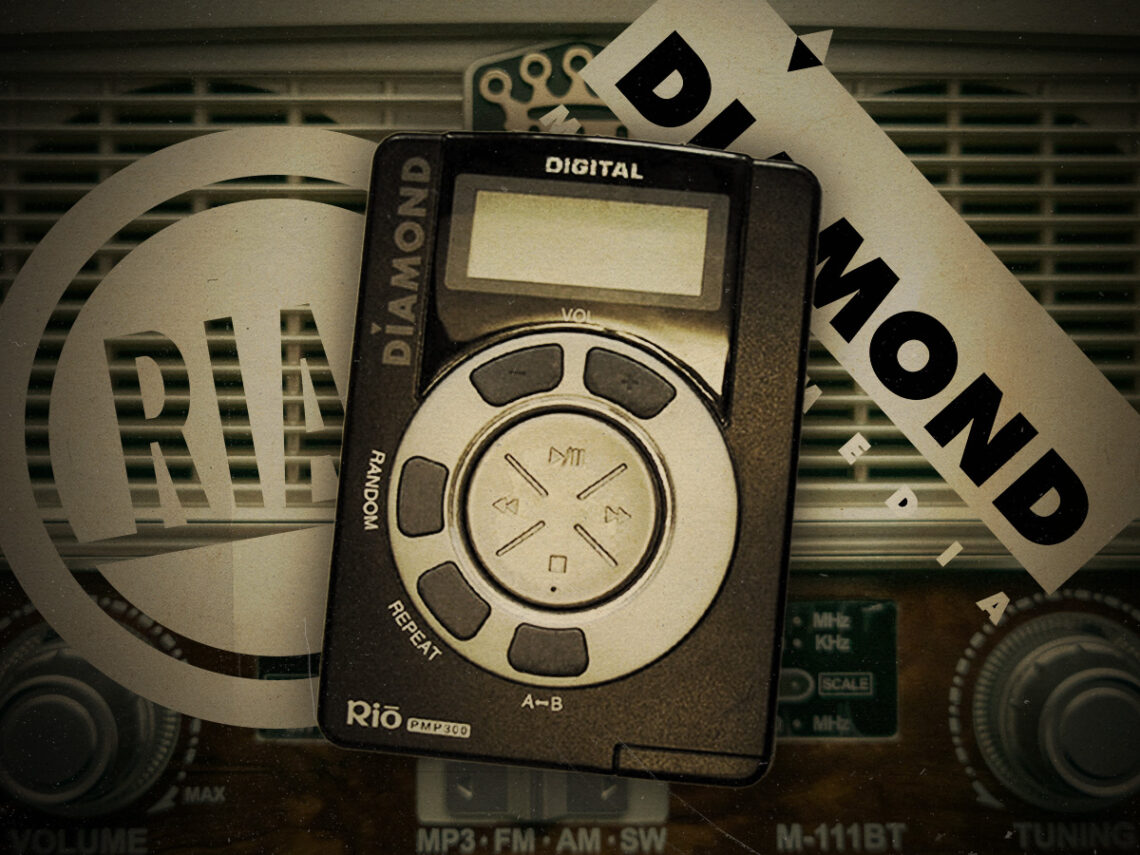
RIAA v Diamond: The 1998 case that spurred the MP3 revolution

In September of 1998, while the press was mostly preoccupied with the latest salacious details of the Bill Clinton/Monica Lewinsky scandal, two rather significant milestones took place in the evolution of technology.
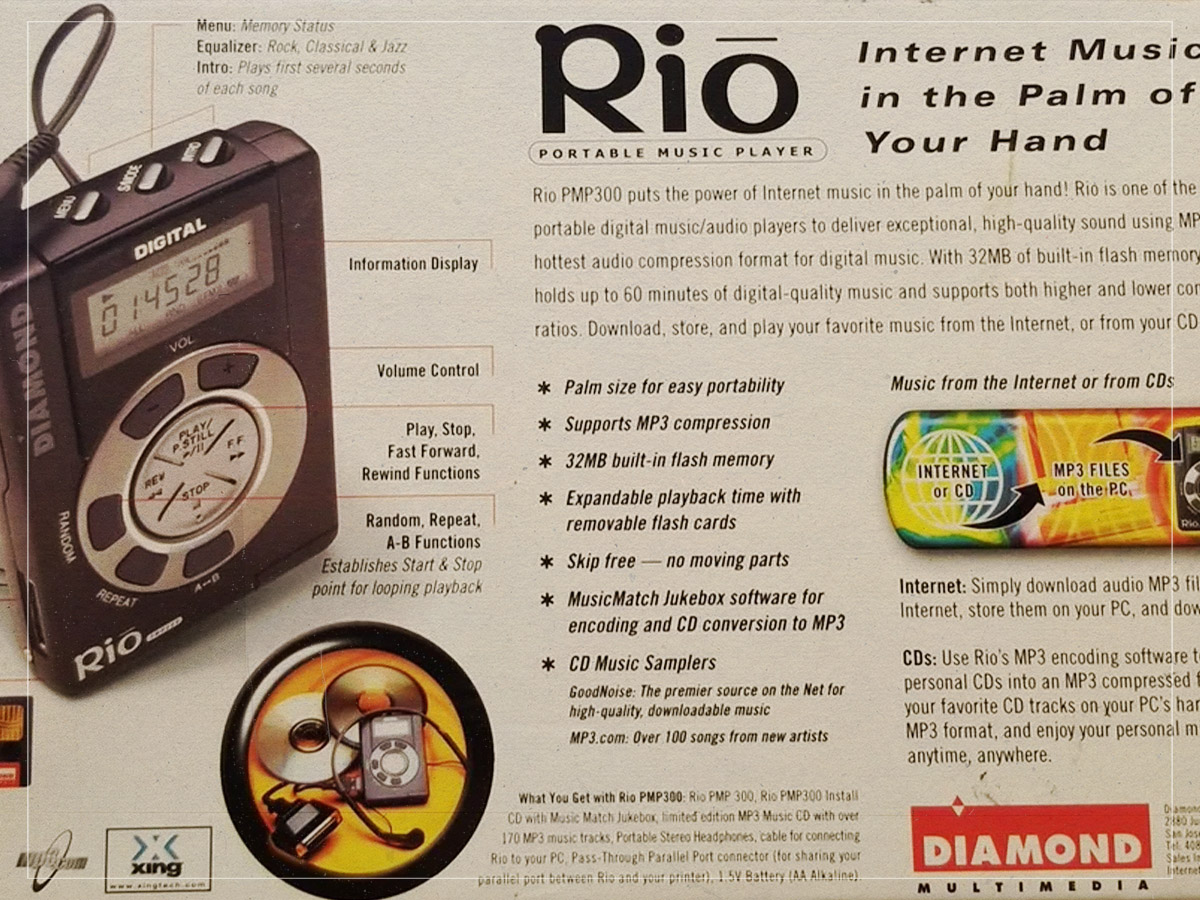
First, a company called Google was formally incorporated to minimal fanfare, and a few days after that, a more established firm, Diamond Multimedia, released a new commercial product branded as the Rio PMP300, one of the world’s first portable MP3 players.
Diamond was based in Silicon Valley, but didn’t have any sort of mainstream recognition outside its own industry, as their bread and butter products had always been computer add-ons like graphics cards and sound cards. At the end of the 20th century, though, hundreds of companies like Diamond recognised that a new digital Wild West was upon them, and much like the feeding frenzy over AI right now, the race to corner the market on new tech quickly devolved into an elbow-throwing free-for-all, akin to a bouquet toss into a sea of unattached bridesmaids.
For the executives at Diamond, the most glaring and easily conquered gap in the market was the next evolution of the portable music player. Specifically, they hoped to develop a small device to serve as a convenient, on-the-go companion for the rising explosion in MP3 file sharing on personal computers.
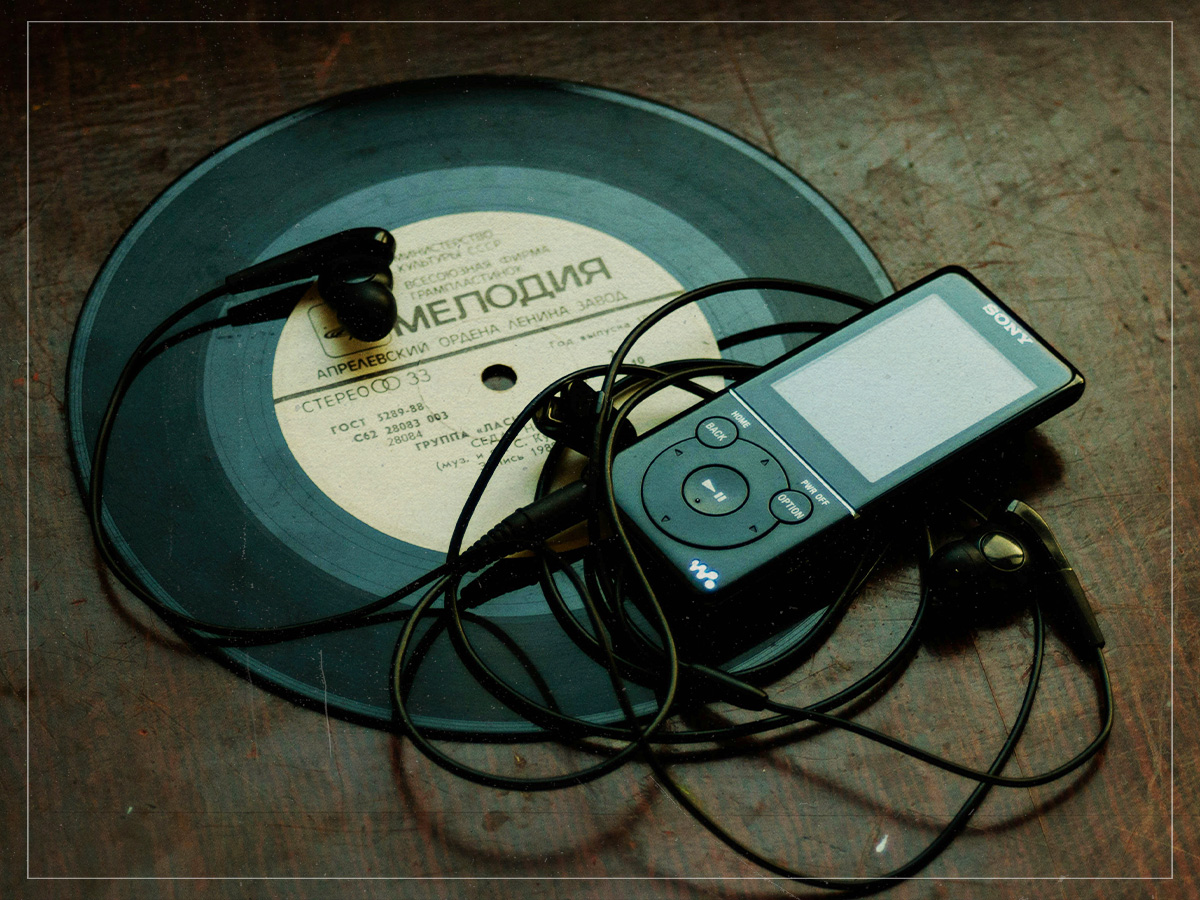
In the first half of 1998, even though sites like MP3.com were already generating a lot of traffic on the early internet, portable headphone music listening still meant one thing to most people: selecting a CD, putting it in a pocket-sized player, and accepting that your commute or morning jog would include an occasional skipping sound. The Sony Discman, itself a successor to the cassette-based Walkman, was the dominant device in this field, and nobody had too many complaints about it. Sure, you could only listen to one album at a time, and the thing was a little bit chunky and clunky, but expecting anything more would be a bit greedy, really.
Sony didn’t seem to think there were any problems with the Discman either. Like most of the big international tech giants in the late ‘90s, they were bizarrely late to the digital player party, allowing comparable indie upstarts like Diamond to jump out ahead of them in the market.

Diamond, importantly, hadn’t invented or patented the digital audio player; that technology dated all the way back to the early 1980s. They weren’t the first to release a portable digital player, either, as several models were introduced by other companies between 1996 and 1997, including the Listen Up player by Audio Highway, the FlashPac by AT&T, and the MobilePlayer from Audible. There was even an MP3-specific player that came out ahead of the Diamond Rio, made in South Korea and known in the West as the EigerMan F10 and F20.

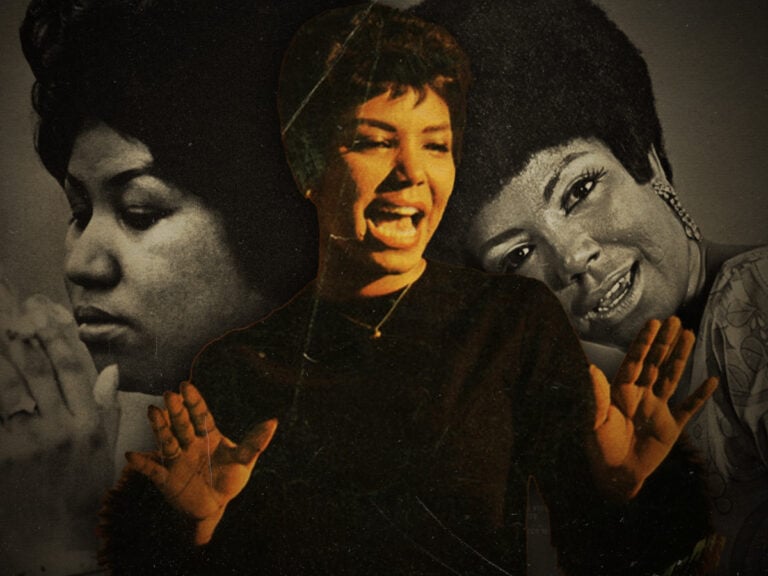

It was the release of Diamond’s Rio PMP300 in September of ‘98, however, that really cleaned up the missteps of the earlier devices and attracted a much bigger response from the general public, specifically the Venn diagram of Discman owners who’d become immersed in the world of MP3 downloading on their home computers. They wanted to take their new digital music files with them when they left the house, and the Rio, despite a hefty cost of $200, was the most streamlined and compact system yet created for doing so, weighing just two ounces and measuring about 6x9cm. It only had 32MB of storage, which didn’t allow playback much beyond the length of a CD, but it was still the ‘next big thing’ for thousands of ‘90s kids.
As early sales figures came in, there was plenty of high-fiving at the Diamond Multimedia offices, but that honeymoon period was brief. First, there was the inevitable threat of competition from dozens of other manufacturers, all equally if not more capable of producing similar players due to the public domain nature of digital player technology. Then, perhaps more importantly, there was the music industry itself, which was finally waking up to the earth-shattering potential of online file-sharing and desperate to nip it in the bud any way they could.
Within weeks of the Rio’s release, the Recording Industry Association of America launched a legal case against Diamond Multimedia, demanding that the Rio be removed from stores and that production cease. In its marketing, the Rio PMP300 had been positioned as a unit for listening to songs that were downloaded, legally, from sites like MP3.com, or simply burned off a customer’s own CD collection. RIAA president Hilary Rosen argued that it would be used, probably in far more cases, to play illegally downloaded music, to the detriment of both the record companies and the recording artists.
“Diamond essentially created a machine that doesn’t distinguish between pirated songs and legitimate songs,” Rosen said at the time, “Therefore, in our view, it exacerbates the marketplace for pirate recordings.”
The counterargument, from Diamond’s vice president of corporate marketing, Ken Wirt, was that the RIAA was pointing a finger at the wrong people. “They should go after the pirates and not penalise the consumers,” he said, “Preventing the use of the Rio is like saying the portable CD player is illegal because it can play bootleg CDs.”
Ultimately, a judge in Los Angeles sided with Diamond, allowing the Rio to remain on the market for the 1998 holiday season, where it enjoyed further excellent returns, selling upwards of 100,000 units. The RIAA continued its fight, however, appealing the earlier ruling and strapping in for a second case of the ‘RIAA v Diamond Multimedia’, this time in the US Court of Appeals for the Ninth Circuit.
That case, which carried into the summer of 1999, generated a great deal of attention, not just in the offices of Silicon Valley but in the music press, as well. The RIAA was trying to build a legal dam to hold back the tsunami of music piracy seemingly awaiting them in the new millennium, and defeating a relatively small-time opponent like Diamond was exceptionally important if they had any hopes of succeeding. Many recording artists were asked for their opinions on the situation at the time, and as was often the case, David Bowie seemed to have the most prescient perspective.
“It ain’t going to work,” Bowie told the New York Times, referring to the RIAA’s efforts to stem the MP3 revolution, “Quirkiness and decentralisation are what define the internet, and the idea of trying to formalise it and police it is abhorrent. The internet is so volatile and idiosyncratic that whoever tries to police it will be beaten.”
The RIAA’s immediate problem in its case against Diamond Multimedia was that a precedent had already been set in previous cases that consumers had a right to copy material they had already purchased from one medium to another, and so long as the Rio could defend itself as a device intended for such use, overturning the case would be very difficult.
It could be argued that everything that followed, and what the music industry now looks like in the 21st century, hinged on the ruling of RIAA vs Diamond. Maybe it’s true that we’d be living in a slightly different reality today if the case had gone differently, as a few delays or different legal requirements in the late ‘90s could have given different companies a chance to leapfrog others in the race to digital music dominance. Instead, the court upheld the original ruling, and the RIAA’s big contention that Diamond was breaking the law by not collecting or requiring copyright information (via a Serial Copyright Management System or SCMS) from all downloaded music files was basically met with a shrug by the judges.
“Although the Rio will inevitably be used to record both legitimate music (for example, commercially available CDs) and illegitimate music (for example, copyrighted music illegally posted on the internet),” the court ruled, “the absence of the SCMS information does not cause the illegitimate uses. Even if the Rio did incorporate SCMS, a Rio user could still use the device to record unauthorised MP3 files posted to the internet.”
While Diamond won its battle with the RIAA, it didn’t ultimately win the war of the portable MP3 players. As the industry exploded in the aftermath of RIAA vs Diamond, all the big tech players soon hurried out their own players, and by 2001, Apple’s first iPod arrived. The Rio series of players would eventually be forgotten, and as the rise of the smartphone made separate pocket media players almost obsolete overnight in the 2010s, this whole transitional period now looks a bit like a strange blip in time.
