


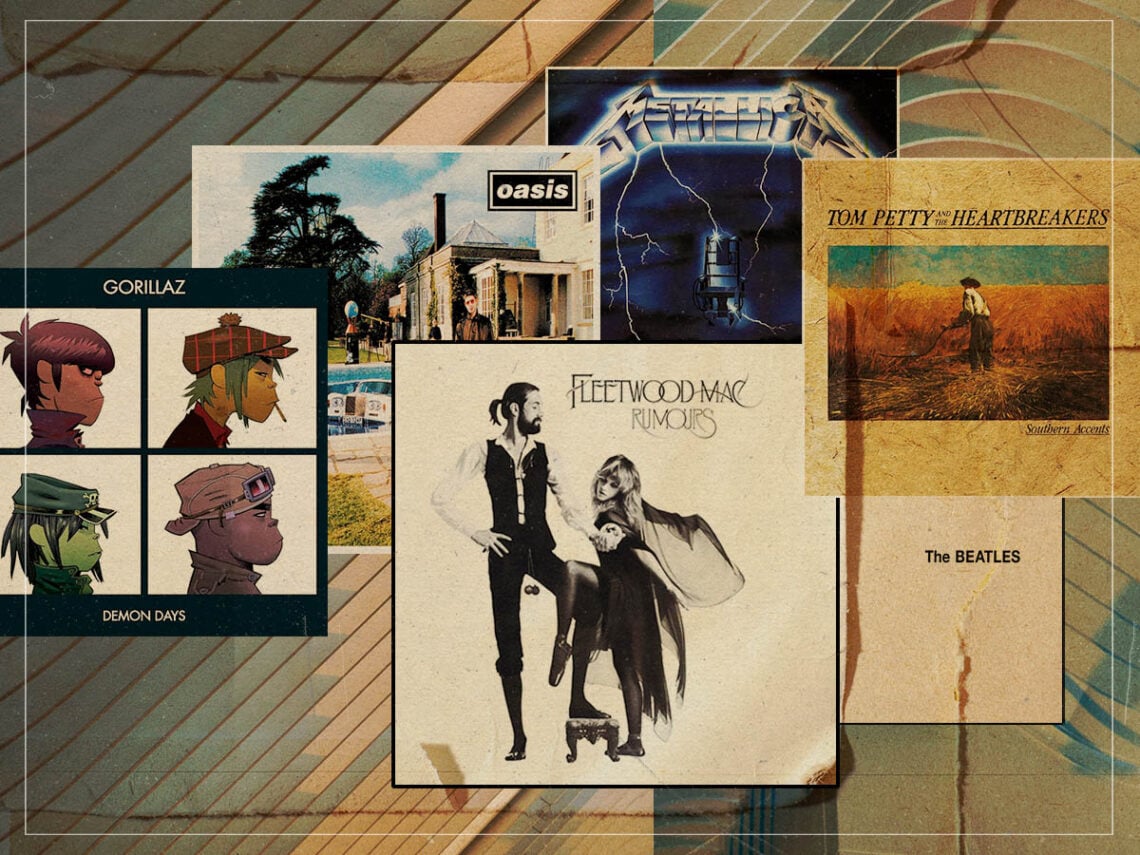
10 songs that derail classic albums

One of the most neglected parts of the album experience is momentum. The best records of all time are meant to take people on a journey, and even if they aren’t the most thoughtful experience in the world, it’s important to understand what makes the artist tick rather than having a sing-along on every single track. Artists are free to do what they want, though, and even though acts like The Beatles have made masterpieces, they do have places where things go South for a second.
Then again, songs that are flies in the ointment aren’t always a bad thing. A track like ‘Fitter Happier’ off of Radiohead’s OK Computer might sound like it qualifies for this list, but the more that people look at it in the context of the record, it does its job of providing a stopgap. The ones showcased here are meant to be a cornerstone piece of the album, but they end up falling through the cracks in all the wrong ways.
Sometimes it’s not even the song’s fault. Many tracks have been able to keep the listener’s interest for a certain length of time, but given how they are put in the record, they either derail what the record was building towards or make the entire thing sound half-hearted when the record carries on as if the album didn’t exist.
And that’s the cornerstone of all of these songs. Not all of them are terrible, and some might actually be pretty good for what they are, but if they were taken out of the album, released as a single, or left on the cutting room floor, the album would lose none of its merits. And for bands that centre around quality control, having a whole song of dead weight is not a great sign.
10 songs that derail classic albums
‘The Second Album’ – Stone Temple Pilots

The sophomore slump isn’t the stuff of rock and roll legend by accident. The biggest blunder that anyone can do is let fame go to their heads and make something that feels like a half-hearted rehash of what came before. So, in essence, Stone Temple Pilots did everything right when making Purple, but the ending of the album is where things start to take a turn that no one saw coming.
As the end of ‘Where the River Goes’ gently fades out and everyone’s left feeling great, we get one of the band’s friends singing in a Johnny Mathis impression. While a track like ‘Interstate Love Song’ was a strange piece of California sunshine in between the grunge rock, this feels like someone accidentally flipped on the adult contemporary station or Grandma accidentally dubbed one of her old lounge CDs onto the finished product.
While the song itself is actually fantastic and could go to bat with any of the other lounge numbers that were out at the time, it earns its spot because of how hard it pulls you out of the album that came before it. The whole concept of a second album may have been about growing with time and showing everyone that you’re more than one note, but trying to make a tune all about those feelings didn’t really need to have a cocktail jazz tone to it.
‘Escape’ – Metallica

Nothing about thrash metal was meant to be happy. While Metallica didn’t prioritise singing about ghouls and goblins throughout their history, a lot of what turned up on Kill Em All comprised some of the most vicious thrash metal that anyone had heard up until that point. So now that they had a budget, Ride the Lightning was their time to conquer. But as with all great bands who have a certain sound, the label has to get their claws into things and start making executive decisions.
Although most of the album is still intact and features some great moments like ‘Creeping Death’ and ‘Fade to Black,’ ‘Escape’ is a rare miss for the band during their 1980s prime. Since the whole album was a bit too short for the label’s liking, the band rushed back into the studio and wrote a song that might have some hit potential. And while they did get their wish, ‘Escape’ is miles away from anyone’s favourite Metallica song, especially since James Hetfield has made fun of it.
The chorus is halfway there and the breakdown section towards the end is one of the heaviest moments of Metallica’s career, but it stings knowing that there was no real point in making this track at all. Even though they refrained from using cover tunes on most of their mainline albums, if they were to have substituted any of their Diamond Head cuts for the record, we might be talking about an album that could beat out Master of Puppets.
‘White Light’ – Gorillaz

The entire concept behind Gorillaz was always about having no rules. Damon Albarn had saved a lot of his proper songwriting for Blur back in the day, and when he started to embrace the digital world, he figured that there was a lot more to explore once he started treating his new band like a project rather than a fleshed-out lineup. But for something as kaleidoscopic as Demon Days is, ‘White Light’ is the one spot on the record that has absolutely nothing to say.
Since the whole album was meant to be a long journey through the night, this could symbolise the moment when the party is still going and everyone is passed out. On the other hand, the other tracks had a certain apocalyptic feel to them, and coming right after tunes like ‘November Has Come,’ Murdoc here sounds like someone who found their first DJ set and decided to go to town despite already being far too wasted to operate anything.
Many of Gorillaz’s best songs can get a dance floor going, but even with that four-on-the-floor bass drum, all this is going to elicit is people trying to find a nice cosy spot up against the wall. That is, if it doesn’t elicit someone wanting to throw up through the loud kick drum alone. But hey, people have to get rid of that hangover somehow, right?
‘Visions’ – Eagles

Once any great rock and roll band has their bearings, it’s easy for everyone to fit into their own lane. There’s usually someone who acts as the meditator, the one always pushing forward, and often the one who’s so insane that it’s hard to wrangle them in for too long at any time. Eagles had all of those members and then some, but Don Felder’s role as the quiet member of the group probably should have stayed that way.
One of These Nights was already the band’s moment to prove that they weren’t a one-trick pony. They had done their country-rock music before, and this was their opportunity to make something soulful. But for a riff that sounded as good as ‘Visions,’ it was clear that Felder wasn’t quite ready for prime time yet, especially since the rest of the band was singing with him to the point where the whole thing became a mess of different voices rather than their signature harmonies.
Granted, this isn’t the kind of song that warrants those ‘Seven Bridges Road’ vocal parts, but for a group known as one of the best vocal bands of all time, there’s no reason for them to be making something that sounded this slapdash. I mean, The Long Run was literally assembled over years at a time and painstakingly crafted, and yet that album sounded more finished than something that should have been a fireworks show.
‘Swing on This’ – Alice in Chains

There’s no other word to describe the end of Alice in Chains other than pain. Layne Staley was never going to make it out of his heroin addiction without a fight, but hearing him getting peeled down to the bone on Jar of Flies made many people realise how far gone he had come since first talking about his habits on Dirt. For a record that is steeped in raw heartache, what’s even stranger is the fact that the band felt obliged to leave their audience with a happy ending at the end.
While ‘Don’t Follow’ works fine as a closer and a cautionary tale about what could happen if someone goes down the same road Staley did, hearing them do a swinging blues tune feels all wrong. The whole thing does feel like a bit of a gag at the end of the record, but when the chorus hits, it feels like the band are trying to paint a happy face on a sad situation, especially when Staley starts singing and sounds like he’s on the verge of a breakdown.
There are pieces of the song that could have worked if they played them in a blues jam with some of their Seattle friends, but putting this at the end almost feels like the band is making fun of themselves for wallowing in their own pain. This was meant to be the record that showed off their vulnerable side, and once everyone settled into that groove, ‘Swing on This’ is the moment you realise all that build-up was for nothing.
‘Make It Better’ – Tom Petty

The entire story behind Tom Petty putting together Southern Accents feels like a living nightmare. The band’s decision to take some time off didn’t do them any favours whatsoever, and when they did get back to the studio for an intended double album, everyone being off their faces on cocaine didn’t help matters. Most of the album did eventually get folded into a great project, but for an album all about Petty’s roots, he quickly found out that R&B didn’t quite suit him.
Which is strange because some of the best live moments in his catalogue focus on songs like ‘Shout,’ like the nine-minute version on Pack Up the Plantation. When listened to in the context of the album, ‘Make It Better’ feels like a cheap stab at a single that Petty put together in an hour, and since it comes off the gorgeous title track and leads right into ‘Spike,’ it feels like a strange detour rather than anything worthwhile.
While a song like ‘Don’t Come Around Here No More’ had nothing to do with the central story of the album, that song at least had some punch to it and a bulletproof chorus that went down as one of Petty’s best. To go from that to the kind of groove that Wilson Pickett threw out would have been bad enough, but ‘Make It Better’ does a good job at both killing the momentum and reminding everyone of the tricks cocaine can play on the brain.
‘Not That Funny’ – Fleetwood Mac

The entire premise behind Fleetwood Mac’s Tusk was to do everything but a new version of Rumours. Anyone who had to go through the hellscape of making their masterpiece would have never wanted to speak to each other ever again, but now that they were in a new era, they might be able to change their style around to suit the moment a little better. While Lindsey Buckingham was ready to leap off the creative diving board, it wasn’t exactly shocking when he had a few faceplants as well.
A lot of what Buckingham was listening to at the time had to do with the sounds of new wave and post-punk, and while that doesn’t necessarily fit in with tunes like ‘Go Your Own Way,’ ‘Not That Funny’ feels like it’s actively trying to kill the goodwill that Rumours had, complete with Buckingham sounding like he’s pulling a muscle as he’s singing the backing vocals and doing pushups to get the right urgency in his voice.
There’s nothing wrong with experimenting, but there’s also a good chance that the rest of the band was looking at him funny when watching him put together the song. The studio might be a playground for someone who knows what they’re doing, but if you spend too much time pouring over every direction that a song can go in, being a mad scientist and just being absolutely mad starts to blur.
‘All Around The World’ – Oasis

Noel Gallagher always had a particular plan when putting Oasis together. He wasn’t in the trenches with the band when they were first starting, but once he started having visions for what they could sound like when they hit the big time, ‘The Masterplan’ was no longer a great title; it was an actual schematic for their success. And if they were going to go out in a blaze of glory, ‘All Around the World’ was going to be the perfect way for ‘The Chief’ to send off his merry band of rock and rollers.
Although Be Here Now did everything it set out to do in terms of being one of their most popular albums, the penultimate track on the record is Noel’s cocaine-addled answer to The Beatles’ ‘Hey Jude.’ While an updating of a Beatles-style classic is rarely a bad thing, the whole track plods along for far too long with little to no payoff, with Liam chanting the mantra of the song at the end while going through unnecessary key changes before everything fades out. Or does it?
Before people can even catch their breath, the whole track morphs into ‘It’s Gettin’ Better (Man!!)’ before that track also fades out, giving way for the reprise of ‘All Around the World’ to close up shop. While it does help build the momentum of the grand finale, the whole thing feels nothing but tiring once you get to the end, with those final footsteps and door closing feeling like an act of mercy. There is a lot to admire about the sheer audacity of a song this long, but never before had the phrase ‘album continuity’ felt like a goddamn threat.
‘Teenagers’ – My Chemical Romance

When crafting any great concept album, the whole point is to be able to stick the landing. Even if there are some scenes that don’t work on their own or manage to take someone out of the mix, albums like The Wall or Tommy have had great stories despite a few blemishes. While My Chemical Romance made an album that is pretty much spotless by rock and roll standards, The Black Parade does have one song that feels like it was thrown onto the album as an afterthought.
Then again, it’s hard to look at ‘Teenagers’ as a pedestrian track on the record. It’s one of the band’s biggest singles, and that singalong chorus has been burned into the minds of emo kids the world over for generations. It deserves to be part of this collection of songs, but in terms of its placement on the album, it doesn’t seem to serve its purpose at all, coming right after the protagonist deals with facing mortality and turning into an absolute killer in the afterlife.
While the song might have served its purpose if ‘The Patient’s backstory were fleshed out a bit more, hearing him go from one of the darkest sections in 2000s rock to a song that wouldn’t feel out of place in a Southern rock blues bar isn’t doing it any favours. Even if it does play into the rest of the story by continuing on the tale of this man becoming a demon, why would the first place he chooses to haunt be a school?
‘Revolution 9’ – The Beatles

The Beatles were never afraid to take a risk no matter what it looked like. If it suited the kind of music they were making, it was worth having on a record, and judging by what they had done from Rubber Soul onward, nothing was off the table from classical music to Indian instruments to avant-garde sound effects. While that last one may have been worked in exquisitely on ‘Tomorrow Never Knows,’ ‘Revolution 9’ is the kind of experiment that feels like it was made to piss people off.
Granted, there is a point behind putting it on The White Album. John Lennon wanted to make sure that he had the perfect representation of what he thought chaos and revolution sounded like, and for what it’s worth, the sound design is fairly interesting in its ability to put you on the street in the middle of a revolution taking place. It definitely serves Lennon’s purpose for self-expression, but on an album that was full of zany characters and strange detours, this is the one that goes all the way off the map in terms of style changes.
While ‘Good Night’ does the best it can at lulling us down to sleep at the end of the record, it’s too late when all anyone can think about is how Lennon scared the hell out of us towards the end. Lennon was already supposed to be turning over a new leaf and start making some crazy experiments with Yoko Ono in his downtime, but it’s an injustice to see this song take up so much precious space on the album instead of something like ‘Not Guilty’ or even Lennon’s own ‘Child of Nature.’

Never Miss A Beat
The Far Out Beatles Newsletter
All the latest stories about The Beatles from the independent voice of culture.
Straight to your inbox.