


10 terrible movies that wasted great ideas

Few disappointments match the sinking feeling when a film falls short of expectations. It’s the familiar scenario: eager anticipation, curiosity about how they’ll bring their captivating concept to life, and then, the sudden letdown. Some of the worst movies are disappointing for various reasons, whether it’s the performances, the storytelling, the direction, or an elusive element that defies precise definition. Sadly, however, poorly executed films seem to be a widespread cinematic reality.
In reality, the list of reasons why a film may fall short of delivering a particular concept is endless. It may come across as just another entry in a slew of unoriginal corporate reboots, remakes, or cash grabs. Some projects attempt adaptations of source materials considered exceedingly challenging to adapt, while others bring forth original concepts that rely on the elusive reassurance of exceptional filmmaking.
In the contemporary realm of filmmaking, many exceptional original films have only come to fruition by keeping production costs to a minimum. Conversely, numerous remarkable films based on corporate properties emerge thanks to diligent, passionate, creative teams who ardently strive to preserve their vision within the confines of a cautious studio structure.
However, while it’s the audience’s job to decide what’s good and what’s bad, some genuinely terrible films are every bit as diabolical as the works of Ed Wood. Even if a director attempts to justify their choices or claims that it’s misunderstood, escaping the harsh criticisms of the public is impossible.
With that, let’s dive into ten awful movies that wasted great ideas.
10 movies that wasted great ideas:
Yesterday (Danny Boyle, 2019)
Stories that include a giant supernatural event causing a cosmic shift in reality is always interesting. That’s why, when Danny Boyle started promoting his romantic comedy Yesterday, everybody was listening. In fact, the film pulls on the very two things that audiences love in cinema: sentiment and music.
Featuring The Beatles in this movie concept was undeniably a genius idea: after all, what better way to resonate with a global audience than by leveraging the talents of the Fab Four? Although films like Yesterday continue to honour their legacy, the movie itself was lacking. It not only failed to encapsulate the genuine, endearing spirit of The Beatles, but it also made no sense whatsoever.
Suicide Squad (David Ayer, 2016)
Some ‘bad’ films are relatively unique because they still birth viral concepts; take Margot Robbie‘s Harley Quinn, for example. The film itself? Terrible. Maybe it’s David Ayer’s hit-or-miss approach when it comes to writing a good screenplay or the film’s inherent lack of interesting supporting characters, but 2016’s Suicide Squad just didn’t live up to its hype.
The months leading up to the film’s release were very memorable: everybody on social media was talking about it, and the teasers that dropped were all incredibly exciting. However, when it was finally released, reviews flooded in about its narrative inconsistencies and general lack of cinematic grandeur. Maybe if fans could view Ayer’s original cut, opinions would differ.
Sucker Punch (Zach Snyder, 2011)
Zach Snyder‘s infamous Sucker Punch has brought many polarising debates within the seminar rooms of film students. Is it so bad that it’s actually good? Does its misogynistic undertones actually provide some insightful commentary on our problematic society? No, that would be giving it too much credit. Let’s all be honest: this is a bad movie. It always was.
Characterised by Snyder as “Alice in Wonderland with machine guns”, the movie introduces a main character named Babydoll, who, in true Snyder fashion, seeks refuge in an alternate reality as a means of dealing with the abuse inflicted upon her by her abusive stepfather. While some may view it as progressive, it ultimately becomes a simplified depiction of oppressed people, with their resistance confined to a realm of fantastical reverie within a profoundly sexist backdrop that fails to be genuinely confronted.
Passengers (Morten Tyldum, 2016)
In 2016, casting Jennifer Lawrence and Chris Pratt as leads in a romantic sci-fi movie seemed a dream come true. Lawrence was still enjoying the success following the release of The Hunger Games franchise, while Pratt had just propelled into the mainstream with his role in Jurassic World. Therefore, Passengers, with its intriguing plot and captivating casting, was sure to be a huge success.
Wrong. The story revolves around 5,000 passengers placed in suspended animation for a century and a couple of decades, all set to embark on a fresh start on a new planet. However, three decades into the voyage, a malfunction occurs, causing two of the hibernation pods to open prematurely, rousing two passengers (Lawrence and Pratt) from their deep slumber a whopping 90 years ahead of schedule. While the film does have a few intriguing dramatic moments, it ultimately becomes a chore to reach the end.
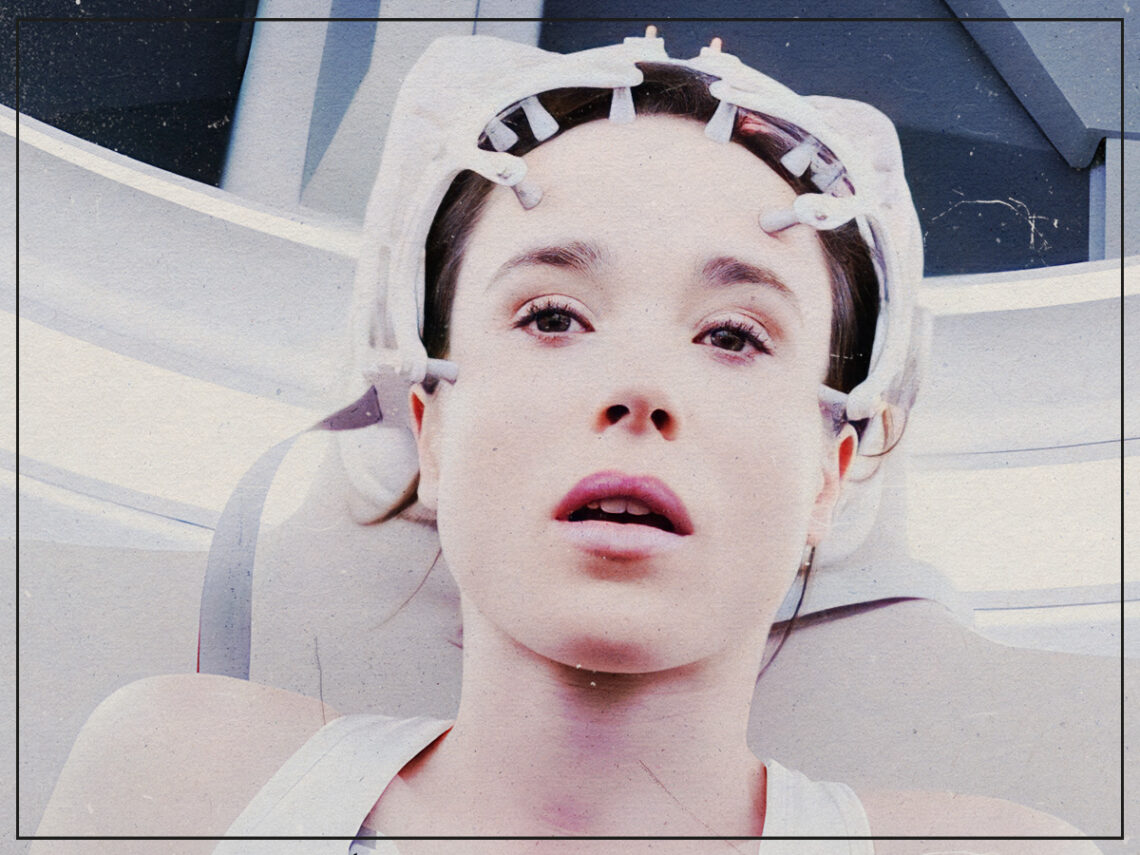
Flatliners (Niels Arden Oplev, 2017)
While the original Flatliners was a solid attempt at mastering sci-fi horror, the 2017 remake felt like a half-baked attempt. A cast boasting the likes of Nina Dobrev and Elliot Page is enough to spark intrigue, but the film itself? Pass.
The initial concept holds great promise: a group of five medical students explore the realm of “near-death” experiences, pushing the boundaries until their experiments spiral out of control, leading to consequences. Unfortunately, however, the film struggles to fully develop its intriguing source material and ends up falling flat. Despite the evident commitment of the entire cast, the movie can’t escape its contrived and clichéd scares, as well as its clear overuse of melodrama. Maybe the toxicity on set had something to do with its overall lack of quality.
In Time (Andrew Niccol, 2011)
The wealthy are nearly immortal, while the poor, living paycheck to paycheck, teeter on the precipice of life and death. In Time promises a compelling social commentary on inequality, but the execution significantly falls short of its potential.
The film had a chance to explore a unique realm of storytelling, focussing on the nuances and intricacies of its social allegory channelled through interesting characters and well-defined narratives. However, it relies heavily on predictable action-movie conventions and fails to expand on the societal criticism it promises. A shame, really, especially considering Amanda Seyfried’s prowess when it comes to complicated characters.
Devil (John Erick Dowdle, 2010)
Some of the best horror movies have the simplest concepts, and Devil promises just that: a group of strangers are trapped in an elevator, but one of them is the devil. Hysteria and paranoia ensue as they all struggle to maintain a level head in the face of evil.
Devil could have been a genuinely fascinating, spine-tingling film. However, the lack of jump-scares and interesting dialogue makes it difficult to fall into the story as a viewer. M Night Shyamalan as the producer might have saved the film from flopping, but even his touch couldn’t ignite this disappointing failure.
Downsizing (Alexander Payne, 2017)
Matt Damon is a popular choice for casting male protagonists in sci-fi films. In Downsizing, he plays a professor who realises he would have a better life if he were to shrink himself to five inches tall, allowing him to live in heightened prosperity.
While Damon seems to maintain high standards when it comes to acting choices, opting to lead Downsizing seems questionable, particularly given the fact that the film includes multiple frustrating shortcomings. The whole thing seems like it should be making some kind of poignant statement about society, but when the credits roll, there’s no real profound impact.
Transcendence (Wally Pfister, 2014)
In his directorial debut, Wally Pfister attempts to tackle a subject that’s been done to death: Artificial Intelligence. Though some films master the concept of new technologies causing dystopian realities, Transcendence ends up nothing more than another sci-fi flop that belonged on Movies4Men in the early hours of the morning.
While Pfister later showcased his mastery of complex subjects with Inception, Transcendence falls short in its attempt to divert attention from significant plot holes and overcomplicated scientific logic. Undoubtedly, it holds promise with its intriguing cast, but it ultimately comes across as a project aware of its flaws, attempting to mask them with impressive cinematography.
The Purge (James DeMonaco, 2013)
The most exceptional horror films in cinematic history have skilfully addressed pressing contemporary concerns with incisive commentary, all while crafting a captivating and spine-chilling work of art. Just think about the way Night of the Living Dead critiques consumerism or how Get Out delves into racial injustice.
The Purge is perhaps the forerunner in the realm of disappointing films with interesting concepts. The film explores a horrific fictionalised American tradition in which, on one night and one night only, all crime (including murder) is legal. Considering the fact that the idea for the film came to DeMonaco when he encountered a realisation about different attitudes towards weaponry, The Purge had the potential to be something truly exceptional. However, in reality, it’s just a sloppy attempt at criticising American capitalist values.
