


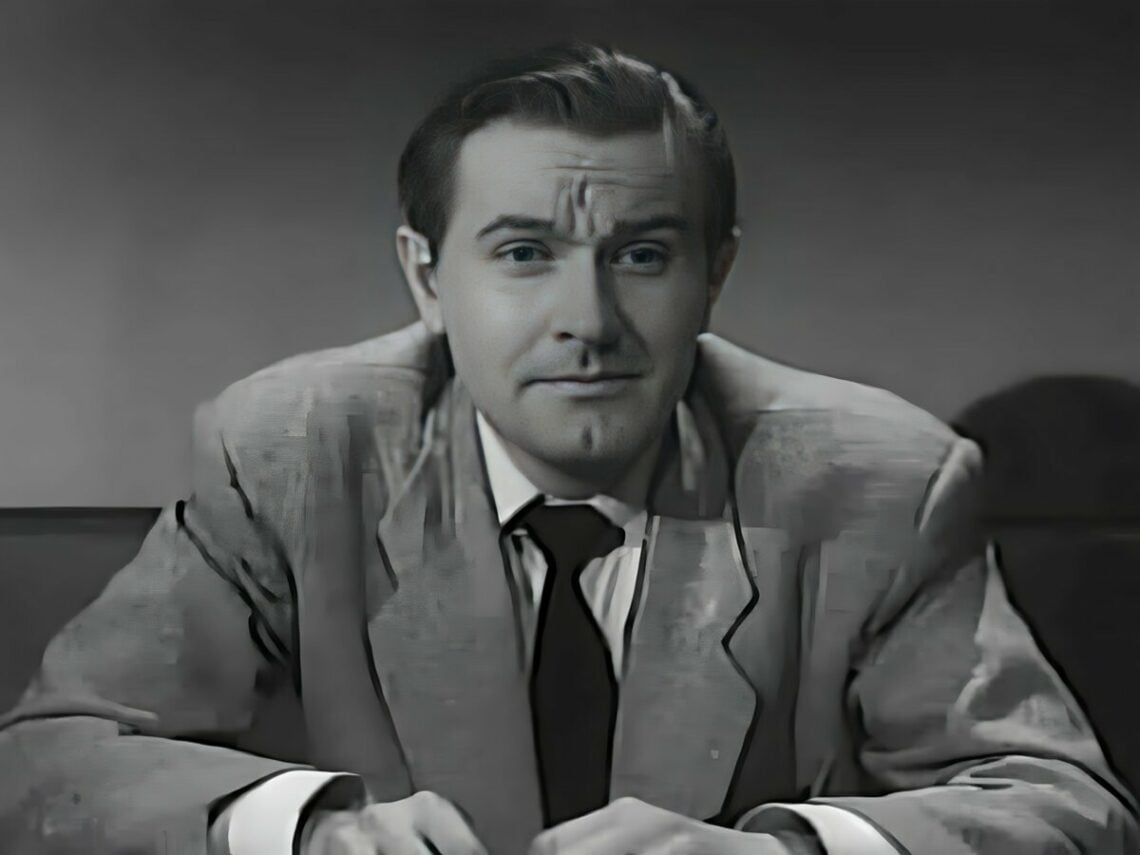
Ed Wood: the pioneering pulp filmmaker who spearheaded a queer community

Often, filmmakers are celebrated for their remarkable artistry, creating enduring legacies of innovation and creative brilliance that keep their works in discussions for many years. It’s unusual for a director to establish a legacy based on their lack of skill, yet in a peculiar way, this became Ed Wood‘s unique path. The imaginative illusions of a flawed artist made an impact not just as an example of that but also as someone who ventured in and out of film studios with a hopeful reverence for the potential of the future.
For years, critics chose to focus on Wood’s lack of skill as a filmmaker, and while there’s much more to his story than just that, it’s probably the best place to start. Wood’s filmmaking career began in the 1950s, and he became best known for his low-budget, independent films that fell into the genres of science fiction, horror, and exploitation. His most famous work is the 1959 film Plan 9 from Outer Space, often considered one of the worst movies ever made.
Wood’s films are notorious for lacking production values, heaps of poor acting, an array of continuity errors, and bizarre storytelling. He often worked with limited resources and used unconventional methods to complete his films. Wood had a notable collaboration with Hungarian actor Bela Lugosi, best known for his role as Count Dracula in the 1931 film Dracula. Lugosi appeared in several of Wood’s films, including Glen or Glenda and Bride of the Monster.
Rather remarkably, despite the critical and commercial failures of his films, Wood developed a following based on his unique and often eccentric style, making him a beloved figure in cult cinema. At the same time, he was largely ahead of his time in terms of queer representation; Wood cast his long-term partner Dolores Fuller in three of his films, one of which includes Glen or Glenda, a docudrama about gender identity.
Semi-autobiographical in nature, Glen or Glenda was the first time Fuller saw Wood as his alter ego, and while the film was a plea for tolerance, it was met with extreme criticism at the time and triggered the breakdown of Wood and Fuller’s relationship. In Rudolph Grey’s 1992 biography, Nightmare of Ecstasy: The Life and Art of Edward D. Wood Jr., Wood’s third wife, Kathy O’Hara, clarified that Wood’s interest in presenting as a woman was rooted in a desire for maternal comfort, particularly linked to angora fabric, which was prominently featured in many of the director’s films.
Even in his later years, Wood openly embraced this side of his personality. His alter ego, ‘Shirley’, often appeared in his screenplays and stories. In Glen or Glenda, Wood also attempted to disperse common misconceptions about his personal endeavours by making the point that dressing this way didn’t automatically imply homosexuality.
The making of this film, along with Wood’s connection with Lugosi, took centre stage in Tim Burton’s 1994 biographical film, Ed Wood. Styled like a Hollywood noir but distinctly different, Burton’s portrayal of the filmmaker’s life maintains a rather straightforward narrative. It tracks Wood’s escapades as he endeavours to secure funding for his successive eccentric projects while capitalising on the waning fame of Lugosi, portrayed brilliantly by Martin Landau.
When explaining why he was drawn to Wood’s eccentricities, Burton explained: “The films are unusual; I’ve never seen anything like them, the kind of bad poetry and redundancy-saying in, like, five sentences what it would take most normal people one, which I can also relate to. Yet still there is a sincerity to them that is very unusual, and I always found that somewhat touching; it gives them a surreal, weirdly heartfelt feeling.”
