


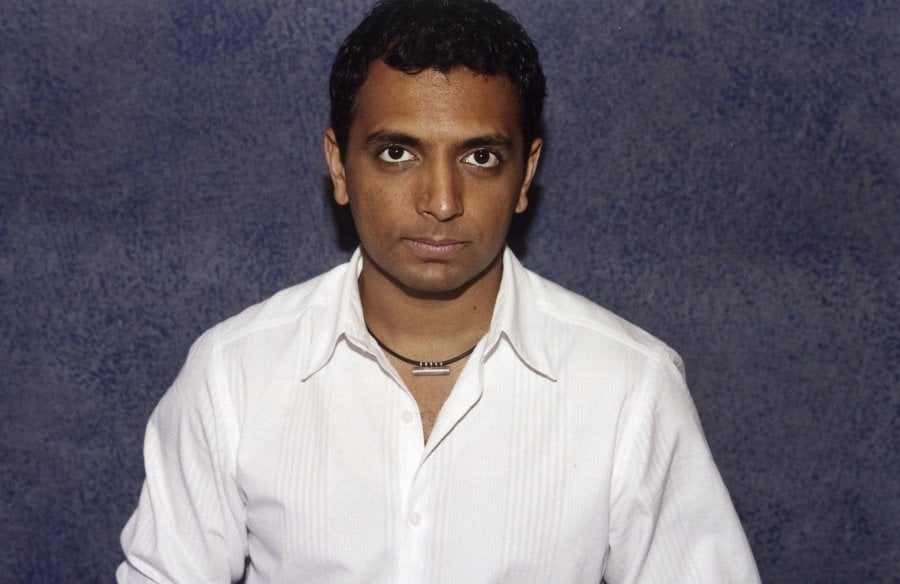
The misunderstood artistry of M. Night Shyamalan

These days, when we refer to cinematic innovators, the likes of Christopher Nolan, James Cameron and Denis Villeneuve come to mind. Loud, epic and visually inventive, there’s no doubt that such filmmakers can get bums on seats and retinas peeled back in visceral glee, but when it comes to conceptual tales of pure carnivalesque pleasure, few auteurs better the efforts of the storytelling illusionist M. Night Shyamalan.
Twisting and contorting his stories with glee, watching a Shyamalan film takes viewers back to the early days of the cinema when the silver screen was little more than a fleeting carnival attraction. Creating spectacle with the promise of an intriguing premise and twisting narrative, Shyamalan’s films are, more often than not, baffling thrill rides that disregard reason and sense to take you on a wild, imaginative odyssey.
Often mocked for producing some of the quirkiest and most idiosyncratic movies of modern cinema, Shyamalan is an easy target for armchair movie critics who expect a certain narrative template from their Hollywood flicks. Ceaselessly independent and daring, Shyamalan has undoubtedly made several cinematic misfires, with 2006s Lady in the Water and 2015s The Visit leaving him vulnerable to criticism; still, for every misfire, there is a charming hit.
Though rightfully celebrated for his six-time Oscar-nominated 1999 hit The Sixth Sense and strange superhero flick Unbreakable one year later, arguably, the director has only come into his own in the last half-decade. Funding and producing his own movies, making himself an auteur liberated from the studio system, Shyamalan has allowed himself the wiggle room for unabashed creativity, directing the viral James McAvoy-led thriller Split, unlikely superhero team-up movie Glass and the surprisingly unsettling conceptual horror Old.
Known for his fondness for the narrative twist, viewing a Shyamalan film becomes an oddly enthralling experience, a pop-puzzle that is pleasurable to decipher, like a cinematic riddle fit with bells, whistles, horns and kazoos. Whilst you may feel you’re making considerable headway in solving the film’s intricate puzzle, Shyamalan’s resolutions are often so off-the-wall that they keep you guessing until the after-credits scene.
In this, Shyamalan consistently conjures a carnivalesque joy, with films such as 2008s The Happening becoming an indulgent ride into a nonsensical world where the story is as zany as the eccentric characters that drive it forward. Though often associated with being a ‘bad’ screenwriter, Shyamalan’s approach is more stylised than most give him credit for, writing stories that indulge in quirky comedy, bombastic fantasy and camp frivolity.
Describing his cinematic outlook in an interview with Collider in 2015, the director stated: “I want it to be quirky. Whatever that odd little tilt is, I don’t want to correct it. I want it to be that way and celebrate its individuality, and then hope that it goes back into the system. It was the perfect thing for me. You don’t get to celebrate yourself unless you risk being mocked or rejected. As an artist, you cannot play it safe”.
Whether it’s the bizarre ‘hot-dog’ man in The Happening, the insane Saturday morning cartoon-like conclusion to Old or the countless twists and turns of the director’s filmography, Shyamalan should be embraced as a bastion of the camp carnivalesque.
