


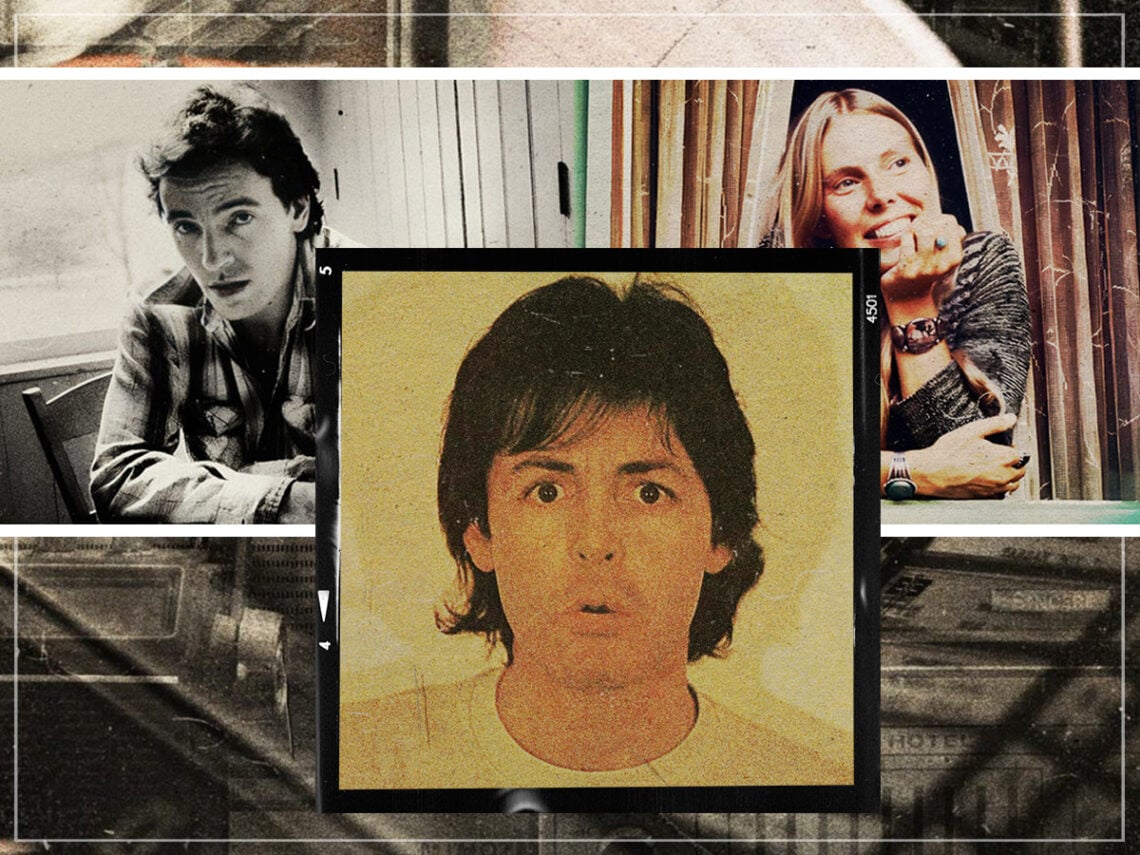
10 rock albums recorded by one person

Some of the best albums ever made have often been a communal experience. Even though art might be a personal expression for everyone involved, artists are always working at their best when bouncing ideas off their contemporaries, building to a song that anyone couldn’t have created. Then again, a handful of great artists like Dave Grohl and Prince can do the job alone.
Although a lot is going on every record on this list, each was performed by only one person. Despite the massive amount of technical capabilities that go into making a feature-length release this singular, each artist would have to provide the instrumentation on every track, with the producer only leaving room for a few touchups here and there for outside help.
Outside of the massive amount of artistic fire to get an LP like this off the ground, the greatest strength of these albums is what they can accomplish as a single entity. Rather than listening to many different artists come together, these records can hold the listener’s attention from back to front, almost like they tell a story from the other side of the speakers.
That didn’t mean that the artists wouldn’t one day add more people to their ranks, with many of them often building their live band around the songs when they took to the road. Whereas most LPs might get people acquainted with a specific style of music, albums coming out of one person’s head make you understand the artist just a bit better than an entire band arrangement.
10 albums recorded by a single person:
10. Niandra Le Des – John Frusciante
There’s no rulebook on leaving one of the world’s biggest bands. Even though John Frusciante may not have wanted the fame and attention of being in Red Hot Chili Peppers, the massive dropoff gave him time to get strung out on heroin at all hours of the day. Although Frusciante liked to make music alone, Niandra Le Des is a dark look into the mind of a genius slowly going insane.
Succumbing to his heroin addiction, Frusciante was not taking care of himself around this time, often being confined to a classical guitar as he croaked out whatever songs fell into his head. Although most of the tracks have faint wisps of the great music he made with the funk-rock gods, the tone varies between humble folk rock and Captain Beefheart-style musical exorcism, depending on which track is being played.
Rather than putting on an act, Frusciante genuinely sounds tortured on this album, as if he knows that the demons on his tail will never let him go. While Frusciante would ultimately conquer all of his addictions in time to record Californication, Niandra Le Des contains the most raw emotion from the darkest stages of the guitarist’s life.
9. Post Traumatic – Mike Shinoda
In an era when most rock was dead, Linkin Park was on the cusp of bringing it back to the mainstream. Although they may have used different electronics throughout their first handful of projects in the new decade, like A Thousand Suns, they remained one of the few rock artists that could get singles to chart alongside pop acts. Once the band decided to take a drastic turn, the entire fanbase was delivered a sucker punch when Chester Bennington was found dead in his home.
With the band being on indefinite hiatus ever since, Mike Shinoda took the time away to share his grief through music. Outside of a few collaborations here and there, Post Traumatic is the result of Shinoda trying to pick up the pieces of where his life was, wondering if he could make music on the same level as Linkin Park with one of their foundations now gone. Although Shinoda is hurting, the amount of emotion on the record is more potent than any sadness.
Instead of sharing too many details, Shinoda encapsulates what it means to go through emotional turmoil, creating a vivid collection of tracks that perfectly describes being alone. No amount of songs could ever bring Bennington back from the dead, but bringing people together through music is one of the first steps Shinoda took to bring him back from the edge.
8. Either/Or – Elliott Smith
The one-man band concept has never fit any genre quite like folk music. Since most of the best folk musicians of all time have gotten by playing their numbers on a single guitar, the best musicians have been known to fly solo whenever painting their masterpieces. In the wake of the alternative revolution a few years prior, Elliott Smith showcased what indie folk could be at its finest on Either/Or.
Years before he became the darling of the Good Will Hunting soundtrack, Smith’s intimate take on traditional songwriting is among the most tuneful music of the time, being as informed by Neutral Milk Hotel as he was from The Beatles. Regardless of the spare arrangements, there’s hardly a note out of place as Smith turns over the words in his throat with his signature gruff falsetto.
Outside of the production value, Smith’s songwriting has also left its mark on countless indie musicians ever since, informing the intimate side of artists like Phoebe Bridgers in the modern age. Though Smith may not have been long for this world, hearing him in this intimate setting is the best indication of his genius with a guitar and his voice.
7. Pretty Hate Machine – Nine Inch Nails
Everything about the 1980s was about being as glamorous as possible. Outside of the massive hair metal movement growing out of LA, the mainstream was about having the brightest colours imaginable on every artist onscreen, from Madonna’s lavish videos to the synth-pop adjacent acts like Tears for Fears. While Trent Reznor may have respected the synthetic side of ‘80s pop, Pretty Hate Machine introduced him to the world as one of the angriest voices in the nu-metal scene.
Recorded on his own during downtime in his Cleveland studio, Reznor put together the beginnings of Nine Inch Nails with every song on the album. While most would remember tracks like ‘Head Like a Hole’ for its caustic chorus, the real strength comes in the deep cuts of the record, with Reznor denouncing organised religion on tracks like ‘Terrible Lie’.
Although Reznor was on full blast throughout most of the project, an effort like ‘Something I Can Never Have’ predicted what would transpire on The Downward Spiral, showing the vulnerable man that was hiding underneath all that aggression. The industrial music world had already been going on for a while, but Pretty Hate Machine proved that the genre was a musical force to be reckoned with.
6. Blue – Joni Mitchell
At the end of the 1960s, rock and roll had started to become a far more intimate affair. As opposed to artists writing songs about the various mischief they would get into, acts like Bob Dylan had opened people’s eyes to what the genre could be at its most honest, discussing the most critical problems in the world outside of the traditional party music. While Joni Mitchell may have been born and bred in the folk tradition, her emotional exorcism on Blue was far braver than anyone could have imagined.
After a strenuous relationship, Mitchell would recall feeling like someone had chewed her up and spit her out emotionally. When approaching every one of her tunes, that emotional frailty is on full display, from the memories of her former flame on ‘My Old Man’ to still having an undying love for him despite all the pain on ‘A Case of You’.
Rather than the traditional lovesick albums of old, Mitchell is trying to find some sort of escape through her music, detailing wanting to skate away across the water on ‘River’. Plenty of artists have turned to their problems for musical inspiration, but whenever Mitchell sang one of her tunes, she was practically cutting her heart open in front of her fans and letting them dissect it for themselves.
5. The Times They Are A-Changin – Bob Dylan
Bob Dylan has been a musical tour de force since his first record. Although he may be known more today for his choice to go electric and restructure the rock world as we know it, Dylan’s early days began as a humble songwriter in the vein of other luminaries like Woody Guthrie. Like his idols, though, Dylan knew the best way to deliver a song to the people was to play it to them directly.
Throughout The Times They Are A-Changin, Dylan delivers graphic pictures of how modern society is being structured solely through his use of guitar and voice. While the title track may have been the preachy side of Dylan coming out in full force, tracks like ‘The Lonesome Death of Hattie Carroll’ were perfect examples of musical reporting, with the songwriter painting a vivid picture of race relations in America that have run amok.
Even though The Beatles famously got on board with Dylan on the album prior, The Times They Are A-Changin solidified his mystique as one of the most world-wise voices in the music industry. The electric side was to follow, but Dylan has never sounded more natural than with an acoustic in his hands.
4. Foo Fighters – Foo Fighters
By the end of April 1994, Dave Grohl’s world had completely fallen apart. After being a member of one of the greatest grunge bands of all time, Grohl was heartbroken by the death of Kurt Cobain, retreating from music entirely because of how raw the emotional wounds were. Once he realised that he could never outrun the aura of Nirvana, the former drummer figured that the next best thing would be to get in the studio with his material.
Since Foo Fighters was never intended to be an entire project, the band’s debut album consists of Grohl playing every instrument, save for one guitar overdub on the song ‘X-Static’. Recorded for his fun with tracks that he had worked on in Nirvana, Grohl had already honed down what would become the signature Foos sound, with walls of loud guitars that blended punk anarchy with classic rock melodicism on ‘I’ll Stick Around’ and ‘Weenie Beenie’.
Once Grohl found a formula that worked, he quickly assembled the rest of the band for the tour, tapping former Nirvana guitarist and Germs founder Pat Smear and the rhythm section of Sunny Day Real Estate. Foo Fighters may have a whole band arrangement whenever they play live, but the debut reminds the audience that the band is Grohl’s outfit before anything else.
3. For You – Prince
There aren’t too many territories to be covered as a musician that Prince hasn’t done first. Whether singing one of a song’s most technically demanding sections or ripping out one of the most excellent guitar solos ever, Prince could outshine anyone in the Minneapolis music scene and beyond, becoming one of the biggest musical phenomenons in popular music. While the legend may have built his legacy over time, all the pieces were present from the first LP.
Despite the insistence of his record label to use studio musicians, For You consists of Prince playing every single instrument. Written while he was barely out of his teens, Prince had already developed his unique sonic identity, making pieces that wreaked of sex like ‘Soft and Wet’ along with his fantastic penchant for ballads like ‘Just As Long As We’re Together’.
The Prince empire would become too much for one man to carry, though, with ‘The Purple One’ drafting in The Revolution to perform on classic albums like 1999 and Purple Rain. Regardless of what Prince may have gotten up to on the live stage, For You proved that his natural habitat was working magic in the studio.
2. McCartney II – Paul McCartney
The trilogy of Paul McCartney’s solo outings captures photos of the former Beatle at his most human. When coming out of the Fab Four for the first time, hearing Macca go back to square one on his proper debut was a shocker for many fans, considering his reputation for being a perfectionist in the studio. Though McCartney would spend most of the 1970s getting Wings off the ground, the final months of the decade were spent honing away at new sounds in his home.
Of all the self-titled McCartney projects, McCartney II is one of the most daring experiments he has ever taken on. Looking to get in touch with a primitive way of making tunes, McCartney recorded most of the material in his house, creating songs that could have easily passed for new wave tracks in their time, like ‘Coming Up’ and ‘Temporary Secretary’.
While most critics and fans may have been perplexed by what McCartney was doing, the living legend tried out different sonic spaces for himself, whether in different genres or using his voice differently, like the strange stoicism on the ballad ‘Waterfalls’. Macca may have a reputation for being the most lightweight member of The Beatles at times, but as evidenced by albums like McCartney II, he was just as daring with his musical ambitions as any of his former bandmates.
1. Nebraska – Bruce Springsteen
Every Bruce Springsteen album has thrived off the massive energy of The E Street Band. While ‘The Boss’ may be able to write killer hooks across any ditty he makes, it’s usually the power behind him that gets him the rest of the way, from the thundering pianos or Roy Bittan to the screeching saxophone solos from Clarence Clemons. Even though the band may have been second to none in rock history, the best way to appreciate Springsteen’s music is when every other member is stripped away.
When working on the follow-up to Darkness on the Edge of Town, Springsteen was woodshedding different ideas on a cassette in his living room, each of which would become the foundation of Nebraska. Although the arrangements are incredibly sparse throughout the entire LP, hearing every one of these rockers in their beginning stages makes it sound like Springsteen discovering the songs for the first time, like the heartbreaking story that unfolds in the middle of ‘Highway Patrolman’.
Each story lends itself to the minimalism of the effort as well, with characters that are in the most dire situations of their lives on songs like the title track or ‘Atlantic City’. Springsteen’s music may be about capturing the spirit of life in real-time, but by stripping away all those musical enhancers, ‘The Boss’ became naked in front of his audience and showed how human he could genuinely be.

Never Miss A Tale
The Far Out Bob Dylan Newsletter
All the latest stories about Bob Dylan from the independent voice of culture.
Straight to your inbox.