


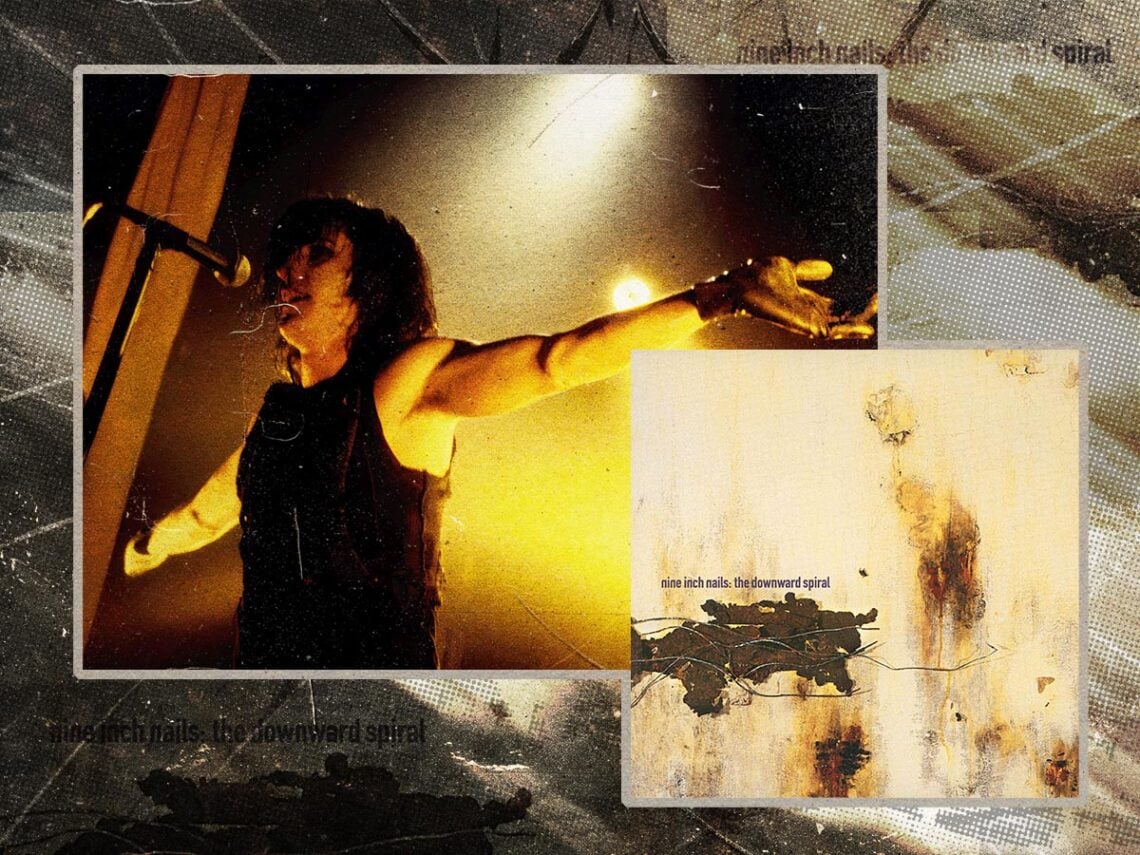
Understanding the story of Nine Inch Nails album ‘The Downward Spiral’

The rapid ascent of Nine Inch Nails never quite sat well with Trent Reznor. Despite becoming one of the biggest names in music with his debut Pretty Hate Machine, Reznor felt more isolated than he ever was, confined to life on the road and indulging in as many rock star excesses as he could night after night. Being around that seedy side of humanity struck a nerve with Reznor, and all of it would unfold on his next album.
Although the EP Broken gave fans a good idea of the dark side of Reznor with songs like ‘Wish’, The Downward Spiral was like putting one’s nerves through a woodchipper, as Reznor played around with different sonic textures to create an uncomfortable feeling looping around the songs. While some songs on the record could be autobiographical, the focus of the record revolves around a dark concept about a man nullifying his life.
Opening with the haunting sounds of a man being beaten, ‘Mr Self Destruct’ introduces the audience to the protagonist, looking to mow down anything in his path so he can get what he wants. Compared to the teenage punks Reznor might have seen on the road, this man wants nothing more than to cause as much evil behaviour as possible, almost inviting the listener to join him on the following track, ‘Piggy’.
After creating his fair share of physical chaos, Reznor starts challenging the human sense of morality, intoning that God is dead on ‘Heresy’ before jumping to breakneck speeds for the song ‘March of the Pigs’. Seeing how most of the album is caustic on the ears, the lovely piano interludes on this tight track point to the small semblance of humanity that the main character is holding onto.
As the listener moves further down the spiral, ‘Mr Self Destruct’ begins wreaking even more havoc, aiming to satisfy every sexual desire while riding an Iggy Pop sample on ‘Closer’. When listening to tracks like ‘The Becoming’, all of the instrumentation gets more mechanical, as if Reznor is trying to shed away all the natural aspects of the music until there’s nothing but abrasive noise.
Reznor also uses various sound effects to get what he wants, such as audio from an adult film on ‘Big Man With a Gun’ or screams from Texas Chainsaw Massacre on ‘Reptile’. While there is some regret on the record, like the frail sounds of ‘I Do Not Want This’, the one time fans get to see a calming side of Reznor is ‘A Warm Place’. Influenced by David Bowie’s ambient period, this may as well be one of the few happy memories that the protagonist had left, looking back on his life before everything went wrong.
While Reznor might look back fondly on his youth in this track, he can never go back, as the guitars grow more mechanical before the protagonist decides to take his own life. Being one of the most disturbing songs of the 1990s, the title track hardly has any lyrics outside of Reznor rambling about the gun in his hand as the muffled sounds of screams echo in the background.
It’s the common belief that the singer takes his life at the end of the song, but there’s one more track to get through. As the strains of the title track dissipate, ‘Hurt’ begins with raw nerves, as Reznor sings in a whisper about hurting himself. Although Johnny Cash’s version might have greater poignance, Reznor talking about his inner pain acts as the perfect coda for the album, as he wonders what he could have done differently if he had decided to live longer.
While the rest of the music world was talking about the rise of grunge, Reznor was peeling back the layers of himself and giving in to the darkest aspects of his psyche on The Downward Spiral. It would never sound pretty from back to front, but Reznor gave rock and roll the auditory equivalent of a David Fincher thriller.
