


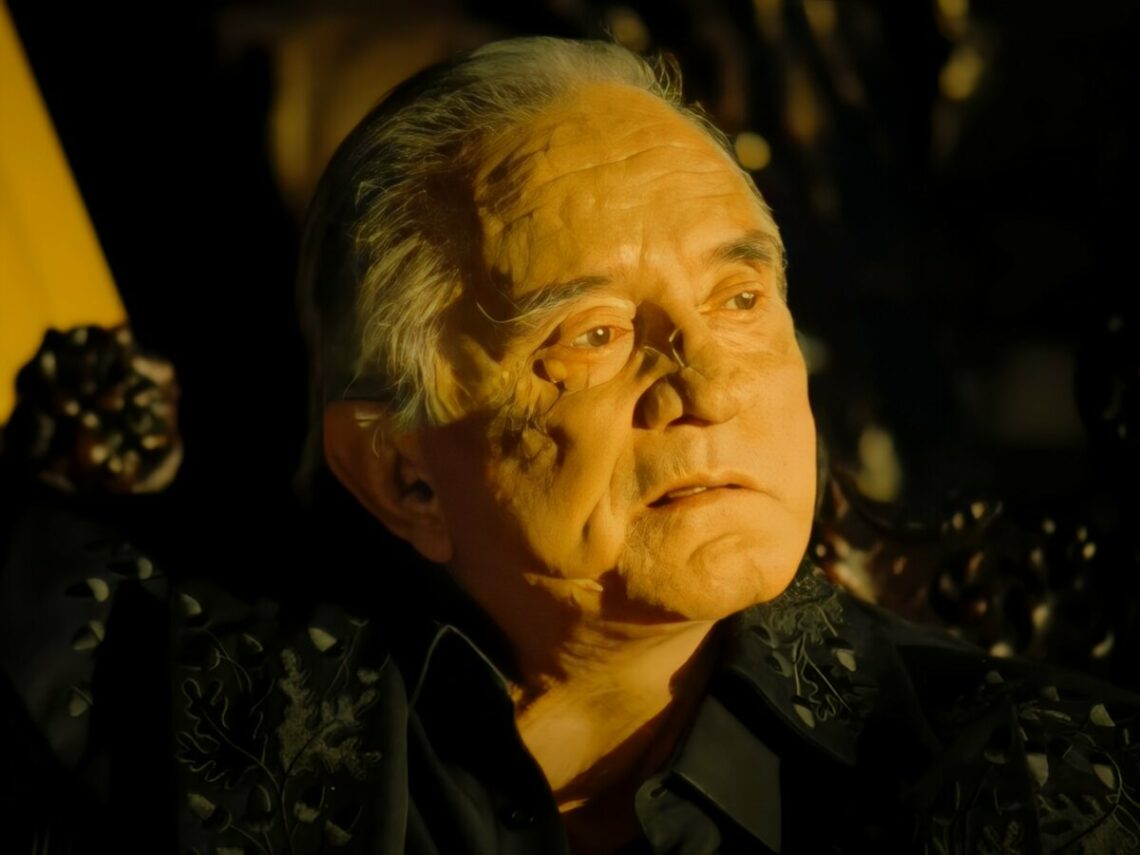
How Johnny Cash transformed Nine Inch Nails’ song ‘Hurt’

The end of Nine Inch Nails’s The Downward Spiral has to be one of the greatest gut punches in rock and roll history. Across the record, Trent Reznor commits one of the greatest musical masochistic activities he can, calling himself ‘Mr Self Destruct’ until he finally commits suicide partway through the record. Although ‘Hurt’ was meant to be the hopeful epilogue to his tortured soul, it took on a different meaning when it was brought to music legend Johnny Cash.
Around the same time Reznor was having his first major success with NIN, Johnny Cash was going through his next country renaissance. Thanks to producer extraordinaire Rick Rubin, Cash was suddenly back in the public’s good graces, getting back in touch with his outlaw roots and using friends like Tom Petty to make his albums come to life. As with most outlaws, though, nothing could save Cash from his greatest adversary: time.
As the 2000s began, Cash continued his studio output with albums of different covers, often delving into modern rock bands to reinterpret their classics into outlaw tunes. Aside from his work interpolating acts like Soundgarden and Depeche Mode, Cash found a peculiar resonance in ‘Hurt’.
Much like Reznor, Cash had struggled with substance abuse for most of his life, constantly questioning his moral character and seeing what he could have done better. Although Cash had previously played downtrodden heroes in his songs, ‘Hurt’ was one of his last opportunities to play a perfect role.
Whereas Reznor’s version features a broken man after killing himself and seeing what he could have done better, Cash plays the perspective of a man at death’s door looking back on what he could have done differently. Although the industrial noise of the original is gone, the spare acoustic guitar is all the track needs, almost providing Cash’s heartbeat to tell his regret story.
Although most of the songs Cash played from this era were played with the same lyrics, Cash’s slight adjustment from a “crown of shit” to a “crown of thorns” is eye-opening, bringing to mind biblical imagery as Cash tries to repent for all the sins he committed when he was on this Earth. And just as the end of Reznor’s version stops with a jarring blast of noise, Cash takes the exact opposite approach, leaving the listener in the air as he plans to do things better if he could live his life over again.
While Nine Inch Nails’ original may have been closer to what Reznor heard in his head, Cash is the exact person who understands what a life lived with ‘Hurt’ truly feels like. Although many regrets are sprinkled throughout this song, Cash isn’t ready to count himself out yet. For a song this bleak, Cash’s stripped-down approach can sprinkle the tiniest bit of sunshine into the mix as well.
Even when hearing the final version, Reznor deferred to Cash, claiming that the song didn’t belong to him anymore. As much as Reznor’s version was the tale of a nihilist looking back on his troubled past, Cash is the beaten-down anti-hero, pleading his case that he should be allowed into Heaven at the end of his days.
